
TL;DR:
- Dermaplaning is a gentle facial treatment that removes dead skin and peach fuzz using a surgical scalpel. It provides immediate smoother, brighter skin and improves makeup application without affecting hair growth. Regular sessions every four to six weeks and proper aftercare are essential for maintaining results.
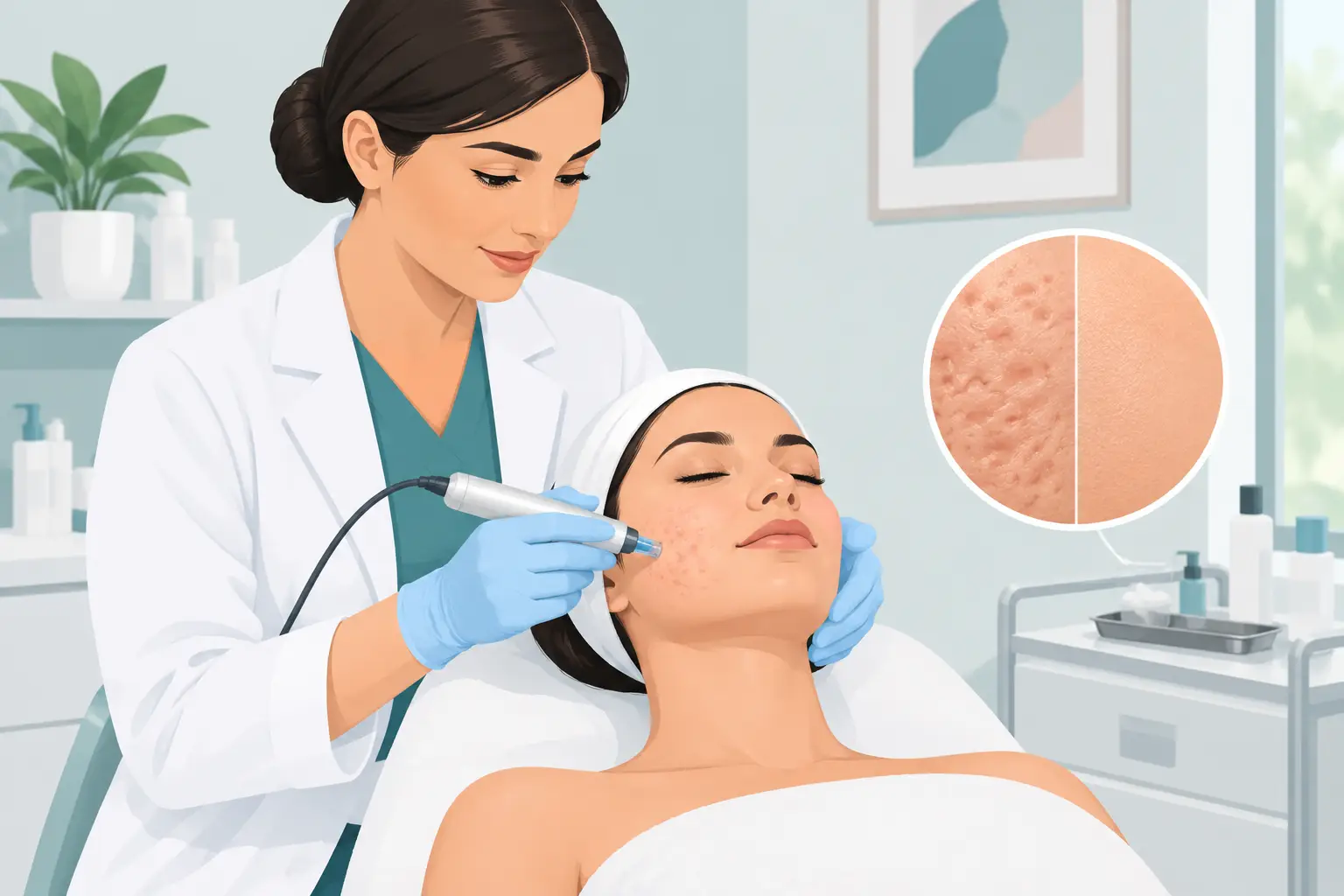
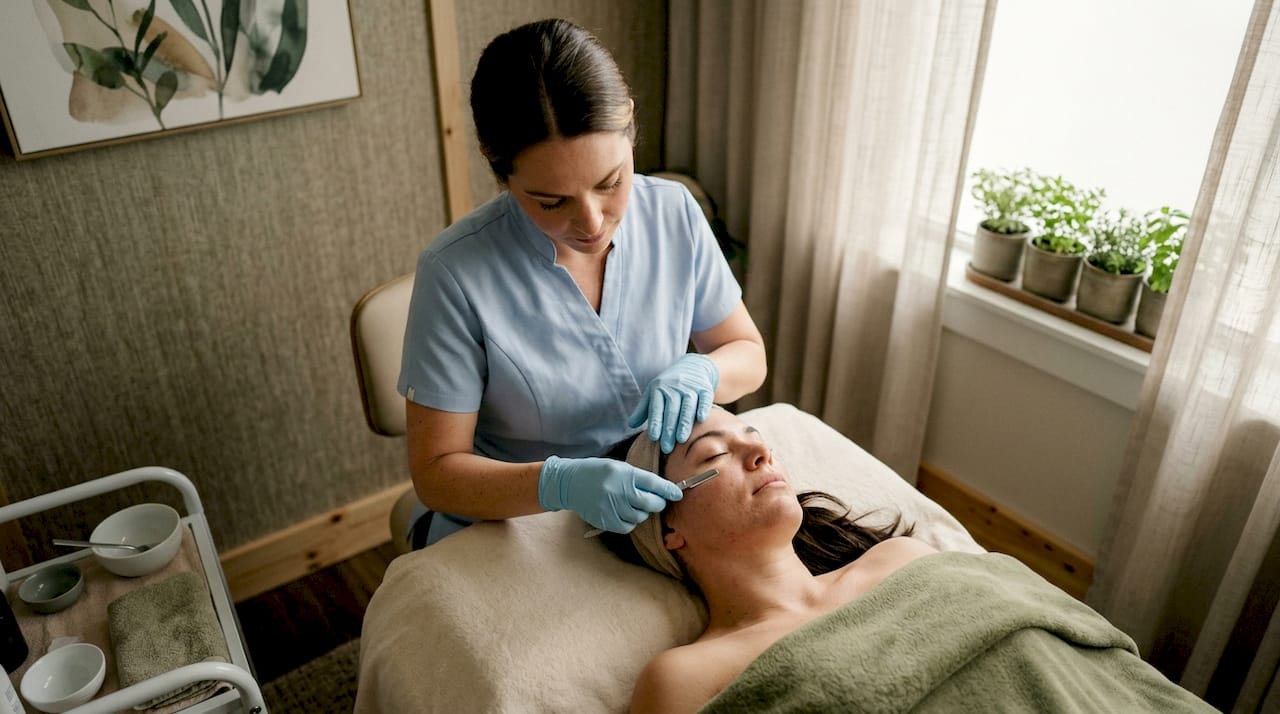
Dermaplaning is a physical exfoliation treatment that uses a small surgical blade to scrape away dead skin cells and vellus hair, commonly known as peach fuzz, from the face. Harvard Health notes that at-home devices shave the face using a razor or scalpel, removing both hairs and dead skin in a single pass. The result is smoother, brighter skin with noticeably improved texture. Sessions typically last between 10 to 60 minutes depending on the area treated and whether it is combined with other procedures. At Theaestheticsroom, we see this treatment consistently deliver an instant skin refresh with minimal downtime.
What benefits can you expect from dermaplaning?
Dermaplaning delivers smoother, brighter skin with reduced fine hair, and the effects are visible immediately after treatment. That instant result is one reason it has become a popular pre-event treatment among clients who want their skin looking its best quickly.
The benefits go beyond surface appearance. Removing the layer of vellus hair and dead skin cells means that foundation and concealer sit more evenly on the skin, without the slight fuzziness that peach fuzz can create. InStyle cites improved makeup application as one of the most practical and consistent advantages clients report.
Dermaplaning also supports the absorption of skincare products. With the stratum corneum cleared, serums containing hyaluronic acid or vitamin C penetrate more effectively. This makes it a useful preparation step before applying active treatments.
Key benefits include:
- Smoother skin texture with a visible reduction in rough patches
- Brighter complexion from the removal of dull, dead surface cells
- Improved makeup application as products glide on without catching on fine hair
- Better product absorption for serums and moisturisers post-treatment
- No permanent hair change as dermaplaning does not affect the follicle, so regrowth appears no thicker
Pro Tip: Schedule dermaplaning two to three days before a special occasion rather than the day before. This gives any minor redness time to settle, leaving your skin at its smoothest.
The effects are largely surface-level and temporary. Ongoing treatments are necessary for sustained results, which is why most clients book sessions every four to six weeks.
How is the dermaplaning process performed?
Professional dermaplaning uses a surgical scalpel with a sterile blade discarded after each use. This is a key distinction from at-home razors, which are smaller, less sharp, and designed for a shallower pass across the skin.
The procedure follows a consistent technique:
- Cleanse the skin thoroughly to remove all makeup, oil, and debris before the blade makes contact.
- Hold the skin taut with one hand to create a firm, flat surface for the blade to glide across safely.
- Position the blade at approximately 45° to the skin surface. This angle maximises exfoliation while reducing the risk of nicks.
- Use short, downward strokes across the treatment area, working systematically across the forehead, cheeks, chin, and upper lip.
- Discard the blade after each session. Harvard Health advises using new, clean blades every time to minimise nicks and infection risk.
- Apply a calming serum or moisturiser immediately after to soothe the freshly exfoliated skin.
| Step | Professional clinic | At-home device |
|---|---|---|
| Blade type | Surgical scalpel | Small dermaplaning razor |
| Blade angle | ~45° | ~45° (harder to maintain) |
| Blade sterility | Single-use, sterile | Reusable, variable hygiene |
| Session length | 30–60 minutes | 10–20 minutes |
| Risk of nicks | Low with trained technique | Higher without professional skill |
Pro Tip: If you are trying dermaplaning at home for the first time, practise on a small area of the jaw first. This helps you find the correct angle before working across the full face.
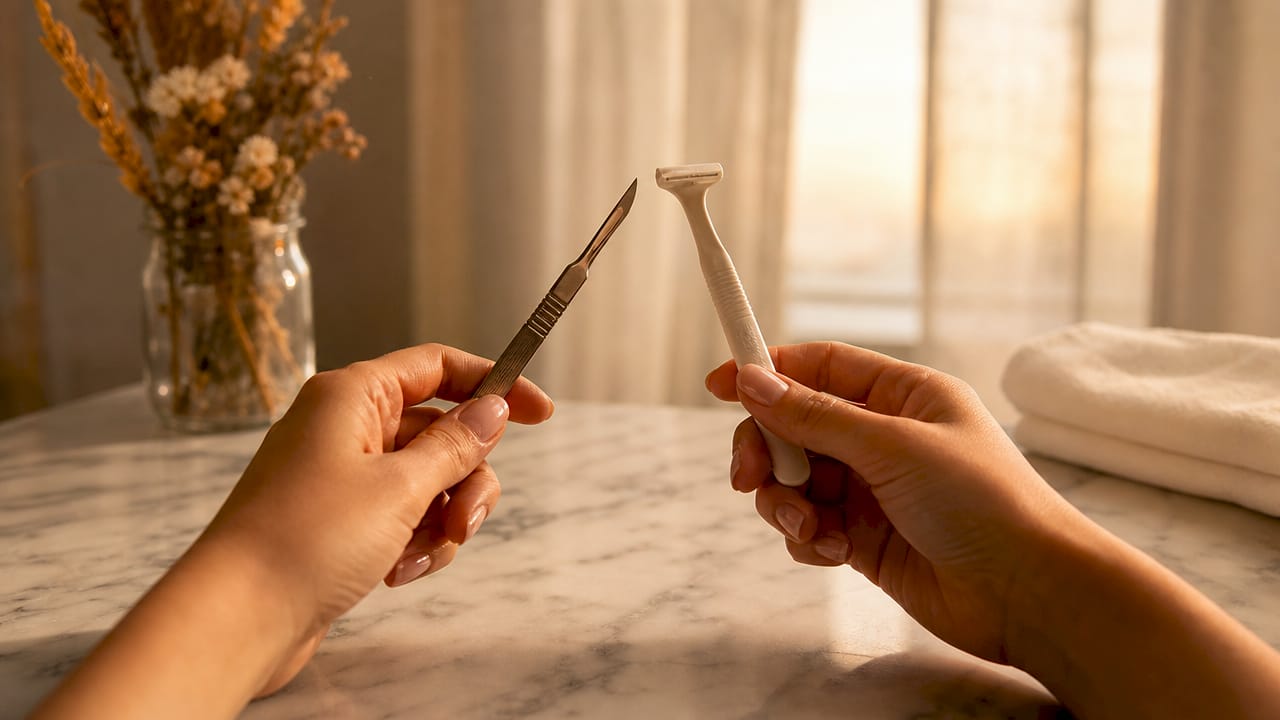
The 45° blade angle and short downward strokes are the two most critical technical elements. Deviating from either increases the chance of irritation or superficial cuts, particularly around curved areas like the chin and nose.
Who should avoid dermaplaning and what are the risks?
Dermaplaning is not suitable for everyone. People with rosacea, eczema, or active acne should avoid the treatment, as the blade can aggravate inflamed or broken skin. Active breakouts in particular present a risk of spreading bacteria across the face during the scraping motion.
Those with very sensitive or reactive skin should seek a professional assessment before booking. A skin mapping consultation can identify whether your skin barrier is strong enough to tolerate physical exfoliation without triggering a reaction.
Risks to be aware of include:
- Nicks and cuts from incorrect blade angle or insufficient skin tension
- Post-treatment redness that typically resolves within a few hours
- Increased sun sensitivity due to removal of the protective stratum corneum layer
- Infection risk if non-sterile blades are used, particularly with at-home devices
- Irritation from actives if strong skincare products are applied too soon after treatment
“Dermaplaning is essentially face shaving plus removal of a bit more of the top skin layer, making it low downtime but requiring gentle aftercare.” — InStyle
One of the most persistent myths about dermaplaning is that it causes hair to grow back thicker or darker. Dermatologists are clear on this point. Dermaplaning removes hair at the surface only, with no change to follicle biology. Regrowth appears blunt-ended rather than tapered, which can feel coarser initially, but the hair itself is unchanged.
For guidance on managing reactive skin before or after treatment, Theaestheticsroom’s resource on sensitive skin management covers practical daily strategies.
How does dermaplaning compare to other exfoliation methods?
Dermaplaning sits within a broader category of exfoliation treatments that includes microdermabrasion, chemical peels, and standard shaving. Each method targets the skin surface differently, with varying levels of depth, downtime, and suitability.
| Treatment | Method | Depth | Downtime | Best for |
|---|---|---|---|---|
| Dermaplaning | Physical blade | Superficial | Minimal | Texture, peach fuzz, makeup prep |
| Microdermabrasion | Crystal or diamond tip | Superficial to mid | Low | Uneven texture, mild scarring |
| Chemical peel | Acid solution | Superficial to deep | Low to high | Pigmentation, acne scarring |
| Shaving | Razor | Surface only | None | Hair removal only |
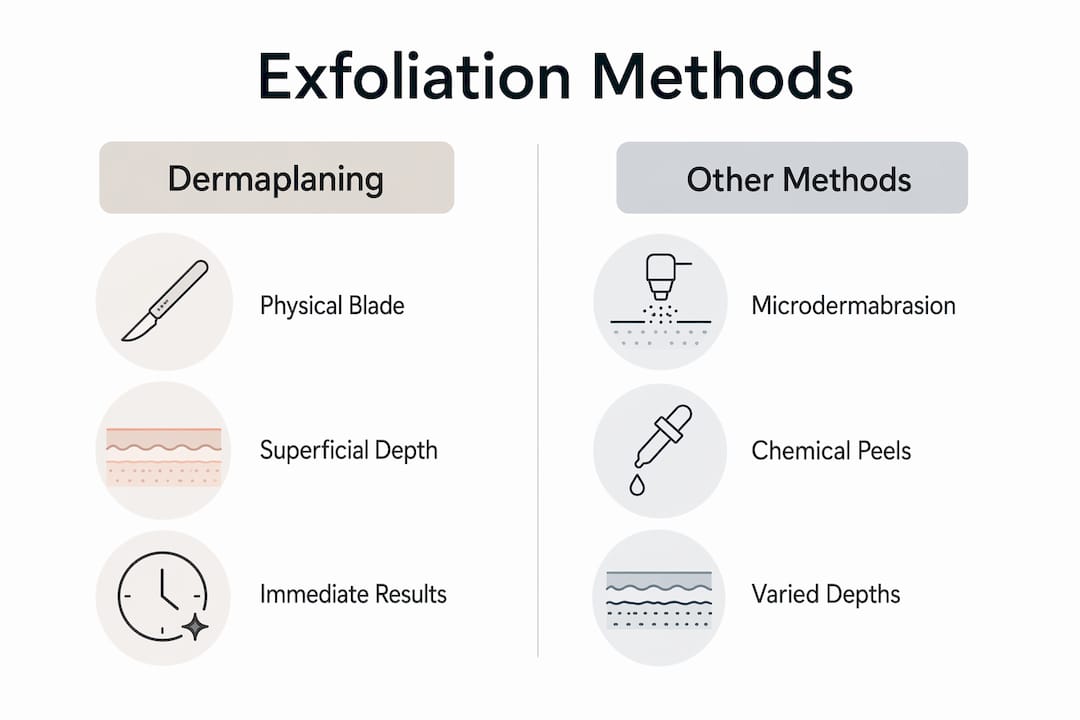
Microdermabrasion and dermaplaning both work on the superficial skin layer, but microdermabrasion does not remove vellus hair. For clients whose primary concern is makeup application or skin smoothness, dermaplaning offers a clear advantage. For a detailed look at how chemical exfoliation compares, Theaestheticsroom’s guide on microneedling vs chemical peel provides useful context.
Chemical peels use acids such as glycolic acid or salicylic acid to dissolve dead skin cells rather than scraping them away. They can address deeper concerns like acne scarring and pigmentation, but they carry more downtime and are not suitable for all skin types. Dermaplaning for acne scarring is generally limited to superficial texture improvement rather than deeper scar remodelling.
At-home dermaplaning devices are widely available, but the results differ meaningfully from a professional treatment. The blades are smaller and less sharp, and maintaining the correct 45° angle without professional training is genuinely difficult. For a full breakdown of when the clinic is worth the investment, Theaestheticsroom’s article on at-home vs clinic treatments covers the key differences.
Pro Tip: Combine dermaplaning with a hydrating facial mask immediately after treatment. The cleared skin surface allows the mask’s active ingredients to absorb far more effectively than on untreated skin.
What aftercare steps should you follow post-dermaplaning?
Post-dermaplaning skin is more reactive than usual. Dermaplaning removes the protective stratum corneum layer, leaving skin temporarily more sensitive to active ingredients and UV exposure. The right aftercare protects the results and prevents irritation.
Follow these steps in the days after treatment:
- Avoid acid-based and retinol products for several days. Experts recommend pausing harsh actives post-treatment due to heightened sensitivity. This includes glycolic acid, salicylic acid, and vitamin A derivatives.
- Apply SPF 30 or higher every morning. Freshly exfoliated skin burns more easily, so sun protection is non-negotiable.
- Use a gentle, fragrance-free moisturiser twice daily to support the skin barrier as it recovers.
- Avoid heavy exercise and steam rooms for 24 hours. Heat and sweat can irritate freshly treated skin.
- Do not pick or exfoliate further for at least a week. The skin needs time to rebuild its surface layer.
- Watch for signs of prolonged redness or breakouts. Minor redness is normal; anything lasting beyond 48 hours warrants a call to your practitioner.
For clients with naturally dry or reactive skin, Cosmedica Skincare’s practical sensitive skin guide offers useful daily routines that complement post-treatment recovery.
Key takeaways
Dermaplaning is a safe, low-downtime exfoliation treatment that delivers immediate results, but it requires consistent professional sessions and careful aftercare to maintain those results.
| Point | Details |
|---|---|
| Core definition | Dermaplaning uses a surgical blade to remove dead skin cells and vellus hair from the face surface. |
| Results are temporary | Effects last four to six weeks; regular sessions are needed for sustained skin improvement. |
| Hair does not grow back thicker | The blade removes hair at the surface only, with no change to follicle biology or hair texture. |
| Aftercare is critical | Avoid acids, retinol, and direct sun exposure for several days post-treatment to protect sensitive skin. |
| Not suitable for all skin types | Active acne, rosacea, and eczema are contraindications; a professional assessment is recommended first. |
Why I think most people underestimate the technique behind dermaplaning
Dermaplaning looks deceptively simple. A blade, a face, a few minutes. What I have observed across many client consultations is that the gap between a good outcome and a poor one almost always comes down to technique rather than the treatment itself.
The 45° angle is not a suggestion. It is the difference between effective exfoliation and a nick that leaves a client nervous about booking again. At-home devices have made dermaplaning more accessible, but accessibility is not the same as safety. I have seen clients arrive with irritation and micro-cuts from at-home attempts that a trained practitioner would never cause.
What I find genuinely undervalued is dermaplaning as a preparation step rather than a standalone treatment. When combined with a clinical facial or a targeted serum application, the results are noticeably better than either treatment alone. The cleared skin surface is simply more receptive. Pairing it with clinical facial treatments is where the real improvement in skin quality shows up.
My honest advice: if you are new to dermaplaning, start with a professional session. Let a trained practitioner assess your skin, demonstrate the technique, and guide your aftercare. Once you understand how your skin responds, you can make a more informed decision about at-home maintenance. Realistic expectations matter here. Dermaplaning refreshes and brightens. It does not resurface deep scars or permanently alter skin structure. Knowing that going in means you will appreciate what it genuinely delivers.
— Vishul
Professional dermaplaning and skin treatments at Theaestheticsroom
Theaestheticsroom offers professional dermaplaning and a full range of complementary skin treatments at its Knightsbridge clinic, with additional locations on Harley Street and in Mayfair. Every treatment is delivered by trained specialists in a CQC-accredited environment, with personalised care plans tailored to your skin’s specific needs.

For clients looking to go beyond surface exfoliation, Theaestheticsroom’s dermal fillers and Botox treatments address deeper concerns such as volume loss and dynamic lines, working alongside dermaplaning for a more complete skin rejuvenation result. Whether you are booking your first dermaplaning session or exploring a combined treatment plan, the team offers both virtual and in-person consultations. Book yours today at Theaestheticsroom.
FAQ
What is dermaplaning used for?
Dermaplaning removes dead skin cells and vellus facial hair using a surgical blade, improving skin texture, brightness, and makeup application. It is also used as a preparation step before other skincare treatments to improve product absorption.
Does dermaplaning make hair grow back thicker?
No. Dermaplaning removes hair at the surface only and does not affect the hair follicle, so regrowth appears no thicker or darker. The blunt cut can feel coarser initially, but the hair itself is biologically unchanged.
How often should you get dermaplaning?
Most clients book dermaplaning every four to six weeks. Results are temporary, and regular sessions are necessary to maintain smooth, bright skin.
Is dermaplaning safe for acne-prone skin?
Dermaplaning is not recommended for skin with active acne breakouts, as the blade can spread bacteria and worsen inflammation. Clients with acne-prone skin should consult a practitioner before booking.
What is the difference between dermaplaning and microdermabrasion?
Dermaplaning uses a blade to physically scrape away dead skin and vellus hair, while microdermabrasion uses a crystal or diamond tip to abrade the skin surface. Dermaplaning is the only method that also removes peach fuzz, making it the preferred choice for improving makeup application.