
TL;DR:
- Effective anti-aging treatments should prioritize safety, scientific evidence, and personal suitability.
- Daily habits like SPF use, hydration, and retinoids significantly enhance clinic treatment results.
- Evidence supports botulinum toxin and fillers as reliable, with regenerative treatments showing variable outcomes.
The anti-aging market is, frankly, overwhelming. Serums, injectables, energy devices, regenerative therapies — the options multiply faster than you can book a consultation. Yet not every treatment delivers what it promises, and individual responses vary far more than glossy marketing implies. At The Aesthetics Room, we believe informed clients achieve the best results. This evidence-based checklist cuts through the noise, focusing on what genuinely works, what warrants careful thought, and how to build a personalised routine that fits your skin, your schedule, and your life in London.
Table of Contents
- How to evaluate anti-aging options: science and personalisation
- Essential daily habits for youthful, radiant skin
- In-clinic treatments: what works (and what’s overhyped)?
- Personalising your anti-aging checklist: smart choices for London lifestyles
- The uncomfortable truth: why the perfect anti-aging routine doesn’t exist
- Elevate your results with expert guidance
- Frequently asked questions
Key Takeaways
| Point | Details |
|---|---|
| Evidence matters | Prioritise treatments with solid scientific and real-world backing for genuine results. |
| Customise your routine | No single approach fits all—personalise your checklist for your skin, goals, and lifestyle. |
| Consistency counts | Daily habits amplify and prolong clinic results, making them essential to any anti-aging plan. |
| Satisfaction over perfection | Focus on what boosts your confidence rather than chasing unrealistic ideals. |
How to evaluate anti-aging options: science and personalisation
With the need for clarity set, let’s define what makes an anti-aging option genuinely worth your time and investment.
The sheer volume of treatments available today means you need a clear framework before committing to anything. At its core, any option you consider should pass a straightforward set of criteria:
- Safety profile: Is the treatment performed by a qualified practitioner? What are the documented risks?
- Scientific evidence: Are there randomised controlled trials, or is the evidence largely anecdotal?
- Suitability: Does it match your skin type, age, and specific concerns?
- Downtime: Does the recovery period realistically fit your lifestyle?
- Practitioner expertise: Is the provider experienced with your skin tone, age group, and treatment goals?
Minimally invasive approaches consistently sit at the top of our recommendation list. They offer meaningful results with manageable risk, and crucially, they can be personalised. A treatment plan that works for a 35-year-old with early fine lines will look very different from one designed for a 52-year-old addressing volume loss and laxity.
It also helps to understand the fundamental difference between regenerative and structural treatments. Regenerative options such as PRP (platelet-rich plasma) and Profhilo aim to stimulate the skin’s own collagen and elastin production over time. Structural options such as dermal fillers and botulinum toxin work more directly — fillers restore volume and contour immediately, while neurotoxins temporarily relax the muscles responsible for expression lines.
One important reality is the gap between clinical trial outcomes and real-world satisfaction. Empirical data on treatment variability shows that regenerative treatments like PRP and Profhilo produce mixed results in randomised trials, with some performing no better than placebo in older skin groups, yet clinic-level patient satisfaction often remains positive. This tells us that subjective experience, overall skin quality, and holistic wellbeing play a significant role in how people feel about their results. Check our skin health checklist for a broader picture of what your skin truly needs.
Pro Tip: Before committing to any treatment, ask your provider to share both peer-reviewed clinical data and real patient feedback from people in your age group. This dual picture gives you a much more reliable expectation of outcomes.
Essential daily habits for youthful, radiant skin
After setting your evaluation criteria, let’s cover the essential daily habits that everyone needs in their arsenal.
No in-clinic treatment will compensate for a neglected daily routine. Think of your home regimen as the foundation upon which every professional treatment is built. Get the basics right, and your clinic results will last longer, look better, and feel more natural.
Here are the five non-negotiable pillars of an evidence-based daily skincare routine checklist:
-
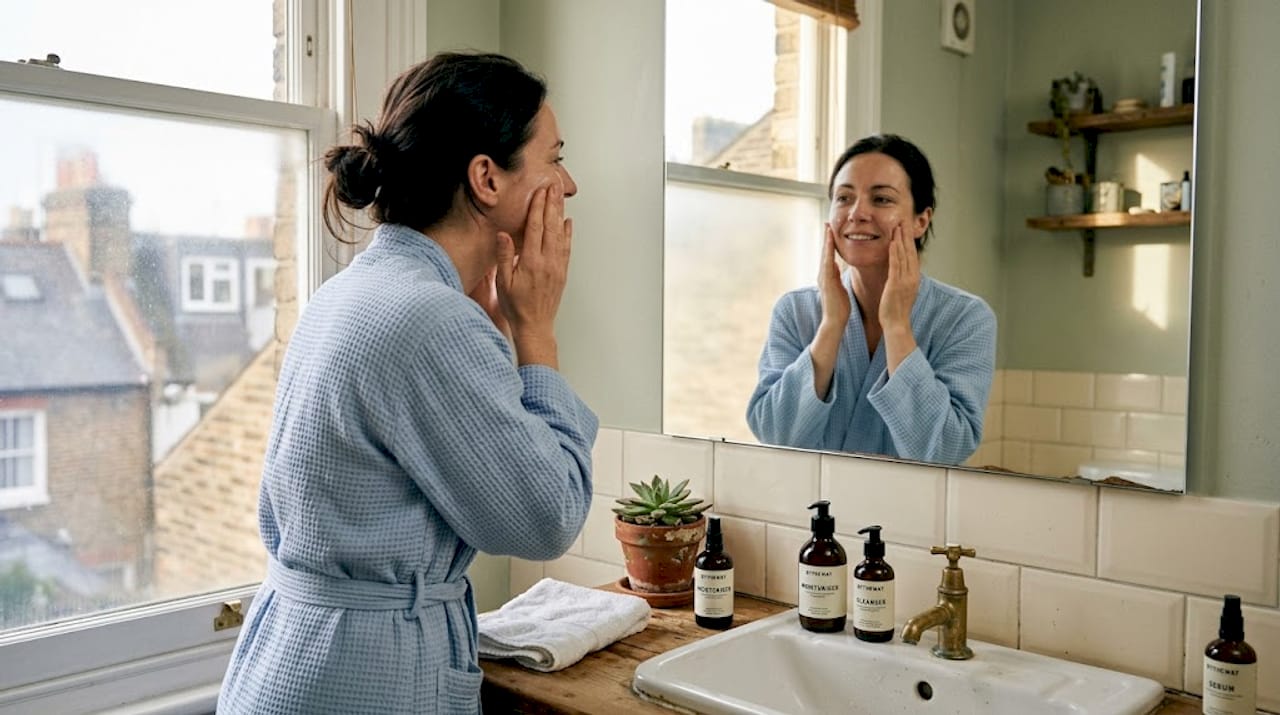
Cleanse thoughtfully. A gentle, pH-balanced cleanser removes pollution, makeup, and excess sebum without stripping your skin’s moisture barrier. London air quality is notoriously variable, and urban particulates accelerate oxidative stress in skin cells, making thorough yet gentle cleansing essential every evening.
-
Protect with broad-spectrum SPF. This is the single most evidence-backed anti-aging step you can take. UVA rays penetrate cloud cover and glass year-round, accelerating photoageing even on grey London days. SPF 30 minimum daily, SPF 50 on sunny days, reapplied if you’re outdoors.
-
Nourish with antioxidants and hydration. Vitamin C brightens and neutralises free radical damage. Hyaluronic acid draws moisture into the skin’s upper layers. Niacinamide strengthens the barrier and reduces the appearance of pores. Used consistently, these ingredients visibly improve skin clarity and resilience.
-
Repair with retinoids or peptides. Retinoids remain the gold-standard topical anti-aging ingredient, boosting cell turnover and stimulating collagen production over months of consistent use. If you find retinoids irritating, peptide-based alternatives such as Matrixyl and Argireline offer a gentler but still effective pathway to firmer, smoother skin. Our anti-aging skincare workflow provides step-by-step guidance on building this into your evenings.
-
Prioritise sleep and hydration. During deep sleep, the body releases growth hormone and cortisol normalises, enabling genuine cellular repair. Chronic sleep deprivation accelerates glycation, a process that stiffens collagen fibres. Drinking 1.5 to 2 litres of water daily supports skin turgor and helps the barrier function optimally. Our anti-aging product recommendations highlight the best medical-grade options that complement these habits.
Pro Tip: Combining medical-grade skincare with in-clinic treatments consistently produces better and longer-lasting results than either approach alone. Think of your clinic visits as boosters that amplify what your daily habits are already achieving.
In-clinic treatments: what works (and what’s overhyped)?
Having covered skincare basics, it’s time to weigh up the clinic interventions — what’s truly effective and what warrants a second thought.
The treatments generating the most interest among our clients at The Aesthetics Room are Profhilo, PRP with microneedling, botulinum toxin, and dermal fillers. Each has its place, but the evidence behind them varies considerably.
| Treatment | Evidence level | Typical satisfaction | Key benefit | Downtime |
|---|---|---|---|---|
| Botulinum toxin | Strong RCT support | Very high | Expression line reduction | Minimal |
| Dermal fillers | Robust clinical data | High | Volume restoration, contouring | Minimal to low |
| Profhilo | Mixed RCTs | Variable | Hydration, skin quality | Minimal |
| PRP + microneedling | Mixed RCTs | Variable | Texture, radiance | Low to moderate |
What the research actually shows:
Profhilo clinical results from a randomised controlled trial found reduced wrinkles and pore visibility, but dermal thickness increase did not exceed placebo, and 54.5% of participants reported dissatisfaction with their outcomes. However, a separate study focusing on Profhilo in Asian women showed a significant 21% increase in hydration and a 21% reduction in transepidermal water loss at 12 weeks, alongside trends in wrinkle and elasticity improvement, suggesting ethnicity, skin type, and assessment method all influence results meaningfully.

For PRP and microneedling, an RCT on PRP and microneedling in women over 45 found no significant improvement in laxity, rhytides, or roughness compared to saline controls, with researchers noting that patient age and assessment methodology may have contributed to these outcomes.
Clinically meaningful vs. overhyped claims:
- Meaningful: Botulinum toxin reducing dynamic expression lines, dermal fillers restoring lost cheek volume, hyaluronic acid fillers improving nasolabial folds
- Requires careful thought: Profhilo as a standalone solution for significant laxity in older women, PRP as a primary wrinkle treatment after 45
- Overhyped: Single-session “collagen banking” for prevention, devices promising surgical-level results without downtime
“Age, skin type, and the measurement tools used in studies all affect how we interpret treatment outcomes. What works beautifully for one patient may deliver modest results for another. This is why thorough individual assessment, not trend-chasing, should always guide treatment selection.” — The Aesthetics Room clinical team
Our PRP facial guide explains when PRP may still be a valuable adjunct treatment, and you can explore the broader role of PRP in aesthetics to understand where it genuinely adds value. To weigh up your wrinkle treatment options side by side, our resource to compare wrinkle solutions is a practical starting point.
Personalising your anti-aging checklist: smart choices for London lifestyles
Not all regimens or interventions fit every person. Let’s make your checklist as unique as you are.
London’s specific lifestyle demands deserve a place in your planning. The city’s pollution levels, demanding schedules, frequent indoor heating in winter, and social calendars mean your anti-aging strategy needs to be both effective and realistic.
| Skin concern | Recommended first step | Consider adding | Best evidence level |
|---|---|---|---|
| Fine lines and expression lines | Botulinum toxin | Topical retinoids | Strong |
| Volume loss and hollowing | Dermal fillers (hyaluronic acid) | Profhilo for hydration | Robust |
| Dullness and uneven texture | Medical-grade vitamin C and SPF | Microneedling (with or without PRP) | Moderate |
| Skin laxity (mild to moderate) | Profhilo or skin boosters | Consider combination approaches | Mixed |
| Dryness and barrier concerns | Hydrating serums and ceramides | Profhilo in Asian skin types showed 21% hydration boost | Emerging |
When personalising your plan, work through these key decision points:
-
Budget: Some treatments require ongoing sessions to maintain results. Botulinum toxin typically needs refreshing every three to four months. Dermal fillers may last six to eighteen months depending on product and area. Factor in maintenance costs, not just the initial outlay.
-
Downtime tolerance: If your diary is full and you cannot afford visible bruising or swelling, prioritise treatments with minimal recovery. Profhilo and botulinum toxin typically allow you to return to work the same day.
-
Long-term maintenance: Are you looking for a one-off refresh or an ongoing relationship with your practitioner? Progressive treatments like retinoids and regular skin booster sessions compound their benefits over time.
-
Lifestyle factors: Heavy gym-goers may metabolise botulinum toxin faster. High-stress lifestyles may undermine the collagen-building effects of regenerative treatments. Your practitioner needs to understand your full picture.
-
Realistic expectations: No treatment reverses twenty years overnight. The clients who are most satisfied tend to be those who understand that results build gradually and that their routine evolves with their skin’s changing needs.
Our expert anti-wrinkle list is specifically tailored for London women navigating these decisions, and our wrinkle tips for smoother skin offer practical, immediately actionable guidance.
The uncomfortable truth: why the perfect anti-aging routine doesn’t exist
With all factors considered, let’s address the myth of the “perfect” anti-aging checklist and what truly matters.
We review clinical data rigorously, and it tells a humbling story. Some of the most popular treatments in aesthetics produce genuinely mixed results when tested under controlled conditions. Does that mean they’re worthless? Not at all. It means the outcome depends enormously on who is receiving the treatment, who is delivering it, and what the individual’s goal actually is.
Here’s what experience has taught us: clients who feel most satisfied are rarely those who achieved clinical perfection. They are those who felt listened to, whose treatment plan respected their lifestyle, and who noticed improvements that made them feel more like themselves. That distinction matters.
Ageing is not a problem to be solved. It is a process to be navigated with intelligence and self-awareness. Reframing your approach around skincare that boosts wellbeing rather than the relentless pursuit of reversal produces better decisions and, usually, better results. Experiment thoughtfully. Prioritise what fits your values and your skin. And be willing to evolve your routine as your skin evolves with you.
Elevate your results with expert guidance
Ready to build your ultimate anti-aging checklist? Here’s how The Aesthetics Room can help you take the next step.

At The Aesthetics Room in Knightsbridge, our practitioners create bespoke treatment plans that reflect both the science and the individual. Whether you’re exploring Botox treatments to soften expression lines, seeking dermal filler expertise to restore youthful volume, or investigating skin rejuvenation specialists for overall radiance, we combine clinical rigour with genuine personalisation. Every consultation begins with a thorough assessment of your skin, lifestyle, and goals. Book your consultation today and let us help you build a checklist that is genuinely tailored to you.
Frequently asked questions
Is Profhilo effective for women over 45?
Evidence is mixed; some Profhilo clinical results show dermal thickness gains no better than placebo, with 54.5% of participants reporting dissatisfaction, though hydration benefits are more consistently documented in certain skin types. A thorough consultation with your practitioner is essential to determine whether it suits your individual profile.
Which anti-aging treatment has the most scientific support?
Botulinum toxin and dermal fillers hold the broadest body of randomised controlled trial evidence, with consistently high patient satisfaction rates across diverse age groups and skin types.
Do daily habits really matter if I get clinic treatments?
Yes, significantly. Consistent daily skincare habits, especially SPF use and active ingredients like retinoids, actively extend and enhance the results of in-clinic treatments, making your investment work harder.
Are PRP and microneedling effective for sagging and wrinkles?
Recent trial data found that RCT on PRP and microneedling offered no significant improvement over saline for laxity, rhytides, and roughness in women over 45, though results may differ depending on individual factors and treatment protocols.