
TL;DR:
- Antioxidants neutralize free radicals, protecting skin from oxidative damage and premature ageing. Combining effective formulations and dietary sources enhances skin health more than single antioxidants alone. Proper use alongside sunscreen and professional treatments maximizes their protective and restorative benefits.
Antioxidants are defined as molecules that neutralise free radicals, preventing oxidative damage to the skin’s cellular components including DNA, proteins, and lipids. The role of antioxidants in skin is to protect and repair at a molecular level, reducing the oxidative stress that drives premature ageing, uneven tone, and barrier breakdown. Key antioxidants studied in clinical settings include Vitamin C, Vitamin E, and glutathione. A meta-analysis of 94 studies confirmed that antioxidant interventions improve skin hydration and reduce trans-epidermal water loss measurably. Understanding how these molecules work, and how to use them effectively, is the foundation of any serious skincare approach.
How do antioxidants protect skin at the cellular level?
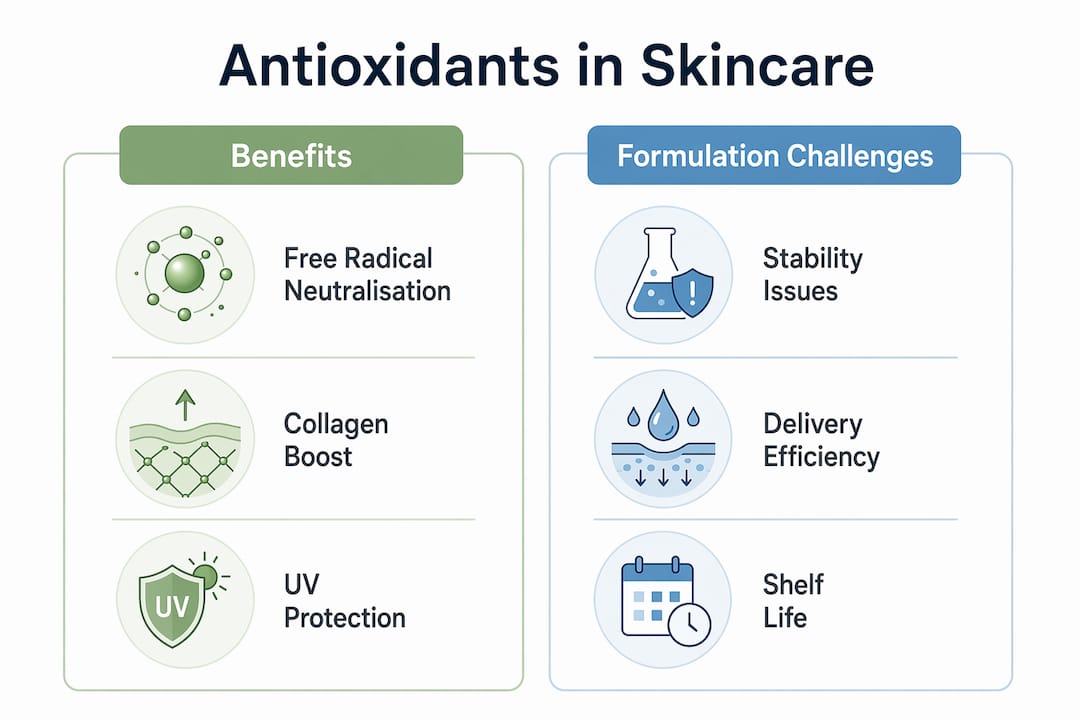
Free radicals are unstable molecules that steal electrons from healthy skin cells, triggering a chain reaction of oxidative damage. This process degrades collagen and elastin, impairs cellular DNA, and activates matrix metalloproteinases (MMPs), the enzymes responsible for collagen fragmentation and the formation of wrinkles. The result is visibly aged, less resilient skin.
Antioxidants interrupt this chain reaction by donating electrons to free radicals without becoming unstable themselves. The skin relies on both endogenous antioxidants, produced internally, and exogenous antioxidants, delivered through diet or topical products. Endogenous defenders include glutathione, superoxide dismutase (SOD), and catalase. These enzymes form the skin’s first line of defence against reactive oxygen species (ROS).
Topical antioxidants do not increase intracellular glutathione levels directly. Instead, they protect endogenous stores from being depleted by environmental stressors such as UV radiation and pollution. This distinction matters because it explains why topical products support, rather than replace, the skin’s own repair systems.
Pro Tip: Apply your antioxidant serum in the morning, before sunscreen. This positions it to intercept free radicals generated by UV exposure throughout the day.
| Antioxidant | Type | Primary Target |
|---|---|---|
| Vitamin C (ascorbic acid) | Water-soluble | Collagen synthesis, UV-induced ROS |
| Vitamin E (tocopherol) | Lipid-soluble | Cell membrane oxidation |
| Glutathione | Endogenous/exogenous | Melanogenesis, redox balance |
| Superoxide dismutase (SOD) | Enzymatic | Superoxide radical neutralisation |
| Resveratrol | Polyphenol | Inflammation, DNA repair |
What are the best antioxidants for skin health?
The most studied antioxidants for skin health span several categories: vitamins, polyphenols, flavonoids, and endogenous enzymes. Each targets different aspects of oxidative damage, which is why multi-antioxidant approaches consistently outperform single-ingredient products.

Vitamin C is the most clinically validated topical antioxidant. It stimulates collagen synthesis, reduces UV-induced pigmentation, and neutralises ROS in the aqueous layer of the skin. You can explore Vitamin C’s role in skincare in detail, including its optimal concentrations and formulation requirements. Vitamin E works in the lipid-rich cell membrane environment, protecting fatty acids from peroxidation. The two vitamins work synergistically: Vitamin C regenerates oxidised Vitamin E, extending its protective effect.
Glutathione is the skin’s master antioxidant. A review of 194 studies confirmed glutathione’s clinical efficacy in reducing pigmentation and improving skin brightness through both topical and oral delivery. It regulates melanogenesis, the process that controls melanin production, making it particularly relevant for those addressing uneven skin tone. For more on this, Theaestheticsroom covers pigmentation treatment options in depth.
Flavonoids and polyphenols, found in green tea, resveratrol, and plant extracts, offer a broader set of benefits:
- Anti-inflammatory action: Flavonoids suppress pro-inflammatory cytokines, reducing redness and irritation.
- Collagen stimulation: Studies show flavonoids stabilise cell membranes and promote collagen synthesis, improving elasticity.
- Antimicrobial properties: Polyphenols inhibit bacterial growth, supporting clearer skin.
- UV protection support: Flavonoids reduce oxidative damage from UV exposure, complementing sunscreen use.
Dietary antioxidants also contribute meaningfully. A systematic review found that antioxidant-rich diets improve skin barrier function, hydration, and inflammation across a range of skin conditions. Dietary sources include berries, leafy greens, nuts, and oily fish. Topical delivery, however, allows higher concentrations to reach the skin directly, making both approaches complementary rather than interchangeable.
How does formulation affect antioxidant efficacy in skincare?
Formulation quality is the single biggest variable separating effective antioxidant products from ineffective ones. Many antioxidants, particularly Vitamin C in its pure ascorbic acid form, are highly unstable. They oxidise rapidly on exposure to air, light, and heat, losing their potency before reaching the skin.
Advanced delivery systems address this problem directly. Nanocarriers and encapsulation technology protect unstable antioxidants during storage and improve their penetration into target skin layers. Encapsulated Vitamin C, for example, releases its active form gradually within the skin rather than degrading on the surface. This is why a £15 Vitamin C serum and a clinically formulated product can produce entirely different results despite sharing the same active ingredient.
Pro Tip: Store Vitamin C serums in a cool, dark place and replace them every three months. Yellowing or browning of the product signals oxidation and reduced efficacy.
| Formulation Method | Advantage | Limitation |
|---|---|---|
| Standard aqueous solution | Low cost, easy to apply | Rapid oxidation, poor penetration |
| Encapsulation (liposomes) | Protects stability, controlled release | Higher production cost |
| Nanocarriers | Deep skin penetration, targeted delivery | Regulatory scrutiny, complex formulation |
| Oil-based (lipid-soluble) | Stable, membrane-compatible | Less suited to water-soluble antioxidants |
| Multi-antioxidant complex | Synergistic protection, broader coverage | Formulation complexity |
Combining water-soluble antioxidants like Vitamin C with lipid-soluble ones like Vitamin E, alongside enzymatic antioxidants, produces superior protection. Multi-targeted antioxidant formulations outperform single-antioxidant products in preventing UV-induced skin damage. This is the clinical rationale behind serums that combine several actives rather than relying on one.
Antioxidants are not a replacement for sunscreen. They operate at different levels: sunscreen blocks UV radiation at the skin surface, while antioxidants neutralise the free radicals that penetrate deeper. The synergy between antioxidants and sunscreen is well established, and using both together provides protection that neither offers alone.
How do antioxidants work alongside other skincare treatments?
Antioxidants deliver the greatest benefit when integrated into a broader skincare strategy rather than used in isolation. Their role shifts depending on what else you are doing for your skin.
Photoprotection: Antioxidants and high-SPF sunscreens form the most evidence-backed pairing in skincare. Antioxidant serums reduce UV-induced erythema and DNA damage markers substantially when applied before sun exposure. Sunscreen handles surface-level UV blocking; antioxidants neutralise the ROS that slip through. Products such as the URBAN RETREAT SPF50+ mineral sunscreen pair well with antioxidant serums for comprehensive daily defence.
Dietary support: Oral supplementation with antioxidant-rich formulations supports skin hydration and barrier repair from within. URBAN RETREAT’s skin supplements provide a dietary complement to topical antioxidant routines. Theaestheticsroom also covers how nutrition transforms your complexion, detailing the dietary antioxidants with the strongest evidence base.
Post-procedure recovery: After aesthetic treatments such as laser resurfacing or microneedling, the skin undergoes controlled injury and repair. Antioxidants support this recovery by reducing oxidative stress during the healing phase, calming inflammation, and protecting newly regenerated collagen. Incorporating a Vitamin C or niacinamide-rich product post-procedure accelerates visible results.
Here is a practical guide to integrating antioxidants effectively:
- Do apply antioxidant serum in the morning before SPF for maximum photoprotection.
- Do combine Vitamin C with Vitamin E for synergistic, extended protection.
- Do support topical use with antioxidant-rich foods such as berries, green tea, and dark leafy vegetables.
- Do use clinically formulated, encapsulated products rather than low-cost alternatives with unstable actives.
- Don’t expect antioxidants alone to replace sunscreen. They complement, not substitute.
- Don’t mix Vitamin C with retinol in the same application. Use Vitamin C in the morning and retinol at night.
- Don’t ignore product freshness. Oxidised antioxidants offer no benefit and may irritate skin.
Key takeaways
Antioxidants protect skin most effectively when combined across topical, dietary, and professionally guided approaches, using clinically formulated products alongside daily SPF.
| Point | Details |
|---|---|
| Free radical neutralisation | Antioxidants donate electrons to stabilise ROS, preventing collagen degradation and DNA damage. |
| Formulation quality matters | Encapsulated and nanoformulated antioxidants deliver measurably better clinical results than standard solutions. |
| Multi-antioxidant synergy | Combining water-soluble, lipid-soluble, and enzymatic antioxidants provides broader and more durable protection. |
| Sunscreen is non-negotiable | Antioxidants neutralise internal free radicals; sunscreen blocks surface UV. Both are required for full protection. |
| Diet amplifies topical results | Antioxidant-rich diets improve skin hydration and barrier function, complementing what topical products achieve. |
Why i think most people are using antioxidants wrong
After years of working in aesthetic medicine, the pattern I see most often is this: clients invest in good antioxidant products but undermine them with poor formulation choices, inconsistent use, or the mistaken belief that one antioxidant covers everything.
The biggest misconception is that Vitamin C alone is sufficient. It is not. Vitamin C is water-soluble and works brilliantly in the aqueous environment of the skin, but it cannot protect cell membranes, which are lipid-based. That is Vitamin E’s territory. Without both, you are leaving a significant portion of your skin unprotected. The clinical evidence for multi-antioxidant formulations is clear, yet most people still reach for a single-ingredient serum.
The second issue is product quality. I have seen clients using Vitamin C serums that have visibly oxidised, turning yellow or orange in the bottle. An oxidised antioxidant is not just ineffective. It can generate its own oxidative stress. Spending more on a well-formulated, encapsulated product is not a luxury. It is the only way to get the clinical benefit the research promises.
My practical recommendation is to build what I call an antioxidant stack: a Vitamin C and E serum in the morning, a polyphenol-rich moisturiser, daily SPF50+, and a diet that includes green tea, berries, and oily fish. If you are also undergoing aesthetic treatments, discuss your antioxidant routine with your practitioner. The anti-ageing skincare workflow we recommend at Theaestheticsroom integrates antioxidants at every stage, from daily maintenance to post-procedure recovery. That is where the real results come from.
— Vishul
Revitalise your skin with expert aesthetic care at Theaestheticsroom
Antioxidants build the foundation of healthy, resilient skin. Professional aesthetic treatments take that foundation further.

At Theaestheticsroom, our team of medical specialists at our Knightsbridge and Harley Street clinics combines evidence-based skincare guidance with advanced treatments including Botox and dermal fillers to restore volume, smooth fine lines, and support long-term skin health. Clients who maintain a strong antioxidant routine alongside their treatments consistently achieve better results and faster recovery. We offer bespoke consultations, both in-person and virtual, to design a treatment plan that works with your skin, not against it. Book your consultation today and take the next step towards radiant, confident skin.
FAQ
What is the main role of antioxidants in skin?
Antioxidants neutralise free radicals and reactive oxygen species, preventing oxidative damage to collagen, elastin, and cellular DNA. This protects against premature ageing, uneven tone, and barrier breakdown.
Which antioxidants are most effective for ageing skin?
Vitamin C, Vitamin E, and glutathione are the most clinically studied antioxidants for ageing skin. Combining all three provides broader protection than any single antioxidant alone.
Can antioxidants replace sunscreen?
Antioxidants cannot replace sunscreen. Sunscreen blocks UV radiation at the skin surface, while antioxidants neutralise the free radicals that penetrate deeper. Both are required for complete photoprotection.
How do dietary antioxidants benefit the skin?
A meta-analysis of 94 studies confirmed that antioxidant-rich diets and supplements improve skin hydration and reduce trans-epidermal water loss. Dietary antioxidants support barrier function and reduce inflammation from within.
Why does antioxidant formulation quality matter?
Many antioxidants, particularly Vitamin C, degrade rapidly without advanced stabilisation. Encapsulated and nanoformulated products protect active ingredients during storage and improve their penetration into target skin layers, delivering measurably better clinical results.