
The first fine lines around the eyes often appear when the rest of the face still looks notably youthful. That is why reducing crow’s feet can feel like a very personal concern: these expression lines may make you look tired, stressed or older than you feel, even when they are simply a sign of a life well lived. The right approach should soften their appearance without flattening the warmth and character in your smile.
Why crow’s feet develop
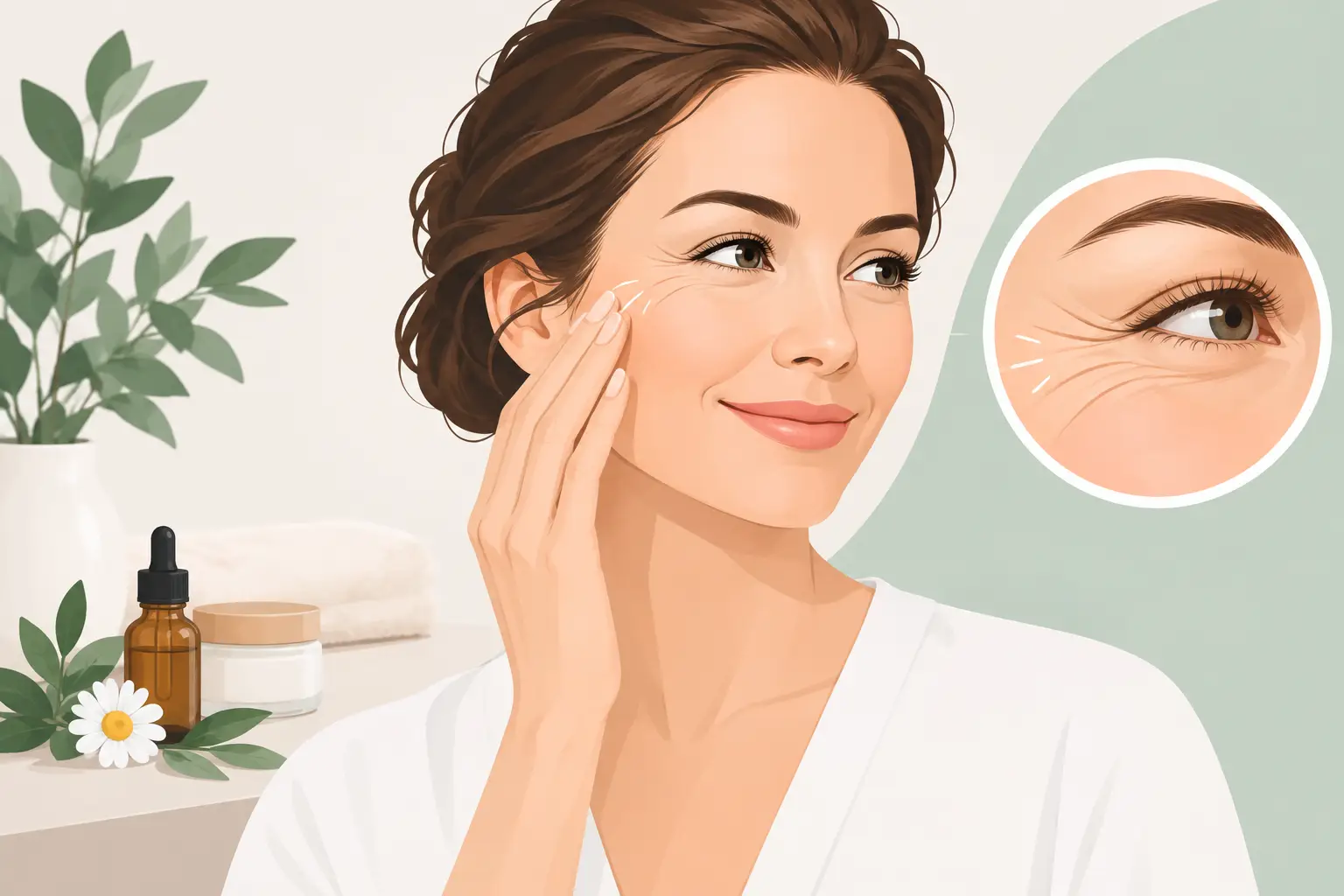
Crow’s feet are the fine lines that fan out from the outer corners of the eyes. They are commonly called expression lines because repeated movement of the muscles around the eyes – particularly when smiling, laughing or squinting – gradually creases the skin above them.
In earlier stages, these lines may only be visible when the face moves. Over time, they can remain present at rest as collagen, elastin and natural hydration decline. Sun exposure is a major contributor, as is regular squinting in bright light. Genetics, smoking, environmental exposure, poor sleep and dehydration can also influence how early and how deeply lines appear.
The eye area deserves particular care. Its skin is thinner than the skin across much of the face, and it moves constantly. A treatment that is appropriate for deeper folds around the mouth, for example, is not automatically appropriate near the eyes.
Reducing crow’s feet begins with the right assessment
There is no single best treatment for every set of crow’s feet. The most effective plan depends on whether the concern is primarily movement-related, caused by changes in skin quality, or accompanied by volume loss through the temples and upper cheek. Often, it is a combination.
A careful consultation should assess your facial movement at rest and in expression, the quality of the surrounding skin, your previous treatments and the degree of change you would like to see. It should also cover your medical history, suitability and expectations. A well-planned result should still look like you – relaxed, refreshed and able to express yourself naturally.
At The Aesthetics Room, treatment planning is led by this principle rather than by a standard dose or a one-size-fits-all appointment. Subtle placement and measured treatment are particularly important around the eyes, where a little can make a meaningful difference.
Anti-wrinkle injections for expression lines
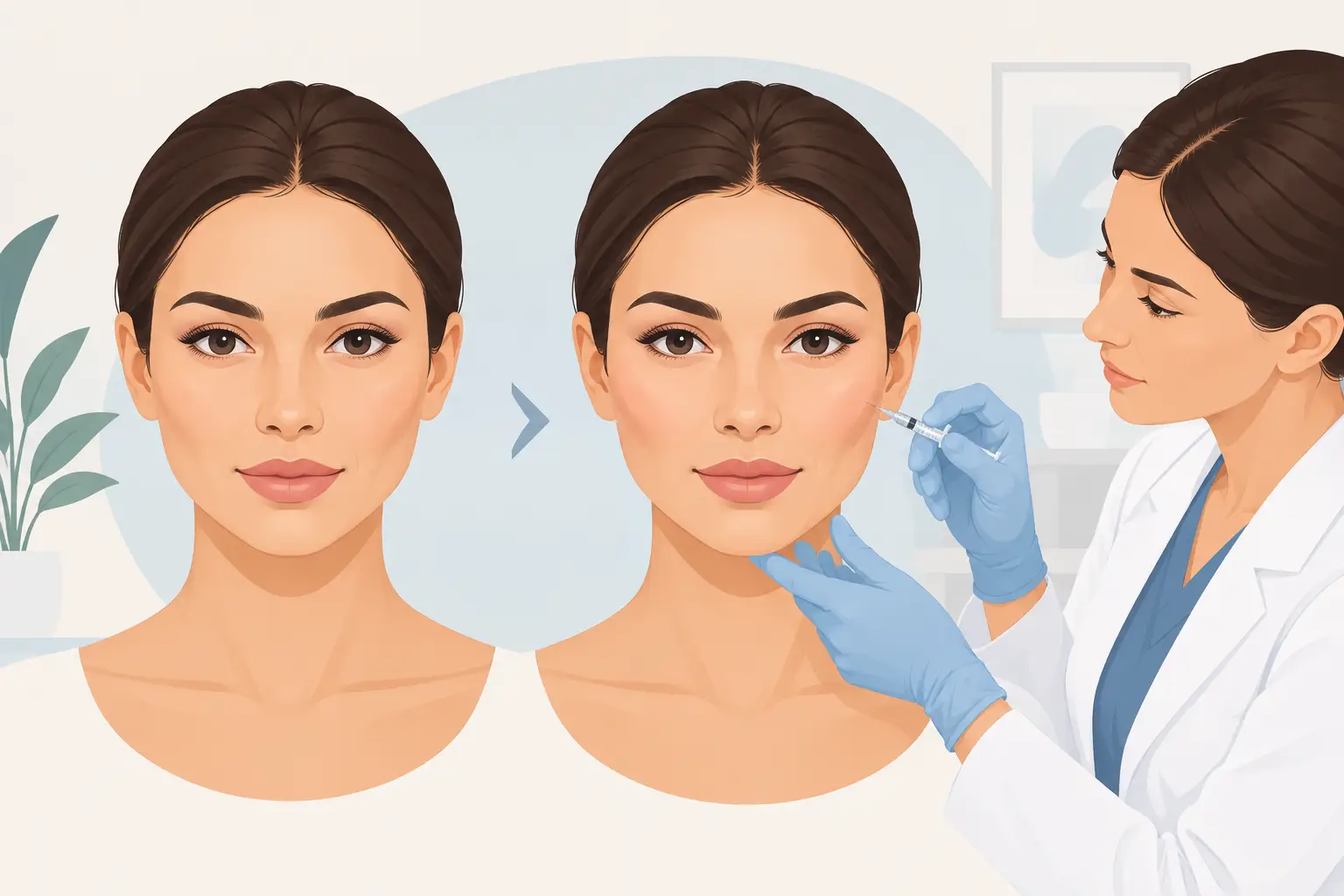
For crow’s feet that appear chiefly when you smile or squint, anti-wrinkle injections are often the most direct non-surgical option. These prescription-only medicines work by temporarily reducing the activity of the specific muscles responsible for pulling the skin into repeated creases. As movement softens, the lines usually become less pronounced.
Treatment is precise, with small amounts placed at selected points around the outer eye area. The aim is not to remove all movement. An experienced practitioner considers the strength of your muscles, the shape of your eyes, eyebrow position and how much expression you wish to retain. Over-treating this area can make an otherwise natural face appear less animated, which is rarely the desired outcome.
Results develop gradually rather than immediately, commonly becoming noticeable over the following days and settling over around two weeks. Effects are temporary, and maintenance appointments are required to sustain them. The exact interval varies from person to person, so it is better to review how your face responds than to follow a rigid timetable.
As with any injectable treatment, there can be temporary redness, swelling, tenderness or bruising at injection points. Less common risks must also be discussed properly before treatment. Choosing a suitably trained medical practitioner, a clinical setting and an individualised plan is essential, not optional.
Improve the skin as well as the movement
Anti-wrinkle treatment can reduce the repeated folding that contributes to crow’s feet, but it does not replace healthy, well-supported skin. When fine lines are visible at rest, a broader skin-quality plan can make a considerable difference to how smooth, luminous and resilient the eye area appears.
Professional skin treatments may be recommended to support hydration, texture and collagen stimulation, depending on the condition of your skin and your downtime preferences. These treatments should be selected conservatively around the eyes. Stronger is not always better, especially when the area is already dry, sensitive or prone to irritation.
A thoughtful home routine matters too. A gentle cleanser, a well-formulated moisturiser and daily broad-spectrum SPF are the foundations. Sunscreen is one of the most valuable long-term habits for preventing lines from becoming more deeply etched, yet it is often overlooked on cloudy commutes and through the winter months. Apply it around the orbital bone with care, and choose a formula you can use consistently without stinging your eyes.
Ingredients such as retinoids, peptides, antioxidants and hyaluronic acid may have a place in a personalised regime. Retinoids can support collagen and improve fine lines over time, but the skin around the eyes can be reactive. Introduce active products slowly, avoid applying too close to the lash line and seek professional advice if you have eczema, sensitivity or are pregnant or breastfeeding.
When filler may, or may not, be appropriate
People sometimes assume dermal filler is the answer to every facial line. Around crow’s feet, that is not usually the starting point. Filling directly into fine expression lines at the outer eye can be unsuitable and may create puffiness or an unnatural look in the wrong candidate.
However, carefully addressing volume loss in adjacent areas such as the temples or mid-face can occasionally improve the overall support and balance of the upper face. This is a more nuanced decision than treating a line in isolation. It requires a detailed facial assessment and an injector with a strong understanding of anatomy.
For some patients, the best outcome comes from combining a conservative anti-wrinkle approach with skin optimisation and, where clinically suitable, subtle structural support elsewhere. For others, injections alone or a focused skincare plan will be enough. The most premium result is not necessarily the most treated result.
Habits that protect the eye area
Aesthetic treatment can be highly effective, but it works best alongside practical prevention. Wear sunglasses with reliable UV protection when outdoors, not merely on summer holidays. They protect delicate skin and reduce habitual squinting. If you find yourself frequently narrowing your eyes to read, drive or use a screen, an up-to-date eye test can also be worthwhile.
Avoid rubbing the eye area, particularly when removing make-up. Use a gentle product, allow it to dissolve make-up before wiping, and pat rather than pull the skin. Smoking accelerates collagen breakdown, while regular sleep, adequate water intake and a nutrient-rich diet all support the skin’s ability to function at its best. None is a substitute for medical aesthetics, but each can influence the quality and longevity of your results.
Be wary of aggressive DIY treatments, unregulated injectables and promises of permanent line removal. The eye area is too delicate for shortcuts. If a product causes burning, persistent redness or flaking, stop using it rather than trying to push through irritation.
Choosing a safe, natural-looking treatment plan
The conversation around crow’s feet should not begin with a syringe or a skincare product. It should begin with what you see, what you would like to change and what a natural result means to you. Some clients want to soften lines before a milestone event; others are interested in preventative treatment that keeps expressions from becoming deeply set. Both goals can be valid, provided the plan is clinically appropriate.
Ask who will carry out your treatment, how suitability is assessed, what product or technique is being recommended and what aftercare is required. You should feel listened to, informed and under no pressure to proceed. A consultation is also the place to discuss realistic outcomes: skin can look smoother and more rested, but it should not be expected to look airbrushed or motionless.
Crow’s feet are not a flaw to erase. With thoughtful skincare, daily protection and tailored medical aesthetic care where appropriate, they can be softened in a way that keeps your face recognisably yours – confident, expressive and well cared for.