

Many people wrongly assume all spas offering cosmetic treatments ensure equal safety and expertise. The reality is starkly different. This guide clarifies the critical distinctions in oversight, qualifications, treatments, and safety between medical and regular spas. By understanding these differences, you’ll make informed decisions about your aesthetic goals in London’s competitive cosmetic treatment landscape.
Table of Contents
- Understanding Medical Spas And Regular Spas
- Regulatory Frameworks And Accreditation In The UK
- Professional Staffing And Qualification Differences
- Treatment Scope And Exclusivity
- Safety And Risk Profiles
- Pricing And Value Perspectives
- Making An Informed Choice: Practical Guidance For London Clients
- Discover Expert Cosmetic Treatments At The Aesthetics Room
Key takeaways
| Point | Details |
|---|---|
| Medical spas operate under strict healthcare regulations, unlike regular spas | CQC accreditation ensures patient safety and clinical standards |
| Only medically qualified professionals perform invasive treatments in medical spas | Doctors and nurses hold medical degrees, unlike non-medical spa therapists |
| Medical spas offer exclusive cosmetic procedures ensuring higher safety | Injectable treatments and laser procedures require clinical supervision |
| Pricing reflects safety, expertise, and treatment complexity differences | Higher costs justify better outcomes and lower complication risks |
| Clients should verify accreditation and practitioner qualifications before booking | Check CQC registration and staff credentials online |
Understanding medical spas and regular spas
Medical spas combine healthcare oversight with aesthetic treatments. These facilities deliver cosmetic procedures requiring medical supervision, from injectable treatments to advanced skin rejuvenation. Regular spas focus on relaxation and wellness through non-medical services like massages, facials, and aromatherapy.
The fundamental distinction lies in treatment intent. Medical spas target measurable aesthetic improvements through clinical interventions. Regular spas prioritise relaxation and temporary wellness benefits.
Client goals differ significantly:
- Medical spa clients seek lasting cosmetic enhancements like wrinkle reduction or facial contouring
- Regular spa clients want stress relief, pampering experiences, and temporary skin refreshment
- Medical spa treatments address specific concerns with medical-grade solutions
- Regular spa services provide general wellness without permanent alterations
For London clients pursuing aesthetic enhancements, understanding these core differences prevents mismatched expectations. Medical spas deliver clinical outcomes. Regular spas offer comfort and temporary beautification.
Regulatory frameworks and accreditation in the UK
The UK healthcare system mandates strict CQC accreditation for medical spas, ensuring patient safety and regulatory compliance. Regular spas operate without such healthcare regulation. This creates a stark safety divide.
Medical spas must meet rigorous standards:
- Care Quality Commission registration and regular inspections
- Documented safety protocols for all invasive procedures
- Mandatory incident reporting and clinical governance frameworks
- Sterile environments meeting healthcare facility requirements
- Patient consent processes aligned with medical ethics
Regular spas face no equivalent healthcare oversight. They operate under general business regulations only. This means no mandatory safety audits, no clinical protocol requirements, and no standardised practitioner qualifications.
Receiving invasive treatments outside regulated environments carries legal and health risks. If complications arise at an unregulated facility, patients have limited recourse. Medical spas maintain insurance and accountability structures protecting clients.
Pro Tip: Before booking any cosmetic treatment, verify CQC registration at cqc.org.uk. Search the provider’s name and confirm their rating. If starting a medical aesthetics clinic, this registration becomes mandatory.
Professional staffing and qualification differences
Medical spa practitioners hold medical degrees or nursing qualifications. Doctors, registered nurses, and physician associates administer treatments requiring clinical expertise. Their training spans years of medical education, anatomy study, and supervised practice.

Regular spa therapists typically complete short beauty therapy courses. These programmes teach massage techniques and skincare basics but exclude medical training. Therapists cannot legally perform invasive procedures without medical supervision.
The qualification gap impacts treatment outcomes profoundly:
- Medical professionals understand facial anatomy, reducing complication risks
- Nurses recognise adverse reactions immediately and respond appropriately
- Medical practitioners follow evidence-based protocols, not beauty trends
- Ongoing medical education keeps practitioners current on safety standards
Client confidence stems from verified credentials. Over 90% of medical spa practitioners hold medical qualifications, unlike regular spas staffed by non-medical personnel. This directly affects safety and treatment efficacy. Medical professionals assess suitability, manage contraindications, and handle emergencies.
Regular spa staff lack training to manage medical complications. A therapist cannot treat an allergic reaction or vascular occlusion. This limitation restricts the treatments they can safely offer.
Treatment scope and exclusivity
Medical spas exclusively provide invasive and semi-invasive procedures. These treatments require clinical supervision and medical-grade products.
Medical spa exclusive treatments:
- Botulinum toxin injections for wrinkle reduction
- Dermal fillers for facial volumisation
- Laser skin resurfacing and hair removal
- Chemical peels at prescription strength
- Fat dissolving injections and body contouring
- Microneedling with medical devices
Regular spa typical services:
- Relaxation massages and body treatments
- Basic facials using cosmetic-grade products
- Manicures, pedicures, and beauty treatments
- Aromatherapy and holistic wellness services
- Hair removal using non-medical methods
| Treatment category | Medical spa | Regular spa |
|---|---|---|
| Injectable treatments | Yes | No |
| Prescription-strength procedures | Yes | No |
| Laser and energy-based devices | Yes | Limited |
| Medical-grade skincare | Yes | No |
| Relaxation services | Optional | Primary focus |
| Clinical consultation required | Always | Rarely |
Some overlap exists in skincare. Both offer facials, but medical spas use clinical formulations with active ingredients at therapeutic concentrations. Regular spas use cosmetic products with gentler, non-prescription formulations.
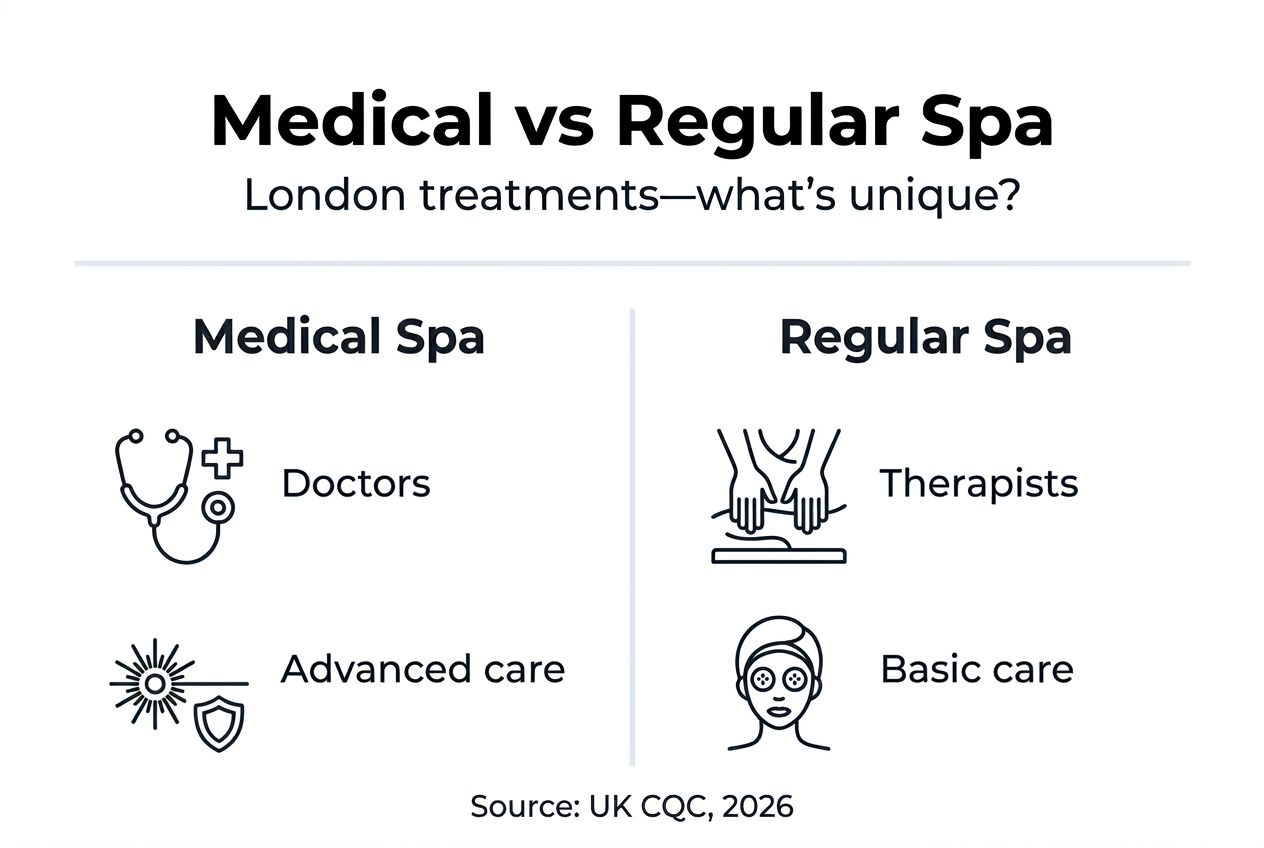
Pro Tip: Choose treatment type based on desired results. For lasting changes like wrinkle elimination or facial reshaping, medical spas offer the only safe, legal option. For relaxation and temporary skin refreshment, regular spas suffice.
Safety and risk profiles
Clinical supervision dramatically reduces treatment complications. Statistics reveal the safety gap between spa types.
Complication rates for injectable treatments reach under 1% in medical spas but climb to 10% in unregulated environments. This tenfold difference stems from inadequate training, non-sterile conditions, and inappropriate product sourcing.
Medical spas implement rigorous safety measures:
- Sterile single-use needles and clinical waste disposal
- Pre-treatment health assessments and contraindication screening
- Informed consent processes documenting risks and benefits
- Emergency protocols and resuscitation equipment on site
- Post-treatment monitoring and follow-up care
- Adverse event reporting to regulatory bodies
Regular spas lack these protections. Without medical oversight, complications escalate quickly. Infections, scarring, and allergic reactions require immediate medical intervention unavailable at beauty facilities.
“The difference between medical and non-medical environments is night and day. Medical spas prioritise patient safety through clinical protocols, whilst unregulated providers focus on profit margins. This distinction saves lives and prevents disfigurement.”
Hygiene standards differ fundamentally. Medical spas follow hospital-grade sterilisation protocols. Regular spas use basic cleaning methods insufficient for invasive procedures.
Clients should expect comprehensive safety measures. Safe cosmetic procedures require medical-grade environments, qualified practitioners, and regulatory oversight.
Pricing and value perspectives
Medical spa treatments cost more than regular spa services. This price difference reflects genuine value, not marketing.
Typical price comparisons for London:
- Botox at medical spas: £200 to £400 per area
- Botox at regular spas: £80 to £150 per area
- Dermal fillers at medical spas: £300 to £600 per syringe
- Basic facials at medical spas: £150 to £250
- Basic facials at regular spas: £60 to £100
Factors justifying higher medical spa pricing:
- Medical practitioners’ expertise and training costs
- CQC compliance and insurance requirements
- Clinical-grade equipment and sterile environments
- Pharmaceutical-grade products with proven efficacy
- Comprehensive consultations and aftercare support
Lower regular spa prices attract budget-conscious clients. However, these savings come with substantial risks. Using unqualified practitioners or non-medical products compromises results and safety. Correcting complications often costs far more than choosing proper treatment initially.
Evaluate value through outcomes, not just price. Medical spas deliver lasting results with minimal complications. Regular spas offer temporary benefits without medical safety nets.
Smart clients invest in quality. A properly administered filler lasts 12 to 18 months with natural-looking results. A poorly placed injection at a discount facility causes lumps, asymmetry, or worse, requiring expensive correction.
Making an informed choice: practical guidance for London clients
Selecting the right spa requires due diligence. Follow this verification checklist:
- Confirm CQC registration on the official website
- Review practitioner qualifications and medical training
- Examine before-and-after photos demonstrating expertise
- Read independent client testimonials and reviews
- Schedule consultations to assess professionalism
- Verify insurance coverage and complaint procedures
Key questions to ask providers:
- What medical qualifications do your practitioners hold?
- Can I see your CQC inspection reports?
- Which products and brands do you use?
- What happens if complications arise?
- Do you provide detailed aftercare instructions?
- What is your policy on treatment corrections?
Red flags signalling unsafe providers:
- Reluctance to share credentials or registration details
- Pressure to book treatments without proper consultation
- Prices significantly below market rates
- Unclear or evasive answers about safety protocols
- Absence of visible medical equipment or sterile environments
- Social media marketing prioritising discounts over safety
Review client testimonials critically. Look for mentions of safety, professionalism, and results longevity. Ignore generic praise focusing only on facility décor.
Pro Tip: Always consult directly with the medical practitioner performing your treatment before booking. This conversation reveals their expertise and approach. Safe cosmetic procedures require personalised assessment, not assembly-line service.
Discover expert cosmetic treatments at The Aesthetics Room
Choosing where to receive aesthetic treatments matters profoundly. The Aesthetics Room combines medical expertise with luxurious care in London’s Knightsbridge. Our CQC-registered clinic ensures every treatment meets the highest safety standards.
Our medical practitioners hold verified qualifications, delivering Botox treatments and dermal fillers with precision and artistry. We prioritise your safety through comprehensive consultations, clinical protocols, and personalised care plans. Book a consultation at The Aesthetics Room to experience the difference medical expertise makes in achieving your aesthetic goals.
Frequently asked questions
What is the main difference between medical spas and regular spas?
Medical spas are regulated healthcare facilities offering invasive and semi-invasive cosmetic treatments supervised by medical professionals. Regular spas focus on relaxation and non-invasive wellness services. This impacts safety, treatment efficacy, and legal compliance significantly.
Are medical spa practitioners always medically qualified?
Yes, medical spa practitioners usually have medical degrees or nursing qualifications to ensure safe administration of aesthetic treatments. Regular spa therapists typically lack formal medical qualifications, limiting the treatments they can legally and safely perform.
Why are treatments at medical spas often more expensive?
Higher prices at medical spas reflect medical expertise, stricter safety standards, and use of advanced clinical equipment. These factors contribute to better outcomes and lower complication risks compared to regular spas, justifying the investment.
How can I verify if a medical spa is properly accredited in the UK?
Check if the spa is registered and accredited by the Care Quality Commission via their official online registry at cqc.org.uk. Ask the spa for credentials of their medical staff and confirm their safety practices through documentation and consultation.
Recommended
- Skin rejuvenation benefits: expert guide for Londoners – The Aesthetics Room
- Ensure safety in cosmetic procedures London 2026 – The Aesthetics Room
- Safe Cosmetic Procedures London 2026: 95% Satisfaction – The Aesthetics Room
- Top 6 Non-Surgical Face Lifts in 2026 for Londoners Seeking Gentle Rejuvenation and Safety – The Aesthetics Room