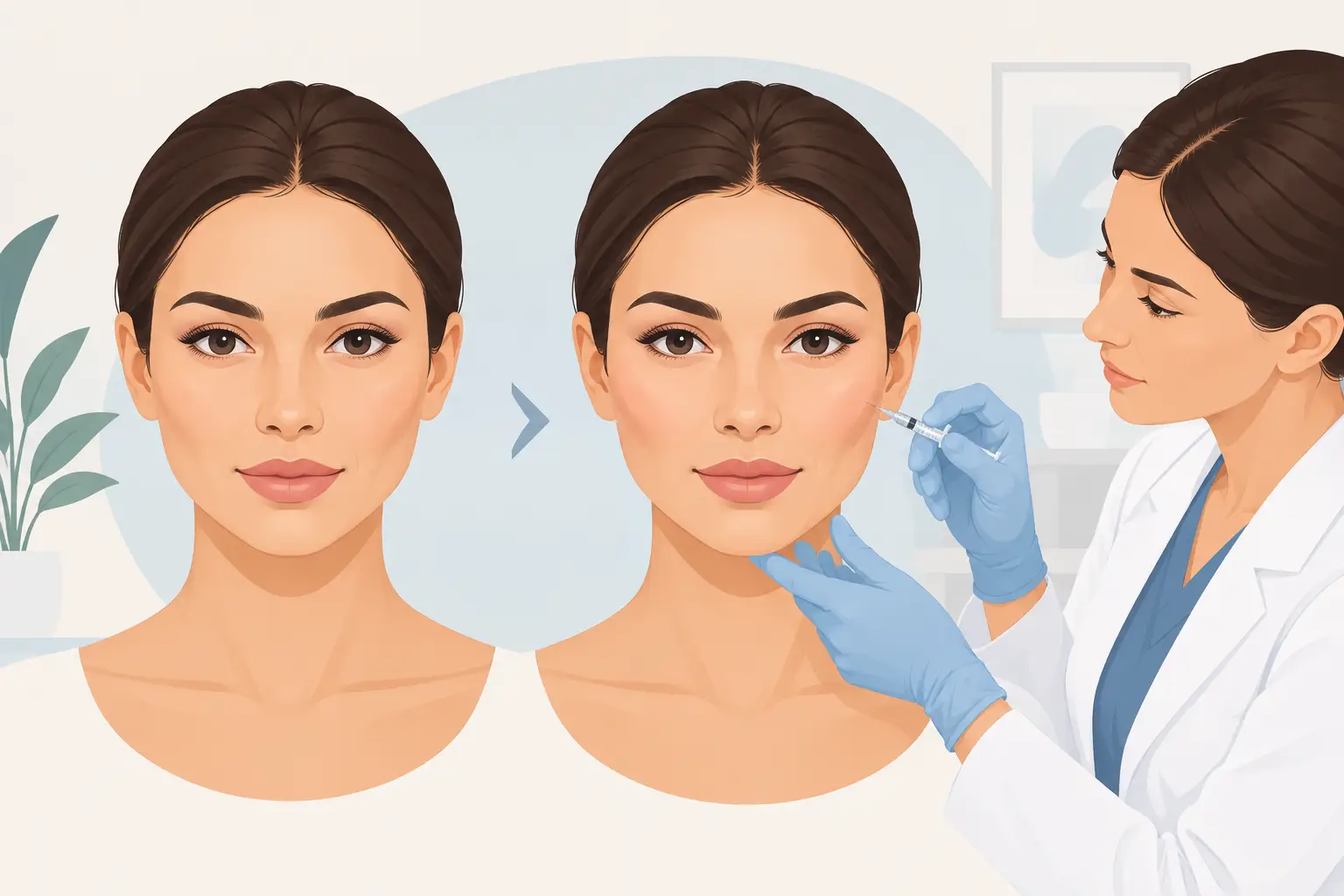


TL;DR:
- Persistent dark circles often require personalized, evidence-based treatments that address their underlying causes.
- Matching treatment modalities to specific factors such as volume loss, pigmentation, or vascular issues yields better results.
- A thorough clinical diagnosis, combination protocols, and realistic expectations are essential for effective, long-lasting improvement.
Persistent dark circles are one of the most frustrating cosmetic concerns for adults in London. You can get a full night’s sleep, drink plenty of water, and apply every concealer the beauty industry offers, yet those shadows remain stubbornly visible. Modern cosmetic science has moved far beyond quick fixes, however, offering highly personalised, evidence-backed treatments that target the actual root cause of your dark circles rather than simply masking them. This guide walks you through everything you need to know, from understanding why they form to selecting the most effective clinic treatments available today.
Table of Contents
- Understanding the causes of dark circles
- What you need before starting treatment
- Step-by-step: most effective evidence-based treatments
- Troubleshooting: common mistakes and how to avoid them
- Verifying results: what to expect and when to review
- Why personalised combination treatments work best for dark circles
- Your premium dark circle treatment: next steps
- Frequently asked questions
Key Takeaways
| Point | Details |
|---|---|
| Tailored treatments are critical | Match therapies to the specific cause for best dark circle results. |
| Combination approaches work best | Evidence shows layered treatments in clinics achieve superior outcomes. |
| Expect gradual improvement | Most notice progress over weeks, with full results and satisfaction after several sessions. |
| Consult an expert first | A qualified practitioner will identify your unique needs and ensure safe, effective care. |
Understanding the causes of dark circles
Once we appreciate how widespread dark circles are, it becomes clear that a single solution will never serve everyone equally. Before considering any treatment, understanding the underlying cause is the most important step you can take.
Dark circles develop through several distinct biological pathways, and this is precisely why they respond so differently to the same treatment. The major contributors include:
- Genetic predisposition and ethnicity. People with deeper skin tones often experience periorbital hyperpigmentation more intensely due to higher melanin activity in the skin around the eyes.
- Volume loss. As we age, fat pads beneath the eye diminish and the skin loses collagen, creating a hollow or sunken appearance that casts a shadow.
- Vascular causes. Thin under-eye skin can allow blue or purple blood vessels to show through, giving the area a bruised appearance.
- Pigmentation changes. Sun exposure, inflammation, and hormonal fluctuations can trigger excess melanin production specifically in the periorbital zone.
- Lifestyle factors. Chronic fatigue, alcohol, and dehydration temporarily worsen all of the above.
What makes this so clinically significant is that treatment success depends on matching the approach to the specific aetiology rather than applying a one-size-fits-all method. Evidence actually favours combination therapies over single monotherapies. Many Londoners spend years layering on dark circles evidence that simply does not address their actual cause. That is where expert clinical diagnosis becomes invaluable.
What you need before starting treatment
With the underlying causes in mind, being well-prepared sets the foundation for the most effective results. Jumping straight into treatment without proper groundwork is one of the most common mistakes we see, and it often leads to disappointment.
Before committing to any cosmetic treatment, consider the following checklist:
- Book a consultation with a fully qualified aesthetic practitioner who can diagnose your specific dark circle type.
- Be transparent about your medical history, medications, and previous cosmetic treatments.
- Ask your practitioner whether a combination approach is suitable for your presentation.
- Discuss realistic downtime expectations and understand that some treatments require a series of sessions.
- Request to see before-and-after photographs specific to your skin tone and concern.
The table below outlines how different dark circle types typically respond to common clinic treatments:
| Dark circle type | Recommended first-line treatment | Typical downtime | Sessions needed |
|---|---|---|---|
| Volume loss | Tear trough filler or fat injections | 1 to 5 days | 1 to 2 |
| Pigmentation | Laser, chemical peel, or topical agents | 3 to 7 days | 2 to 6 |
| Vascular | Nd:YAG laser or carboxytherapy | 1 to 3 days | 3 to 6 |
| Mixed aetiology | Combination protocol | Varies | Multiple |
Research confirms that combinations over monotherapy consistently deliver superior clinical results, particularly when the approach is matched carefully to the individual’s aetiology. A practitioner who insists on a single treatment without assessing the cause of your dark circles should prompt caution.
Pro Tip: Photograph your under-eye area in natural daylight before your consultation. This helps your practitioner accurately assess the degree of shadowing, colour, and volume loss, and it gives you a useful baseline to compare against your results later.

Step-by-step: most effective evidence-based treatments
With preparation done, you are ready to start the actual process. Here is how to approach evidence-based treatments methodically, moving from the most targeted to the most innovative protocols available.
-
Assess your aetiology first. No treatment plan should begin without a clinical diagnosis. Your practitioner should examine the colour, texture, and structural characteristics of your dark circles before recommending anything.
-
Address volume loss with fillers or autologous fat. A tear trough filler guide can help you understand how hyaluronic acid injections restore lost volume, smooth the tear trough, and reduce shadowing almost immediately. A systematic review across 39 studies identified fillers and autologous fat injections as the best-evidenced treatment for volume-related dark circles.
-
Target pigment and vascular issues with lasers or chemical peels. Fractional lasers, Q-switched Nd:YAG lasers, and superficial chemical peels can break up melanin deposits and reduce the appearance of underlying blood vessels. These treatments show moderate efficacy when matched to the correct presentation.
-
Consider carboxytherapy or PRP. A meta-analysis drawing on 31 studies and 1,257 patients found that carboxytherapy delivers good improvement (greater than 50% reduction) in approximately 50% of cases and excellent improvement (greater than 75% reduction) in 26% of cases. Platelet-rich plasma (PRP) shows comparable outcomes. You can explore a detailed PRP facial for dark circles breakdown to see how this regenerative approach stimulates collagen and improves skin quality over time.
-
Explore emerging protocols. A pilot study using cysteamine-isobionic amide complex found that 83% of participants (from a group of seven) experienced measurable improvement in periorbital pigmentation. Early data is promising, and this is one to watch as larger trials progress.
-
Commit to a combination strategy. A hyaluronic acid combination injection protocol achieved a 39% reduction in pigmentation and a remarkable 96.7% patient satisfaction rate among 120 participants. These figures illustrate what is achievable when treatments are thoughtfully layered.
| Treatment | Best for | Evidence strength | Typical improvement |
|---|---|---|---|
| Tear trough filler | Volume loss | Strong (39-study review) | Immediate to 2 weeks |
| Carboxytherapy | Vascular, pigment | Strong (31 studies, n=1,257) | 50% good, 26% excellent |
| PRP | Overall skin quality | Moderate to strong | Progressive over sessions |
| Laser/peels | Pigmentation, vascular | Moderate | Variable by skin type |
| Cysteamine-isobionic amide | Pigmentation | Emerging (pilot study) | 83% improved |
Pro Tip: Ask your practitioner about sequential combination protocols rather than simultaneous treatments. Spacing out modalities often allows skin to recover fully between sessions, which typically produces smoother, more natural-looking results.
Troubleshooting: common mistakes and how to avoid them
Even with the right evidence-based treatment, avoiding mistakes ensures your results live up to your expectations and remain long-lasting.
The most frequent pitfalls we observe among clients who have had previous unsatisfactory experiences include:
- Relying exclusively on DIY remedies. Cold spoons, cucumber slices, and caffeine eye creams can temporarily depuff the skin but they address none of the structural or pigmentary causes. No at-home product replicates the precision of a clinical injectable or laser.
- Choosing a practitioner based on price alone. The under-eye area is delicate and vascular-rich, making technical precision non-negotiable. Always verify qualifications, CQC registration, and patient safety affiliations before proceeding.
- Neglecting aftercare. Swelling, bruising, and temporary asymmetry after injectables are normal, but proper aftercare accelerates recovery and protects your investment. Read detailed under-eye filler aftercare tips to understand what the post-treatment period involves.
- Expecting one session to resolve everything. Most evidence-based protocols require multiple sessions, especially for pigmentation and vascular causes. Patience is part of the treatment plan.
- Skipping review appointments. Dark circles are a dynamic concern. Volume changes, pigmentation shifts, and lifestyle factors mean that maintenance reviews are essential to sustain results.
“There is no universal solution for periorbital hyperpigmentation. The most clinically effective approach combines treatments matched to the aetiology, with evidence consistently favouring combination protocols over any single modality.”
Understanding and accepting these realities upfront protects you from disappointment and sets you on a realistic path to brighter, refreshed eyes.
Verifying results: what to expect and when to review
After taking action, tracking your results and knowing what to expect helps you gauge progress and maintain confidence in the process.
Here is a practical timeline for reviewing different treatment outcomes:
-
Days 1 to 7 post-treatment. Initial swelling or bruising resolves. Early softening of shadows may be visible, particularly after filler. Avoid heavy exercise, sun exposure, and alcohol during this window.
-
Weeks 2 to 4. The full result of injectable treatments becomes visible as swelling fully subsides and filler integrates with surrounding tissue. Pigment-targeting treatments may show the first signs of lightening.
-
Months 1 to 3. PRP and carboxytherapy results continue to build as collagen production is stimulated and circulation improves. Multiple sessions within this window are common and expected.
-
Months 3 to 6. Combination protocols reach their peak effectiveness. This is typically when clinical photography comparisons are most striking. Hyaluronate combination injection protocols demonstrated meaningful results at this stage, with a 39% pigmentation reduction and 96.7% patient satisfaction across a 120-participant cohort.
-
Six months onwards. Book a review appointment to assess whether maintenance is needed. Most filler-based treatments last between 6 and 18 months, depending on the product used and your individual metabolism. Review your tear trough filler results with your practitioner to determine the optimal timing for top-up sessions.
Signs that your treatment is working include a visibly lighter under-eye area in natural daylight, reduced shadowing, improved skin texture, and a more rested overall appearance. If you see no change after the expected timeframe, return to your practitioner for a reassessment rather than abandoning the treatment pathway entirely.
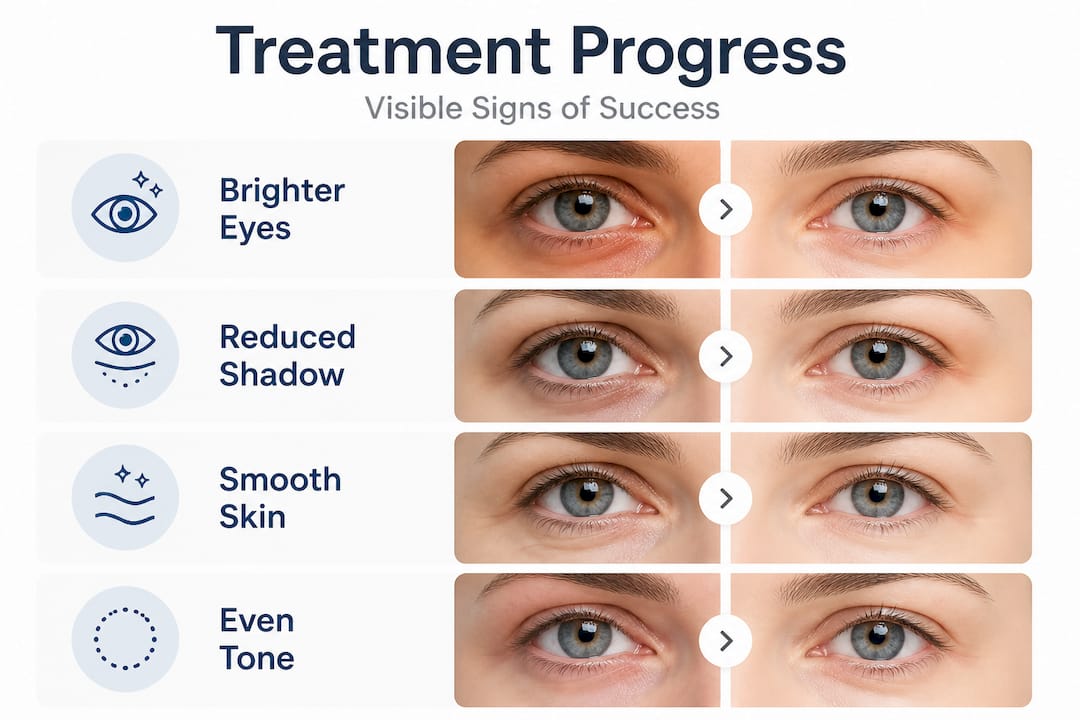
Pro Tip: Keep a weekly photo diary in consistent lighting conditions. Progress in the under-eye area is often gradual and can be easy to miss day to day. A visual record makes it far easier to appreciate cumulative improvements over months.
Why personalised combination treatments work best for dark circles
With a full understanding of how and when results manifest, it is worth considering something that many clinics still hesitate to emphasise: no single treatment will ever address every type of dark circle, and this is not a limitation to be embarrassed about. It is simply the biology.
We have seen clients arrive at The Aesthetics Room after years of pursuing individual treatments, each recommended confidently as “the answer.” Topical brighteners for what was actually a volume issue. Fillers alone for a presentation that also carried significant pigmentation. Each intervention was technically sound in isolation, but the outcome disappointed because the approach was incomplete.
The evidence is unambiguous on this point. Combination approaches outperform monotherapy when treatments are carefully matched to the individual’s aetiology. This is not simply a clinical observation. It is a practical framework that shapes how we design treatment plans for our clients.
For Londoners specifically, the advantages of a bespoke approach are particularly relevant. Urban life, stress, irregular sleep patterns, and the diversity of skin tones across London’s population mean that standardised protocols rarely deliver optimal outcomes. A tailored plan that layers, for example, a tear trough filler to restore volume, carboxytherapy to address vascular shadowing, and a targeted topical alongside, will consistently outperform any single intervention. The additional benefit is that layering treatments thoughtfully often reduces the intensity of each individual session, meaning less downtime and a more natural progression of results.
If a clinic cannot articulate why they are recommending a specific treatment for your specific type of dark circles, that is a meaningful warning sign. Personalisation is not a luxury in this space. It is a clinical necessity. Explore bespoke filler treatments as part of a broader conversation with your practitioner about the right combination for your concerns.
Your premium dark circle treatment: next steps
Having learned what works and why, here is how you can experience the benefits with help from London’s trusted experts.
At The Aesthetics Room, we design every dark circle treatment plan around your individual presentation, skin tone, and lifestyle. Whether you need Dermal Fillers to restore lost volume under the eyes, advanced laser or carboxytherapy to address pigmentation and vascular shadowing, or a carefully sequenced combination protocol, our practitioners combine clinical precision with a genuinely personalised approach.

Our Knightsbridge clinic is CQC-accredited and a member of the ACE Group, so you can be confident that safety and quality underpin every consultation. We also offer a skin rejuvenation guide to help you understand how complementary skin treatments can enhance and extend your results. Book a one-to-one consultation with our team today, and take the first step towards brighter, refreshed eyes.
Frequently asked questions
How long do dark circle treatments last?
Most filler and advanced skin treatments last between 6 and 18 months before top-up sessions are needed, depending on the treatment used and individual factors such as metabolism and lifestyle.
Are dark circle injections safe?
Injectables are clinically safe when performed by qualified practitioners, with studies reporting 96.7% satisfaction and minimal side effects in cohorts receiving hyaluronate combination injections.
Can home remedies get rid of dark circles permanently?
No at-home remedy has demonstrated lasting results for the majority of people. Combination clinic therapies consistently outperform topical products for meaningful, sustained improvement.
What is the best treatment for genetic dark circles?
Tailored clinic solutions are typically recommended, as treatment success hinges on matching the approach to the specific cause. Fillers and advanced skin modalities are often combined following expert clinical assessment.
Does laser treatment help with under-eye dark circles?
Laser treatments can meaningfully reduce pigment and vascular-based dark circles, though lasers and peels show moderate efficacy and should always be matched to your specific presentation by a qualified aesthetic expert.
Recommended
- Tear Trough Filler: Revitalising Under-Eye Hollows Safely – The Aesthetics Room
- Pigmentation treatments explained: evidence, options and results – The Aesthetics Room
- Tear Trough Filler: Restoring Youthful Under-Eye Volume – The Aesthetics Room
- Skin rejuvenation tips: Advanced London treatments for radiant results – The Aesthetics Room