
Glutathione IV drips offer limited, largely temporary cosmetic benefit and carry documented safety risks, including anaphylaxis and organ strain, particularly when given outside medically regulated settings. The clinical evidence for reliable skin brightening is inconsistent at best. If you’re considering one, the priority is choosing a medically led clinic that screens you properly before any needle goes near your arm.
TL;DR:
- Glutathione IV treatments provide only modest and short-lived cosmetic benefits, with inconsistent evidence for skin brightening and no established safety protocols.
- Serious safety risks include allergic reactions, infections, and organ strain, especially when administered in unregulated environments without proper screening or sterile procedures.
- Proper clinics should conduct thorough assessments, use verifiable products, and have emergency measures; low prices often indicate compromised safety standards.
- Individuals with specific health conditions, pregnant women, and those without proper screening should avoid glutathione IV therapy outside specialized medical settings.
- Choosing a clinic with official registration, trained staff, full transparency, and comprehensive patient monitoring significantly reduces risks.
Table of Contents
- What is a glutathione IV drip and why do clinics offer it?
- What are the risks of glutathione IV therapy?
- How is glutathione given, and what should a safe clinic do?
- How much does a glutathione drip cost and what should the price include?
- Who shouldn’t have IV glutathione therapy?
- What does a medically led, safety-conscious clinic look like?
- Is glutathione IV therapy worth it?
- The gap between the marketing and the evidence is the real story
- How Theaestheticsroom approaches IV vitamin therapy
- Sources
- FAQ
What is a glutathione IV drip and why do clinics offer it?
Glutathione is a naturally occurring antioxidant made from three amino acids, produced in your liver and found in every cell in your body. It helps neutralise free radicals and supports your liver’s detoxification processes, which is the biological fact that underpins most of the marketing around glutathione IV therapy.
The theory behind intravenous glutathione for cosmetic use runs like this: infusing high doses directly into the bloodstream bypasses digestion, delivering more of the compound to tissues than an oral supplement could. Clinics promoting glutathione infusion therapy typically claim it can:
- Brighten and even out skin tone
- Reduce the appearance of pigmentation and dark spots
- Support antioxidant defences against ageing
- Assist general detoxification
The rationale sounds plausible, but the clinical picture is messier than the marketing suggests. A 2025 clinical review found limited and inconsistent evidence that intravenous glutathione produces reliable, long-term skin-lightening effects, with reported benefits often minimal or short-lived once treatment stops. That same review noted that long-term safety and optimal dosing for cosmetic indications have not been properly established.
Glutathione IV benefits, in other words, tend to be modest and temporary rather than dramatic and lasting. That’s a meaningful gap between what’s advertised on a clinic’s Instagram page and what the PMC review on glutathione efficacy actually documents.
What are the risks of glutathione IV therapy?
The safety conversation around glutathione infusion has moved well beyond theoretical caution. UK trading standards bodies issued a public warning in 2025 specifically about glutathione IV drips marketed for skin whitening, citing serious adverse events tied to unregulated provision.
Reported harms from that warning and related reporting include:
- Anaphylaxis and severe allergic reactions
- Bloodstream infections from poor sterile technique
- Kidney and liver strain from unverified or excessive dosing
- Hospital admissions linked to salon-based or online-sourced vials
Trading standards officers found glutathione IV drips being sold and administered in settings with no medical oversight, no baseline screening, and vials sourced online with no verifiable quality control. Cases reviewed included anaphylaxis, infections, and organ strain serious enough to require hospital treatment.
The CTSI public warning on glutathione IV drips makes a point worth repeating clearly: intravenous glutathione is not licensed for cosmetic use in the UK, and there are no standardised dosing protocols for this indication. That absence of standardisation is exactly why outcomes and risk vary so widely between providers. Follow-up investigative reporting on the cosmetic drip sector prompted further calls from consumer-safety bodies for tighter oversight, describing much of the market as effectively unregulated in cosmetic settings outside clinical medicine.
Wider medical commentary reinforces the caution. Clinical voices interviewed by the BBC have noted that IV vitamin infusions for otherwise healthy people rarely have strong medical justification, since the body excretes much of what’s infused, meaning the risk-to-benefit ratio can tip unfavourably fast when procedure and screening standards slip.
How is glutathione given, and what should a safe clinic do?
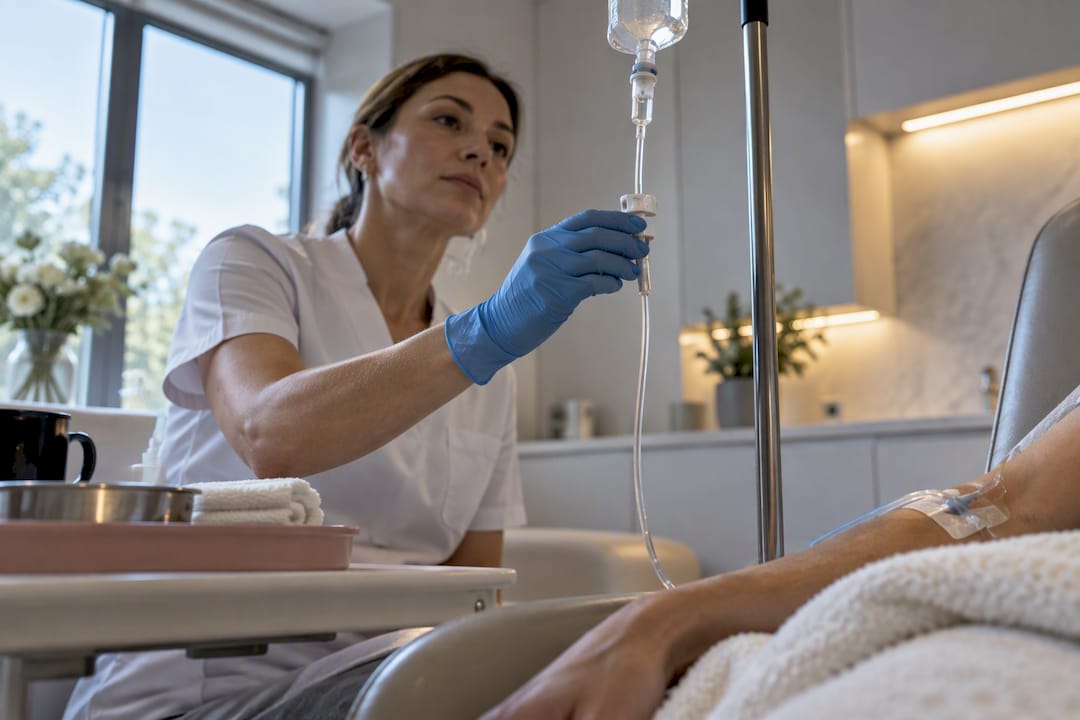
There are two administration routes: IV push, where the dose is injected manually over a few minutes, and IV drip infusion, where it’s delivered gradually via a drip bag over 20 to 60 minutes. Drip infusion allows closer monitoring for adverse reactions as they emerge, which is why medically led clinics tend to favour it over rapid push administration for cosmetic use.
Dose and product origin matter enormously. Because there’s no standardised cosmetic dosing protocol, mg amounts vary widely between providers, and vials sourced without verifiable manufacturing standards carry unknown purity risks.
A properly run clinic visit should follow a consistent sequence:
- A pre-assessment consultation covering your medical history and expectations
- Baseline blood tests where clinically indicated
- Cannulation performed by a trained professional in a clean clinical environment
- Monitoring throughout the infusion for signs of reaction
- A post-infusion observation period before you leave
Pro Tip: Ask your provider exactly how many milligrams are in your infusion and where the product is sourced from. If they can’t answer both questions confidently, that’s a reason to walk away.
How much does a glutathione drip cost and what should the price include?
Glutathione drip pricing in the UK varies by dose, clinic standards, and what’s bundled into the appointment. Reported clinic price ranges for IV drip treatments generally show dose-dependent variation, and price alone tells you very little about safety.
An unusually cheap quote is a warning sign, not a bargain. It often means a lower or unverified dose, no proper screening, or corners cut on sterile technique and qualified staffing. A reasonable price should include:
- A qualified consultation and screening beforehand
- Administration by a trained, medically supervised professional
- A sterile clinical environment with proper equipment
- Some form of aftercare or monitoring guidance
Before booking, ask each clinic the same set of questions: what’s the mg dose, where does the product come from, who is administering it, and what happens if you have a reaction. Comparing answers, not just prices, is how you actually judge quality.
Who shouldn’t have IV glutathione therapy?
Certain groups face materially higher risk from glutathione infusion and should avoid it outside specialist medical advice. These include pregnant women, anyone with active liver or kidney disease, people with severe atopic or allergic conditions, and those with known hypersensitivity to the compound or its formulation.
Baseline renal and liver function checks, alongside a supervised observation period after infusion, are the minimum safeguards a responsible provider should apply. Hospital-style infusion protocols involving these checks and at least 30 minutes of post-infusion observation reduce the risk of a missed adverse reaction compared with informal salon provision.
Red flags to walk away from immediately:
- No screening questions or blood tests offered
- No visible emergency medicines or resuscitation kit on site
- No written records of dose, batch, or consent
What does a medically led, safety-conscious clinic look like?
A genuinely safety-conscious provider is easy to check against a short list: CQC registration, medically trained staff, written informed consent, baseline testing where relevant, an emergency kit on site, and a proper post-infusion observation window.
| What to check | Why it matters |
|---|---|
| CQC registration | Independent verification of care standards |
| Medically trained staff | Reduces risk of missed complications |
| Written consent process | Confirms you understand risks beforehand |
| Baseline testing | Screens out high-risk patients before treatment |
| Emergency kit on site | Covers the rare but serious reaction |
Theaestheticsroom is CQC accredited and holds ACE Group membership, both markers built around this exact kind of patient-safety standard. When booking anywhere, ask directly: are you CQC registered, who administers the infusion, and what’s your protocol if something goes wrong?
Is glutathione IV therapy worth it?
Glutathione infusion may be reasonable within a medically led, properly screened setting, for someone who understands the evidence is modest and accepts the (small but real) procedural risk. Outside that setting, in a salon with no screening and no emergency provision, the risk-to-benefit balance tips firmly against it.
If your goal is genuinely brighter, more even skin, licensed alternatives often deliver more predictable results: medical-grade topical actives, dermatology-reviewed procedures such as chemical peels, and consistent sun protection all have stronger evidence behind them than IV glutathione does. Before booking any IV treatment, ask for proof of screening, product provenance, and CQC status. If a provider can’t produce all three, that answer alone tells you what you need to know.
The gap between the marketing and the evidence is the real story
The uncomfortable truth about glutathione IV drips is that the clinical case for skin brightening was never as strong as the aesthetic industry’s marketing implied. That’s not a reason to panic about anyone who’s had one, but it is a reason to be sceptical of before-and-after photos presented as proof rather than anecdote.
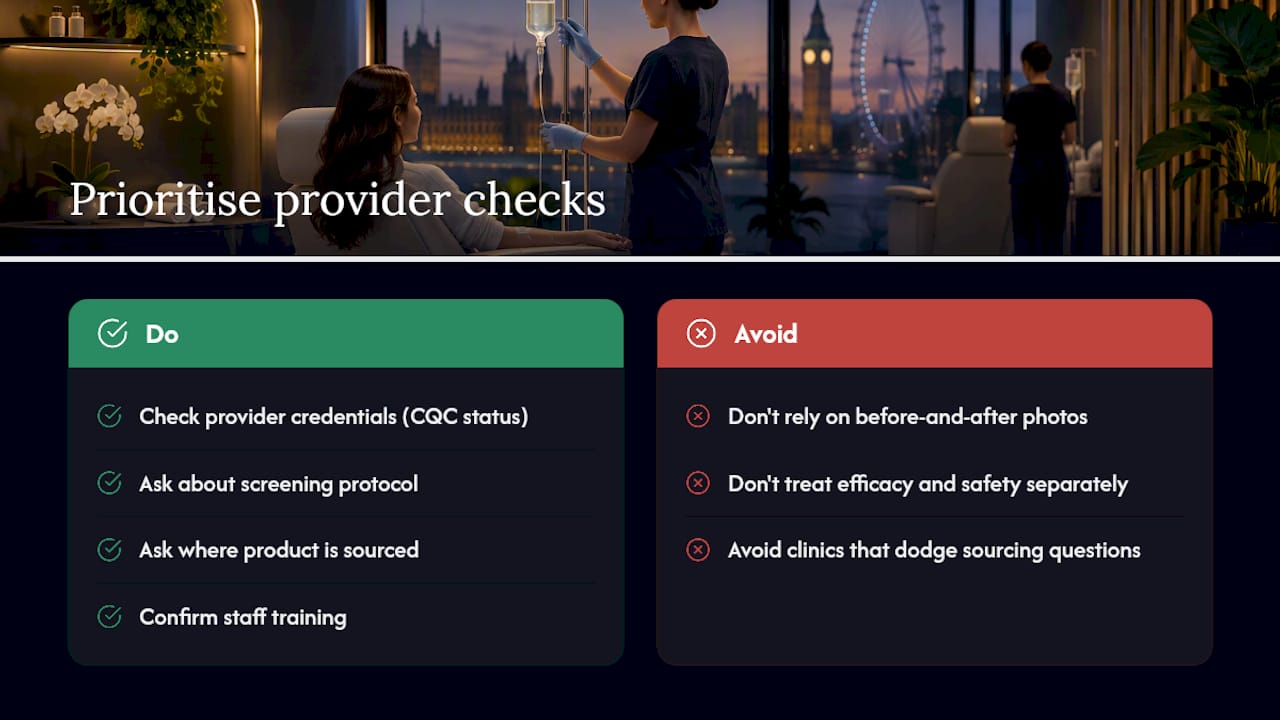
Where conventional advice falls short is in treating “does it work” and “is it safe” as separate questions. They’re not. A treatment with modest, inconsistent benefit only becomes reasonable to consider once the safety side is airtight, which is exactly why screening, sourcing, and staff training matter more here than in almost any other cosmetic treatment on offer.
My honest read: prioritise the provider’s credentials before you even ask about the treatment itself. A clinic that’s comfortable discussing its screening protocol, CQC status, and product sourcing without being asked twice is telling you something. One that changes the subject to before-and-after photos is telling you something too.
— Vishul
How Theaestheticsroom approaches IV vitamin therapy
A medically led clinic is a safer alternative to unregulated salon provision for anyone considering IV therapy in London. Every consultation starts with proper screening and informed consent rather than a rushed sales pitch.

As a CQC accredited clinic and member of the ACE Group dedicated to patient safety, Theaestheticsroom builds its IV therapy service around the same standards this article has laid out: bespoke assessment, transparent product information, and treatment delivered by trained professionals across its Knightsbridge, Harley Street, and Mayfair locations. Consultations include a full screening conversation, written consent, and a bespoke plan built around individual health history rather than a generic protocol.
The clinic also declines requests judged unsafe, reflecting the standards that evidence suggests are necessary. If you’d like to discuss your options with a medically led team, view the full price list and book a consultation to start with a proper assessment.
Sources
This article draws on the PMC clinical review of glutathione efficacy, the CTSI trading standards warning, NHS SPS infusion safety guidance, and MHRA Yellow Card reporting for adverse events.
This article is general information, not a substitute for advice from a qualified doctor. Consult a qualified healthcare professional about your own circumstances before acting on anything here.
- PMC article (2025) review on glutathione efficacy
- CTSI public warning on glutathione IV drips (2025)
- NHS SPS: minimising risks associated with administration of injectable iron
- BBC coverage: Is it really worth injecting vitamins?
FAQ
What does a glutathione IV drip do?
It delivers a high dose of the antioxidant glutathione directly into your bloodstream, with claimed effects including skin brightening and reduced pigmentation. A 2025 clinical review found the evidence for lasting cosmetic benefit is inconsistent, and effects often fade once treatment stops.
What are the bad side effects of glutathione IV drips?
Documented harms include anaphylaxis, bloodstream infections, and kidney or liver strain, particularly when administered outside a regulated clinical setting. UK trading standards bodies have warned specifically about these risks linked to unregulated salon provision.
How much does a glutathione drip cost in the UK?
Pricing varies by dose, product source, and clinic standards, and it isn’t listed as a standard treatment on Theaestheticsroom’s current price list. Treat unusually cheap quotes as a warning sign rather than a bargain, since low prices often mean reduced screening or unverified product sourcing.
How quickly does IV glutathione work, and does it last?
Any perceived brightening effect, where reported at all, tends to appear gradually over repeated sessions rather than after a single drip. Clinical evidence suggests benefits are often minimal and temporary, fading once treatment is discontinued, so there’s no reliable “quick fix” timeline to point to.
How do I check if a clinic offering glutathione IV drips is safe?
Ask directly about CQC registration, staff medical training, baseline screening, and what emergency provision they have on site. A provider that hesitates on any of these questions, or can’t confirm product sourcing and dose, has not met the minimum safety standard that regulators and clinical guidance expect.