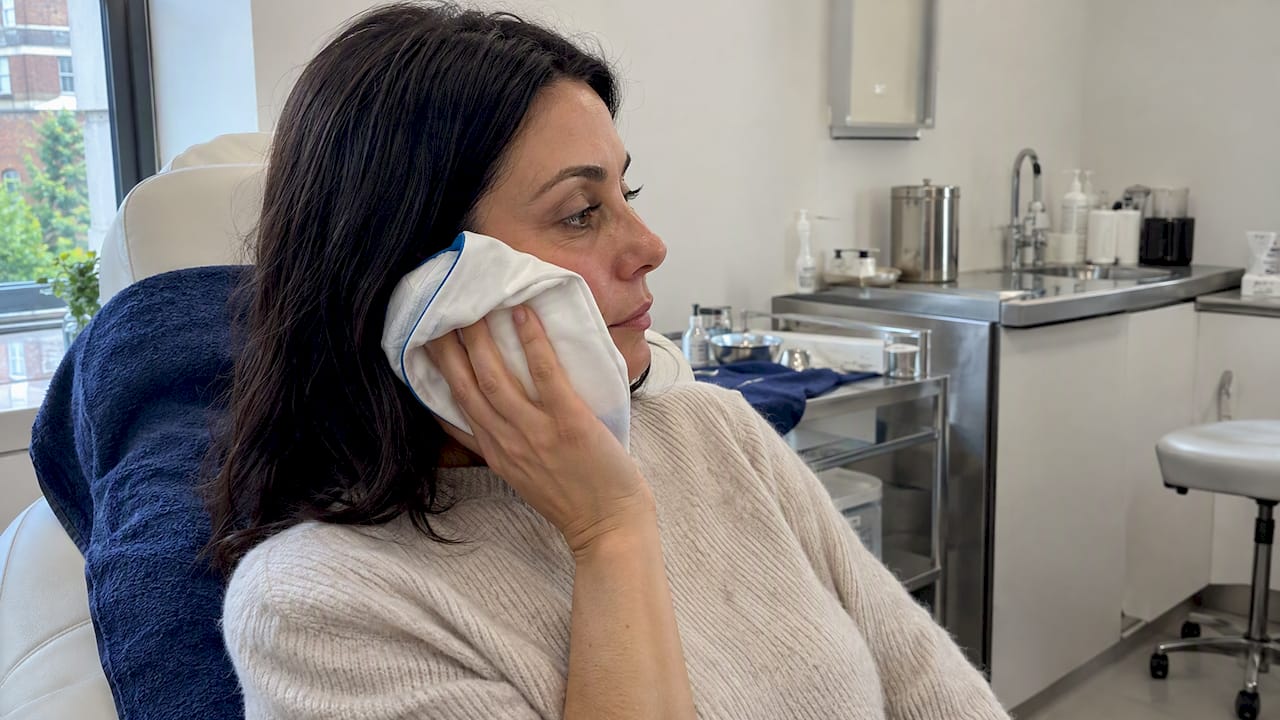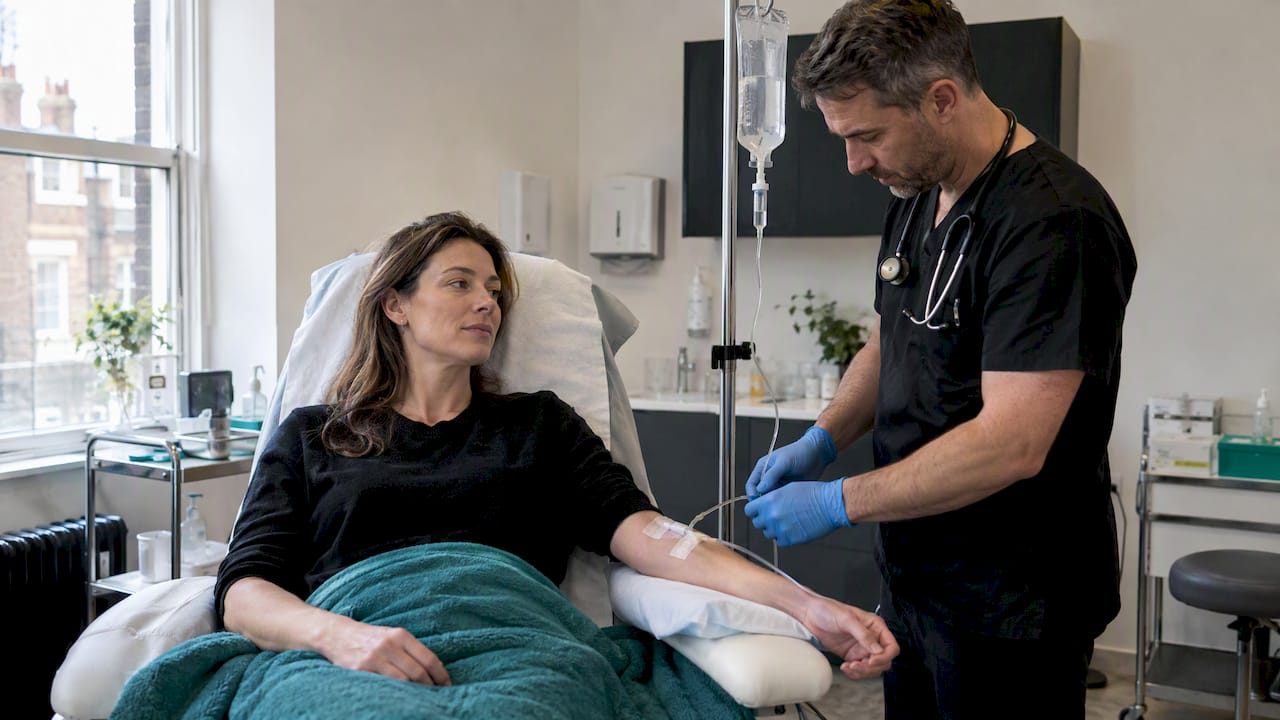


At Theaestheticsroom, every treatment follows a clinic hygiene protocol aligned with Care Quality Commission (CQC) standards and ACE Group infection-control guidance. You can expect documented procedures, trained practitioners, and visible safety measures from the moment you arrive. Three trust signals confirm this at a glance:
- CQC registration, verifiable online via the CQC’s public register
- Published infection-control policy, available on request before you book
- Temperature monitoring logs for refrigerated medicines, kept on-site and auditable
The CQC inspects cleanliness, equipment, record-keeping, and staff training. A clinic that is registered and maintains current inspection reports is demonstrating daily compliance, not just a one-time tick-box exercise.
Key takeaways
A CQC-registered clinic following ACE Group infection-control guidance provides patients with verifiable, documented safety at every stage of their treatment.
| Point | Details |
|---|---|
| CQC registration is verifiable | Search the CQC’s public register by provider name and read the “Safe” domain rating in the inspection report. |
| Visible hygiene steps confirm safe practice | Expect hand hygiene, fresh gloves, sealed single-use items, and surface disinfection between every patient. |
| Consultation must precede payment | NHS guidance states: do not pay until you have had a consultation with the person carrying out your procedure. |
| Temperature and audit logs are patient-facing | You can request fridge temperature logs, cleaning schedules, and training records from any compliant clinic. |
| Theaestheticsroom is CQC-registered and ACE Group-governed | Policies, logs, and practitioner credentials are maintained as live documents and available on request. |
Table of Contents
- What you will see when you arrive and during your treatment
- What CQC registration actually means for you as a patient
- What a proper consultation must include before any treatment
- A checklist of what you should see during the treatment itself
- How medicines and clinical waste are handled safely
- Aftercare instructions and warning signs to act on immediately
- How staff training, audits, and daily logs protect you
- Questions to ask before you book any treatment
- How cross-contamination is prevented during multi-patient sessions
- Why air quality matters in a treatment environment
- How often inspections happen beyond initial registration
- How clinics maintain hygiene standards during outbreaks
- Safety culture is the standard, not the exception
- Book a consultation at Theaestheticsroom
- Sources
What you will see when you arrive and during your treatment
Visible hygiene measures begin at reception. Hand sanitiser stations are positioned at entry points, seating is arranged to allow appropriate spacing, and signage confirms the clinic’s infection-control commitments.
Inside the treatment room, the ACE Group infection-control guideline shapes every step:
- Treatment couches and chairs are wiped down between patients using 70% alcohol solution
- Single-use items (syringes, needles, cannulas) are opened in front of you from sealed sterile packaging
- Practitioners follow bare-below-elbow practice: no wrist jewellery, short clean nails, no watches
- Fresh single-use sterile gloves are worn for any procedure that breaches the skin
- Reusable devices carry visible service or calibration stickers confirming maintenance dates
Pro Tip: Ask to see the vial label before any injectable treatment. A legitimate clinic will show you the product name, batch number, and expiry date without hesitation.
What CQC registration actually means for you as a patient
The CQC is England’s independent regulator for health and social care. Registration is not optional for clinics providing certain regulated activities, and it carries real consequences: a clinic that fails inspection can be required to improve or, in serious cases, be closed.
The CQC Fundamental Standards most relevant to your safety are:
- Regulation 12 (Safe care and treatment): requires clinics to assess and manage infection risk, use appropriate PPE, and handle medicines safely
- Regulation 15 (Premises and equipment): requires premises to be clean, properly maintained, and fit for purpose
To verify a clinic’s registration, visit the CQC’s website, search by provider name or location, and read the most recent inspection report. The report’s “Safe” domain rating tells you directly what inspectors found about hygiene, medicines management, and staffing.
Pro Tip: Look for the date of the most recent inspection. A report older than three years without a follow-up visit warrants a direct question to the clinic.
What a proper consultation must include before any treatment
NHS guidance is clear: book a consultation with the person who will carry out your procedure and do not pay until you have had that consultation. A professional pre-treatment consultation covers:
- Full medical history, including current medications and known allergies
- Discussion of the specific treatment, expected results, and realistic limitations
- Explanation of risks, potential side effects, and how they are managed
- Aftercare instructions and what to do if something goes wrong
- Time to ask questions, with no pressure to proceed immediately
For invasive procedures, a cooling-off period between consultation and treatment is good practice. Verbal agreement at the payment terminal is not valid informed consent. You should receive a written consent form to review, sign, and keep a copy of.
Pro Tip: Request a copy of your consent form and consultation notes. A clinic that hesitates to provide these is worth reconsidering.
A checklist of what you should see during the treatment itself
Before the first injection or device contact, run through this mentally:
- Practitioner washes hands or uses surgical hand rub in your presence
- Fresh gloves applied after hand hygiene, not instead of it
- Sterile syringe and needle opened from sealed packaging in front of you
- Skin at the treatment site cleaned with an antiseptic wipe before injection
- Vial label visible: product name, batch number, expiry date confirmed
For prescription-only medicines (POMs) such as botulinum toxin, ask who is prescribing and whether a Patient Group Direction (PGD) or named prescriber covers the treatment. This is a legal requirement, not a formality.
How medicines and clinical waste are handled safely
Refrigerated medicines, including botulinum toxin, are stored in locked, temperature-monitored fridges. Temperature logs record readings at least twice daily; any excursion outside the required range triggers a documented response and, where necessary, product disposal.
Clinical waste is handled under strict segregation rules:
- Sharps bins are yellow, puncture-resistant, and labelled with the clinic’s details and fill date
- Bins are collected by a licensed clinical waste contractor, never placed in general waste
- Used vials, contaminated consumables, and PPE are segregated from non-clinical waste
Documents you can request to see include a recent temperature log extract, the sharps bin label, and evidence of the waste contractor’s licence. The CQC inspection checklist confirms that inspectors look for exactly these records, so a well-run clinic keeps them readily accessible.
Aftercare instructions and warning signs to act on immediately
After injectables or skin procedures, the clinic will provide written aftercare. For the first day or two, keep the treated area clean, avoid touching it unnecessarily, and follow any product-specific guidance given by your practitioner. A detailed dermal filler aftercare guide covers the specifics for injectable treatments.
Contact the clinic immediately if you notice:
- Increasing redness, warmth, or swelling beyond the first 48 hours
- Skin that looks pale, mottled, or has a bluish tinge near the injection site
- Severe or worsening pain disproportionate to the procedure
- Signs of allergic reaction: hives, difficulty breathing, facial swelling
For vascular occlusion or anaphylaxis, call 999. For concerns that are urgent but not immediately life-threatening, NHS 111 is available 24 hours a day. The clinic should provide a direct contact number for post-treatment queries and respond within a clearly stated timeframe.
Pro Tip: Save the clinic’s aftercare contact number in your phone before you leave the appointment.
How staff training, audits, and daily logs protect you
Mandatory training for practitioners at a CQC-registered clinic typically includes infection prevention and control, basic life support (BLS), anaphylaxis management, and equipment safety. Training records are kept on file and updated regularly.
Ongoing audits and logs that a well-run clinic maintains include:
- Daily cleaning schedules with staff sign-off
- Twice-daily fridge temperature records
- Equipment servicing and calibration logs
- Incident and near-miss reports with documented follow-up
The CQC can carry out unannounced inspections as well as announced ones, which means compliant clinics maintain these records every day, not just before a scheduled visit. You can ask to see a recent audit summary or training certificate; a transparent clinic will not refuse.
Questions to ask before you book any treatment
Asking the right questions before booking is the single most effective way to verify a clinic’s standards. Use this list:
- Are you CQC-registered? (Ask for the provider registration number to check online.)
- Who will prescribe and administer my treatment?
- Can I see your infection-control policy before I attend?
- What is your process if I have a complication after treatment?
- Will I receive a written consent form before the procedure begins?
Acceptable answers are specific and confident. Red flags include vague responses about “following guidelines” without naming them, reluctance to share the prescriber’s name, or pressure to book and pay before a consultation. Reviewing how to prepare for fillers safely gives you a fuller picture of what a responsible pre-treatment process looks like.
Pro Tip: Email your questions before booking. A clinic’s written response is a record you can refer back to.
How cross-contamination is prevented during multi-patient sessions
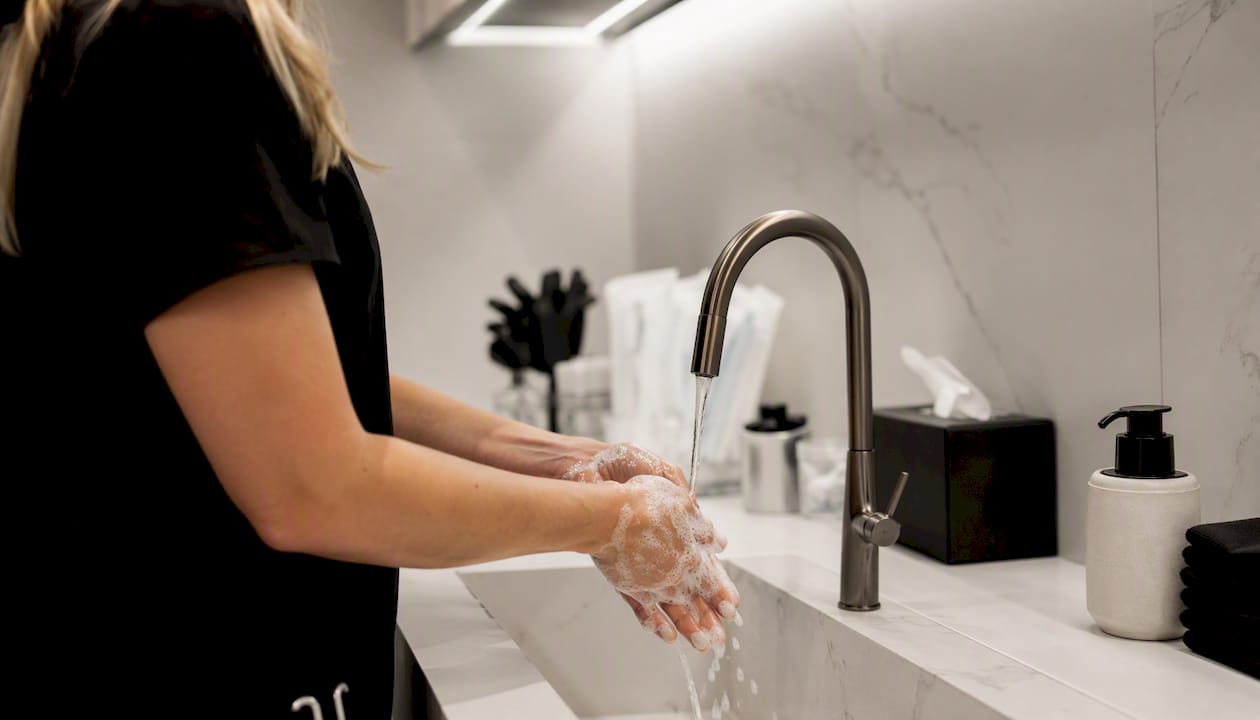
When a clinic treats multiple patients in a day, the risk of cross-contamination is managed through strict zoning and single-use discipline. Practitioners change gloves and perform hand hygiene between patients, not just between sessions. Shared equipment such as dermoscopes or ultrasound probes is either single-use or disinfected with a validated wipe protocol between uses.
Why air quality matters in a treatment environment
Ventilation and air quality are part of the premises standard under CQC Regulation 15. Treatment rooms should have adequate fresh air exchange, either through mechanical ventilation or controlled natural airflow, to reduce the concentration of airborne particles. In rooms where procedures generate aerosols or fine particulates, HEPA-filtered air purifiers provide an additional layer of protection. Theaestheticsroom’s Knightsbridge, Harley Street and Mayfair locations are maintained to these standards, with ventilation arrangements reviewed as part of routine premises management.
How often inspections happen beyond initial registration
CQC registration is not a one-time event. After initial registration, the CQC schedules monitoring activity based on a clinic’s risk profile, previous inspection outcomes, and any concerns raised by patients or staff. Announced inspections typically give at least two weeks’ notice, but the CQC also conducts unannounced visits where concerns exist. Between formal inspections, clinics are expected to submit notifications of significant events and respond to any information requests. Patients can submit concerns directly to the CQC at any time, and these are factored into the regulator’s ongoing risk assessment for that provider.
How clinics maintain hygiene standards during outbreaks
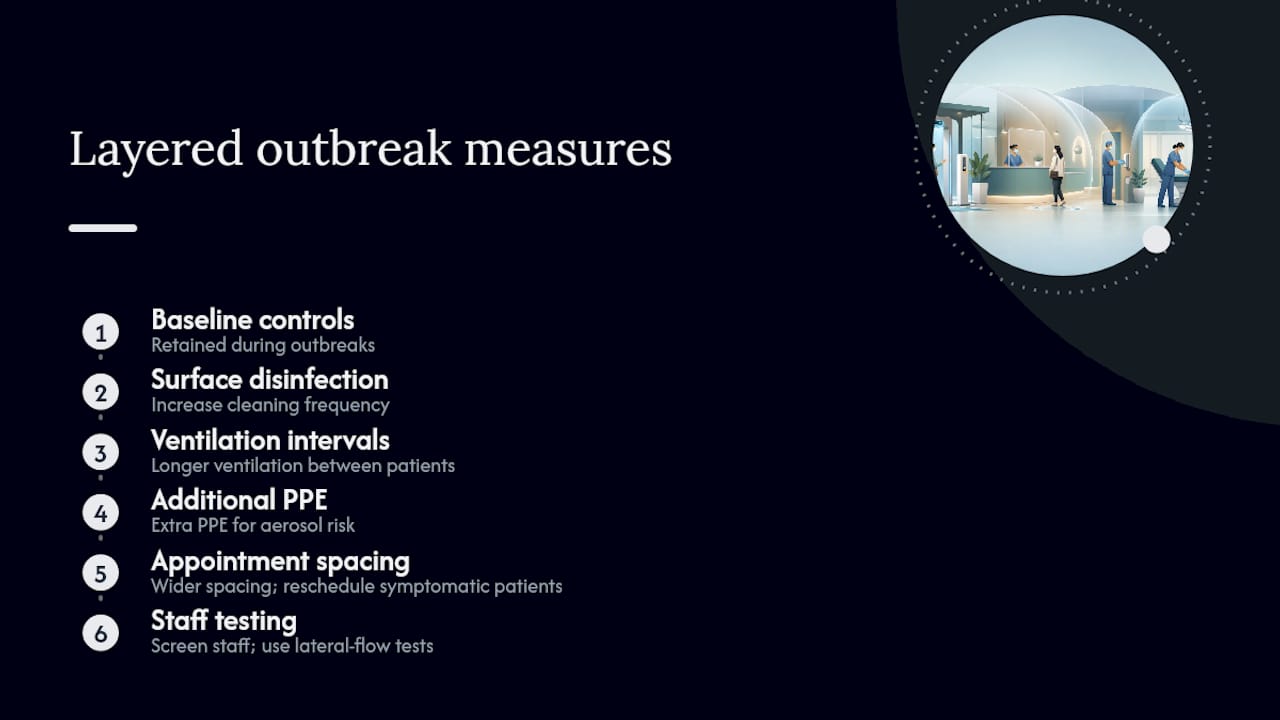
During periods of heightened infection risk, such as a respiratory virus outbreak, well-governed clinics layer additional controls on top of their standard protocols. These typically include enhanced surface disinfection frequency, extended ventilation periods between patients, and additional PPE where aerosol risk is elevated. Appointment spacing is increased to reduce waiting-area density, and patients with active symptoms are rescheduled. Staff screening and lateral flow testing may be introduced during high-prevalence periods. The underlying principle is that standard infection-control procedures provide the baseline, and outbreak protocols amplify specific elements of that baseline rather than replacing it.
Safety culture is the standard, not the exception
Hygiene compliance is not something we treat as a background administrative task. At Theaestheticsroom, CQC registration and ACE Group membership represent a genuine commitment to the governance structures that keep patients safe. Our published infection-control policy, temperature logs, and staff training records are maintained as live documents, not inspection-day preparations. If you want to review our policies or discuss our safety measures before booking, we welcome that conversation. It is exactly the kind of question a well-informed patient should ask.
Book a consultation at Theaestheticsroom

Theaestheticsroom offers Botox and dermal filler treatments across our Knightsbridge, Harley Street, and Mayfair locations, each delivered within a CQC-registered, ACE Group-governed environment. Every consultation covers your medical history, treatment plan, and aftercare in full before any procedure begins. No payment is taken before your consultation, and written consent is obtained and retained for every treatment. To book an in-person or virtual consultation, visit Theaestheticsroom or call the clinic directly. Our team is ready to answer any hygiene or safety question before you commit to a single appointment.
Sources
The sources below underpin the guidance in this article. Use them to verify claims independently or read further on specific topics.
- Choosing who will do your cosmetic procedure – NHS
- CQC inspection checklist for aesthetic clinics
- ACE Group infection control guideline (PDF)