
Botox is a prescription-only medicine in the UK. It can only be prescribed after a consultation with a healthcare professional such as a doctor or nurse, and since 1 June 2025 the prescriber has to assess you face to face first. Who holds the syringe on the day is a separate question, and that is where most of the confusion starts. This guide explains both, so you know what a safe appointment looks like before you book.
TL;DR
- Botulinum toxin (the active ingredient in Botox and similar brands) is a prescription-only medicine. A prescriber must authorise it for you personally.
- A face-to-face assessment is required before prescribing for a cosmetic procedure. Remote prescribing by nurse and midwife prescribers is not allowed, and doctors must carry out a physical examination.
- Prescribing and injecting are different roles. A prescriber can delegate the injection, but stays responsible for your care.
- Retreatment after three months needs a fresh in-person assessment, not a repeat of an old prescription.
- Check your practitioner’s registration, the clinic’s regulation and who the prescriber is before you pay a deposit.
Table of Contents
- What the law says about Botox
- Who can prescribe Botox in the UK
- The face-to-face rule: what changed in June 2025
- Prescribing is not the same as injecting
- Do the rules differ across the UK?
- How to check who is treating you
- Perspective: why we put the assessment first
- Botox safety: symptoms that need urgent help
- IV therapy: risks and the questions to ask
- How retreatment works under the rules
- Red flags that a clinic is not following the rules
- Book an assessment with our prescribers
- FAQ
- Sources
What the law says about Botox
Botulinum toxin is classed as a prescription-only medicine (POM). The NHS states that it can only be prescribed after a consultation with a healthcare professional such as a doctor or nurse. That is the core rule, and it applies whether the treatment is for wrinkles, jaw tension, sweating or anything else.
Two things follow from it:
- The prescription is personal. It is written for you, after an assessment of you. A vial cannot be prescribed in bulk and used on whoever walks in.
- Advertising is restricted. The JCCP code of practice says practitioners must not allow an organisation they work for, represent or own to advertise prescription-only medicines to the public. This is why well-run clinics talk about “anti-wrinkle treatment” on their pages and explain the medicine in the consultation.
Dermal fillers are different. They are generally regulated as medical devices rather than prescription medicines, so the prescribing rules in this article are about Botox and similar toxin products. Hyaluronidase, the enzyme used to dissolve filler, is a prescription medicine and follows the same prescriber rules.
Who can prescribe Botox in the UK
Prescribing is restricted to registered healthcare professionals with prescribing rights. In practice, in aesthetics, that means:
- Doctors, registered with the General Medical Council (GMC).
- Dentists, registered with the General Dental Council, within the scope of their practice.
- Nurse independent prescribers, registered with the Nursing and Midwifery Council (NMC), who have completed an approved prescribing qualification.
- Pharmacist independent prescribers, registered with the General Pharmaceutical Council.
A beauty therapist, a non-medical aesthetician or someone who has completed a weekend injecting course cannot prescribe Botox, however good their technique. They would need a prescriber to assess you and prescribe for you.
A nurse who is not a prescriber is in the same position as any other non-prescribing injector: they can only work within a lawful prescribing arrangement set up by someone who is.
The face-to-face rule: what changed in June 2025
For years, some clinics worked on a model where a prescriber signed off a prescription from a distance, often without meeting the patient. The professional bodies have now closed that route.
The joint advisory notice from BAMAN and the JCCP, effective 1 June 2025, sets out the position:
- A face-to-face assessment is required before prescribing a medicine for a cosmetic procedure, and it should include a medical, physical and psychosocial history.
- NMC nurse and midwife prescribers must not prescribe remotely, and each new prescribing episode needs a new assessment.
- Repeat prescribing, including retreatment after three months, requires a new in-person assessment.
The NMC’s own guidance for prescribers, effective 1 June 2025, defines cosmetic procedures broadly. The definition covers injecting a substance, applying a substance capable of penetrating the epidermis, inserting needles into the skin, placing threads under the skin, and applying light, electricity, cold or heat. So the rule reaches well beyond Botox.
The GMC takes the same line for doctors. Its guidance says that doctors prescribing injectable cosmetic medicines such as Botox must carry out a physical examination of the patient.
What this means for you as a patient
- A questionnaire filled in on a website, or a video call where the prescriber never examines you, is not a lawful basis for a Botox prescription.
- A virtual conversation can still be useful for planning, discussing goals and understanding what is possible. The prescribing assessment itself has to happen in person. We explain how the two fit together in virtual vs in-person consultation.
- If you return for a top-up, expect to be assessed again. That is the system working, not the clinic being fussy.
Prescribing is not the same as injecting
This is the point that surprises most people. The person who prescribes your Botox does not always inject it.
The GMC explains that a doctor may delegate administration, but remains responsible for overall patient management and must be satisfied that the person providing care has appropriate qualifications, skills and experience. Delegation is therefore allowed, but it is not a loophole: the prescriber answers for the outcome.
This is why you will see two common set-ups in UK clinics:
| Set-up | Who assesses and prescribes | Who injects |
|---|---|---|
| Prescriber treats directly | The doctor, dentist or nurse or pharmacist prescriber | The same person |
| Prescriber delegates | A prescriber, after meeting you in person | A trained practitioner working under that prescriber’s responsibility |
Both can be safe when the prescriber genuinely examines you and the injector is properly trained and supervised. Neither is safe when the prescriber is a name on paper.
Note also that the law on prescribing is not the same as the law on who may inject. Anyone can currently carry out the injection itself in England without a licence, which is why a prescriber’s involvement and a practitioner’s training matter so much to you.
Do the rules differ across the UK?
The prescription-only status of Botox and the professional regulators’ standards apply across the UK. The NMC, GMC and GPhC regulate their registrants in all four nations.
What differs is the wider regulation of the sector. Healthcare regulation is devolved, so Scotland, Wales and Northern Ireland have their own arrangements for registering and inspecting independent clinics. In England, the government has the legal power to introduce a licensing scheme for non-surgical cosmetic procedures, but you should treat any scheme as separate from the prescribing rules above and check the official government page for what is in force at the time you book. Do not rely on a clinic’s claim that a “new licence” makes a practitioner safe: ask who prescribes and how they will assess you.
How to check who is treating you
The NHS advises that you can check that clinics providing cosmetic surgery in England are CQC-registered, and that non-surgical practitioners are on a voluntary register such as JCCP or Save Face, or a relevant association such as BAMAN.
Before you book, ask these questions:
- Who is the prescriber? Get a name and a professional registration number, then check it on the GMC, NMC, GDC or GPhC register.
- Will the prescriber see me in person? The answer should be yes, before any treatment.
- Who will inject, and what is their training? Ask about their experience with the specific area you want treated.
- What is the plan if something goes wrong? A clinic should be able to explain how it handles complications and who is on call.
- Which product will you use? It should be a product licensed for use in the UK. Some products are licensed in other countries but are unlicensed medicines in the UK, which brings additional prescribing responsibilities and is a reason to ask.
- Will I get written aftercare? Good clinics also explain what is normal afterwards, such as when it is safe to exercise and when to wear makeup.
The price is a signal too. A very low per-area price with no consultation suggests corners being cut on the assessment, not a bargain.
Perspective: why we put the assessment first
We built our clinic around one principle: the consultation is part of the treatment, not a formality before it.
At The Aesthetics Room, our treatments are performed by medically trained professionals, and we are CQC-registered and members of the ACE Group, which is dedicated to patient safety. For us, that means a proper assessment of your history, your skin, your goals and your expectations before any prescription-only medicine is discussed.
We favour bespoke plans over standard menus. Two people can ask for the same forehead lines and need very different dosing, placement and timing. A face-to-face assessment is how a prescriber sees that, and it is how natural results start.
If you are comparing clinics, we would encourage you to choose the one that asks you the most questions at the first appointment, not the fewest.
Vishul
Botox safety: symptoms that need urgent help
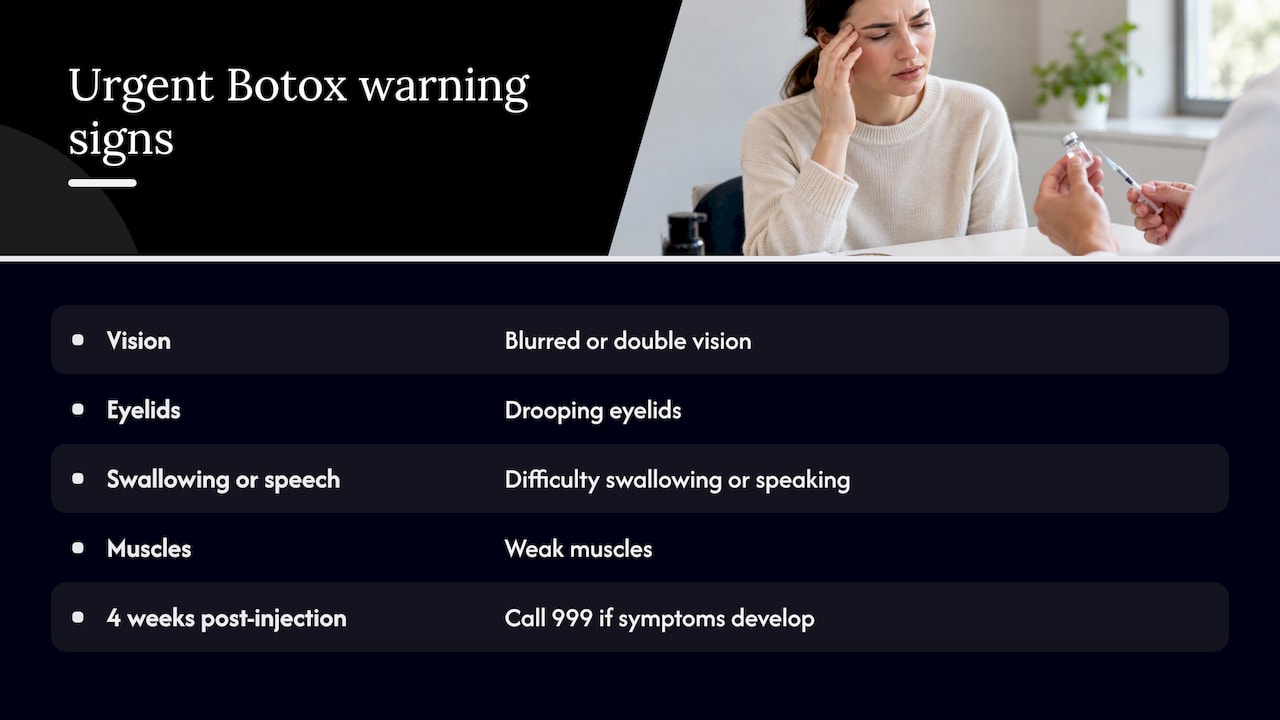
Serious problems after Botox are rare, but you should know the warning signs. The NHS describes botulism as rare but serious, potentially life-threatening and needing immediate hospital treatment.
The NHS advises you to call 999 if you have had a botulinum toxin injection in the past four weeks and develop symptoms such as blurred or double vision, drooping eyelids, difficulty swallowing or speaking, or weak muscles. Do not wait to see whether it passes, and do not drive yourself.
For ordinary aftereffects such as small bumps at injection sites, mild redness or a slight headache, your clinic’s aftercare sheet is the first reference. Our guide to reducing post-treatment swelling safely covers the everyday side.
IV therapy: risks and the questions to ask
Readers who research prescribing rules often look at IV therapy next, so here is the position in brief. IV drips are not governed in the same way as Botox, which makes it more important for you to ask questions.
Which? reports that IV therapy can cause infection, tissue damage, nutrient imbalances, interactions with medicines, allergic reactions and, less commonly, anaphylaxis. It adds that some ingredients can be dangerous at high doses, particularly for people with kidney or heart problems. The same piece quotes a professor of pharmacy who says oversight and monitoring can vary widely between providers because the drips are not regulated as medicines.
On evidence, the Drug and Therapeutics Bulletin says high-dose vitamin infusions lack high-quality evidence of benefit without a specific deficiency or medical condition. The Advertising Standards Authority expects claims to rest on robust evidence of clinically significant outcomes that are relevant to the claimed benefits. NHS England’s medical director criticised marketing of drips to healthy people, calling it exploitative.
Safe use looks like this:
- A medical history and, where relevant, blood tests before anything is infused. Our wellness blood test guide explains what that involves.
- A named clinician who is accountable for the plan.
- Honest, specific claims rather than promises of detox or immunity.
- Clear pricing. Our IV drip cost guide explains what you pay and why.
Tell the clinician about kidney, heart or allergy history and every medicine you take before an IV session.
How retreatment works under the rules
Because each prescribing episode needs its own in-person assessment, a “top-up” is not a repeat order. The BAMAN and JCCP notice specifically names retreatment after three months as requiring a new in-person assessment.
In practice, this suits good care. Your face changes with expression habits, weight, medication and the effect of earlier doses. A prescriber who sees you again can adjust the dose, change the sites or recommend waiting. If you want to plan your timings around an event, read our Botox maintenance schedule and our advice on Botox before a wedding.
Red flags that a clinic is not following the rules
- It offers Botox by post, by courier or after an online form only.
- You cannot find out who the prescriber is.
- The practitioner will not tell you the product name or batch.
- You are pushed to pay a deposit or buy a package on the day of a first consultation.
- Treatment is offered at a party, in a home or at a pop-up with no medical history taken.
- Prices are far below those of comparable clinics.
If you have already had a treatment and are unsure about how it was arranged, you can report concerns to the relevant regulator of the prescriber or practitioner, and your GP can advise on any health worries.
Book an assessment with our prescribers
We offer anti-wrinkle treatment from £200 to £358, depending on the areas treated, and the full list of treatments is on our price list. Every plan starts with a consultation, and we explain who is prescribing, what is being used and what to expect. If you want to understand the process first, our guide to London aesthetic consultations walks through it.
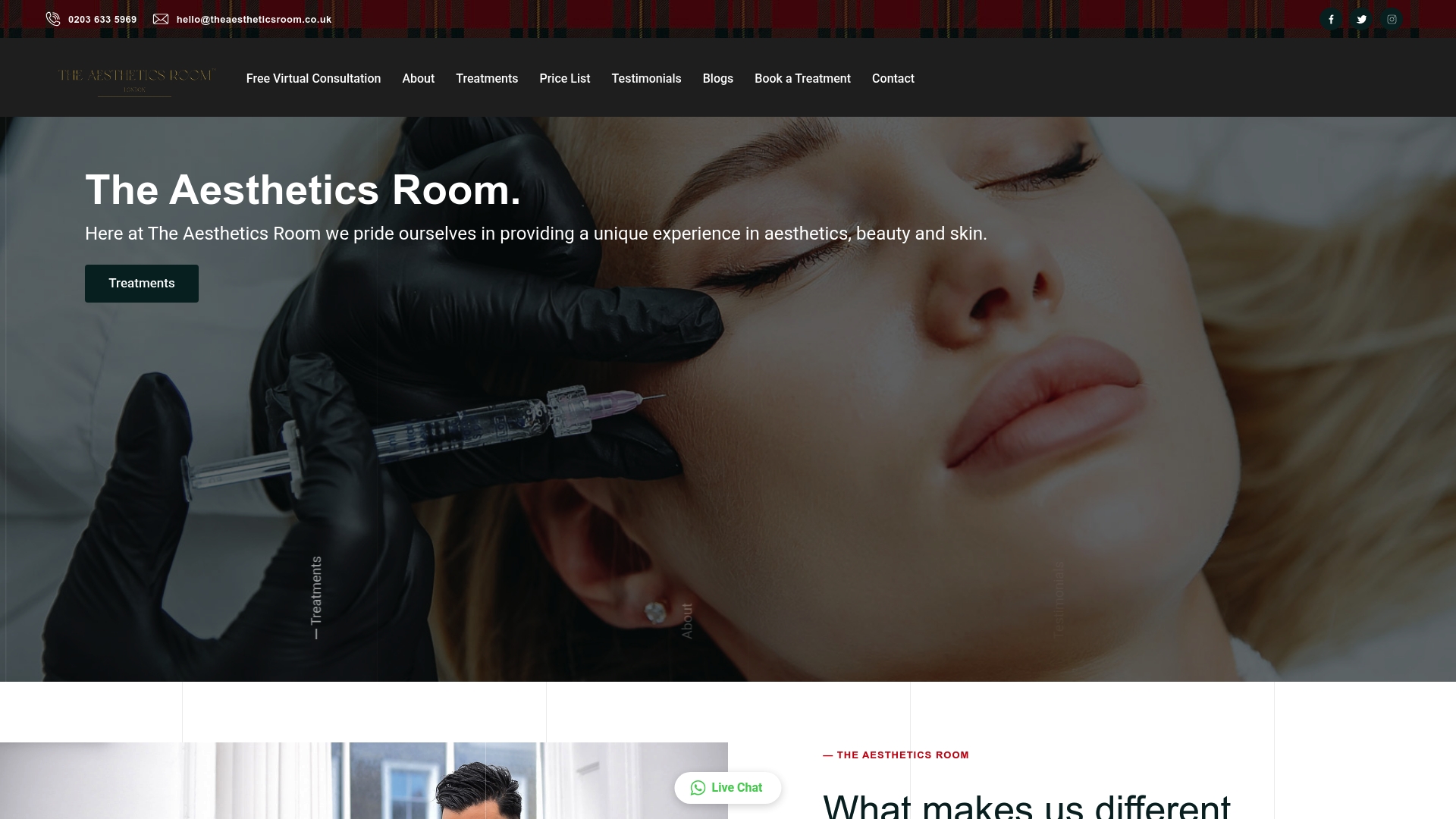
You can see our practitioners at our clinics in Knightsbridge, Harley Street and Mayfair. Book your consultation and ask us anything from this article.
FAQ
Can a beauty therapist prescribe Botox?
No. Botox is a prescription-only medicine, and only a registered healthcare professional with prescribing rights can prescribe it. A non-prescriber can only be involved when a prescriber has assessed you and takes responsibility for the prescription.
Can I get a Botox prescription from a video call?
Not for a cosmetic procedure. A face-to-face assessment is required before prescribing, and NMC nurse and midwife prescribers must not prescribe remotely. Doctors must physically examine you. A video call can help with planning, but it does not replace the in-person assessment.
Can the person who injects my Botox be different from the prescriber?
Yes. A doctor may delegate administration, but remains responsible for your overall care and must be satisfied that the injector has suitable qualifications, skills and experience. Ask for both names and check their registrations.
Do I need a new assessment every time I have Botox?
Yes. Each new prescribing episode needs a new assessment, and the professional guidance says retreatment after three months requires a new in-person assessment. It helps the prescriber adjust your dose to how you have responded.
Do dermal fillers need a prescription?
Generally no, because fillers are regulated as medical devices rather than prescription-only medicines. The consultation, training and aftercare questions in this article still apply, and the enzyme used to dissolve filler is a prescription medicine.
Sources
- Choosing who will do your cosmetic procedure, NHS
- Joint BAMAN and JCCP advisory notice
- Questions about our cosmetic interventions guidance, GMC
- Useful information for prescribers, NMC
- JCCP and CPSA Code of Practice
- Botulism, NHS
- Why IV vitamin drips are a waste of money, Which?
- Drug and Therapeutics Bulletin
- Healthcare: Intravenous Nutritional Therapy, ASA
- England’s top doctor on party drips, NHS England