
Most Botox myths fall apart once you look at what UK medical bodies actually say. Botox does not have to look frozen, it is not permanent, and it is a prescription-only medicine, not a beauty product you can pick up anywhere. It also has real, rare risks that a good practitioner will explain before you decide.
Below, we take the myths we hear most often in consultations and test each against official and professional UK guidance. Where the evidence is thin or the answer depends on the person, we say so.
TL;DR
- Frozen faces are a dosing problem, not a Botox problem. Judicious treatment softens lines and moderates movement without removing expression.
- It is temporary. Effects generally last around 3 to 4 months, so it is never a permanent change.
- It is a prescription-only medicine. Who prescribes and who injects matters more than the brand name on the vial.
- It does not erase every line. It works on lines caused by muscle movement, not sun damage or sagging skin.
- Risks exist but are uncommon. Know the warning signs and who to call.
Table of Contents
- Myth 1: “Botox is toxic and unsafe”
- Myth 2: “Botox makes you look frozen”
- Myth 3: “It must be very painful”
- Myth 4: “Botox is permanent” (or that it works instantly)
- Myth 5: “Your wrinkles get worse when you stop”
- Myth 6: “Botox is only for wrinkles, and only for older women”
- Myth 7: “Botox erases wrinkles completely”
- Our perspective: what the myths get wrong
- Botox at The Aesthetics Room
- How to spot a myth-free provider
- FAQ
- Sources
Myth 1: “Botox is toxic and unsafe”
The word “toxin” does the damage here. Botox is a purified form of botulinum toxin type A, and the name sounds alarming. But in the UK it is a licensed, prescription-only medicine. The MHRA states that botulinum toxin products should only be sold or supplied in accordance with a prescription from an appropriate prescriber.
That rule is the real safety message. The same MHRA update warns that buying botulinum toxin from illegal suppliers, in the UK or abroad, significantly increases the risk of a falsified or unlicensed product, which can mean more adverse reactions and a danger to your health.
So the honest answer is this: the medicine is not the main risk when it is genuine, prescribed properly and injected by a trained professional. Cheap, unprescribed or “mystery” product is where problems start.
What the rare risks look like
We do not pretend there are none. The MHRA notes that rare cases of iatrogenic botulism have been reported after therapeutic or cosmetic use. Symptoms typically appear between 4 and 8 days, though they can take up to 4 weeks, and can include difficulty swallowing, breathing or speaking, or slurred speech.
If you notice any of those after treatment, do not wait for a follow-up appointment. The guidance is to seek immediate medical attention through the emergency services. A good clinic will tell you this before you leave, not after you ask.
Myth 2: “Botox makes you look frozen”
This is the most common worry, and it comes from visible bad work. The professional standard is clear. The JCCP, the body that sets practitioner standards in non-surgical cosmetic procedures, says that judicious use can soften lines and moderate, but not inhibit, expression, achieving natural results.
The word “judicious” carries the weight. A frozen look usually comes from too much product, the wrong placement, or treating every muscle the same way. Faces are not symmetrical and nobody animates them identically, so a standard formula applied to every patient is the red flag.
What natural treatment looks like in practice:
- A conversation about which lines bother you, and which expressions you want to keep.
- A plan that starts conservatively. Botox wears off, so a top-up is easy and an overdose is not.
- Treatment designed around your muscle strength and facial balance.
The JCCP also says the practitioner should explain how risks can be minimised, weigh them against the benefits with you and agree the decision with you. If you feel rushed or sold to, that is your cue to pause.
Myth 3: “It must be very painful”
Most people find it quicker and gentler than they expected. According to the British Association of Aesthetic Plastic Surgeons, Botox is injected into the muscles with a very small needle. Localised discomfort and bruising can occur, but sedation or local anaesthesia is generally not required.
In plain terms: expect brief pinpricks, a few tiny injection sites and, for some people, a small bruise. If you are needle-nervous, tell your practitioner at the consultation. A calm, unhurried appointment makes a real difference.
Very rare effects worth knowing
BAAPS also notes that, very rarely, eyelid ptosis (a slight droop) can occur after injections above the eyebrows. It improves as the effects of Botox wear off. This is one reason technique and anatomical knowledge matter. It is also why you should be treated by someone who has handled complications before, not only someone who has done the cheap, quick version.
Myth 4: “Botox is permanent” (or that it works instantly)
Both halves of this are wrong, and they pull in opposite directions.
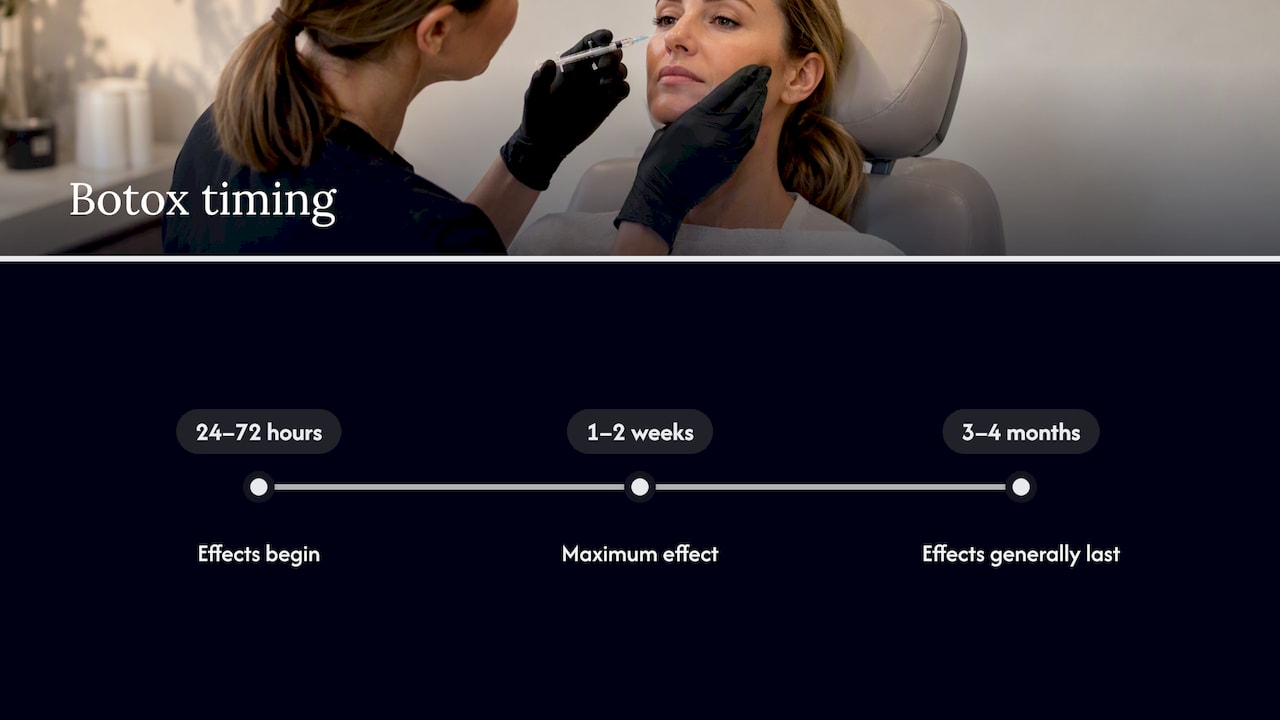
It is not instant. Botox usually takes effect 24 to 72 hours after injection, with maximum effect at about 1 to 2 weeks. If you are planning around an event, book at least two weeks ahead so you see the full result and any small adjustment can be made.
It is not permanent. The effects are temporary and generally last approximately 3 to 4 months. That is reassuring if you are nervous, because a result you dislike will fade. It also means maintaining the effect needs repeat visits. We cover timing in our guide to the Botox maintenance schedule, including how to avoid topping up too early or too late.
Myth 5: “Your wrinkles get worse when you stop”
This one is half-feared, half-repeated. Botox does not age the skin underneath. When it wears off, the muscles move again, and the lines return to roughly where your face was heading anyway. Time moves on regardless of whether you treat.
What about years of repeated use? The evidence is more nuanced. One academic review of cosmetic botulinum toxin notes that the recommended cosmetic use of 2 years is often exceeded, which may result in atrophy (thinning) of the injected muscles. We read that as a reason for caution, not panic:
- Use the lowest effective dose rather than the maximum.
- Review your plan regularly with the same trusted practitioner.
- Ask what your plan looks like over years, not just for your next appointment.
A responsible clinic will not push a fixed schedule on you. It will adapt your treatment as your face, your goals and your tolerance change.
Myth 6: “Botox is only for wrinkles, and only for older women”
Cosmetic wrinkle treatment is the best-known use, not the only one. BAAPS notes that Botox can also be used to treat excessive sweating of the armpits and palms of the hands. We treat hyperhidrosis at our clinic, and it is a good example of a medical use that has nothing to do with appearance.
As for who has treatment: men and women of different ages seek it out, for different reasons. Some want to soften a frown line before it deepens. Others want a gentle refresh. There is no single right age, only a right reason and a sensible plan. What matters is whether the treatment suits your face and your goals, and whether a practitioner will tell you honestly when it does not.
Myth 7: “Botox erases wrinkles completely”
It does not, and any provider who promises that is overselling. The JCCP says lines that remain when the face is relaxed may soften with treatment but may not resolve completely.
BAAPS is more specific: Botox can reduce wrinkles caused by muscle contraction, but does not reduce fine lines caused by sun damage or lines due to sagging facial skin.
That is why the right treatment is often a combination. Botox for movement lines, and something else for texture, volume or skin quality. If skin quality is your concern, our comparison of polynucleotides and skin boosters explains the options.
Is it addictive?
Not in any pharmacological sense. What people usually mean is that they like the result and book again when it fades. Because the effect is temporary, rebooking is the only way to keep it. That is a decision you can make, pause or stop at any time.
Our perspective: what the myths get wrong
We see two kinds of worry in the consultation room. One is fear of looking “done”. The other is fear of the unknown: what is in the syringe, who is holding it and what happens if something goes wrong.
Both are reasonable, and both have the same answer: the practitioner. A medically trained, CQC-registered clinician who prescribes properly, explains risks plainly and treats you as an individual removes most of what the myths describe. We are registered with the CQC and are members of the ACE Group, which is dedicated to patient safety. We build bespoke plans because no two faces move the same way.
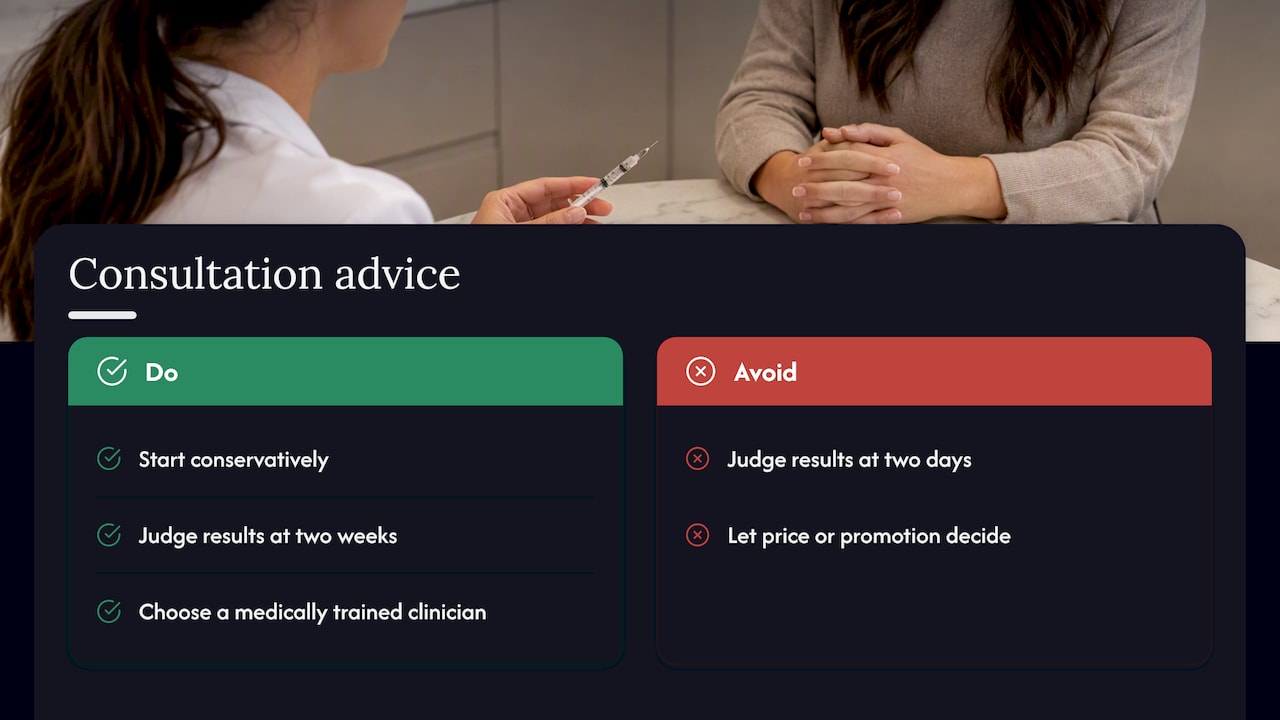
Our advice is simple. Start conservatively. Judge the result at two weeks, not two days. And never let a price or a promotion decide who injects your face.
— Vishul
Botox at The Aesthetics Room
We offer anti-wrinkle treatment at our London clinics in Knightsbridge, Harley Street and Mayfair, with in-person and virtual consultations available. Anti-wrinkle treatment is priced at £200-£358 on our price list, depending on the areas treated. Your consultation is where we agree the plan, the dose and the follow-up. If you would like to know what to expect first, read our guide to London aesthetic consultations.
How to spot a myth-free provider
Myths thrive where information is thin. A good clinic fills the gaps before you ask. Before you book, check these:
- A prescriber is involved. Botulinum toxin is prescription-only, so ask who prescribes and how.
- The consultation is real. You should be asked about your health history, medications and goals, and given time to decide.
- Risks are explained. Including rare ones, the warning signs after treatment and who to contact.
- The product is genuine and traceable. Be wary of unusually low prices or anyone who cannot say where their product comes from.
- Your goals are respected. If you want to keep your expressions, the plan should reflect that.
- Aftercare is clear. You should know when to expect results, when a review is offered and what to do if something feels wrong.
None of this is unusual to ask. A confident practitioner will welcome it.
Red flags after treatment
Mild redness, tenderness or a small bruise at the injection sites can happen. Difficulty swallowing, breathing or speaking, or slurred speech, is different. Treat those as an emergency and seek immediate medical attention through the emergency services, as the MHRA advises. For anything else that worries you, such as a droopy lid or uneven movement, contact your clinic promptly so they can assess it.
FAQ
How long does Botox last?
Botox effects generally last around 3 to 4 months. You will usually start to see changes within 24 to 72 hours, with the full effect at around one to two weeks. Your practitioner can advise on timing for your own muscles and goals.
Can Botox look natural?
Yes, when the dose and placement are tailored to you. Professional guidance says well-judged treatment softens lines and moderates expression without inhibiting it. Ask your practitioner to start conservatively and review at two weeks.
Is Botox safe?
It is a licensed, prescription-only medicine in the UK, and serious problems are rare. The main risks come from unlicensed or falsified product and from inexperienced treatment. Choose a CQC-registered provider with a proper prescribing process, and learn the warning signs before you leave.
Will Botox stop me making facial expressions?
It should not. The aim is to soften the lines caused by muscle movement while leaving you able to look like yourself. If you feel you want more movement, say so at the consultation, because the dose can be adjusted.
Does Botox remove all wrinkles?
No. It works best on lines caused by muscle contraction. Fine lines from sun damage and lines from sagging skin need other approaches, and your practitioner can tell you which suit your skin.
Sources
- MHRA Drug Safety Update: botulinum toxin type A products, updated warnings
- JCCP Information Sheet 2: Botulinum Toxins
- BAAPS: Botulinum toxin injections
- Keeping up appearances: academic review of cosmetic botulinum toxin use