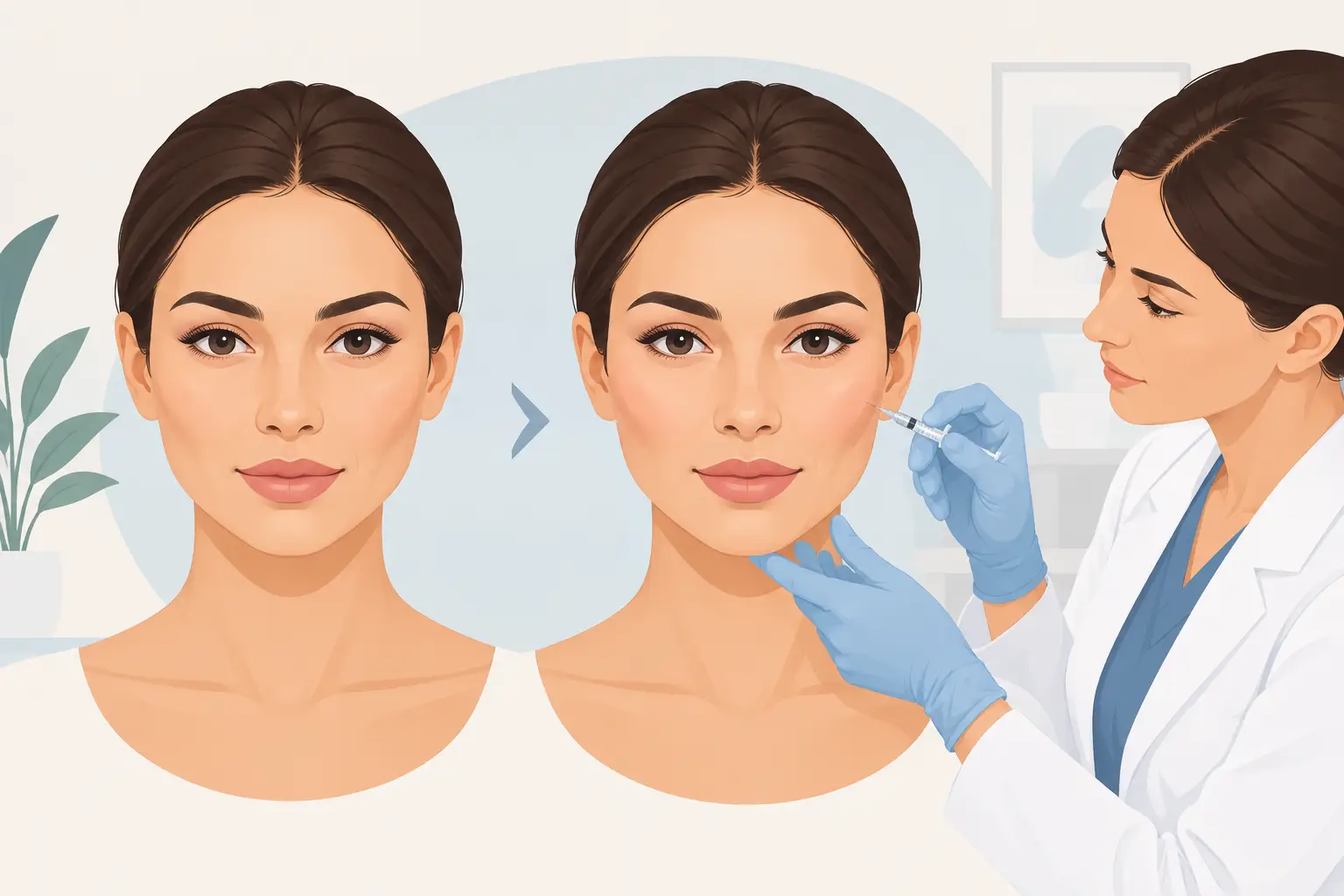


Skin laxity rarely arrives as one isolated concern. A softer jawline may sit alongside cheek volume loss; crepey skin around the eyes may be accompanied by dehydration and sun damage; looseness on the body may follow weight change, pregnancy or the natural reduction of collagen over time. The best options for skin laxity therefore depend on what has changed beneath the surface, as well as the degree of laxity visible in the skin itself.
For many people, the goal is not to look dramatically different. It is to look rested, refined and more like themselves. The right approach should respect facial proportions, skin quality, lifestyle and tolerance for downtime, rather than promising that one treatment can correct every type of looseness.
Why skin becomes loose
From our mid-twenties onwards, collagen and elastin production gradually slows. These proteins give the skin its strength, bounce and ability to recoil. UV exposure, smoking, stress, poor sleep, repeated weight fluctuation and hormonal changes can accelerate the process. Genetics also matter: some people notice laxity early around the lower face or neck, while others first see it on the eyelids, abdomen, arms or knees.
It is also useful to separate skin laxity from volume loss. When facial fat pads and bone support reduce with age, skin can appear to sag because there is less structure beneath it. Conversely, adding volume where the skin is already heavy can make the face look fuller rather than firmer. This distinction is one reason a considered clinical assessment matters.
Best options for skin laxity: treatments matched to the concern
There is no single “best” treatment. Non-surgical options can improve mild to moderate laxity and skin quality, but they cannot remove a significant amount of excess skin. A clinician should assess the area, skin thickness, tissue quality and your expectations before recommending a course of treatment.
Collagen-stimulating skin treatments
For early laxity, treatments designed to create controlled stimulation in the deeper layers of skin are often a strong starting point. Radiofrequency treatments and radiofrequency microneedling use heat, with or without tiny needles, to encourage collagen remodelling. They can be especially useful for crepey texture, fine lines and mild laxity on the face, neck, décolletage and selected body areas.
Results develop gradually because the body needs time to form and remodel collagen. A course is commonly required, and the improvement is usually progressive over several months rather than immediate. The trade-off is that results are subtle to moderate, particularly where there is more established skin redundancy.
Focused ultrasound is another collagen-stimulating option that may be considered for areas such as the brow, jawline and neck. It delivers energy at selected depths below the skin surface, aiming to support a firmer appearance without surgery. Suitability varies considerably, however. Thin faces, marked volume loss and very loose skin need especially careful assessment to avoid an outcome that feels less balanced.
Injectable treatments for structure and skin quality
Injectable treatments can play an important role when laxity is partly caused by lost support. Precisely placed dermal filler may restore contour in areas such as the cheeks, chin or jawline, helping to improve the appearance of descent without overfilling the face. The emphasis should be on structural balance, not simply adding volume where a shadow or fold appears.
Collagen-stimulating injectables may also be suitable for selected patients. Rather than creating an instant filled effect alone, these treatments are intended to encourage the skin’s own collagen response over time. They can be valuable for diffuse facial laxity and areas of the body where skin quality has become thinner, but they require an experienced practitioner, appropriate product selection and a measured treatment plan.
Skin boosters and regenerative-style injectable treatments can improve hydration, luminosity and fine crepiness. They are not a substitute for a lift, yet better-quality skin often makes laxity look less pronounced. This is a useful distinction for anyone hoping for a polished, healthy finish rather than a visibly treated appearance.
Anti-wrinkle injections have a more targeted role. They relax muscles that create expression lines and may subtly improve the balance of certain facial areas, but they do not tighten loose skin. Used thoughtfully alongside other treatments, they can contribute to a fresher result. Used as the only answer to pronounced laxity, they are unlikely to meet expectations.
Medical-grade skincare and daily protection
Professional treatments work best when they are not expected to compensate for an unsupported skincare routine. Daily broad-spectrum SPF is fundamental, particularly in preventing UV-driven collagen breakdown. Prescription-strength or clinically guided retinoids, vitamin C and barrier-supporting ingredients may help improve texture, pigmentation and collagen production over time.
Skincare cannot lift tissue or remove loose skin. It can, however, improve the condition of the skin you have and help protect the investment made in clinic. A tailored routine is more useful than a crowded bathroom shelf: active ingredients must suit your skin sensitivity, pigmentation risk and treatment schedule.
Surgery for significant excess skin
When skin is markedly loose, surgery remains the most reliable option for a substantial lift. Procedures such as a facelift, neck lift, eyelid surgery, tummy tuck or arm lift can remove excess skin and reposition deeper tissues in a way non-surgical treatments cannot replicate.
That does not make surgery the right choice for everyone. It involves scars, anaesthetic considerations, recovery and a larger financial commitment. For some, a non-surgical plan offers the level of improvement they want with less downtime. For others, an honest discussion about surgical referral is more respectful than repeatedly treating severe laxity with modest-yield procedures.
Building a bespoke plan for skin laxity
The most effective treatment plans often combine approaches, but combination should never mean doing everything at once. A practitioner may first improve skin hydration and barrier health, then use collagen-stimulating treatment, followed by carefully planned injectables if structural support is needed. Staging treatment allows the skin to respond and keeps the result controlled.
At consultation, consider discussing when you first noticed the change, previous aesthetic treatment, significant weight loss, medications, skin conditions and any tendency towards pigmentation or scarring. Good photographs, taken consistently, are also invaluable. They reveal gradual improvements that can be hard to see day to day and help prevent overtreatment driven by a single angle or moment of self-criticism.
Safety should shape every recommendation. Treatments involving energy devices and injectables are not interchangeable services. They require appropriate training, a clear medical history and an understanding of anatomy. Pregnancy, active skin infection, certain implanted devices, autoimmune conditions and medicines that affect healing may alter what is suitable or when treatment should take place.
What results can you realistically expect?
Non-surgical skin tightening tends to create refinement, not a surgical transformation. You may notice smoother texture, a modest improvement in firmness, sharper facial transitions and makeup sitting more evenly on the skin. Results from collagen stimulation commonly continue to evolve for three to six months, while injectable outcomes have their own timelines depending on the product and area treated.
Maintenance is usually part of the plan. Ageing continues, and a result that looks natural is often sustained through periodic review rather than a single intensive treatment. Stable weight, sun protection, nutrition, sleep and avoiding smoking all support longer-lasting skin quality, even though they cannot stop the ageing process.
At The Aesthetics Room, a consultation-led assessment considers the whole picture: skin health, facial structure, lifestyle and the degree of change you would genuinely like to see. The aim is a plan that feels proportionate, safe and worth your time.
If laxity is affecting how confident you feel, begin with a proper assessment rather than a treatment trend. The most satisfying results usually come from choosing the least invasive option capable of delivering a visible, believable improvement.