
Botox (onabotulinumtoxinA) is licensed in the UK for the prevention of chronic migraine in adults and is available through NHS specialist services when NICE TA260 criteria are met. Private assessment offers a faster route to the same clinical evaluation.
Your immediate next step depends on urgency. If you can wait for standard NHS timelines, ask your GP for referral to a neurologist or headache specialist. If you want faster triage, a CQC-registered private clinic such as Theaestheticsroom can carry out the same specialist assessment.
- NHS route: GP referral → headache specialist → NICE eligibility check
- Private route: Direct specialist consultation, often within days rather than months
- Either route requires: a documented history of chronic migraine and prior preventive treatments
Key Takeaways
Botox works for chronic migraine prevention when strict NICE eligibility criteria are met, delivered via a fixed 155–195 unit, 31–39 site protocol, and judged against clear stopping rules after two treatment cycles.
| Point | Details |
|---|---|
| Licensed for chronic migraine only | Requires 15+ headache days monthly with 8+ migraine days; not licensed for episodic migraine. |
| Eligibility requires prior failures | NICE requires 3 or more preventive medications tried, failed, or unsuitable before approval. |
| Fixed injection protocol | 155–195 units across 31–39 sites, repeated roughly every 12 weeks. |
| Success is measured objectively | NICE stops treatment if headache days fall by less than 30% after two cycles. |
| Private assessment speeds access | Theaestheticsroom offers CQC-registered specialist consultations for faster triage and documented care. |
Table of Contents
- What is Botox for migraines and how does it work?
- Who is eligible for Botox migraine treatment on the NHS?
- What happens during a Botox migraine treatment session?
- Does Botox actually reduce migraine days?
- What are the side effects and risks of migraine Botox?
- NHS or private clinic: which route suits you?
- How is Botox migraine treatment monitored over time?
- How do you choose a safe clinic for migraine Botox?
- Why documented, evidence based care matters here
- Book a specialist migraine Botox assessment in London
- Frequently asked questions
- Sources
What is Botox for migraines and how does it work?
Botulinum toxin type A, sold under the brand Botox by Allergan, is a prescription-only medicine with a specific marketing authorisation for chronic migraine prevention in adults. That authorisation is separate and distinct from its cosmetic licence for frown lines.
The likely mechanism involves blocking the release of neurotransmitters involved in pain signalling at nerve endings around the head and neck, which appears to dampen the trigeminal pathways implicated in migraine. Researchers do not have complete certainty on the precise chemistry, but the effect on chronic migraine frequency is well documented in licensing data.
Botox migraine treatment looks nothing like a cosmetic appointment. The dose is far higher, the injection map covers different muscles including the neck and shoulders, and the goal is neurological, not aesthetic. Confusing the two protocols is one of the more common misunderstandings patients bring to a first consultation.

Who is eligible for Botox migraine treatment on the NHS?
Chronic migraine has a specific clinical definition: headaches on 15 or more days a month, with at least 8 of those days showing migraine features, for longer than three months. Fewer headache days than that, and you are classed as having episodic migraine, for which Botox is not licensed.
NICE sets out clear conditions before botulinum toxin type A becomes an option. You typically need to have:
- Tried and failed, or been unable to tolerate, at least three previous preventive medications
- Had any medication overuse appropriately managed by your prescriber first
- A confirmed diagnosis of chronic migraine, not another headache disorder
- Assessment by a headache specialist or neurologist, usually following GP referral
Only after these boxes are ticked does NICE guidance support botulinum toxin type A as a funded NHS option. This is a treatment reserved for genuinely difficult, treatment-resistant cases, not a first-line answer to occasional bad headaches. It is also restricted to adults; there is no licence for treating migraine in children with this drug.
What happens during a Botox migraine treatment session?
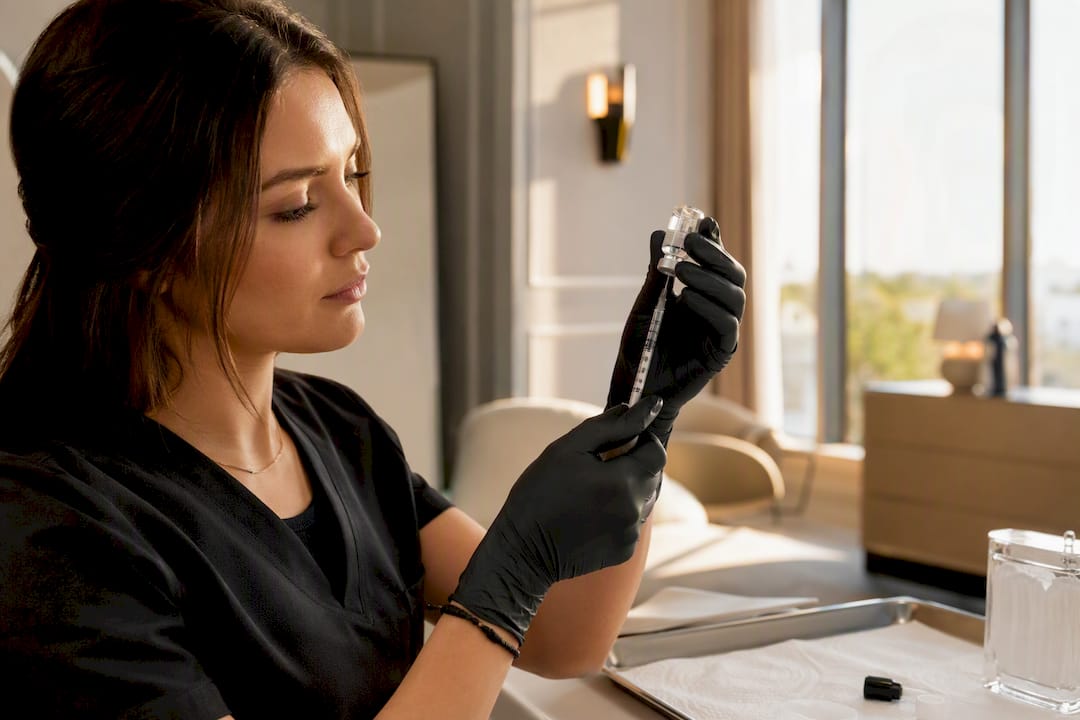
The migraine protocol follows a fixed, evidence-based map. Clinicians administer between 155 and 195 units, delivered as 31 to 39 separate injections of 0.1ml (5 units) each, across the forehead, temples, back of the head, neck and shoulders. This precise pattern comes directly from the licensed dosing schedule, and deviating from it is considered off-protocol care.
A typical appointment runs through several stages:
- Consent discussion and a review of your headache history and prior medications
- Marking the injection sites according to the standard map
- The injections themselves, usually completed within 15 to 20 minutes
- A short observation period before you leave
- Aftercare advice, including what to avoid for the following 24 hours
Pro Tip: Bring a written headache diary and a current medication list to every session. Specialists use both to judge whether the treatment is working and to satisfy NICE documentation requirements at your next review.
Retreatment is usually scheduled every 12 weeks, based on the same interval used in NHS trust patient guidance.
Does Botox actually reduce migraine days?
The honest answer: for people who qualify under NICE criteria, yes, often meaningfully, but not for everyone, and not dramatically for all responders. The PREEMPT trials that underpin the licence showed statistically significant reductions in headache and migraine days compared with placebo, though NICE itself describes the absolute benefit as modest once you strip out the substantial placebo response seen in trial design.
In practical terms, many people who respond to treatment see a 30 to 50% reduction in headache days, according to figures cited by the Migraine Trust. That is the figure worth anchoring your expectations to, rather than a promise of a headache-free life.
Success is judged objectively, not by how you feel in the moment:
- Clinicians typically wait until after two treatment cycles (roughly 24 weeks) before deciding whether it is working
- A reduction of less than 30% in headache days is treated as an insufficient response under NICE stopping rules
- A headache diary is the tool that turns “I think it’s helping” into a number a specialist can actually act on
Individual variation is real. Some people respond strongly after the first cycle; others need two full cycles before any pattern emerges, and a minority see no benefit at all.
What are the side effects and risks of migraine Botox?
Most side effects are mild and settle within days. The commonly reported ones include neck pain, temporary muscle weakness or stiffness near injection sites, localised injection-site pain, and in some cases a drooping eyelid that resolves as the effect wears off.
Rarer but more serious reactions include significant muscle weakness spreading beyond the injection area, or difficulty swallowing or breathing. These need urgent medical attention, though they are uncommon at the licensed migraine dose administered by a trained specialist.
Certain situations call for extra caution before treatment goes ahead:
- Pregnancy and breastfeeding: data is limited, so specialists generally avoid treatment unless benefits clearly outweigh risks
- Active infection at the injection site: treatment should be delayed until it clears
- Certain neuromuscular conditions or medications: always disclose your full medical history and current prescriptions before your first session
A thorough pre-treatment consultation is what catches most of these issues before a needle goes anywhere near you.
NHS or private clinic: which route suits you?
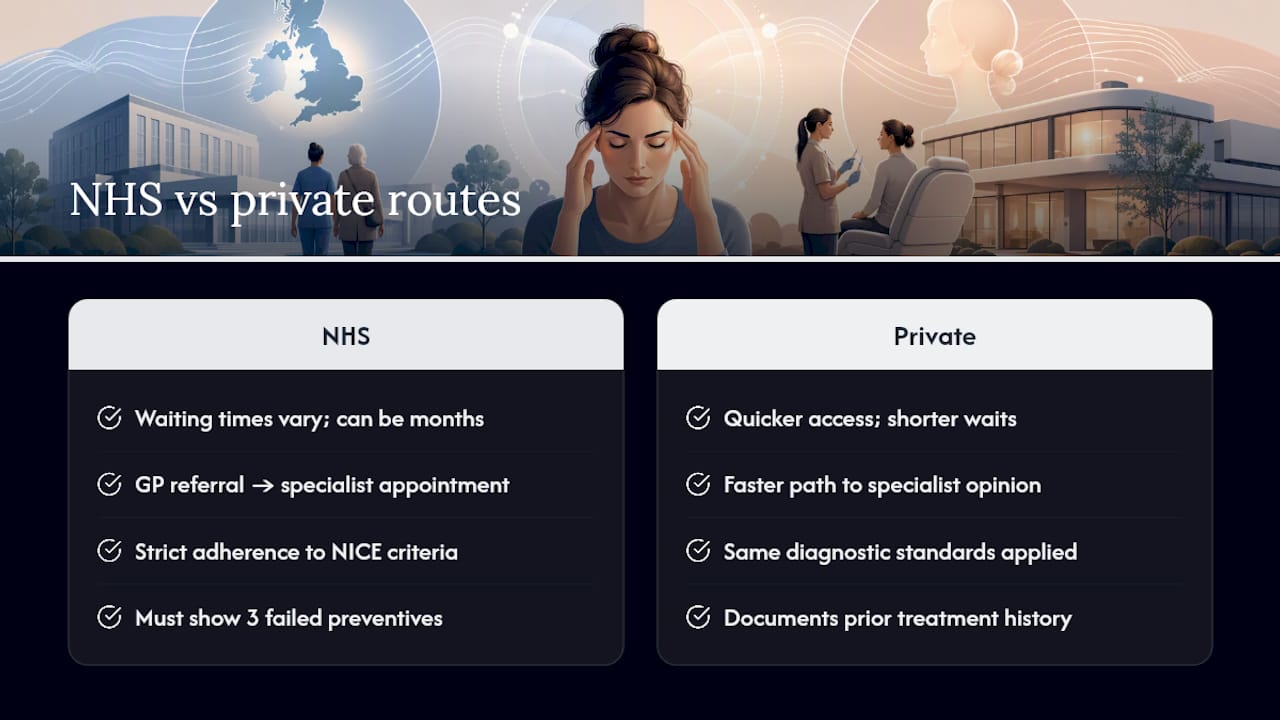
Both routes lead to the same clinical assessment, but the path there looks different. The National Migraine Centre notes that NHS provision requires formal referral and strict adherence to NICE eligibility criteria, while private clinics can move faster but still apply the same diagnostic standards.
The NHS pathway typically runs: GP referral → neurologist or headache specialist appointment → confirmation you meet NICE criteria (three failed preventives, medication overuse managed) → treatment booking. Waiting times vary considerably by region and can stretch to several months for the specialist appointment alone.
The private pathway offers quicker access to that same specialist opinion, sometimes including remote or virtual triage before an in-person visit. This does not mean lower standards. A reputable private specialist still needs to confirm your diagnosis meets the chronic migraine definition and will document your prior treatment history to satisfy the same clinical logic NICE applies on the NHS.
Cost varies by clinic, so expect a private consultation fee in addition to the treatment session itself; ask any provider for a clear breakdown before booking. Some patients choose the private route specifically because NHS waiting lists for neurology are long in their area, and faster access to a proper diagnosis can be worth the fee. Whichever path you choose, verify the clinic or Trust’s CQC registration before committing.
How is Botox migraine treatment monitored over time?
Tracking outcomes properly is what separates a treatment that gets fairly judged from one that gets abandoned too early or continued without evidence it is helping. Keep a simple record of:
- Date of each headache or migraine day
- Severity on a simple scale (mild, moderate, severe)
- Acute medication taken and whether it worked
- Suspected triggers and how the day affected your work or routine
NICE applies clear stopping rules built on this data: treatment should stop if you see less than a 30% reduction in headache days after two cycles, or if your chronic migraine converts to episodic migraine (fewer than 15 headache days a month) for three consecutive months.
Most people are reassessed every 12 weeks, with the real verdict on effectiveness usually reached after two cycles, around six months in. Responders often continue for years with sustained benefit; some eventually stop after long periods of improvement, under specialist guidance.
How do you choose a safe clinic for migraine Botox?
Not every clinic offering Botox is equipped to deliver the migraine protocol correctly, and the difference matters both for safety and for whether treatment actually works. Injection technique and clinic governance both influence outcomes, so a few checks before booking are worth your time.
Look for:
- CQC registration for the clinic, checkable on the CQC website
- A practitioner who can demonstrate specific training in the 31 to 39-site migraine protocol, not just cosmetic injection experience
- A clear policy on managing adverse events and follow-up care
- Willingness to review your headache diary and prior treatment history properly, not rush you through a form
Worth asking directly: “Are you trained specifically in the migraine Botox protocol?” and “Do you follow NICE guidance for eligibility and ongoing monitoring?” A specialist confident in their answer will welcome both questions.
Pro Tip: Ask for a written treatment plan and a documented follow-up schedule before your first session. A clinic that logs your outcomes in a structured record, rather than relying on memory, is one that takes the NICE stopping rules seriously.
Why documented, evidence based care matters here
Botox for chronic migraine sits in a different category to most aesthetic treatments we discuss. It is a licensed neurological therapy with strict eligibility rules, an exact dosing map, and formal criteria for deciding whether to continue. At Theaestheticsroom, that distinction shapes how we approach every migraine consultation, with proper history taking, clear documentation and a genuine focus on whether treatment is measurably working for you.
We offer specialist consultations that take your prior treatment history seriously, alongside a structured approach to following the recognised migraine protocol.
Book a specialist migraine Botox assessment in London
Theaestheticsroom is the option to consider if NHS waiting times for a specialist migraine assessment feel too long. As a CQC-registered clinic in Knightsbridge, our practitioners are trained specifically in the licensed migraine protocol, not just cosmetic injection patterns. Every consultation starts with a proper review of your headache history rather than a rushed sign-off.
A consultation with us covers your prior preventive medications, any medication overuse history, and a look at your headache diary if you keep one, exactly the documentation a specialist needs to judge whether you meet the recognised eligibility criteria. We will talk you through what the migraine Botox protocol involves, what to expect at each visit, and how we track your response over successive cycles.
If long NHS waiting lists are standing between you and an answer, book a specialist Botox consultation with Theaestheticsroom and bring your headache diary and current medication list along to your first appointment.
Frequently asked questions
Is Botox for migraines available on the NHS?
Yes, provided you meet NICE’s chronic migraine criteria, including having tried at least three prior preventive medications without adequate benefit. Access is via GP referral to a neurologist or headache specialist.
How is Botox migraine treatment different from cosmetic Botox?
The dose is higher (155–195 units versus far smaller cosmetic doses), the injection map covers 31 to 39 sites including the neck and shoulders, and the purpose is neurological pain prevention rather than reducing wrinkles.
How long does it take to know if Botox is working for migraines?
Specialists typically wait until after two treatment cycles, roughly six months, before making a final judgement, using headache diary data to measure the percentage reduction in headache days.
What happens if Botox for migraines does not work?
Can I get Botox for migraines privately in the UK?
Yes. Private clinics such as Theaestheticsroom offer specialist consultations that apply the same diagnostic criteria as the NHS, often with faster access, though you should always confirm CQC registration and specific migraine protocol training beforehand.
This article is general information, not a substitute for advice from a qualified doctor. Consult a qualified healthcare professional about your own circumstances before acting on anything here.
Sources
- Recommendations | Botulinum toxin type A for the prevention of headaches in adults with chronic migraine | NICE
- Botox injections for migraine – The Migraine Trust
- Can I get Botox treatments on the NHS? – National Migraine Centre
- Botox treatment for migraine – University Hospitals Sussex NHS Foundation Trust
Recommended
- Botox London for Natural-Looking Bespoke Results – The Aesthetics Room
- BOTOX BOOM – WHY IS BOTOX IS ONE OF THE MOST POPULAR AESTHETIC TREATMENTS? – The Aesthetics Room
- Medical aesthetics safety tips London: 80% risk reduction – The Aesthetics Room
- 7 Benefits of Botox for Appearance and Confidence – The Aesthetics Room