

TL;DR:
- Effective virtual consultations in aesthetic medicine require thorough preparation, structured delivery, and prompt follow-up, supported by reliable technology and clear communication. Practitioners must invest in technical setup, adopt a structured consultation framework, and build rapport through deliberate eye contact and active listening to ensure trust and patient satisfaction. Consistent documentation, contingency planning for technical issues, and secure messaging enhance patient engagement and treatment outcomes remotely.
A virtual consultation is a structured remote clinical appointment conducted via video or telephone, and knowing how to conduct virtual consultations effectively is now a core competency for every aesthetic medicine practitioner. The industry term for this practice is telemedicine or telehealth, and it encompasses everything from initial patient assessments to post-treatment reviews. Done well, remote appointments extend your clinical reach, improve patient convenience, and maintain the same standard of care as an in-person visit. Done poorly, they erode trust and create compliance risks. This guide gives you the preparation protocols, technology choices, communication techniques, and follow-up processes to run remote appointments with confidence.
What tools and technology do you need for virtual consultations?
The foundation of any effective remote appointment is a reliable technical setup. You need a webcam-enabled device with a minimum 1080p camera, a quality microphone or headset, and a stable broadband connection of at least 10 Mbps upload speed. Poor audio is the single most common complaint patients raise after virtual visits, so a dedicated USB microphone or noise-cancelling headset is worth the investment.

Platform selection matters as much as hardware. Choose a telehealth platform that is compliant with UK GDPR and, where relevant, HIPAA standards for international patients. Browser-based solutions such as Whereby or Doxy.me remove the friction of app downloads, which is particularly valuable for older patients who may be less comfortable with technology. The table below compares key features relevant to aesthetic medicine practitioners.
| Feature | What to look for |
|---|---|
| Data compliance | UK GDPR and HIPAA-ready encryption |
| Ease of access | Browser-based, no app download required |
| Waiting room function | Virtual waiting room with patient notification |
| Screen sharing | Built-in screen share for treatment imagery |
| Recording capability | Consent-gated session recording for clinical notes |
Pre-consultation preparation is equally critical. Automated appointment reminders sent 24 hours and again 15 minutes before the session reduce no-shows and administrative delays significantly. Pair these with a digital intake form covering medical history, current skincare regimen, treatment goals, and consent to the remote format. Sending this 24 to 48 hours in advance gives patients time to reflect and gives you time to review before the appointment begins.
Pro Tip: Ask patients to complete a brief lighting and device check as part of their intake confirmation. A short instructional video embedded in the confirmation email takes two minutes to produce and eliminates the majority of technical problems before the session starts.
Advise patients to join the virtual waiting room five to ten minutes early. This buffer allows technical issues to be resolved without eating into clinical time, and it signals to the patient that the appointment is being taken seriously.
How to structure and conduct effective virtual consultations
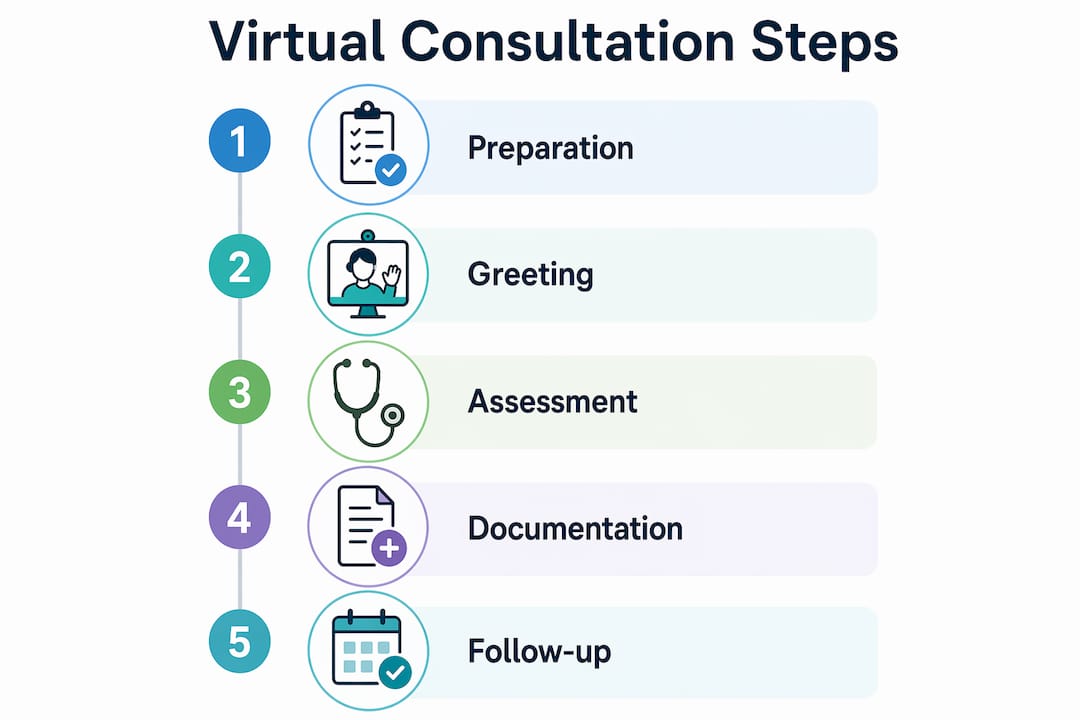
The most reliable framework for conducting online meetings in a clinical context is the three-part flow: warm greeting with a technical check, clinical assessment, and formal closing with a care plan summary. This structure, recommended across telemedicine best practices, reduces friction and improves patient outcomes by giving both parties a clear sense of progression.
Part one: Greeting and technical check. Open by confirming the patient can see and hear you clearly. Ask them to adjust their camera so their face is well lit and centred. This takes under two minutes and prevents disruptions mid-consultation.
Part two: Clinical assessment. Use open-ended questions to draw out the patient’s concerns. In aesthetic medicine, visual examination is central, so ask patients to move closer to the camera, turn to the side, or demonstrate facial movements such as raising their brows or smiling. This replicates much of what you would observe in person. Screen sharing and digital whiteboards allow you to annotate treatment zone diagrams in real time, which improves patient understanding considerably.
Part three: Formal closing. Summarise the agreed care plan verbally, confirm next steps, and schedule any follow-up appointment before ending the call. Never close a virtual session without a clear action item.
A numbered sequence for the full consultation looks like this:
- Confirm audio and video quality with the patient
- Verify patient identity and obtain verbal consent for the remote format
- Review the pre-submitted intake form together
- Conduct the visual clinical assessment using camera positioning guidance
- Discuss treatment options with supporting imagery via screen share
- Summarise the care plan and any prescriptions or referrals
- Schedule the next appointment and confirm follow-up communication method
- Send a written summary via a secure patient portal within 24 hours
Looking directly at the camera rather than at the patient’s image on screen is one of the most underrated techniques in telemedicine. It creates the perception of direct eye contact, which builds rapport and prevents the patient from feeling like a secondary presence in their own appointment.
Pro Tip: Use a customised remote consultation template that includes mandatory fields for verbal consent, identity verification, and clinical disclaimers. Templates with these fields meet both clinical safety standards and legal compliance requirements, and they make documentation faster and more consistent.
What are the most common technical challenges and how do you fix them?
Technical problems during remote appointments are inevitable. The difference between a practitioner who handles them professionally and one who loses patient confidence is preparation. The most frequent issues are camera or microphone failure, poor internet connectivity, and a frozen or dropped video feed.
Your troubleshooting protocol should be ready before every session. A useful backup communication plan such as a pre-shared mobile number ensures continuity of care if the platform fails entirely. This is not a fallback for rare emergencies. It is a standard operating procedure.
Key troubleshooting steps to follow during a disrupted session:
- Ask the patient to refresh their browser or rejoin using the original link before escalating
- Switch to a mobile device if the desktop connection is unstable
- Restart the router if connectivity is the confirmed issue and reschedule if it cannot be resolved within five minutes
- Move to a phone call using the pre-shared number if video cannot be restored
- Document the technical disruption in the clinical notes alongside any clinical information gathered
Train your front desk or patient coordinator to send a one-page technical guide to every patient 48 hours before their appointment. This guide should cover how to test their camera and microphone, how to check their internet speed, and what to do if they cannot connect. Reducing the technical burden on the patient directly reduces the number of disruptions you manage during clinical time.
Pro Tip: Prepare a simple one-page PDF covering the five most common technical issues and their fixes. Include it as an attachment in the appointment confirmation email. Patients who arrive technically prepared are more engaged and more confident throughout the session.
How do you optimise patient communication and engagement remotely?
Virtual consultations demand higher intentional facilitation than in-person visits because the absence of physical body language makes distractions more likely and rapport harder to establish. Practitioners who recognise this adapt their communication style deliberately.
Active listening cues become more important when you are not in the same room. Nod visibly, use verbal affirmations such as “I understand” or “that makes sense,” and paraphrase the patient’s concerns back to them before responding. These techniques signal attentiveness and prevent the patient from feeling unheard. Using the patient’s name at natural points in the conversation also reinforces a sense of personal connection that the screen can otherwise flatten.
Prioritise your questions. In a 20-minute aesthetic consultation, you cannot cover every topic. Prepare a structured question list in advance and share a patient prompt list with the intake form so patients arrive knowing which concerns to raise. This makes the clinical assessment more efficient and reduces the chance of important information emerging only after the session has ended.
Effective communication techniques for remote aesthetic appointments include:
- Using the patient’s name at least twice during the session to maintain personal connection
- Paraphrasing concerns before offering clinical recommendations
- Asking the patient to demonstrate facial movements or skin concerns on camera
- Sharing annotated treatment imagery via screen share to support verbal explanations
- Confirming understanding by asking the patient to summarise the agreed plan in their own words
Written follow-up summaries sent via secure patient portals close the communication gap that many patients experience after virtual visits. Patients who receive a written care plan are more likely to adhere to post-treatment instructions and more likely to book their next appointment. This is particularly relevant in aesthetic medicine, where treatment plans often span multiple sessions.
For further guidance on structuring the patient journey from first contact to treatment, the beauty consultation process outlined by Theaestheticsroom provides a practical reference for aesthetic practitioners.
What best practices ensure continuity after virtual consultations?
The 40-20-40 framework is one of the most useful models for structuring virtual consultation time: 40% preparation, 20% clinical assessment, and 40% follow-up. Most practitioners invert this ratio, spending the majority of their time in the session itself and neglecting the work that happens before and after. This is where patient outcomes and satisfaction diverge.
Send a written summary within 24 hours of every remote appointment. The summary should include the agreed care plan, any prescriptions or product recommendations, post-treatment instructions if applicable, and the date of the next appointment. Use a secure messaging channel that complies with UK GDPR, such as an integrated patient portal rather than standard email.
Schedule the follow-up appointment before ending the session. Patients who leave a virtual consultation without a confirmed next step are significantly less likely to rebook. This is especially true in aesthetic medicine, where treatment plans for procedures such as Botox or dermal fillers require multiple touchpoints across weeks or months.
Pro Tip: Document every virtual consultation with the same rigour as an in-person visit. Record verbal consent, clinical findings, treatment recommendations, and any disclaimers discussed. Accurate documentation protects you legally and supports billing accuracy, particularly if the consultation is part of a broader treatment programme.
Secure asynchronous messaging between appointments allows patients to ask follow-up questions without requiring a full session. Platforms such as Medesk or Pabau offer integrated messaging that keeps all communication within the patient record. This reduces the volume of phone calls your front desk handles and gives patients a documented record of clinical advice. For a broader view of how digital workflows support patient continuity, the medical aesthetics workflow guide from Theaestheticsroom is a useful resource.
Key takeaways
Effective virtual consultations in aesthetic medicine require equal investment in preparation, structured clinical delivery, and post-visit follow-up, with technology and communication skills working together to replicate the trust of an in-person appointment.
| Point | Details |
|---|---|
| Technology setup | Use a UK GDPR-compliant, browser-based platform with quality audio and a stable connection. |
| Pre-consultation preparation | Send intake forms and automated reminders 24 to 48 hours before every session. |
| Structured consultation flow | Follow the three-part framework: greeting and tech check, clinical assessment, formal closing. |
| Camera eye contact | Look at the camera, not the screen, to build rapport and simulate personal presence. |
| Post-visit follow-up | Send a written care plan summary within 24 hours via a secure patient portal. |
What I have learned from running virtual aesthetic consultations
From Vishul’s perspective:
When virtual consultations became standard practice, many practitioners treated them as a lesser version of the in-person appointment. That assumption is the root cause of most poor patient experiences in remote aesthetics. A virtual session is not a compromise. It is a different clinical environment that rewards preparation and penalises improvisation.
The practitioners I have seen succeed in this format share one trait: they treat digital maturity as a clinical skill, not an administrative inconvenience. They invest in their setup, they practise their camera presence, and they build post-visit workflows that are as deliberate as their treatment protocols. The aesthetic consultation process is not diminished by the screen. It is simply recalibrated.
The most common mistake is underestimating how much communication work the practitioner must carry. In person, the room does some of that work for you. The clinical environment, the physical presence, the tactile assessment all contribute to patient confidence. Online, you carry all of it. That means your words, your eye contact, your pacing, and your follow-up must be more deliberate than they would be face to face. Practitioners who accept this and train accordingly build patient relationships that are just as strong as those formed in clinic.
— Vishul
Explore virtual consultations with Theaestheticsroom
Theaestheticsroom combines clinical expertise with a patient-centred digital experience designed for aesthetic medicine. Our virtual consultation workflow integrates digital intake forms, secure video appointments, and structured follow-up communication so that every remote session meets the same standard as an in-person visit at our Knightsbridge clinic. Whether you are assessing a patient for Botox treatment or planning a course of dermal fillers, our virtual pathway gives you the clinical clarity and patient confidence to proceed with precision. Explore our appointment booking workflow to see how we support practitioners at every stage of the remote consultation process.
FAQ
What is the best platform for virtual aesthetic consultations?
Browser-based platforms such as Whereby or Doxy.me are well suited to aesthetic consultations because they require no app download and support screen sharing. Choose a platform that is UK GDPR-compliant and includes a virtual waiting room function.
How long should a virtual aesthetic consultation last?
Most initial virtual aesthetic consultations run between 20 and 30 minutes. The 40-20-40 framework recommends allocating 40% of total consultation time to preparation and 40% to follow-up, with the clinical session itself forming the remaining 20%.
How do you verify patient identity during a remote appointment?
Ask the patient to hold a valid photo ID to the camera at the start of the session and document the verification in the clinical notes. This step should be a mandatory field in your remote consultation template alongside verbal consent and clinical disclaimers.
What should a post-consultation summary include?
A post-visit summary should cover the agreed care plan, any product or prescription recommendations, post-treatment instructions, and the date of the next appointment. Send it within 24 hours via a secure patient portal to improve adherence and patient confidence.
How do you handle a patient who cannot connect to the video platform?
Switch to a phone call using a pre-shared mobile number. Having a designated backup number ready before every session is standard practice in telemedicine and prevents clinical time from being lost to unresolved technical failures.