

TL;DR:
- Nutrition significantly influences skin health through antioxidants, fats, minerals, and diet patterns.
- Whole foods and balanced diets like Mediterranean reduce skin aging more effectively than supplements alone.
- Gut health, achieved through fiber and fermented foods, plays a crucial role in improving skin appearance.
Your skincare cabinet may be immaculate, yet your skin still tells a different story. The reason is often found not in a serum or treatment, but on your plate. Emerging clinical research confirms that nutrition shapes skin through antioxidant defence, collagen synthesis, inflammation modulation, and barrier integrity, working alongside topical solutions rather than being replaced by them. Most people spend considerably more attention on what they apply to their skin than what they consume. This article explores the science, the practical strategies, and the aesthetic connections that make nutrition one of the most powerful tools for healthy, youthful skin.
Table of Contents
- How nutrients shape skin health: antioxidants, Omega-3s, and minerals
- Diet patterns: glycation, Mediterranean diet, and skin ageing
- Gut-skin axis: fibre, fermentation, and advanced barrier support
- Supplements and special nutrients: collagen, polyphenols, and advanced bioactives
- Why nutrition-first skin care outperforms conventional wisdom
- Enhance your skin holistic journey with expert treatments in London
- Frequently asked questions
Key Takeaways
| Point | Details |
|---|---|
| Antioxidants safeguard skin | Vitamins C and E protect skin against oxidative stress, supporting firm, youthful complexion. |
| Diet patterns impact ageing | Mediterranean diets and reduced glycaemic intake dramatically lower wrinkles and optimise skin barrier. |
| Gut health fuels radiance | Increasing fibre and probiotics enhances the skin barrier, reducing inflammation and visible ageing. |
| Supplements have nuance | Collagen, polyphenols, and soy can help, but whole-food synergy and smart selection are crucial. |
| Holistic approach prevails | Combining nutrition with professional treatments delivers lasting, confident skin improvements. |
How nutrients shape skin health: antioxidants, Omega-3s, and minerals
Specific nutrients do far more than simply nourish the body. They actively govern how your skin looks, feels, and repairs itself. Understanding which ones matter most helps you make smarter choices every day.
Antioxidants: vitamins C and E
Vitamins C and E function as antioxidants, supporting collagen synthesis, keratinocyte differentiation, and protection against oxidative stress and UV damage. Vitamin C, found in citrus fruits, peppers, and broccoli, is essential for the hydroxylation of proline and lysine, the two amino acids that stabilise collagen structure. Without sufficient vitamin C, collagen literally unravels. Vitamin E, abundant in nuts, seeds, and avocado, works alongside vitamin C to neutralise free radicals before they damage skin cells.
Omega-3 fatty acids
EPA and DHA at 1.8 to 2.0g daily reduce pro-inflammatory eicosanoids, improve skin barrier function, and show clinical efficacy in randomised controlled trials for acne and photoaging. Omega-3s are found in oily fish such as salmon and mackerel, as well as walnuts and flaxseeds. The barrier-strengthening effect is particularly relevant for Londoners exposed to pollution and seasonal temperature swings.
Zinc
Zinc at 8 to 11mg daily supports wound healing, immune function, and sebaceous regulation, and deficiencies impair skin integrity. Good sources include pumpkin seeds, legumes, meat, and shellfish.
Pro Tip: Pair vitamin C-rich foods with zinc-containing meals. The combination enhances absorption of both nutrients, giving your skin a far greater benefit than either delivers alone.
Food sources versus supplements: a quick comparison
| Nutrient | Best food sources | Supplement consideration |
|---|---|---|
| Vitamin C | Peppers, citrus, kiwi | Useful if diet is restricted |
| Vitamin E | Almonds, sunflower seeds | Rarely needed with varied diet |
| Omega-3 (EPA/DHA) | Salmon, mackerel, sardines | Worthwhile for non-fish eaters |
| Zinc | Pumpkin seeds, oysters, beef | Consider if acne-prone or vegan |
Key takeaways from the evidence:
- Whole food sources provide co-nutrients that enhance bioavailability
- Synergy between antioxidants, minerals, and fats matters more than any single nutrient
- Supplementation should fill genuine gaps, not replace dietary variety
- A skin health checklist can help you identify where your diet may be falling short
Diet patterns: glycation, Mediterranean diet, and skin ageing
Individual nutrients only tell part of the story. The broader pattern of your diet influences collagen integrity, wrinkle formation, and how rapidly your skin ages.
The glycation problem
High-glycaemic and processed foods accelerate glycation, causing collagen degradation and premature wrinkles. Glycation occurs when excess sugar molecules bind to proteins like collagen, forming advanced glycation end-products (AGEs). These AGEs make collagen fibres stiff and brittle, leading to loss of skin elasticity and the formation of fine lines. White bread, sugary drinks, pastries, and ultra-processed snacks are the primary culprits.

The Mediterranean diet advantage
Mediterranean diet adherence reduces acne lesion counts by 25 to 35% and improves skin barrier by 30% in 8 to 12 weeks. This dietary pattern, rich in olive oil, oily fish, vegetables, legumes, and whole grains, works on multiple fronts simultaneously. It reduces systemic inflammation, supplies antioxidants continuously, and supports a healthy gut microbiome, all of which reflect visibly in the skin. You can learn more about the skin maintenance impact of consistent dietary choices.
A landmark clinical trial found that a 16-week Mediterranean intervention reduced PASI scores by 3.4 points (P<0.001), with 47% of participants achieving PASI75 in mild to moderate psoriasis, demonstrating that food choices can genuinely shift inflammatory skin conditions.
Practical swaps to reduce glycation
- Replace white rice with quinoa or brown rice
- Choose dark chocolate over milk chocolate for antioxidant benefit
- Swap sugary breakfast cereals for oats with berries
- Use olive oil instead of refined vegetable oils
- Opt for sparkling water over fruit juice or fizzy drinks
| Dietary pattern | Skin outcome | Timeframe |
|---|---|---|
| High-glycaemic/Western | Collagen degradation, more wrinkles | Months to years |
| Mediterranean | Reduced acne, improved barrier | 8 to 12 weeks |
| Plant-rich anti-inflammatory | Lower inflammation, firmer skin | 6 to 16 weeks |
Those seeking additional skin rejuvenation guidance can explore how professional treatments complement these dietary strategies for faster, more visible results.
Gut-skin axis: fibre, fermentation, and advanced barrier support
Beyond single nutrients and dietary styles, the gut may be the hidden link between what you eat and how your skin looks. Research into the gut-skin axis has accelerated rapidly, revealing that the trillions of microbes living in your digestive system directly influence skin health.
How fibre drives skin improvement
Dietary fibre at 30g daily via the gut-skin axis produces short-chain fatty acids (SCFAs) that boost skin barrier function, reduce inflammation, and lower wrinkle formation. SCFAs, particularly butyrate, are produced when gut bacteria ferment dietary fibre. They regulate immune responses, reduce systemic inflammation, and strengthen the tight junctions in the skin barrier. The result is calmer, firmer, and more hydrated skin.
Most adults in the UK consume far less than 30g of fibre daily. Practical ways to close this gap include:
- Adding chickpeas or lentils to salads and soups
- Eating the skin on fruit and vegetables where safe to do so
- Choosing wholegrain bread and pasta over refined versions
- Snacking on nuts and seeds rather than processed alternatives
- Starting the morning with porridge and mixed seeds
Fermented foods and probiotics
Fermented foods such as live yoghurt, kefir, kimchi, sauerkraut, and miso introduce beneficial bacteria into your gut. These microbes compete with harmful strains, produce B vitamins, and contribute to a more balanced microbiome. The downstream skin benefits include reduced redness, lower sensitivity, and a more even tone.
Pro Tip: London’s fast-paced lifestyle often leads to antibiotic use, alcohol consumption, and irregular eating, all of which disrupt the gut microbiome. Adding just one fermented food daily can meaningfully restore microbial diversity within weeks.
A thorough skin profiling guide can help you understand whether your skin concerns may have a gut-related component, while a detailed skin analysis from our practitioners provides an accurate starting point for personalised recommendations.
Supplements and special nutrients: collagen, polyphenols, and advanced bioactives
Once foundational dietary habits are established, some people look towards targeted supplements and advanced nutrients to further amplify their skin results.
Collagen peptides
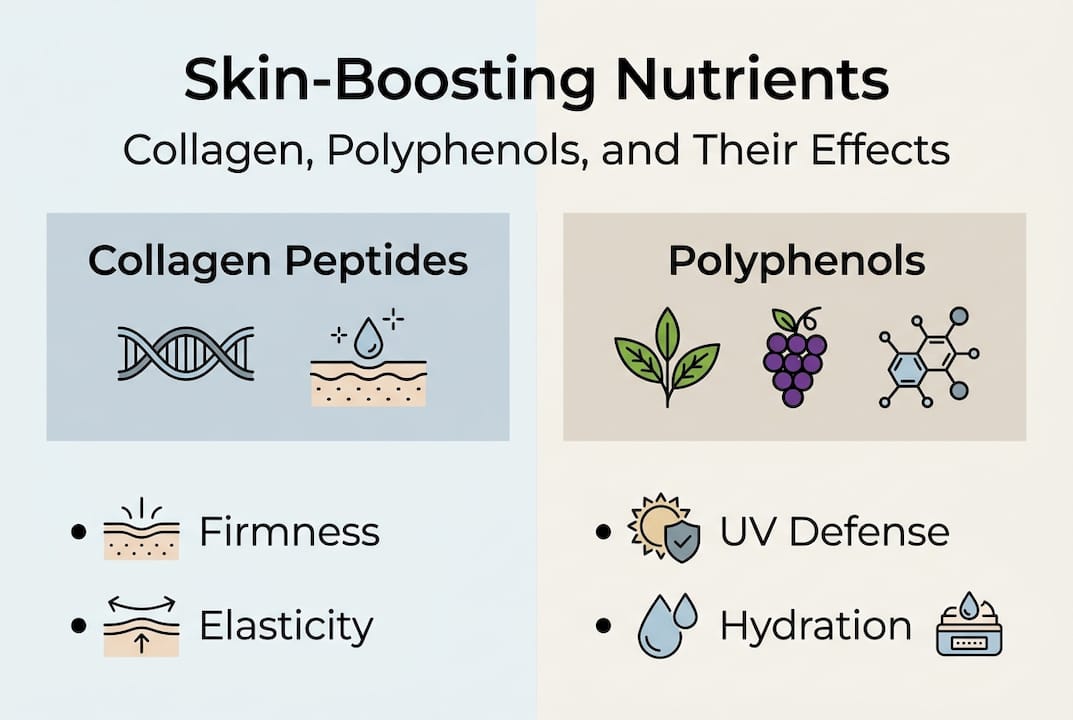
Collagen supplements alleviate photoaging and increase skin elasticity, with cocoa flavanols and polyphenols demonstrating effectiveness across multiple randomised controlled trials. Hydrolysed collagen peptides are absorbed into the bloodstream and appear to stimulate fibroblasts, the cells that produce your skin’s own collagen and elastin. Clinical trials show meaningful improvements in elasticity, hydration, and the appearance of fine lines after 8 to 12 weeks of consistent use.
Those curious about collagen for younger skin will find that dietary sources of collagen co-factors (vitamin C, zinc, proline) are equally important to the supplements themselves.
Polyphenols and cocoa flavanols
Polyphenols, found in green tea, berries, dark chocolate, red wine, and extra virgin olive oil, protect skin from UV-induced damage, reduce inflammation, and improve microcirculation. Cocoa flavanols specifically have shown measurable improvements in skin elasticity and roughness in clinical trials. They work by improving blood flow to the skin and enhancing its defence against oxidative stress.
Soy isoflavones: a nuanced story
Soy isoflavones improve wrinkles and transepidermal water loss (TEWL) in S-equol producers, particularly postmenopausal women, with outcomes dependent on individual gut metabolism. This means that genetic variation and microbiome composition determine who benefits most from soy-based supplements or foods. It is a reminder that not every supplement works identically for every person.
- Assess whether your diet provides adequate collagen co-factors before adding supplements
- Introduce polyphenol-rich foods daily through a variety of colourful produce
- Consider soy isoflavones if postmenopausal and confirmed as an S-equol producer
- Pair collagen supplements with vitamin C for optimal collagen synthesis support
- Explore anti-ageing treatments that complement your nutritional programme for accelerated results
For those considering Sculptra, a treatment that stimulates your own collagen production, combining it with a collagen-supportive diet creates a genuinely synergistic outcome.
Why nutrition-first skin care outperforms conventional wisdom
At The Aesthetics Room, we see a consistent pattern. Clients who arrive having focused entirely on supplements often present with a surprisingly narrow range of results. They have spent considerable sums on collagen powders and vitamin stacks, yet their skin still lacks the luminosity and resilience they are seeking.
The reason is clear: whole foods are superior to supplements for synergy, and over-supplementation risks imbalance. A food-first approach is preferred because real foods deliver co-nutrients, fibre, polyphenols, and minerals that work in concert. A collagen supplement taken alongside a high-sugar, low-fibre diet achieves a fraction of what a genuinely varied, anti-inflammatory diet accomplishes.
We also observe that visible skin improvements, such as improved tone, reduced puffiness, and firmer texture, typically appear within 6 to 12 weeks when clients combine dietary changes with professional treatments and a consistent skincare routine. This timeline matters because it keeps people motivated and consistent.
The misconception we encounter most often is the belief that more supplementation means better results. In practice, the opposite can be true. Excess supplementation of fat-soluble vitamins like A and E can cause toxicity. Excessive zinc can actually impair copper absorption and worsen skin health. The safest and most effective strategy is to use supplements to address confirmed deficiencies and let food do the heavy lifting. Lasting skin confidence comes from a foundation, not a shortcut.
Enhance your skin holistic journey with expert treatments in London
Nutrition builds a powerful internal foundation, but professional aesthetic treatments can accelerate and amplify those results in ways that diet alone cannot achieve.

At The Aesthetics Room, our specialists in Knightsbridge help you bridge the gap between what you eat and how your skin responds. Our expert skin rejuvenation advice is designed to complement your nutritional choices with bespoke, evidence-based treatments. Whether you are interested in our Dermal Fillers to restore volume or seeking a structured London skin workflow to guide your complete skin transformation, our practitioners offer personalised plans tailored to your skin goals. Book your consultation today and take the next step towards skin that truly reflects how well you nourish yourself.
Frequently asked questions
How long does it take for nutrition changes to visibly improve skin?
Visible improvements can occur within 4 to 12 weeks, with sustained results after 6 months when combining nutrition with skincare routines, sunscreen, and adequate sleep.
Are supplements always necessary for better skin?
Whole foods are generally preferred because they deliver nutrient synergy that supplements cannot replicate, and over-supplementation can cause imbalances that actually harm skin health.
Which nutrients are essential for collagen production in skin?
Vitamins C and E support collagen synthesis and antioxidant defence, while zinc at 8 to 11mg daily supports wound healing and sebaceous regulation, making both essential alongside adequate dietary protein.
How does fibre intake affect skin appearance?
Consuming 30g of fibre daily via fruits, vegetables, and whole grains supports gut health through SCFA production, which improves skin barrier integrity and reduces wrinkle formation.
Does the Mediterranean diet really make a difference in skin ageing?
Clinical trials confirm it does. Mediterranean diet adherence reduces acne lesion counts by 25 to 35% and improves skin barrier by 30% in 8 to 12 weeks, with a 16-week trial also demonstrating significant improvements in psoriasis severity.
Recommended
- Glowing skin guide: achieve radiance with expert treatments – The Aesthetics Room
- Skin profiling guide: unlock radiant, tailored skin – The Aesthetics Room
- Skin analysis: The key to radiant, effective results – The Aesthetics Room
- Top tips for autumn skincare – The Aesthetics Room
- Types of skin boosters: what to know for glowing skin