
TL;DR:
- Proper skin hydration requires a layered approach using humectants, emollients, and occlusives to maintain moisture effectively. Key habits include applying products to damp skin, adjusting routines seasonally, and avoiding common mistakes like over-washing and hot showers. Lifestyle factors such as diet, indoor humidity, and sleep quality significantly influence skin moisture levels and overall hydration.
Your skin looks dull, feels tight, and you have tried every cream on the shelf. Sound familiar? Knowing how to boost skin hydration goes well beyond slapping on a moisturiser and hoping for the best. Dehydrated skin is one of the most common concerns we see, and it affects all skin types, including oily ones. This guide covers the science behind moisture retention, the right product layering techniques, lifestyle habits that make a measurable difference, and the mistakes that quietly undo your progress each day.
Table of Contents
- Key takeaways
- The science behind skin hydration
- Building your moisturising skincare routine
- Hydration from within and your environment
- Common hydration mistakes to stop making
- Choosing the right products for your skin type
- My honest perspective on lasting skin hydration
- Discover professional skin hydration at Theaestheticsroom
- FAQ
Key takeaways
| Point | Details |
|---|---|
| Layer ingredients strategically | Combine humectants, emollients, and occlusives in the correct order for lasting moisture. |
| Apply products to damp skin | Moisturiser applied immediately after cleansing locks in significantly more water than on dry skin. |
| Lifestyle factors matter | Diet, sleep, indoor humidity, and water intake all directly affect your skin’s moisture levels. |
| Avoid common routine mistakes | Over-washing, hot showers, and skipping occlusives are the most frequent hydration saboteurs. |
| Professional treatments can help | When home routines plateau, clinical skin hydration therapies offer measurable, deeper results. |
The science behind skin hydration
Before you can increase skin moisture effectively, you need to understand why it escapes in the first place. Your skin barrier, the outermost layer known as the stratum corneum, acts as a seal between your body and the environment. When that seal is compromised, water evaporates through the skin in a process called transepidermal water loss (TEWL). The higher your TEWL, the drier and more reactive your skin becomes.
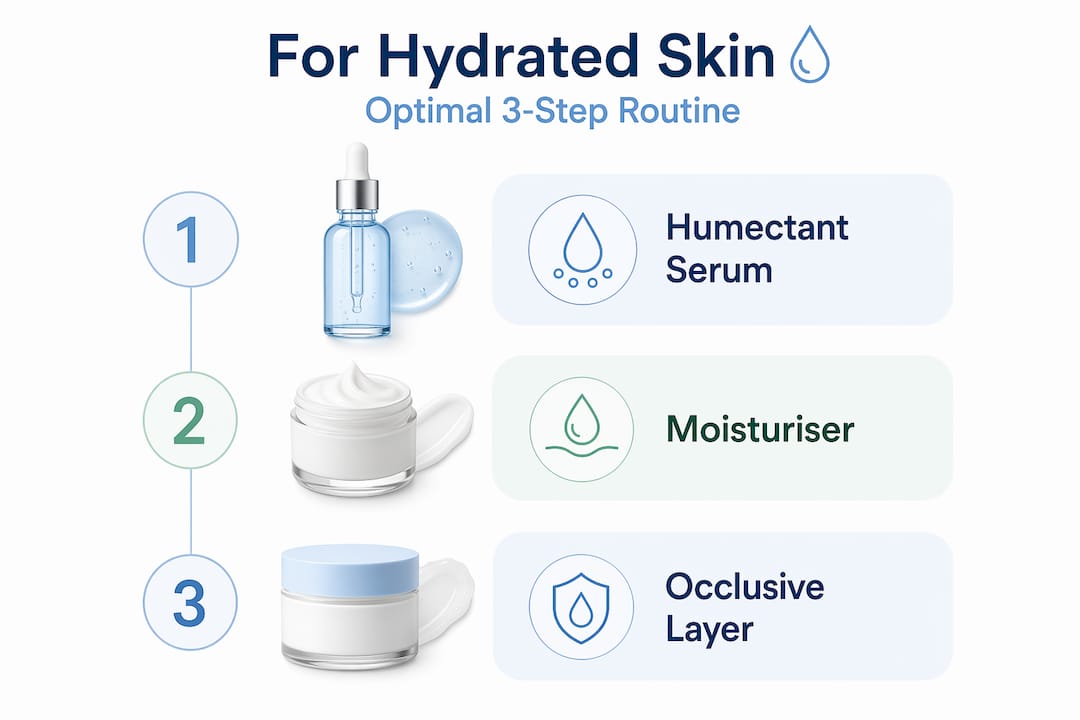
Three categories of ingredients address this problem, and you need all three working together:
- Humectants (hyaluronic acid, glycerin, urea): These draw water into the skin from the air and deeper layers. Hyaluronic acid can bind up to 1,000 times its weight in water, making it one of the most powerful hydrating ingredients available.
- Emollients (ceramides, squalane, shea butter): These smooth the skin surface and repair gaps in the barrier that allow moisture to escape. Ceramides are particularly effective because they mimic the skin’s own lipid structure.
- Occlusives (petrolatum, beeswax, dimethicone): These sit on top of the skin and physically block water loss. Petrolatum is the gold standard. It reduces TEWL by up to 98%, outperforming almost every other ingredient in this category.
Using only one type is where most people go wrong. Dr. Jose Rossello advises that a structured approach combining all three ingredient types is the only reliable way to achieve sustained hydration throughout the day. A comprehensive approach using all three ingredient types can improve skin moisture by up to 47% within four weeks.
Pro Tip: If your skin still feels tight after moisturising, you are likely missing an occlusive step. Try sealing your routine with a product containing dimethicone or beeswax, particularly at night.
Building your moisturising skincare routine
Order, timing, and texture all determine how well your products perform. Getting these right is one of the most underrated skin hydration tips out there.
- Cleanse gently. Choose a pH-balanced, sulphate-free cleanser. Gentle cleansers improve hydration by up to 24% within two weeks simply by preserving the skin barrier you spend the rest of your routine rebuilding. Use lukewarm water, not hot. Hot water increases TEWL by up to 20% and strips the natural oils your skin relies on.
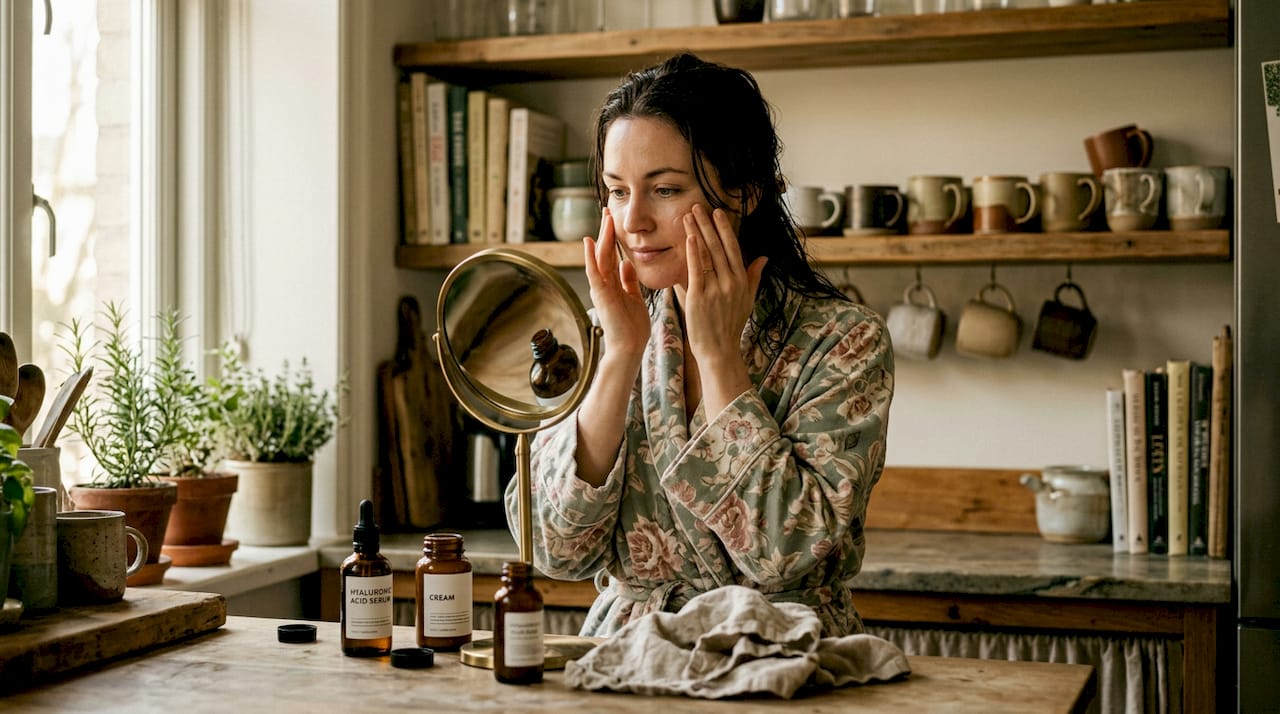
- Apply your serum to damp skin. Pat your face dry very lightly and apply your hyaluronic acid serum while the skin is still slightly damp. Applying moisturiser to damp skin dramatically improves water retention compared to applying on completely dry skin. The humectant draws that surface moisture deeper into the skin.
- Layer from thinnest to thickest. Serums go first, then lightweight moisturisers, then richer creams or balms. This product layering sequence improves absorption and ensures each ingredient reaches where it is needed most.
- Seal with an occlusive at night. This is where slugging earns its reputation. Applying a thin layer of petroleum jelly over your moisturiser overnight acts as a powerful barrier to prevent any moisture loss while you sleep. Slugging significantly increases morning skin hydration. Note: those with acne-prone skin should approach this technique cautiously and consider non-comedogenic alternatives.
- Exfoliate strategically, not aggressively. Dead skin cells block product absorption. Chemical exfoliants (AHAs like lactic acid, BHAs like salicylic acid) are gentler and more effective than physical scrubs. Twice a week is sufficient for most skin types. More than that weakens the barrier.
- Adjust for the season. In winter, switch to a richer cream formulation. In summer, a lighter lotion with the same ingredient categories will do the job without feeling heavy. Our skincare routine checklist can help you build and adapt your routine throughout the year.
Pro Tip: Apply your hyaluronic acid serum within 60 seconds of cleansing. The window for trapping surface moisture is short. After that, the humectant may draw water from deeper skin layers if the air around you is very dry.
Hydration from within and your environment
No topical routine can fully compensate for internal deficiency or a damaging environment. These factors are often the missing piece for people who feel their skincare “just isn’t working.”
What you eat directly affects your skin barrier. Omega-3 fatty acids, found in oily fish, flaxseed, and walnuts, are particularly powerful. Omega-3 intake reduces TEWL by 22% after 12 weeks, measurably strengthening the skin barrier from the inside. Water-rich foods such as cucumber, watermelon, celery, and courgette also contribute to overall hydration.
Here are the key environmental and lifestyle levers to control:
- Indoor humidity: Heated and air-conditioned rooms typically drop to below 30% humidity. Maintaining indoor humidity at 40 to 60% increases skin hydration by 30%. A good humidifier is genuinely one of the best hydrating products you can invest in for your home or workspace.
- Sleep quality: During deep sleep, your body produces growth hormone and repairs the skin barrier. Consistently poor sleep raises cortisol levels, which degrades collagen and weakens the barrier.
- Stress management: Elevated cortisol triggers inflammation and disrupts the skin’s ability to hold water. Even brief daily stress reduction practices, such as a short walk or focused breathing, have measurable effects on skin condition over time.
- Hot shower habits: Keep showers under 10 minutes and use lukewarm water. Rinse with cool water at the end if you can manage it. Pat rather than rub when drying.
- Sun and wind exposure: Both deplete moisture rapidly. Apply SPF 30 or above daily and use a barrier cream or balm on exposed areas in windy conditions.
| Factor | Optimal practice | Effect on hydration |
|---|---|---|
| Indoor humidity | Maintain at 40 to 60% | Up to 30% hydration increase |
| Omega-3 intake | Oily fish, flaxseed, walnuts daily | 22% TEWL reduction in 12 weeks |
| Shower temperature | Lukewarm, under 10 minutes | Prevents up to 20% TEWL increase |
| Sleep | 7 to 9 hours per night | Supports barrier repair and collagen production |
Common hydration mistakes to stop making
Many people follow what seems like a solid routine and still end up with dry, tight skin. Usually, the problem is one of these:
- Moisturising on completely dry skin. This single habit change, applying products to slightly damp skin rather than fully dry, can transform your results without spending a penny more.
- Using harsh or foaming cleansers. Sulphates and strong surfactants strip the skin’s natural lipids, setting you back every morning and evening. If your face feels “squeaky clean” after washing, that is not a good sign.
- Skipping the occlusive step at night. Many people stop at a serum and moisturiser, leaving the final seal out entirely. Moisture continues to evaporate overnight without that barrier.
- Ignoring seasonal changes. What works in August will likely fail you in January. Skin needs richer formulations when central heating runs all day and outdoor temperatures drop.
- Over-exfoliating. More frequent exfoliation does not equal faster results. Stripping the barrier makes every other product less effective and leaves skin vulnerable.
Watch for these signs that your skin is dehydrated rather than simply dry. Dullness, increased visibility of fine lines when you press or pinch the skin lightly, and a persistent feeling of tightness even after applying products all point to dehydration. If you have concerns about dry versus dehydrated skin, understanding which category applies to you shapes every product decision you make going forward.
Dehydrated skin is a condition, not a skin type. Oily skin can be dehydrated. Combination skin can be dehydrated. A targeted, layered routine and a few key lifestyle adjustments are almost always more effective than switching to expensive new products.
Choosing the right products for your skin type
Not all hydrating ingredients suit every skin type equally. Here is how to match your formulation choices to your skin’s specific needs:
| Skin type | Best humectants | Best emollients | Best occlusives |
|---|---|---|---|
| Dry skin | Hyaluronic acid, glycerin | Ceramides, shea butter | Petrolatum, beeswax |
| Oily or combination | Hyaluronic acid, niacinamide | Squalane, jojoba oil | Dimethicone (lightweight) |
| Sensitive skin | Glycerin, aloe vera | Oat extract, ceramides | Zinc oxide, beeswax |
For dry skin, richer formulations with multiple emollients and a strong occlusive work best. Natural oils like rosehip, marula, and argan are excellent emollient additions that also carry antioxidant benefits.
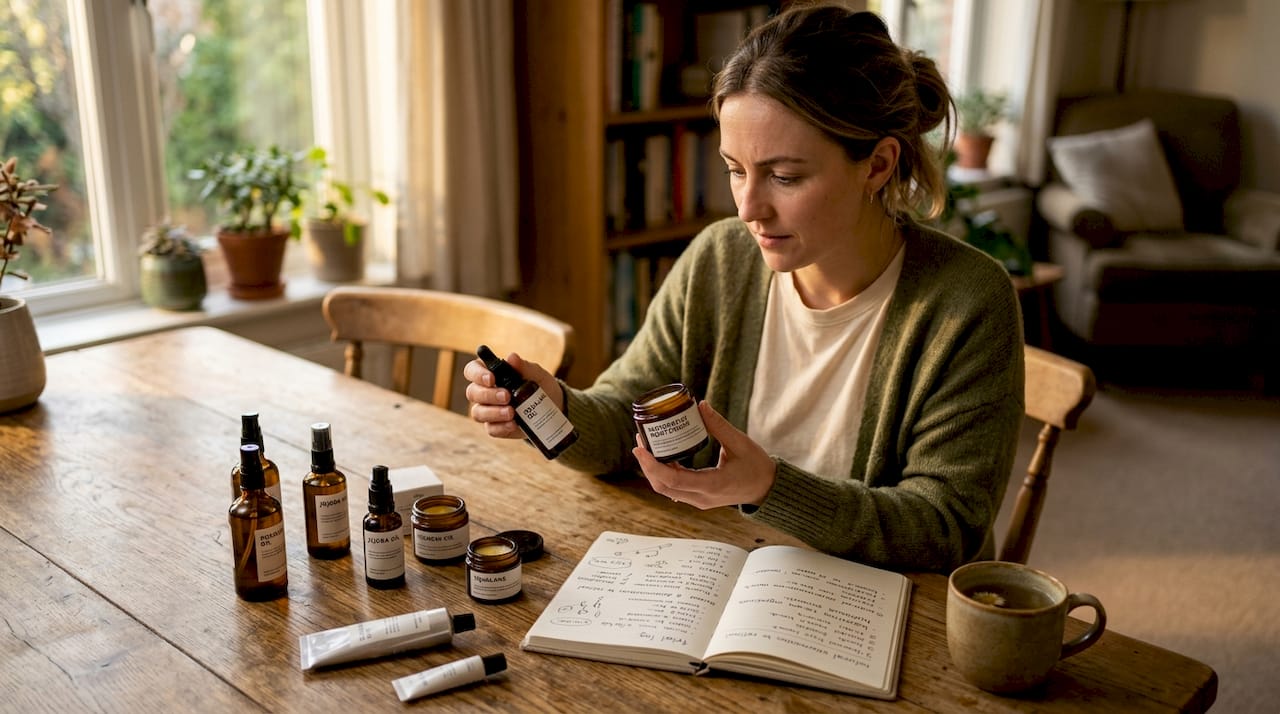
For oily or combination skin, the temptation is to skip moisturiser entirely, which actually worsens dehydration and can trigger more sebum production. Lightweight, oil-free formulations with hyaluronic acid and squalane deliver hydration without congesting pores.
Sensitive skin benefits most from fragrance-free, minimal-ingredient formulations. Fewer actives mean fewer potential triggers. Oat extract and ceramide-rich products are particularly well tolerated. For those interested in going further, beauty booster treatments at a professional clinic deliver deep hydration with targeted injectable ingredients that topical products simply cannot replicate.
My honest perspective on lasting skin hydration
I have seen every hydration trend come and go, and the one thing that holds true every time is this: consistency with the basics outperforms any expensive new product. The most common mistake I observe is people constantly switching products when results plateau, rather than examining whether they are applying what they already have correctly.
The second thing I would say is that hydration is not static. Your skin’s needs in winter are genuinely different from its needs in summer, and what works brilliantly at 25 may need adjusting at 40. I have found that the people who maintain the best skin hydration long-term are not those with the most elaborate routines. They are the ones who have learned to read their skin and adjust incrementally rather than reactively.
Quick fixes rarely deliver lasting results. The science points clearly to a multi-layered approach that addresses both the surface barrier and the underlying lifestyle factors. Embrace that, give it four to six weeks of genuine consistency, and the improvement in texture, tone, and moisture will speak for itself.
— Vishul
Discover professional skin hydration at Theaestheticsroom
Home routines are powerful, but there is a ceiling to what topical products can achieve alone. At Theaestheticsroom, our expert practitioners at our Knightsbridge clinic offer a range of clinically proven treatments designed to restore and maintain deep skin hydration.

Our skin rejuvenation treatments target the structural causes of dryness and dullness, delivering results that complement your home routine rather than replace it. For clients seeking to restore volume and moisture at a deeper level, our dermal filler treatments offer precise, personalised results administered by fully accredited specialists. We also offer Botox treatments for clients looking to address fine lines alongside hydration concerns. Every treatment plan at Theaestheticsroom is bespoke, developed during a thorough consultation with your skin goals at the centre. Book your consultation today and take the next step towards genuinely healthy, hydrated skin.
FAQ
What is the fastest way to hydrate skin?
Apply a hyaluronic acid serum to damp skin immediately after cleansing, then seal with a moisturiser containing emollients and an occlusive. This layered approach can produce noticeable results within days.
Can oily skin be dehydrated?
Yes. Oily skin produces excess sebum but can still lack water content, leading to dehydration. Lightweight, oil-free hydrating products with hyaluronic acid address this without clogging pores.
How does water intake affect skin hydration?
Adequate water intake supports overall cellular function, but topical hydration strategies are also necessary because drinking water alone does not reliably increase skin moisture levels on the surface.
Is slugging safe for all skin types?
Slugging, which means applying petroleum jelly over your moisturiser at night, works well for dry and normal skin types. Those with acne-prone skin should avoid it as petrolatum can trap debris and worsen breakouts.
How often should I exfoliate for better skin hydration?
Twice a week with a gentle chemical exfoliant is sufficient for most skin types. Over-exfoliation damages the skin barrier, which increases moisture loss and counteracts all other hydration efforts.
Recommended
- Skin Hydration Therapy: Revitalising Skin Health Safely – The Aesthetics Room
- Glowing skin guide: achieve radiance with expert treatments – The Aesthetics Room
- Unlock radiant skin: how nutrition transforms your complexion – The Aesthetics Room
- What are beauty boosters? your guide to luxury skin hydration – The Aesthetics Room