
TL;DR:
- Subcision is a safe, minimally invasive procedure that releases fibrous bands to lift depressed acne scars and stimulate collagen growth. It effectively treats rolling scars with gradual, lasting results, especially when combined with other skin therapies. A thorough consultation and proper aftercare are essential for optimal outcomes and safety.
What is subcision and how does it works to lift depressed scars
Subcision is a minimally invasive surgical procedure that physically breaks the fibrous bands tethering depressed acne scars to the underlying tissue, lifting the skin surface and triggering new collagen formation. Originally coined by Orentreich and Orentreich in 1995, the technique remains one of the most clinically validated options for rolling acne scars available in UK clinics today.
The mechanism is straightforward but precise. A needle or blunt cannula is inserted beneath the scar and moved in a controlled fanning motion to sever the fibrotic strands pulling the skin downward. Once those tethers are cut, the dermis lifts. The controlled injury then activates the body’s wound healing response, stimulating connective tissue growth that gradually fills the dermal pocket left behind.
Three things happen in sequence during healing:
- The dermis detaches from underlying tissue and elevates as the fibrous bands are released.
- Wound healing factors promote connective tissue growth, filling the dermal pocket.
- Fat lobules are redistributed, reducing contour irregularities caused by acne-induced lipoatrophy.
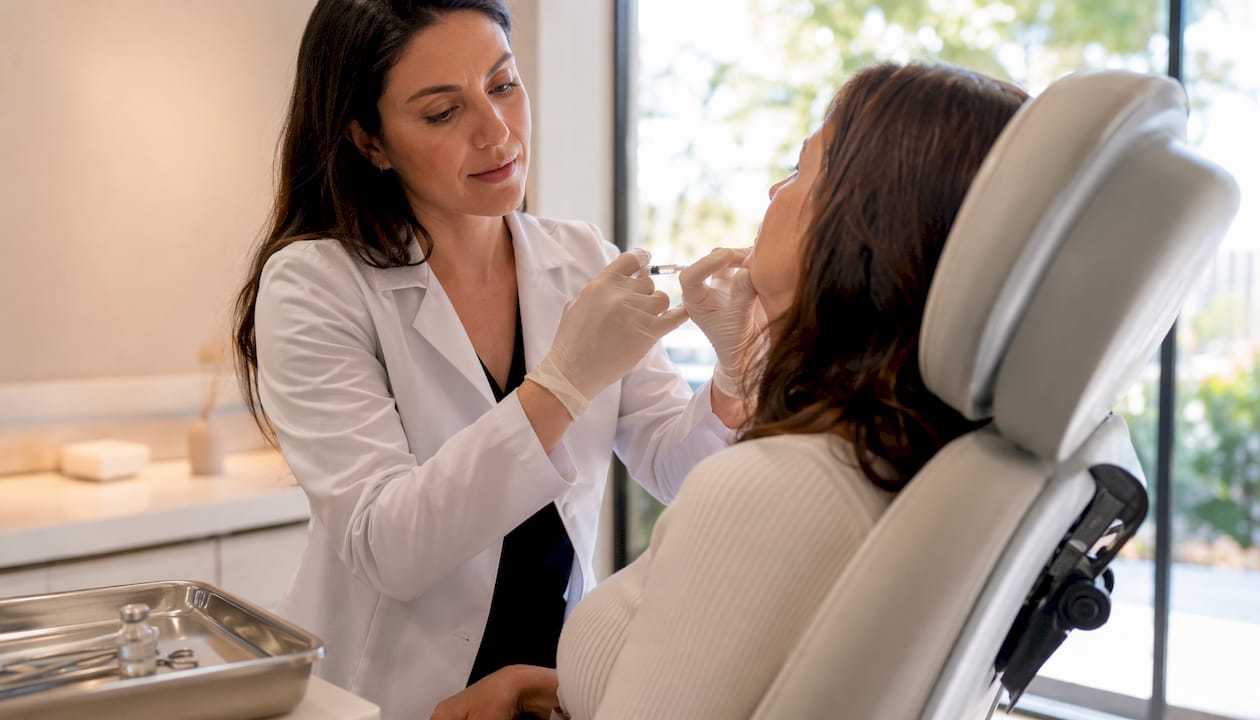
The procedure is performed under local anaesthesia in a clinical setting and typically takes a variable length of time depending on the number of scars being treated. Patients remain awake throughout, and most describe the sensation as mild pressure rather than pain.
Table of Contents
- Which acne scars does subcision treat, and are you a suitable candidate?
- Subcision techniques used in the UK: needles, cannulas, Taylor Liberator, and Nokor needle
- Anaesthesia options and what happens during the procedure
- What are the benefits of subcision for acne scars?
- Risks, possible complications, and what to expect during recovery
- How subcision works alongside other treatments
- Expert insights on technique precision and managing patient expectations
- How to prepare for your subcision consultation and treatment
- Post-procedure aftercare to support healing and results
- Subcision treatment at Theaestheticsroom in London
- Key takeaways
Which acne scars does subcision treat, and are you a suitable candidate?
Subcision is specifically effective for rolling acne scars but offers limited benefit for ice-pick or deep boxcar scars, which require different treatment modalities. Rolling scars have the characteristic gentle, sloping edges and are distensible, meaning they flatten when the skin is stretched. That distensibility is what makes them responsive to subcision: the fibrous tethers are accessible and can be released cleanly.
Ice-pick scars are narrow and deep, extending into the dermis in a way that subcision cannot adequately address. Deep boxcar scars have sharply defined vertical walls, and while shallow boxcar scars may respond partially, they are generally better treated with laser resurfacing or punch techniques.
Suitable scar types:
- Rolling scars (primary indication)
- Shallow boxcar scars (partial response, often combined with other treatments)
Patient suitability criteria practitioners assess:
- Scar morphology: distensible rolling scars with fibrous tethering
- Skin health: absence of active acne or infection in the treatment area
- Skin tone: candidates across all Fitzpatrick skin types can be treated, though pigmentation risk is discussed during consultation
- Medical history: no active bleeding disorders or use of anticoagulant medication
- Realistic expectations: understanding that improvement is gradual and multiple sessions are often needed
A thorough consultation is the only reliable way to confirm suitability. Practitioners assess each scar individually, and many patients present with a mix of scar types requiring a combination approach. The common misconception that subcision works for all acne scarring is worth addressing directly: it does not, and a skilled practitioner will tell you so honestly.
Subcision techniques used in the UK: needles, cannulas, Taylor Liberator, and Nokor needle
Four main instrument categories are used for subcision in UK clinics: needles, blunt cannulas, the Taylor Liberator, and the Nokor needle. Each has a distinct profile in terms of precision, side effects, and the depth of scar it addresses most effectively.
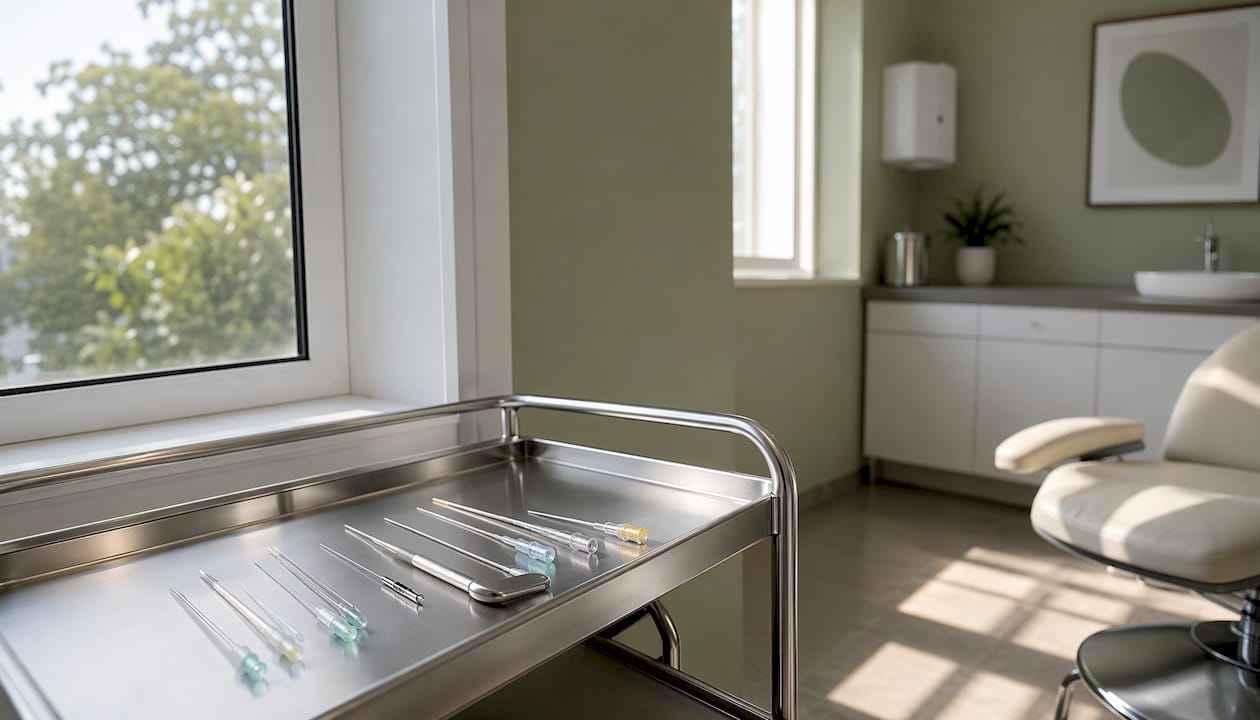
Needle-based subcision uses a tri-bevelled hypodermic needle, typically 18 or 20 gauge. The sharp edges cut through fibrotic bands efficiently, making it well suited to denser tethering. The trade-off is a higher likelihood of bruising and haematoma formation compared to blunt instruments.
Cannula-based subcision uses a blunt-tipped instrument with a single insertion point, which reduces trauma to surrounding nerves and blood vessels. Clinical trials show significantly milder bruising with cannula compared to tri-bevelled needles (p=0.001), and patient satisfaction is higher. Many UK clinics now favour the cannula approach for this reason. You can read more about the differences between cannulas and needles in aesthetic procedures generally.
The Taylor Liberator is a blunt-blade instrument designed specifically for subcision. Its wider blade allows broader release of fibrotic tissue in a single pass, making it particularly useful for larger rolling scar areas. It sits in the blunt-instrument category and shares the lower side-effect profile of cannula techniques.
The Nokor needle is an 18-gauge, 1.5-inch needle with a modified tip that combines cutting efficiency with a degree of blunt dissection. It is inserted with the bevel upwards, parallel to the skin surface, and moved in the characteristic fanning motion to release bands at the dermal or deep dermal-subcutaneous plane.
Technique summary:
- Standard needle: sharp, efficient, higher bruising risk
- Blunt cannula: single entry point, lower bruising, higher patient satisfaction
- Taylor Liberator: broad blunt-blade release, suited to larger scar areas
- Nokor needle: modified tip combining cutting and blunt dissection
Pro Tip: The choice of instrument should reflect scar depth and the patient’s bruising tolerance. Blunt cannulas are generally preferred for patients with darker skin tones where post-inflammatory hyperpigmentation is a concern, as reduced trauma lowers the risk of pigmentation changes.
Anaesthesia options and what happens during the procedure
Tumescent local anaesthesia is the standard approach for subcision in UK clinics. A dilute solution of local anaesthetic is infiltrated into the treatment area, creating a firm, swollen layer that both numbs the skin and provides a physical plane for the instrument to work within. This makes the fanning technique safer and more controlled.
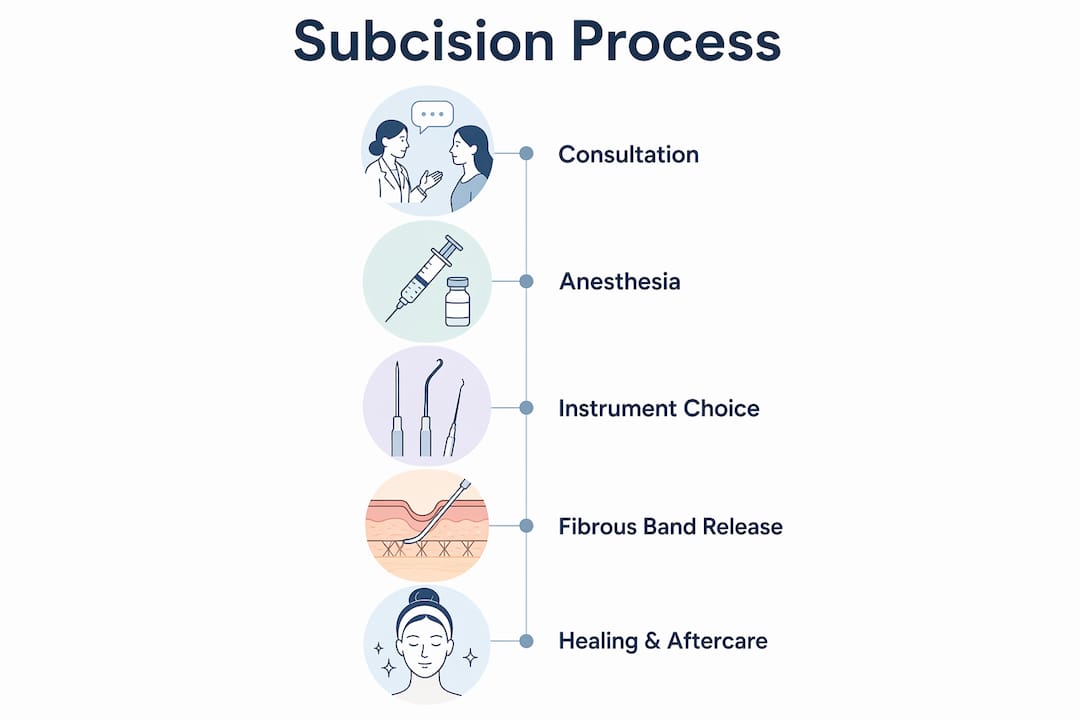
The procedural steps follow a consistent sequence:
- The treatment area is cleaned and marked.
- Tumescent anaesthetic is infiltrated subcutaneously.
- The needle or cannula is inserted adjacent to the scar, bevel upwards, parallel to the skin surface.
- The instrument is advanced to the deep dermis or dermal-subcutaneous junction.
- A fanning motion releases fibrous bands across the scar base; a snapping sensation is often felt as each band breaks.
- The instrument is withdrawn, and the exit site is compressed circumferentially to evacuate excess blood.
Managing the exit site carefully is critical. Excess blood must be evacuated to prevent discomfort and prolonged bruising, though a small haematoma is intentionally left in place. That residual blood clot acts as a scaffold, supporting the elevated scar tissue during the early healing phase and encouraging connective tissue formation.
The procedure itself typically takes a variable length of time. Patients may feel mild pressure and occasional sharp sensations as bands release, but significant pain is uncommon with adequate anaesthesia. Most people are comfortable returning home immediately afterwards.
What are the benefits of subcision for acne scars?
Subcision delivers results that are both structural and lasting. Because it physically releases the fibrous tethers pulling the skin down, the improvement is not dependent on a filler material that will eventually degrade. The collagen stimulated during healing continues to remodel for months after treatment.
Core benefits:
- Scar elevation: depressed rolling scars lift as fibrous tethers are released
- Collagen stimulation: controlled injury promotes connective tissue growth that fills dermal pockets
- Improved skin texture: the surface becomes smoother and more even over time
- Lasting results: structural improvement persists because new collagen is your own tissue
- Psychological benefit: patients consistently report improved confidence as scar appearance reduces
The gradual nature of results is worth understanding clearly. Visible improvement begins within weeks, but the full benefit of collagen remodelling takes three to six months to manifest. Patients who expect an immediate transformation often underestimate how much better their skin looks at the six-month mark compared to the one-month mark.
Subcision also pairs exceptionally well with other treatments. When combined with dermal fillers, for example, the filler can be placed into the newly released space to provide immediate volume while the body’s own collagen builds underneath. That combination addresses both the short-term appearance and the long-term structural deficit.
Risks, possible complications, and what to expect during recovery
Subcision is a safe procedure when performed by a skilled practitioner, but it carries predictable side effects that every patient should understand before treatment.
Common side effects:
- Bruising: typically peaks at 48–72 hours and resolves within one to two weeks
- Swelling: usually subsides within a few days
- Mild tenderness at the treatment site
- Temporary skin discolouration, particularly in patients with darker skin tones
- Small lumps or firmness beneath the skin as haematomas organise
Patients should expect bruising and swelling for several days post-procedure, with final results emerging over months as collagen remodels. This timeline surprises many people, and being prepared for it significantly improves satisfaction with the process.
Rare but more serious complications include infection, nerve injury, and persistent hyperpigmentation. These risks are substantially reduced when the procedure is performed by a practitioner with strong anatomical knowledge and experience in the fanning technique. Choosing a CQC-accredited clinic with qualified medical practitioners is not optional when considering subcision.
Downtime is generally minimal in practical terms. Most patients can return to desk-based work the following day, though visible bruising means social downtime of about a week is realistic for many. Strenuous exercise and heat exposure should be avoided for at least one week.
How subcision works alongside other treatments
Subcision rarely works in isolation for patients with moderate to severe acne scarring. Combining it with complementary treatments produces results that neither approach achieves alone, and reduces the risk of scar re-tethering as healing progresses.
Common combination therapies:
- Laser resurfacing (fractional CO2 or Erbium): resurfaces the skin surface while subcision addresses the underlying structure
- Microneedling: stimulates additional collagen and improves overall skin texture; microneedling vs chemical peel comparisons are useful for patients deciding on complementary options
- Platelet-rich plasma (PRP): autologous platelet gel applied after subcision accelerates healing and enhances collagen production
- Dermal fillers (hyaluronic acid or calcium hydroxyapatite): placed into released scar pockets to provide immediate volume and prevent re-depression
- Fractionated microneedle radiofrequency: combines mechanical and thermal collagen stimulation for enhanced remodelling
Subcision is often combined with laser resurfacing, microneedling, and dermal fillers to enhance results and prevent scar re-tethering. The sequencing matters: subcision is typically performed first to release tethering, with surface treatments following once initial healing is complete.
Most patients require multiple sessions of subcision spaced several weeks apart, depending on scar severity and response. Combination treatments are often scheduled in the intervals between subcision sessions to allow adequate healing time. A practitioner will map out a personalised treatment schedule during consultation, adjusting frequency based on how the skin responds.
Expert insights on technique precision and managing patient expectations
Subcision is one of the few aesthetic procedures where practitioner skill directly determines the outcome more than the instrument used. Precise fanning reduces the risk of neurovascular damage and enhances the efficacy of each session. The instrument must remain in a single plane, parallel to the subcutaneous fat, to avoid complications while maximising the release of fibrotic tethers.
Expert guidance on technique and expectations:
- The fanning motion should be controlled and methodical, covering the full base of each scar without straying into adjacent tissue planes
- Anatomical knowledge of the facial vasculature is non-negotiable for safe subcision around the cheeks and temples
- Patients should be counselled that improvement is progressive: the three-month result will look better than the one-month result, and the six-month result better still
- Multiple sessions are the norm, not the exception, for moderate to severe rolling scars
- Subcision is not a cure; it is a significant improvement tool, and realistic goals centre on meaningful reduction rather than complete elimination of scars
A common misconception is that subcision delivers dramatic results after a single session. For mild rolling scars, one or two sessions may be sufficient. For more extensive scarring, a structured programme combining subcision with complementary treatments over six to twelve months produces the most satisfying outcomes. Patients who understand this from the outset report far higher satisfaction than those who expect rapid perfection.
UK clinics operating under CQC accreditation and ACE Group membership standards provide an additional layer of safety assurance. These frameworks require practitioners to maintain clinical competency and adhere to patient safety protocols, which matters considerably for a procedure that depends so heavily on technical precision.
How to prepare for your subcision consultation and treatment
Preparation begins well before the day of the procedure. A thorough consultation with a qualified medical practitioner is the essential first step, during which your scar types are assessed, your medical history is reviewed, and a personalised treatment plan is discussed.
Pre-procedure preparation checklist:
- Avoid blood-thinning medications (aspirin, ibuprofen, fish oil supplements) for at least one week before treatment, unless prescribed for a medical condition
- Disclose all medications, supplements, and any history of keloid or hypertrophic scarring
- Avoid alcohol for 24 hours before the procedure, as it increases bruising risk
- Arrive with clean skin, free of makeup or topical products
- Arrange transport home if you feel anxious about the procedure, though most patients drive themselves without difficulty
- Discuss any history of cold sores if the treatment area is near the mouth, as prophylactic antiviral medication may be recommended
The consultation itself should include a detailed assessment of your Fitzpatrick skin type, a discussion of realistic outcomes, and a clear explanation of the recovery process. Before-and-after photographs are typically taken at this stage to provide a baseline for tracking progress. Patients who ask specific questions about the practitioner’s experience with subcision and the instruments they use are making a sound decision.
Post-procedure aftercare to support healing and results
The aftercare period directly influences how well subcision works and how quickly bruising resolves. Following your practitioner’s instructions carefully is the single most effective thing you can do to protect your results.
Aftercare instructions:
- Apply ice wrapped in a clean cloth to the treated area for 10–15 minutes every hour on the day of treatment to reduce swelling
- Keep the skin clean and avoid touching the treated area unnecessarily
- Avoid strenuous exercise, saunas, and steam rooms for at least one week
- Sleep with your head slightly elevated for the first two to three nights to minimise swelling
- Avoid direct sun exposure and apply SPF 30 or higher daily once any open puncture sites have closed
- Do not apply active skincare ingredients (retinoids, AHAs, BHAs) until the skin has fully healed, typically after one to two weeks
- Attend all follow-up appointments so your practitioner can assess healing and plan subsequent sessions
Gentle skincare during recovery supports the skin barrier without disrupting the healing process. Some patients find that fragrance-free, tallow-based or barrier-repair moisturisers help soothe the skin during the first week; gentle skincare options that avoid harsh actives are worth considering during this phase. Post-treatment skin is more sensitive to UV damage, so sun protection is not negotiable for the duration of the healing period.
Subcision treatment at Theaestheticsroom in London
Theaestheticsroom offers subcision as part of a broader, medically led approach to acne scar treatment at its Knightsbridge clinic. For patients who want a procedure performed by qualified medical practitioners in a CQC-accredited environment, this is a meaningful distinction from non-medical aesthetic settings.

The clinic’s approach combines subcision with complementary treatments such as dermal fillers and skin rejuvenation therapies, tailored to each patient’s scar profile and skin type. Rather than a one-size approach, Theaestheticsroom builds a structured treatment plan that sequences procedures for maximum collagen stimulation and lasting improvement. Patients benefit from the clinic’s ACE Group membership, which upholds rigorous patient safety standards across every treatment. To discuss whether subcision is right for your skin, book a consultation with the team at Theaestheticsroom and take the first step towards clearer, smoother skin.
Key takeaways
Subcision is the most clinically supported treatment for rolling acne scars, working by releasing fibrous tethers beneath the skin to lift depressions and stimulate lasting collagen growth.
| Point | Details |
|---|---|
| Best scar type for subcision | Rolling acne scars respond best; ice-pick and deep boxcar scars require different treatments. |
| Cannula vs needle | Cannula-based subcision produces significantly milder bruising and higher patient satisfaction than needle methods. |
| Recovery timeline | Bruising and swelling resolve within days to two weeks; final collagen remodelling results take three to six months. |
| Combination therapies | Subcision paired with dermal fillers, PRP, or laser resurfacing produces better outcomes and reduces re-tethering. |
| Theaestheticsroom | Offers medically led subcision in a CQC-accredited London clinic, with personalised treatment plans combining subcision and complementary skin treatments. |