

TL;DR:
- Laser hair removal uses focused light to target melanin in hair follicles, reducing hair growth over time. The effectiveness depends on hair color, skin tone, and proper treatment spaced over multiple sessions, with long-term results achievable through ongoing maintenance. Safety is ensured when performed by trained practitioners using appropriate laser types, with common side effects being mild and temporary.
Laser hair removal is a medical procedure that uses concentrated beams of light to target melanin in hair follicles, damaging them to slow and reduce hair growth. The treatment is one of the most widely performed aesthetic procedures in the UK, commonly applied to the legs, underarms, upper lip, chin, and bikini line. Unlike shaving or waxing, it works at the follicle level, which means results last significantly longer. If you are weighing up your options, understanding the laser hair removal process from start to finish will help you decide whether it suits your skin, hair type, and lifestyle.
How does laser hair removal work?
Laser hair removal works through a principle called selective photothermolysis. The laser emits a specific wavelength of light that is absorbed by melanin, the pigment that gives hair its colour. That absorbed light converts to heat, which damages the follicle and disrupts its ability to produce new hair. The surrounding skin remains largely unaffected because the wavelength is matched precisely to the target.
The science behind this is more specific than most people realise. The laser’s pulse duration is calibrated to heat the follicle long enough to damage it, but short enough to avoid spreading heat to nearby tissue. This precision is what separates professional laser treatment from at-home devices, which operate at lower energy levels and with less accuracy.
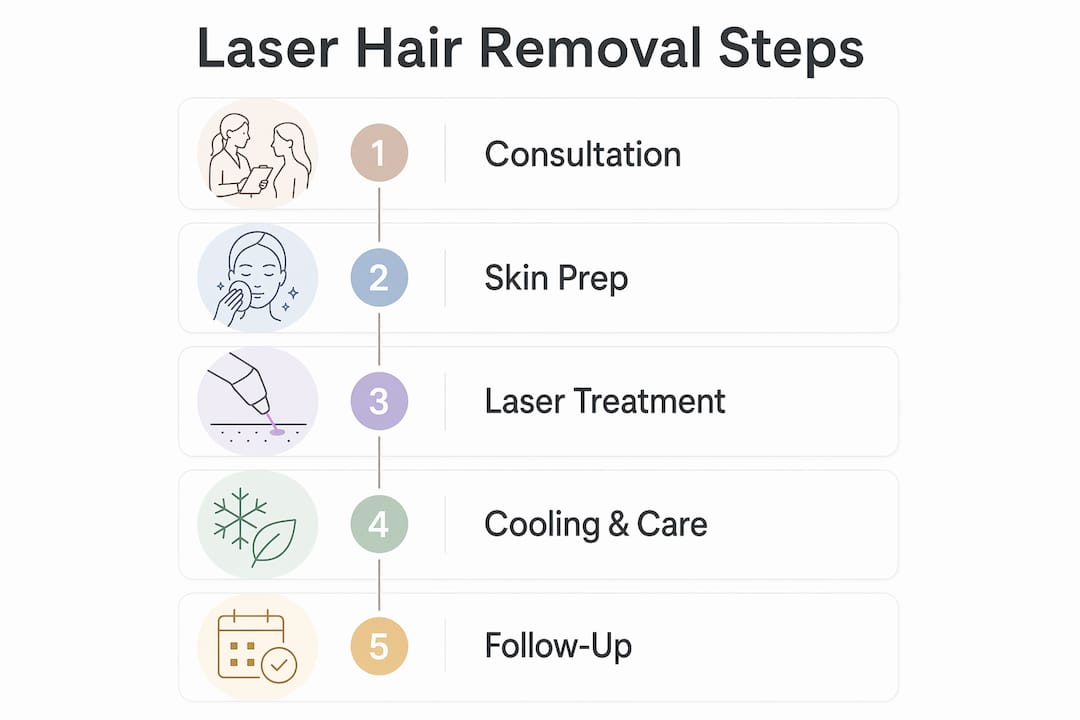
Sessions typically follow this sequence:
- Consultation and skin assessment. A practitioner evaluates your hair colour, skin tone, and medical history to select the appropriate laser type and settings.
- Shaving the treatment area. The area is shaved shortly before the session. Shaving beforehand prevents surface hair from absorbing laser energy, directing it into the follicle instead.
- Applying cooling protection. A cooling gel or device is used on the skin to protect the outer layers and improve comfort during treatment.
- Laser application. The practitioner passes the laser handpiece over the skin in pulses. Most people describe the sensation as a quick snap, similar to a rubber band flicking against the skin.
- Post-treatment care. Redness and mild swelling are normal immediately after. These typically resolve within a few hours.
Treatment duration varies considerably by area. The upper lip takes just a few minutes. The back or legs can require an hour or more. Sessions are spaced several weeks apart to align with the hair growth cycle.
Pro Tip: Avoid waxing, plucking, or threading for at least four weeks before your session. These methods remove the follicle root, which the laser needs to target.
What affects how well laser hair removal works?
The effectiveness of laser hair removal depends on the contrast between hair pigment and skin tone. Dark hair on light skin produces the strongest results because the laser can distinguish the follicle from the surrounding tissue with ease. Very light, grey, or white hair responds poorly because there is insufficient melanin for the laser to target.
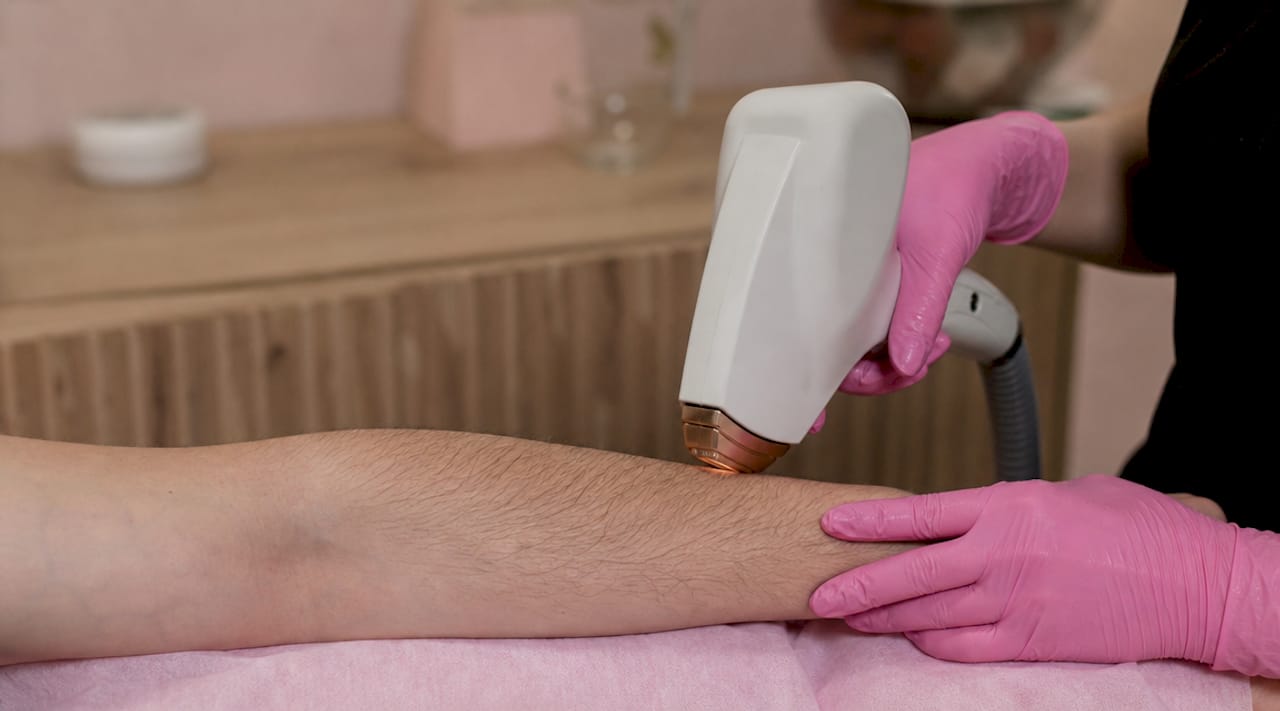
Hair growth cycles also play a critical role. Laser treatment is only effective during the anagen phase, the active growth stage when the follicle is fully formed and connected to the hair shaft. Because not all follicles are in this phase simultaneously, 4–6 sessions spaced several weeks apart are typically required to treat the full area.
Hormonal conditions add another layer of complexity. Polycystic ovary syndrome (PCOS) and similar conditions stimulate ongoing hair growth, which means new follicles can become active after treatment is complete. In these cases, maintenance sessions are not optional. They are part of the long-term management plan.
The choice of laser technology also matters. Here is how the main options compare:
| Laser Type | Best For | Pain Level | Notes |
|---|---|---|---|
| Diode laser | Fair to medium skin tones | Moderate | Strong long-term reduction |
| Nd:YAG laser | Darker skin tones | Moderate to high | Safer for higher melanin levels |
| IPL (Intense Pulsed Light) | Light skin, fine hair | Lower | Broader light spectrum, less precise |
A 2026 clinical trial confirmed that diode laser delivers superior long-term hair reduction compared to IPL, though IPL was better tolerated with less discomfort. This trade-off between efficacy and comfort is worth discussing with your practitioner before committing to a technology.
Pro Tip: If you have a darker skin tone, ask specifically about Nd:YAG laser. It operates at a longer wavelength that bypasses surface melanin, reducing the risk of pigmentation changes.
Benefits of laser hair removal vs. other methods
Laser hair removal offers long-term hair reduction that temporary methods simply cannot match. Here is how it compares to the alternatives:
- Shaving removes hair at the surface only. Regrowth appears within days and the process must be repeated indefinitely.
- Waxing removes hair from the root but does not damage the follicle. Results last 3–6 weeks before full regrowth returns. Professional waxing services are effective for short-term smoothness but require ongoing appointments.
- IPL uses broad-spectrum light rather than a focused laser beam. It is less precise and generally less effective for coarser or darker hair, though it suits some skin types well.
- Laser hair removal damages the follicle itself, leading to progressively finer and sparser regrowth with each session. Many clients experience an 80–90% reduction in hair density after a full course of treatment.
The key distinction is that laser hair removal reduces hair growth rather than guaranteeing permanent removal. Results can last months or years, but occasional maintenance sessions are common, particularly for hormonally influenced hair. Thinking of it as long-term management rather than a one-time fix sets the right expectations from the start.
Laser treatment also covers large areas more efficiently than most alternatives. A full leg session, while lengthy, replaces dozens of waxing appointments over the same period. For many clients, the cumulative time and cost savings make laser the more practical choice over several years.
What side effects and safety considerations should you know?
Laser hair removal is considered safe when performed by a trained practitioner, but side effects do occur. Knowing what to expect helps you distinguish a normal response from something that needs attention.
Common side effects include:
- Mild redness and swelling at the treatment site, typically resolving within a few hours
- Temporary skin irritation or a sensation similar to mild sunburn
- Slight changes in skin pigmentation, particularly in darker skin tones, which usually resolve over time
Less common but serious risks include:
- Burns or blistering if the laser settings are not calibrated correctly for your skin type
- Persistent pigmentation changes, more likely when treatment is performed by an inexperienced operator
- Scarring, which is rare but possible if aftercare instructions are not followed
Treatment is not safe near the eyes, on the eyelids, or on tattooed skin. Tattoo ink can absorb laser energy unpredictably, causing burns. The eyes require protection throughout every session.
Cooling devices and gels are standard practice in professional settings. They protect the outer skin layer and significantly reduce discomfort. Understanding pain management in aesthetics is part of what separates a clinical environment from a less regulated beauty setting.
Pro Tip: Apply a broad-spectrum SPF 30 or higher to treated areas for at least two weeks after each session. Sun exposure on freshly treated skin increases the risk of pigmentation changes.
Reviewing aftercare protocols after each session is not optional. Consistent aftercare directly affects how well your skin heals and how long your results last.
Key takeaways
Laser hair removal is the most effective long-term method for reducing unwanted hair, but results depend on skin tone, hair colour, laser type, and consistent treatment across multiple sessions.
| Point | Details |
|---|---|
| How it works | Laser light targets melanin in follicles, converting to heat that disrupts hair regrowth. |
| Sessions required | Most clients need 4–6 sessions spaced weeks apart to treat all active follicles. |
| Best candidates | Dark hair on lighter skin produces the strongest results; white or grey hair responds poorly. |
| Safety profile | Side effects are typically mild and temporary when treatment is performed by a qualified practitioner. |
| Maintenance matters | Hormonal conditions like PCOS may require ongoing sessions to manage continued hair growth. |
What i have learnt from years of seeing clients through this treatment
The most common mistake I see is clients expecting laser hair removal to be a single course with a permanent, final result. That expectation leads to disappointment, not because the treatment fails, but because the biology of hair growth does not work that way. Follicles cycle. Hormones shift. Life changes. The treatment works best when you approach it as a long-term strategy rather than a one-off fix.
The second thing I would tell anyone considering this is to prioritise the practitioner over the price. The difference between a diode laser and IPL matters far less than the skill and experience of the person operating the device. A 2026 trial confirmed diode laser outperforms IPL for long-term reduction, but even the best technology produces poor results in inexperienced hands.
For clients with PCOS or other hormonal conditions, I always recommend framing laser hair removal as part of a broader management plan. It will reduce hair significantly. It will not stop new follicles from activating. That is not a failure of the treatment. It is simply how the body works, and understanding that distinction makes the whole experience more positive.
Finally, do not underestimate aftercare. The sessions themselves are straightforward. What happens in the days after each one, the sun protection, the avoidance of heat, the gentle skincare, is what determines how well your skin responds and how long your results hold.
— Vishul
Explore expert laser hair removal at Theaestheticsroom
Theaestheticsroom offers a full range of medical aesthetic treatments from its clinics in Knightsbridge, Harley Street, and Mayfair, delivered by qualified practitioners with a focus on safety and personalised care. If you are considering laser hair removal, a consultation with our team will assess your skin tone, hair type, and treatment goals to build a plan that works for you.

We also offer complementary treatments including Botox and dermal fillers for clients looking to address multiple aesthetic concerns in one place. Theaestheticsroom is CQC-accredited and a member of the ACE Group, which means your safety is built into every appointment. Book a virtual or in-person consultation today and take the first step towards lasting results.
FAQ
How many sessions does laser hair removal require?
Most clients require 4–6 sessions spaced several weeks apart. This is because the laser only targets follicles in the active growth phase, and not all follicles are active simultaneously.
Is laser hair removal safe for dark skin tones?
Yes, when the correct laser is used. Nd:YAG laser operates at a longer wavelength that bypasses surface melanin, making it the safest and most effective option for darker skin tones.
Does laser hair removal hurt?
Most people describe the sensation as a quick snap or mild sting, similar to a rubber band flicking against the skin. Cooling devices and gels used during treatment significantly reduce discomfort.
Is laser hair removal permanent?
Laser hair removal significantly reduces hair growth but does not guarantee permanent removal. Results can last months or years, and maintenance sessions are common, particularly for those with hormonal conditions such as PCOS.
Which is better, diode laser or IPL?
A 2026 clinical trial found that diode laser outperforms IPL for long-term hair reduction, though IPL is better tolerated with less discomfort. Your practitioner can advise which suits your skin type and pain tolerance.
Recommended
- Laser hair removal: A safe, effective step-by-step guide – The Aesthetics Room
- What is laser resurfacing? Your complete guide – The Aesthetics Room
- Role of lasers in aesthetics: 50% wrinkle reduction proven – The Aesthetics Room
- Skin tightening options: your 2026 treatment guide – The Aesthetics Room