

More than 80 percent of British professionals considering non-invasive cosmetic treatments cite pain management as their top concern. Comfort and safety are now at the centre of aesthetic choices in London, with discerning patients demanding evidence-based solutions that minimise discomfort without compromising results. Navigating today’s advanced pain control options can help you make informed decisions about achieving your aesthetic goals with confidence and peace of mind.
Table of Contents
- Pain Management In Aesthetics Explained
- Main Methods For Reducing Discomfort
- Legal Standards For Patient Safety UK
- Impacts Of Poor Pain Control In Treatment
- Tailoring Pain Relief To Individual Needs
Key Takeaways
| Point | Details |
|---|---|
| Comprehensive Pain Management is Essential | Effective pain management in aesthetic procedures necessitates a multifaceted approach combining both pharmacological and non-pharmacological techniques. |
| Individualised Pain Assessment is Critical | Assessing individual patient responses and pain thresholds allows for personalised pain management strategies, improving comfort and outcomes. |
| Legal Frameworks Safeguard Patients | The UK has stringent regulations ensuring practitioners are qualified and adhere to informed consent and safety standards in aesthetic treatments. |
| Poor Pain Control Can Have Lasting Impacts | Inadequate pain management may lead to chronic pain and psychological issues, thus prioritising pain discussions is vital during initial consultations. |
Pain management in aesthetics explained
Pain management represents a sophisticated and essential component of contemporary aesthetic medical procedures. Understanding pain’s complex neurological and psychological dimensions enables practitioners to deliver treatments that prioritise patient comfort and satisfaction. Modern aesthetic interventions recognise that pain perception extends beyond simple physiological responses, incorporating emotional and individual sensory experiences.
Clinical approaches to pain management in aesthetic treatments involve multiple strategic interventions. Pain assessment methodologies help practitioners evaluate individual patient responses, recognising that pain tolerance varies significantly across different individuals. These assessments typically involve comprehensive patient history reviews, understanding previous medical experiences, and identifying specific sensory thresholds that might influence treatment protocols.
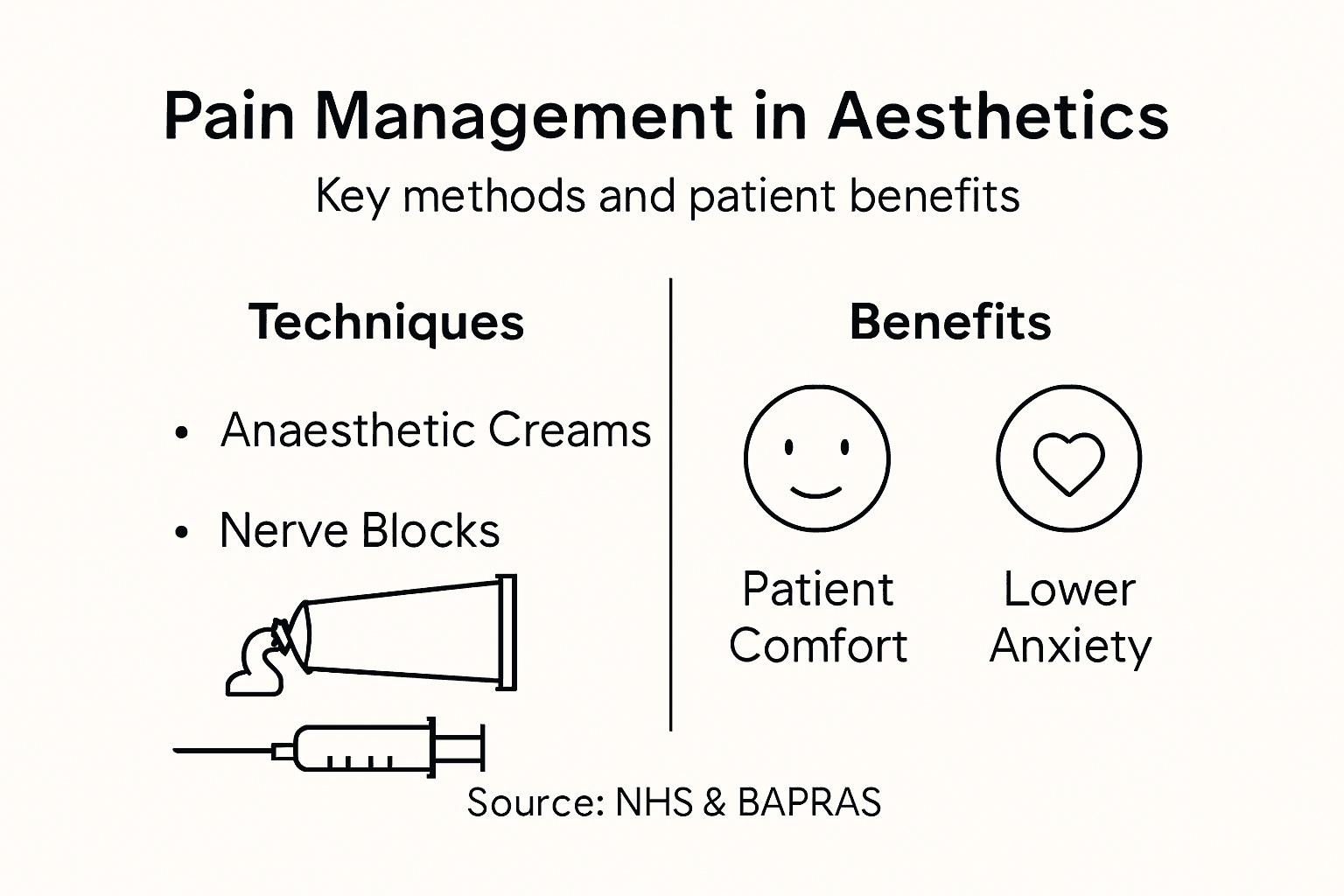
Pharmacological and non-pharmacological techniques form the cornerstone of effective pain management strategies. Topical anaesthetic creams, localised nerve blocks, and precision cooling techniques can substantially reduce patient discomfort during aesthetic procedures. Additionally, psychological preparation and patient education play critical roles in managing pain perception, helping individuals develop realistic expectations and reducing anticipatory anxiety.
Pro tip: Request a comprehensive pre-procedure pain consultation to develop a personalised pain management strategy tailored to your specific physiological and psychological needs.
Main methods for reducing discomfort
Minimising patient discomfort during aesthetic procedures requires a comprehensive, multifaceted approach that addresses both physical and psychological dimensions of pain perception. Multimodal pain management strategies offer sophisticated techniques designed to mitigate potential patient anxiety and physical distress throughout aesthetic treatments.

Pharmacological interventions represent a primary method for reducing procedural discomfort. Topical anaesthetic creams containing lidocaine or benzocaine can be applied prior to treatments, creating a localized numbing effect that substantially reduces sensory perception. Advanced techniques like nerve blocks and targeted anaesthetic injections provide additional options for patients with heightened sensitivity, allowing practitioners to customise pain management protocols to individual physiological responses.
Non-pharmacological approaches complement medical interventions, offering holistic strategies for managing patient experience. Clinical pain reduction techniques incorporate psychological preparation, relaxation methods, and patient education to reframe pain perception. Practitioners might utilise distraction techniques, guided breathing exercises, and carefully designed treatment environments that minimise stress and promote patient comfort. These approaches acknowledge pain as a complex sensory and emotional experience, recognising that psychological preparation can significantly influence an individual’s pain tolerance and overall treatment experience.
Pro tip: Discuss your specific pain concerns and medical history comprehensively during pre-treatment consultations to enable a personalised, targeted pain management approach.
Here is a comparison of common pain management methods in aesthetics:
| Method Type | Example Technique | Main Benefit | Limitation |
|---|---|---|---|
| Pharmacological | Topical anaesthetic gel | Rapid surface numbness | Short duration only |
| Pharmacological | Nerve block injection | Profound local pain relief | Requires practitioner skill |
| Non-pharmacological | Guided breathing exercises | Reduces anxiety, calms mind | Requires patient engagement |
| Non-pharmacological | Sensory distraction | Minimises perceived pain | Effectiveness varies |
Legal standards for patient safety UK
The United Kingdom maintains rigorous legal frameworks designed to protect patients undergoing aesthetic medical treatments. Professional practice guidelines establish comprehensive standards that practitioners must adhere to, ensuring patient safety remains paramount throughout medical aesthetic procedures.
Regulatory bodies like the Joint Council for Cosmetic Practitioners play a critical role in establishing and enforcing professional standards. Aesthetic sector standards mandate specific requirements for practitioner qualifications, ensuring only properly trained professionals can perform aesthetic treatments. These legal standards encompass multiple dimensions, including:
- Mandatory professional qualifications
- Comprehensive insurance coverage
- Rigorous patient consent protocols
- Transparent advertising practices
- Continuous professional development requirements
The legal landscape surrounding aesthetic treatments emphasises informed consent, professional competence, and patient protection. Practitioners must provide detailed information about potential risks, expected outcomes, and alternative treatment options. This approach ensures patients can make fully informed decisions, with legal frameworks designed to protect vulnerable individuals from unqualified or potentially harmful interventions.
Pro tip: Always request and verify your practitioner’s professional credentials and current registration status before proceeding with any aesthetic medical treatment.
Summary of UK legal protections for aesthetic patients:
| Legal Aspect | Role in Safety | Practitioner Obligation |
|---|---|---|
| Qualifications | Ensures expert care | Maintain valid certification |
| Insurance | Financial patient safeguard | Hold comprehensive cover |
| Consent protocols | Upholds informed decisions | Document clear agreement |
| Professional standards | Monitors continuous training | Participate in CPD schemes |
Impacts of poor pain control in treatment
Poor pain management in aesthetic procedures can lead to significant and long-lasting negative consequences for patients. Pain management complications extend beyond immediate physical discomfort, potentially causing profound psychological and physiological disruptions to a patient’s overall treatment experience and recovery trajectory.
Physiological impacts of inadequate pain control are particularly concerning. Unmanaged pain triggers complex neurological stress responses, releasing cortisol and adrenaline that can compromise healing processes. Patients experiencing high levels of procedural pain may develop:
- Increased inflammation
- Prolonged recovery periods
- Heightened autonomic nervous system activation
- Potential development of chronic pain sensitivities
- Reduced treatment effectiveness
Clinical risk assessment reveals that psychological consequences can be equally detrimental. Patients who undergo painful treatments without proper pain management may experience long-term anxiety, develop medical procedure phobias, and potentially avoid future necessary aesthetic or medical interventions. This psychological trauma can create lasting barriers to individuals seeking essential healthcare services, undermining both patient well-being and professional medical practice standards.
Pro tip: Prioritise comprehensive pain management discussions during initial consultations to understand and mitigate potential treatment-related discomfort.
Tailoring pain relief to individual needs
Individualised pain management represents a sophisticated approach to ensuring patient comfort and treatment success in aesthetic procedures. Personalised pain assessment strategies recognise that each patient’s pain perception and tolerance are uniquely influenced by physiological, psychological, and historical factors.
Comprehensive patient profiling involves detailed evaluations across multiple dimensions. Practitioners must consider critical parameters including:
- Medical history and previous treatment experiences
- Specific pain sensitivity thresholds
- Psychological stress responses
- Existing medical conditions
- Potential medication interactions
- Genetic predispositions to pain perception
Nursing pain management guidelines emphasise the importance of collaborative assessment techniques. This multidisciplinary approach involves engaging patients in comprehensive discussions about their pain expectations, historical experiences, and individual comfort levels. By creating a collaborative environment, practitioners can develop nuanced pain management protocols that address both physical and emotional aspects of patient discomfort.
Pro tip: Maintain a detailed pain profile during consultations, documenting your specific sensitivities, past experiences, and personal pain management preferences to enable truly personalised treatment planning.
Experience Expert Pain Management for Your Aesthetic Journey
Pain management is a crucial part of every successful aesthetic treatment. Understanding that each patient’s pain perception is unique and influenced by both physiological and psychological factors is essential for comfort and lasting satisfaction. At The Aesthetics Room, we prioritise personalised care tailored to your specific needs, integrating advanced techniques to reduce discomfort during procedures like those found in our Advanced Injectables range.

Do not let fears about pain hold you back from enhancing your confidence and appearance. Discover the difference of expert pain assessment and management in a luxurious and safe environment. Book your consultation now at The Aesthetics Room and learn how our bespoke treatment plans can make your experience comfortable and effective. Explore more treatments including Anti Wrinkle therapies designed with your wellbeing in mind.
Frequently Asked Questions
What are the main methods of pain management in aesthetic procedures?
Pain management in aesthetic procedures includes pharmacological techniques like topical anaesthetic creams and nerve blocks, as well as non-pharmacological methods such as guided breathing exercises and sensory distraction.
Why is pain management important in aesthetic treatments?
Effective pain management is crucial in aesthetic treatments to enhance patient comfort, reduce anxiety, and ensure a positive treatment experience. Poor pain control can lead to both physical and psychological complications.
How can pain perception vary among patients undergoing aesthetic procedures?
Pain perception can vary significantly among individuals due to factors such as previous medical experiences, psychological stress responses, and specific pain sensitivity thresholds, which makes individualized pain assessments essential.
What role does patient education play in pain management for aesthetic treatments?
Patient education helps manage pain perception by providing information on realistic expectations, treatment processes, and coping techniques, thus reducing anticipatory anxiety and improving overall patient satisfaction.