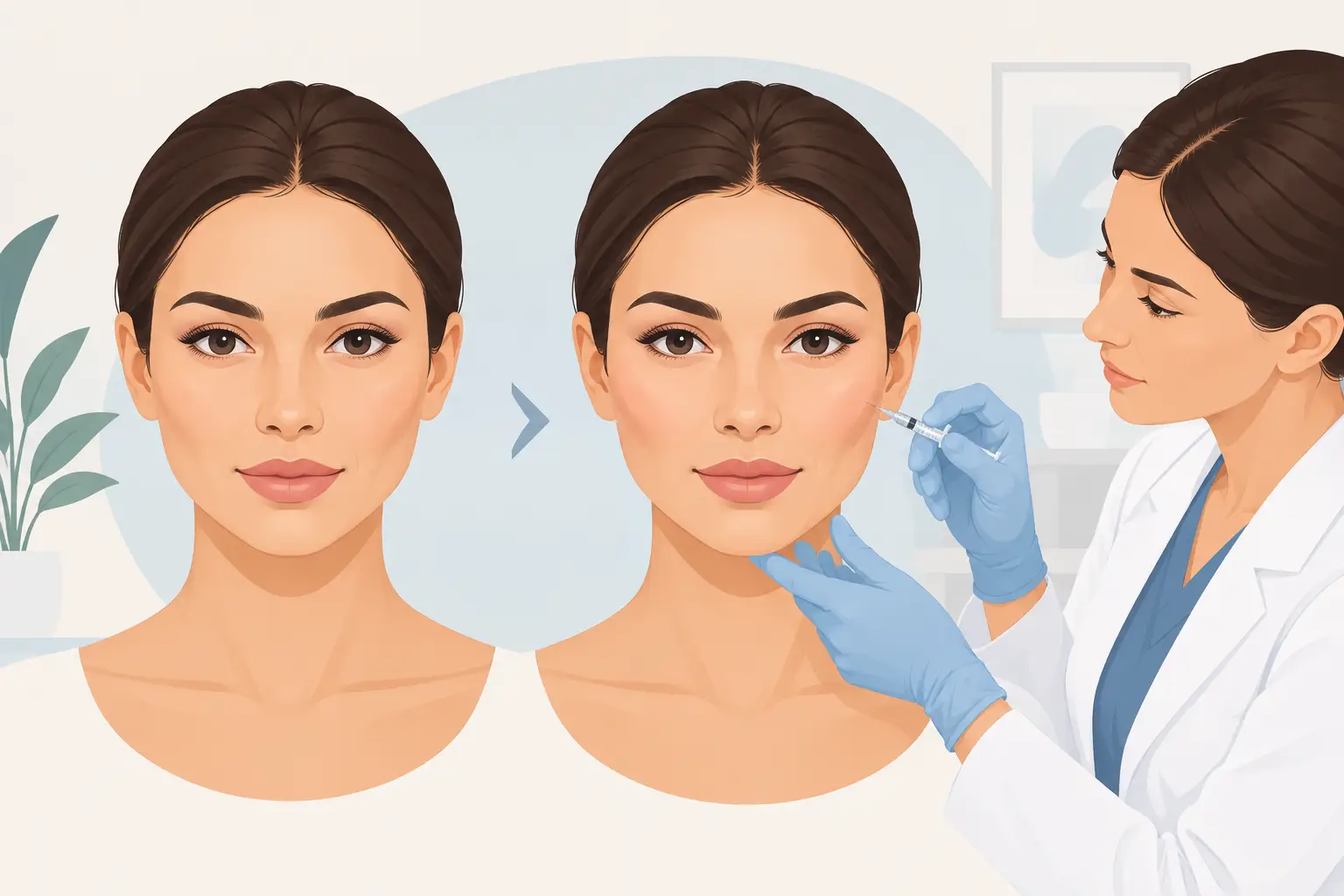
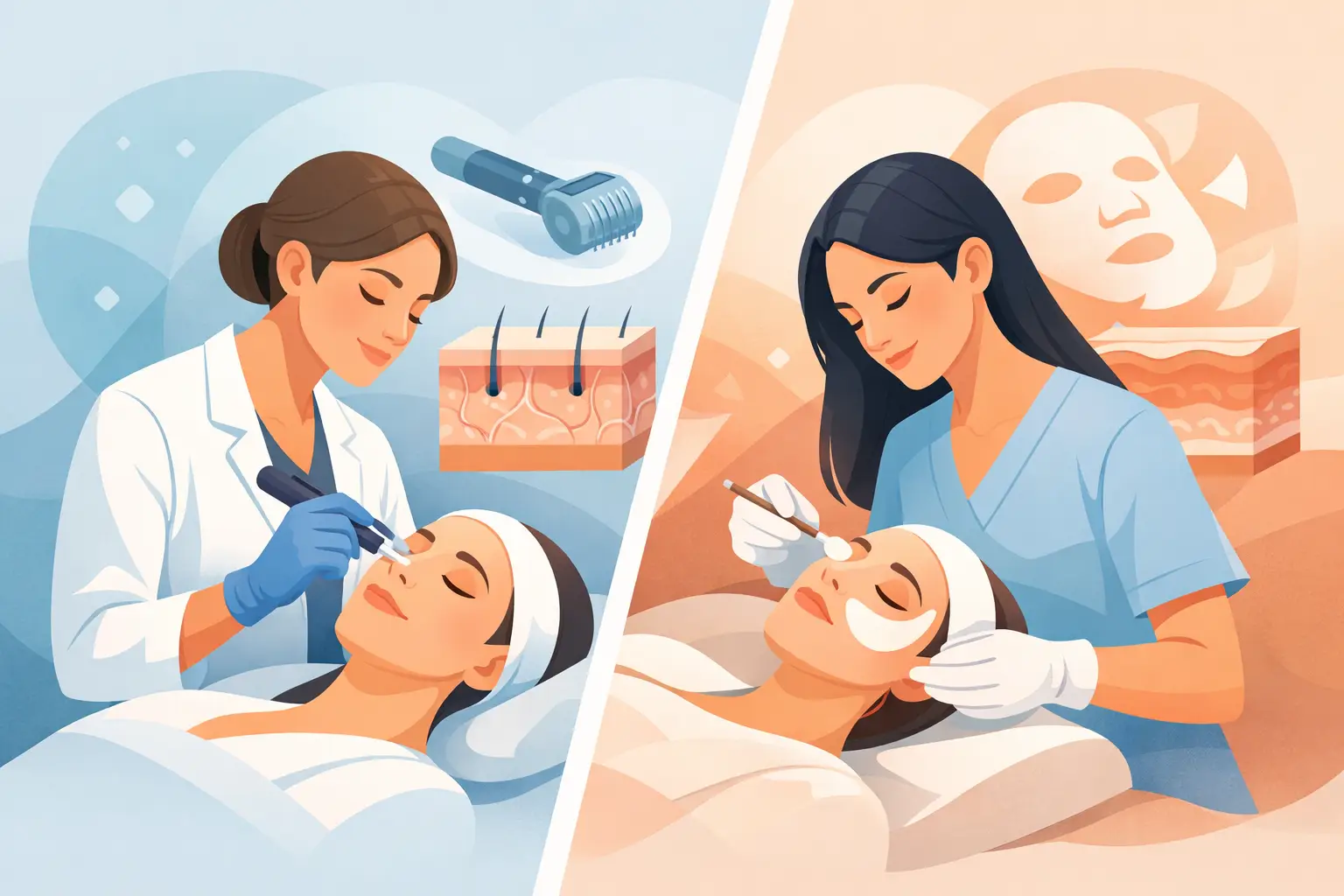

When a patient asks about microneedling vs chemical peel, they are rarely asking for a trend-led answer. They want to know which treatment will actually improve their skin, how much downtime to expect, and whether the result will look refined rather than obvious. That is where the comparison matters – not in choosing the more popular option, but in choosing the right one for your skin, goals and tolerance for recovery.
Both treatments aim to improve skin quality, but they work in very different ways. Microneedling creates controlled micro-injuries in the skin to stimulate repair and collagen production. A chemical peel uses carefully selected acids to exfoliate the skin at a chosen depth, encouraging renewal and addressing concerns such as congestion, pigment and uneven texture. Neither is universally better. The right choice depends on what you are treating, your skin type, your schedule and how bespoke your plan needs to be.
Microneedling vs chemical peel: the core difference
The simplest way to think about microneedling is that it is a collagen-focused treatment. Tiny sterile needles create channels in the skin, triggering a wound-healing response that can improve texture, fine lines, acne scarring and overall firmness over time. It is often chosen by patients who want gradual, natural-looking improvement in skin quality.
A chemical peel is more of a resurfacing treatment. Depending on the formulation and strength, it can loosen dead skin cells, reduce dullness, clear pores, soften post-inflammatory marks and brighten pigmentation. Some peels are very light and involve little more than mild flaking. Others are stronger and require more visible recovery.
That difference in mechanism affects almost everything else, from the feel of the treatment to the type of result you can expect. Microneedling tends to focus on stimulating the skin from within. Chemical peels are typically better at targeting issues closer to the surface, although medium-depth options can have a broader effect.
Which concerns does each treatment treat best?
If your priority is acne scarring, enlarged pores or early signs of skin laxity, microneedling often has the edge. It is particularly valuable when the goal is to rebuild skin quality rather than simply polish the surface. Patients who want stronger collagen support without injectables often find it a useful part of a longer-term treatment plan.
If your concern is dullness, uneven tone, active breakouts or pigmentation caused by sun exposure or post-blemish marks, a chemical peel may be the more direct route. A well-chosen peel can make the skin look fresher and clearer relatively quickly, especially when congestion and uneven texture sit at the centre of the complaint.
That said, there is overlap. Microneedling can improve pigmentation in some cases, and chemical peels can soften fine lines. The question is less about whether a treatment can help and more about whether it is the most efficient and appropriate option for your particular skin.
Microneedling may be more suitable if you have:
Acne scarring, crepey texture, enlarged pores, mild fine lines, or a general loss of firmness and resilience.
A chemical peel may be more suitable if you have:
Pigmentation, breakouts, blackheads, dullness, rough texture or a complexion that needs brightening rather than rebuilding.
Downtime and recovery
Downtime is often the deciding factor for busy patients. Microneedling usually leaves the skin red for 24 to 48 hours, rather like a moderate sunburn. Some people also notice tightness, mild swelling or light flaking in the following days. Makeup is usually paused initially, and good aftercare matters.
Chemical peel recovery varies much more. A light peel may leave you slightly pink for a day or two with only minimal dryness. A stronger peel can involve visible peeling, tightness and sensitivity for several days. If you have an event approaching, this variation is worth discussing carefully.
Microneedling can sound more intensive because of the needles, but many patients are surprised that the recovery feels manageable. Equally, a peel can sound gentle, yet certain formulations produce more obvious downtime than expected. This is one reason consultation-led treatment planning is essential.
Results: quick glow or longer-term change?
Chemical peels often appeal to patients who want a fresher complexion relatively soon. Once the initial sensitivity settles, the skin can look brighter, smoother and more even. If your main aim is radiance or breakout control, this can be a very satisfying option.
Microneedling is usually more of a long game. You may notice an initial glow as the skin recovers, but the most meaningful benefits develop over weeks as collagen production increases. For scarring and textural concerns, a course of treatment is normally more realistic than a single session.
This is where expectations need to be honest. If someone wants immediate visible brightness before a special occasion, a peel may be the better fit. If they are looking at skin quality over the next three to six months, microneedling may offer more strategic value.
What about sensitive or darker skin tones?
Safety and suitability should never be treated as an afterthought. Patients with sensitive skin, rosacea tendencies or a history of post-inflammatory hyperpigmentation need a tailored approach. The same applies to darker skin tones, where poorly chosen treatment settings or peel strengths can increase the risk of unwanted pigment changes.
Microneedling can be an excellent option for many skin tones when performed correctly, but depth, technique and aftercare all matter. Chemical peels can also be very effective across a range of skin types, provided the formulation is chosen carefully and the skin is properly prepared.
This is exactly why experienced assessment matters more than broad claims online. A treatment that is excellent for one patient may be unsuitable for another with the same visible concern but a different skin history.
Microneedling vs chemical peel for acne and acne marks
For active acne, a chemical peel is often the more straightforward starting point. It can help reduce oiliness, keep pores clearer and calm the cycle of congestion. Salicylic acid and other targeted peel formulations are commonly used for this reason.
For acne marks and shallow acne scarring left behind after breakouts, microneedling frequently becomes more relevant. It can support remodelling in the skin and gradually improve uneven texture. If both active acne and post-acne changes are present, treatment may need to be staged rather than forced into a single approach.
That is a recurring theme in aesthetics: the best answer is often not one treatment forever, but the right treatment at the right point in your skin journey.
Can you combine them?
Yes, but not casually. In a medically led setting, microneedling and chemical peels can sit within the same broader skin plan when there is a clear rationale and proper spacing between treatments. For example, one patient may begin with a peel course to improve congestion and pigment, then move to microneedling to target scarring and collagen stimulation.
Combining treatments without a plan is where skin becomes irritated, sensitised or simply underwhelmed. Skin optimisation works best when the barrier is respected and each step has a purpose. At a premium clinic level, treatment should feel curated rather than stacked.
How to choose well
The best decision usually comes down to four things: your main concern, your skin type, your downtime tolerance and your timeline for results. If you want brighter, clearer skin with relatively quick payoff, a chemical peel may be the stronger option. If your goal is textural improvement, collagen stimulation and gradual refinement, microneedling may be the better investment.
What matters most is not choosing the treatment with the strongest reputation, but the one that fits your skin properly. A bespoke consultation should look at your skin history, current routine, previous treatments, pigmentation risk and lifestyle before making a recommendation. That level of planning is especially valuable for patients who want natural-looking improvement without guesswork.
At The Aesthetics Room, that kind of personalised decision-making sits at the heart of good outcomes. Skin rarely responds well to one-size-fits-all advice, especially when the goal is healthy, polished and lasting results.
If you are deciding between the two, resist the temptation to ask which is best in general. Ask which is best for your skin now – and which approach will still make sense once the initial glow has passed.