

TL;DR:
- Treatments can significantly improve the appearance of stretch marks, especially when performed early in the red phase.
- Professional options like laser therapy and microneedling are more effective than topical creams, which mainly support hydration.
Stretch mark removal is the clinical term for treatments that reduce the visibility of stretch marks, known medically as striae distensae. Complete elimination is not possible, but significant improvement in texture, colour, and depth is achievable with the right approach. Stretch marks often fade over time but rarely disappear without intervention. Timing matters enormously: marks treated during the early red phase respond far better than mature white marks. Theaestheticsroom offers specialist assessment and clinical treatments to help you achieve the best possible outcome for your skin.
What is stretch mark removal and why does timing matter?
Stretch mark removal refers to any treatment that reduces the appearance of striae distensae, the linear dermal scars that form when skin stretches faster than collagen and elastin can adapt. The goal is not erasure but meaningful improvement in how the skin looks and feels. Treatments on red stretch marks (striae rubrae) consistently show better cosmetic outcomes than those on mature white marks (striae albae) because the tissue is still actively remodelling. This single fact should shape every treatment decision you make.
The window of opportunity is real and finite. Once marks transition from red or purple to silver or white, the collagen fibres have already settled into their scarred state. Acting early gives clinical treatments a far stronger foundation to work from. Theaestheticsroom practitioners assess your marks at consultation to determine exactly where you are in this cycle and which approach will deliver the most improvement.
What causes stretch marks and how do they form?
Stretch marks are a linear dermal scar caused by rapid skin stretching that disrupts collagen and elastin fibres in the dermis. The skin’s surface remains intact, but the deeper structural layer tears and remodels imperfectly. That remodelling process is what produces the streaked, textured appearance.
Common causes include:
- Pregnancy: Rapid abdominal expansion stretches skin faster than it can produce new collagen.
- Puberty: Growth spurts on the thighs, hips, and upper arms are a leading cause in teenagers.
- Weight gain or loss: Rapid changes in body composition place sudden mechanical stress on the skin.
- Hormonal conditions: Elevated cortisol levels, as seen in Cushing’s syndrome, weaken collagen structure and increase susceptibility.
- Genetic predisposition: A family history of striae significantly raises your personal risk.
Understanding the cause matters because it informs the treatment choice. Pregnancy-related marks on the abdomen often benefit from a different protocol than puberty-related marks on the thighs. A personalised assessment, rather than a one-size approach, produces consistently better results.
What are the main professional stretch mark removal methods?
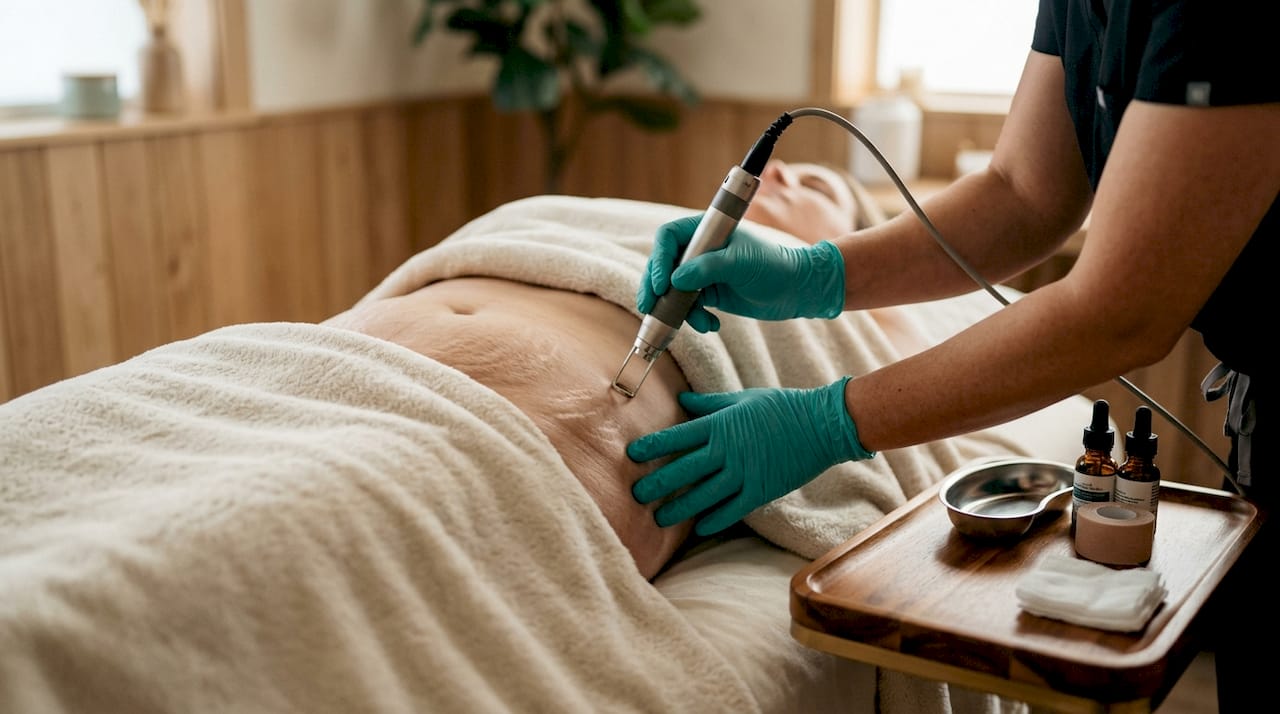
Professional stretch mark treatments work by stimulating the skin’s own repair mechanisms, primarily collagen and elastin production. Laser treatments stimulate collagen and elastin production to improve stretch mark appearance, though they require tailored protocols and may not fully remove marks. The most widely used clinical options are fractional CO2 laser, pulsed dye laser, and microneedling.
Fractional CO2 laser
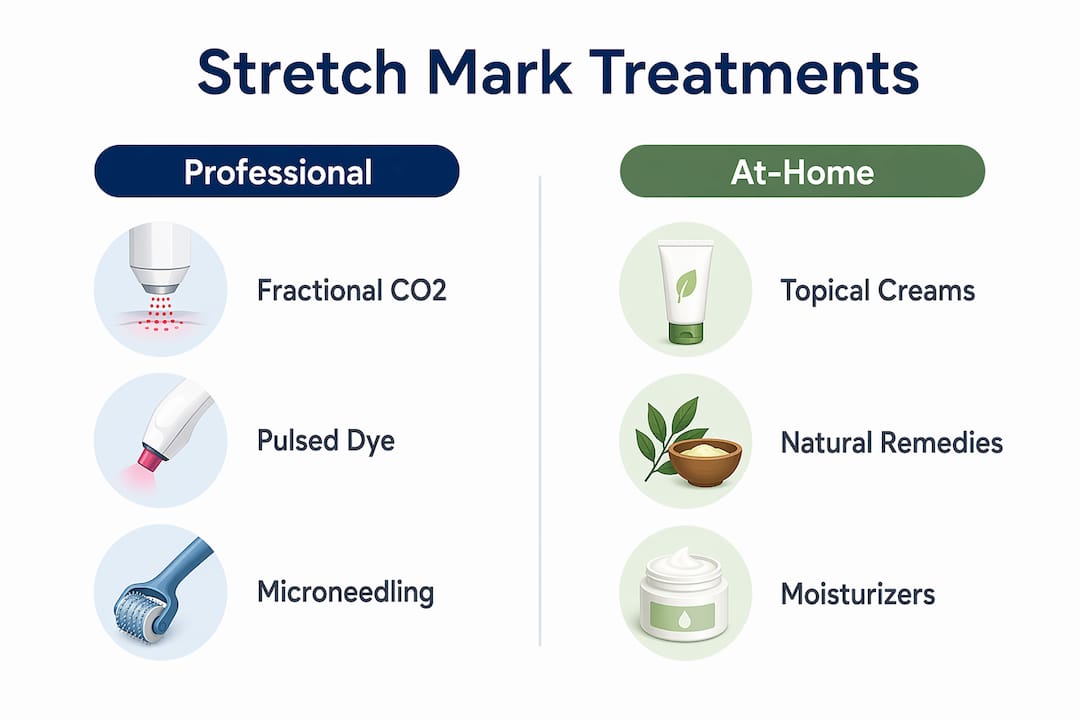
Fractional CO2 laser delivers controlled micro-injuries to the skin, triggering collagen remodelling in the treated zones. It is particularly effective on texture and depth, making white striae more responsive than they would be to surface treatments alone. Multiple sessions are typically required, and downtime of several days should be expected after each one.
Pulsed dye laser
Pulsed dye laser targets the redness in early striae rubrae by addressing the blood vessels beneath the skin’s surface. It is best used during the red or purple phase and is less effective on mature white marks. The treatment is well tolerated and carries a lower risk of post-treatment pigmentation changes than ablative lasers.
Microneedling
CO2 laser and microneedling both significantly improve stretch mark appearance, with over 70% patient benefit reported in meta-analysis. Microneedling carries a lower risk of post-inflammatory hyperpigmentation, making it a strong option for people with medium to deeper skin tones. It works by creating thousands of micro-channels in the skin, prompting a controlled healing response that rebuilds collagen from within.
| Treatment | Best for | Downtime | Hyperpigmentation risk |
|---|---|---|---|
| Fractional CO2 laser | Texture and depth, all stages | Several days | Moderate |
| Pulsed dye laser | Red or purple early marks | Minimal | Low |
| Microneedling | All skin tones, early and mature marks | 24–48 hours | Low |
| Tretinoin (topical) | Early marks, maintenance | None | Low |
Prescription topical treatments
Tretinoin, a vitamin A derivative available on prescription, supports collagen synthesis and accelerates cell turnover. Hyaluronic acid, tretinoin, and Estella-based products carry evidence for reducing stretch mark appearance, particularly when applied early. Tretinoin is not suitable during pregnancy, so timing and medical guidance are essential.
Pro Tip: Book a consultation during the red phase of your stretch marks. Clinical results at this stage are measurably better, and you will have more treatment options available to you.
Do home remedies and over-the-counter products work?
Home remedies are the most common first response to stretch marks, and the most commonly misunderstood. Cocoa butter, shea butter, and vitamin E oil do not penetrate deep enough to repair collagen disruption and are unlikely to remove stretch marks. They provide surface hydration, which keeps skin supple and comfortable, but they do not reach the dermal layer where the structural damage actually sits.
That said, not all topical products are equal. Some ingredients do carry clinical support:
- Hyaluronic acid: Supports skin hydration and plumpness, and has shown modest benefit in early-stage marks.
- Centella asiatica: A plant extracts with evidence for stimulating collagen synthesis and reducing scar formation.
- Tretinoin: Prescription-only and the most evidence-backed topical option for striae rubrae.
- Glycolic acid: Supports cell turnover and may improve surface texture over time.
Home remedies provide hydration benefits but lack proven efficacy in collagen regeneration, which is why professional treatments become necessary when marks mature. Moisturising and massaging the skin regularly does support circulation and skin elasticity, and these habits complement clinical treatments well. They are not, however, a substitute for them.
Pro Tip: Pair your at-home skincare routine with clinical treatment for the best results. A well-structured at-home skincare workflow supports and extends what professional sessions achieve.
For those interested in natural skincare approaches alongside clinical care, natural skincare regimens can support overall skin health, though they work best as a complement rather than a replacement for professional treatment.
How can you prevent stretch marks and support skin recovery?
Prevention is most effective when started before rapid skin changes occur. Once marks form, the focus shifts to minimising their severity and supporting recovery after treatment. Both goals rely on the same core habits.
- Hydrate your skin daily. Well-hydrated skin is more elastic and better able to accommodate stretching without tearing. Apply a moisturiser containing hyaluronic acid or shea butter morning and evening to the areas most at risk.
- Manage weight changes gradually. Sun protection and gradual skin stretching help prevent new stretch marks and support skin health after treatment. Slow, steady changes give collagen fibres time to adapt.
- Protect treated skin from the sun. UV exposure worsens pigmentation in healing skin and can darken post-treatment marks. Use SPF 30 or higher on any treated area whenever it is exposed.
- Support collagen production through nutrition. Vitamin C is required for collagen synthesis. Foods rich in vitamin C, zinc, and protein give your skin the building blocks it needs to repair and maintain structure.
- Follow your practitioner’s post-treatment protocol precisely. After laser or microneedling, the skin is in an active repair phase. The products and timelines your practitioner recommends are calibrated to that phase. Deviating from them reduces results.
Understanding the role of lasers in aesthetics can also help you appreciate how post-treatment skin behaves and why aftercare is so closely tied to outcomes.
Key takeaways
Stretch mark removal reduces visibility rather than eliminating marks entirely, and early treatment during the red phase produces the best clinical results.
| Point | Details |
|---|---|
| Timing is the most critical factor | Treating red striae rubrae produces better outcomes than treating mature white striae albae. |
| Professional treatments outperform home remedies | CO2 laser and microneedling show over 70% patient benefit; cocoa butter and shea butter do not reach the dermis. |
| Microneedling suits all skin tones | It carries a lower hyperpigmentation risk than fractional CO2 laser, making it safer for medium to deeper skin. |
| Evidence-backed topicals exist | Tretinoin, hyaluronic acid, and centella asiatica have clinical support; most over-the-counter creams do not. |
| Prevention requires consistent habits | Daily hydration, gradual weight management, and sun protection reduce the risk of new marks forming. |
Why I always tell clients: treat early, expect improvement, not perfection
The most common mistake I see is waiting. People notice the red marks, feel self-conscious, and hope they will fade on their own. Sometimes they do lighten. But the window for the most effective treatment closes faster than most people realise. By the time a client arrives with fully white, mature striae, we are working with scar tissue that has already settled. We can still improve it, but the results take longer and require more sessions.
The second mistake is expecting removal. No treatment currently available can fully erase a stretch mark. What clinical treatment does is remodel the scar tissue, smooth the texture, and reduce the colour contrast so the mark becomes far less visible. For most people, that improvement is genuinely life-changing in terms of confidence. But setting that expectation clearly from the start means clients are not disappointed by what is actually an excellent result.
What I find most effective is a combined approach: early clinical intervention, a structured home care routine, and realistic milestones. Clients who commit to this see consistent, measurable improvement. Those who rely solely on creams or delay treatment until marks are fully mature tend to see far less. The skin responds to effort, timing, and the right tools. Give it all three.
— Vishul
Specialist stretch mark care at Theaestheticsroom
Theaestheticsroom offers clinical stretch mark treatments at its Knightsbridge clinic, with practitioners who assess your skin individually and build a protocol around your specific marks, skin tone, and treatment history.

Advanced laser and microneedling options are available, supported by a full consultation process that sets clear, realistic expectations before any treatment begins. Theaestheticsroom holds CQC accreditation and is a member of the ACE Group, reflecting its commitment to patient safety. Whether you are in the early red phase or working with more mature marks, a personalised plan makes a measurable difference. Explore the full range of skin rejuvenation options or book a consultation to discuss your specific concerns with a specialist.
FAQ
Can you get rid of stretch marks completely?
Stretch marks cannot be fully removed. Treatments reduce their visibility significantly, but marks may not disappear completely even with professional intervention.
What is the most effective stretch mark treatment?
Fractional CO2 laser and microneedling are the most clinically supported options, with over 70% patient benefit reported in meta-analysis. The best choice depends on your skin tone and the stage of your marks.
Do stretch mark creams actually work?
Most over-the-counter creams, including cocoa butter and vitamin E oil, do not penetrate deep enough to repair collagen. Tretinoin, hyaluronic acid, and centella-based products have stronger evidence, particularly when used early.
When is the best time to treat stretch marks?
Early treatment during the red phase produces the best results because the tissue is still remodelling. Mature white marks are harder to treat and require more sessions.
How many sessions are needed for stretch mark removal?
The number of sessions varies by treatment type, mark severity, and skin response. Most clinical protocols involve multiple sessions spaced several weeks apart, with a practitioner assessing progress throughout.