
PRP for hair is generally safe when carried out in a regulated medical setting, and most side effects are mild, expected, and gone within a few days. The reactions you’re most likely to notice are localised to the injection sites: soreness, redness, swelling, small bruises, and occasionally a dull headache. Pinpoint bleeding at needle points is common and stops quickly.
An umbrella review of adverse effects pooling multiple studies on PRP for hair loss found these reactions are the norm, not the exception:
- Pain at the injection site: reported in the majority of cases
- Swelling (oedema): reported in over half of cases
- Headache: reported in nearly half of cases
- Redness (erythema): reported in a substantial share of cases
- Itching and pinpoint bleeding: reported less frequently but still common
Most of these settle within 24 to 72 hours. Serious complications, including infection or lasting tissue damage, are rare when the procedure is performed with proper sterile technique by a trained clinician.
Key Takeaways
PRP for hair loss carries a favourable safety profile in a regulated clinical setting, with the overwhelming majority of side effects being mild, localised, and resolved within 72 hours.
| Point | Details |
|---|---|
| Most side effects are mild | Pain, swelling, redness, and headache affect a large share of patients but typically resolve within 24 to 72 hours. |
| Serious complications are rare | Infection, significant haematoma, and lasting tissue changes are uncommon when sterile technique is followed. |
| Screening rules out unsuitable candidates | Conditions like critical thrombocytopenia, active infection, or anticoagulant use need medical review before treatment. |
| LP-PRP reduces inflammatory reactions | Leukocyte-poor formulations are generally preferred for scalp injections over leukocyte-rich preparations. |
| Clinic accreditation matters | Theaestheticsroom delivers PRP through CQC-registered practitioners with documented screening and aftercare support. |
Table of Contents
- What is PRP for hair loss, and why do side effects happen?
- How common are the usual PRP scalp side effects, and how long do they last?
- What are the rare complications and red flags to watch for?
- Who shouldn’t have PRP for hair loss?
- How can you lower your risk of side effects from PRP?
- What does the evidence actually say about PRP safety?
- How we counsel and follow up with PRP patients
- Booking a medically supervised PRP consultation
- Frequently asked questions
- Sources
What is PRP for hair loss, and why do side effects happen?
Platelet-rich plasma treatment uses your own blood, drawn, spun in a centrifuge, and reinjected into the scalp. Nothing foreign goes in, which is why allergic reactions to the substance itself are essentially a non-issue. The side effects you experience come from the mechanics of the treatment, not from a reaction to plasma as a substance.
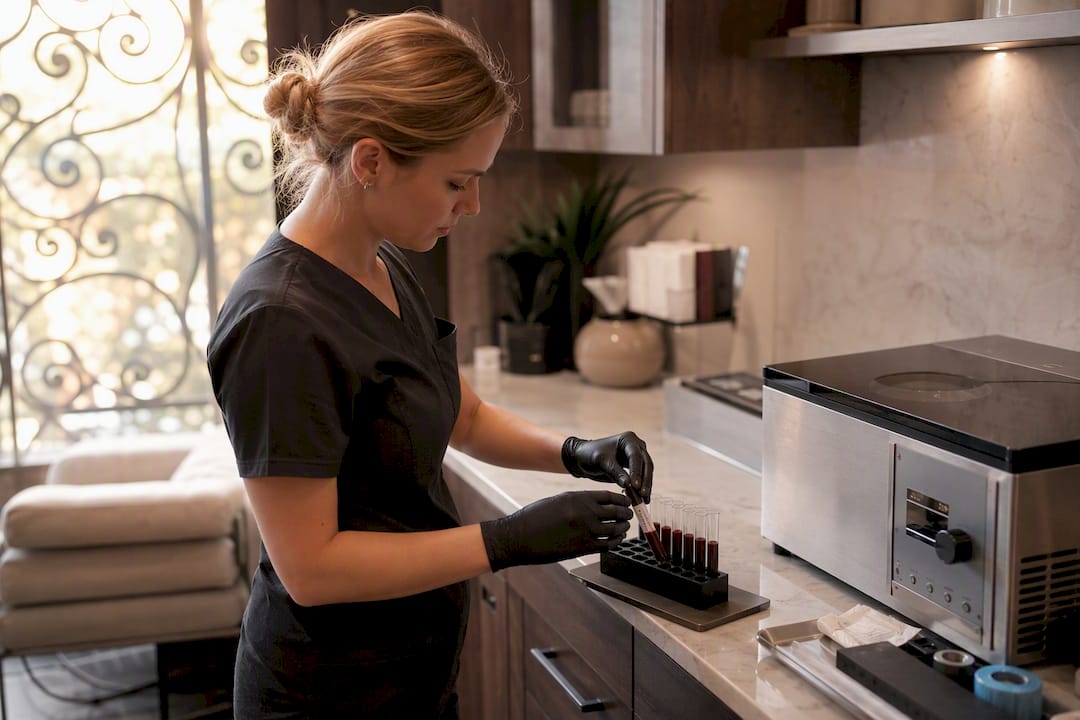
The process runs in three steps. A small blood sample is taken, usually from the arm, much like a standard blood test. That sample goes into a centrifuge, which spins at speed to separate red blood cells from the platelet-rich layer, the fraction packed with growth factors that stimulate hair follicles. The concentrated plasma is then drawn into a syringe and injected across the scalp, typically in a grid pattern covering the thinning or balding area.
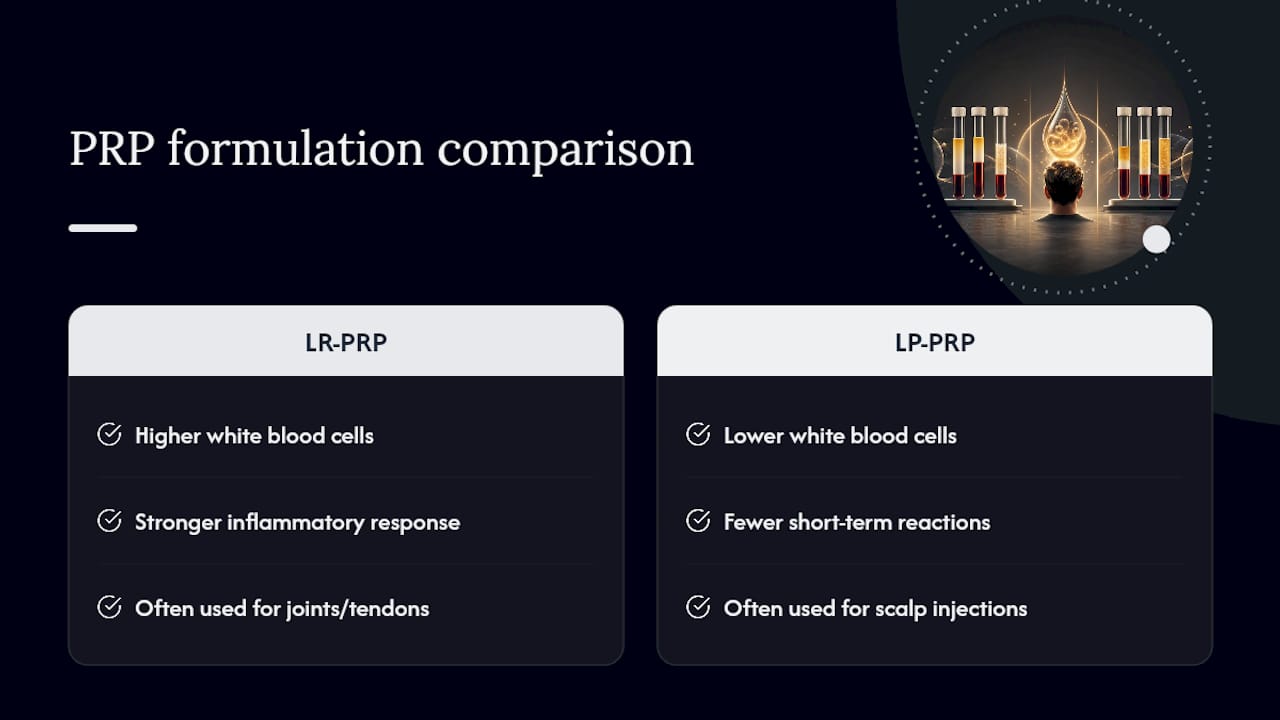
Not all PRP is prepared the same way, and the difference matters more than most patients realise. Preparations fall into two broad categories: leukocyte-rich PRP (LR-PRP) and leukocyte-poor PRP (LP-PRP). LR-PRP retains more white blood cells in the final mixture, which can drive a stronger inflammatory response at the injection site. Research into PRP formulation differences shows LP-PRP tends to trigger fewer short-term reactions, which is why many practitioners favour it specifically for scalp injections rather than the joint or tendon applications where LR-PRP is sometimes preferred.
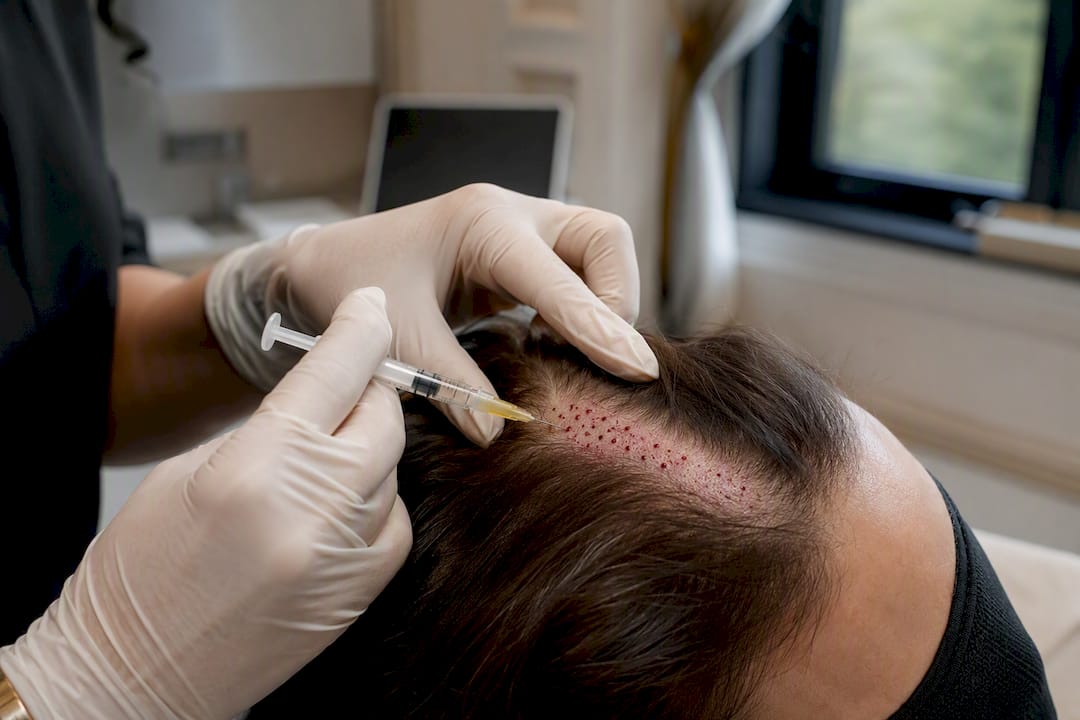
Needle trauma explains the rest. A typical session involves dozens of individual injection points across the scalp, and each one is a tiny puncture wound. Multiply that by the volume of plasma injected per session, and you get the visible swelling, tenderness, and pinpoint bleeding that most patients experience. It’s a direct, mechanical response to the injections themselves, not a sign that anything has gone wrong. For a fuller walk-through of the procedure, our guide to what platelet-rich plasma actually involves covers the clinical steps in more depth.
How common are the usual PRP scalp side effects, and how long do they last?
If you’ve booked a session and want to know exactly what to expect over the following week, the honest answer is: mild discomfort followed by a fairly quick return to normal. Here’s a breakdown of what typically happens, in roughly the order patients notice it.
-
Injection site pain. This is the most reported side effect by a wide margin, present in 86.67% of cases according to the pooled data. It tends to feel like scalp tenderness, similar to a mild sunburn or the ache after a tight ponytail, and usually eases within 24 to 48 hours. Paracetamol is generally fine to manage it.
-
Swelling. Reported in over half of cases, oedema across the treated area is common in the first day. It’s rarely dramatic, more a puffiness than visible distortion, and a cold compress applied gently in the hours after treatment helps bring it down faster.
-
Headache. Nearly half of patients report a headache following treatment, likely linked to the injections themselves rather than any systemic effect of the plasma. It typically resolves within a day and responds to standard over-the-counter pain relief.
-
Redness. Erythema across the scalp shows up in around 40% of cases. It looks more alarming than it is, generally fading within two to three days as the skin settles.
-
Itching and pinpoint bleeding. Small pinpricks of blood at each injection site are expected and stop within minutes. Mild itching as the scalp heals is also common and usually passes within a few days.
-
Bruising. Less common than the effects above but still reported, particularly in patients on any medication that thins the blood. Bruises fade over one to two weeks, the same timeline as a bruise anywhere else on the body.
-
Temporary shedding. Some patients notice a short-term increase in shedding in the weeks following treatment, a phenomenon linked to telogen effluvium, where hairs already in a resting phase are shed slightly earlier as the follicle cycle resets. This is usually a sign the treatment is stimulating turnover, not a sign of worsening hair loss, and it settles within a few weeks.
Comparative data adds useful context here. A systematic review and meta-analysis of PRP for female hair loss, pooling 21 studies and 628 participants, found no significant difference in pain or discomfort between patients who received PRP and those who received a placebo or control treatment, with a relative risk of 1.01 (95% CI 0.87 to 1.18). In plain terms, the pain of the injection itself accounts for most of what people feel, not something specific to the plasma formulation.
Pro Tip: Keep a simple note of when symptoms started and how they changed day by day. If you need to discuss anything with your clinician at a follow-up, a short timeline is far more useful than trying to recall it from memory a week later.
What are the rare complications and red flags to watch for?
Serious complications from scalp PRP are uncommon, and existing reviews haven’t found consistent evidence of major harms such as scarring, chronic infection, or allergic reaction following properly administered treatment. That doesn’t mean risk is zero, and knowing what genuinely warrants concern matters more than worrying about every twinge.
Rare events that have appeared in case reports and pooled studies include:
- Localised infection or abscess formation at an injection site
- Significant haematoma (a larger, deeper collection of blood under the skin, distinct from ordinary bruising)
- Prolonged localised atrophy of scalp tissue
- Isolated reports of worsening alopecia in a treated area, though this is not a consistent finding across studies
None of these are common, and most trace back to breaches in sterile technique rather than the treatment itself. That’s precisely why clinic choice matters as much as the treatment protocol.
Certain symptoms should prompt you to seek medical review rather than wait it out:
- Redness that spreads outward from the injection sites rather than fading over a few days
- Fever or chills developing after treatment
- Pus or any discharge from an injection point
- Pain that worsens rather than improves beyond 72 hours
- Fainting, dizziness, or other systemic symptoms during or shortly after the session
If you notice spreading redness, fever, or discharge, contact the treating clinic first; they can assess whether it’s a localised infection needing antibiotics. Fainting, breathing difficulty, or other systemic symptoms warrant a same-day GP appointment or, if severe, an A&E visit. Our guide to complications worth screening for before any cosmetic treatment covers the broader red-flag categories relevant across aesthetic procedures, not just PRP.
Pro Tip: Take a photo of the treated area on day one and day three. Side by side, it’s much easier to judge whether redness is fading as expected or spreading, which is the detail that actually distinguishes normal healing from something needing review.
Who shouldn’t have PRP for hair loss?
Screening happens before a needle ever touches your scalp, and a properly run consultation will ask about several conditions that rule PRP in or out. Some are absolute contraindications, meaning treatment shouldn’t proceed at all; others are relative, meaning they need managing or clearing first.
Absolute contraindications generally include:
- Critical thrombocytopenia (a platelet count too low for PRP to be effective or safe)
- Known platelet dysfunction disorders
- Active sepsis or a systemic infection
- Active infection localised to the scalp itself
- Active haematologic cancers
- Haemodynamic instability (unstable blood pressure or circulation)
Relative contraindications, meaning treatment may still be possible with adjustments or medical sign-off, include:
- Current use of anticoagulant medication such as warfarin or DOACs
- Recent use of NSAIDs, which can interfere with platelet function
- Systemic steroid use
- Recent fever or acute illness
- Significant anaemia
- Pregnancy or breastfeeding, where caution is generally advised pending further clarity
The full picture of contraindications is set out in detail in a clinical review of PRP for hair regrowth, which is worth reading if you have any of the conditions above and want to understand the clinical reasoning behind screening decisions.
Disclosing every medication and supplement you take, including anything you consider minor, is non-negotiable. Aspirin, ibuprofen, and other NSAIDs are common culprits that patients forget to mention because they seem too ordinary to matter. If you’re on warfarin or a DOAC for a heart condition or previous clot, your prescribing doctor needs to be part of the conversation before a clinic proceeds.
How can you lower your risk of side effects from PRP?
Reducing risk isn’t about a single trick; it’s a sequence of sensible steps before, during, and after your appointment.
-
Get a proper medical history review first. A reputable clinic asks about existing conditions, current medication, allergies, and any recent illness before booking a session, not on the day itself.
-
Disclose every medication and supplement. This includes over-the-counter painkillers, fish oil, and anything with blood-thinning properties, even if it feels unrelated.
-
Treat any existing scalp infection before booking. Injecting into compromised skin raises infection risk considerably; a healthy scalp surface matters as much as a healthy blood draw.
-
Ask about blood tests if your clinician recommends them. Not every patient needs one, but conditions like anaemia or clotting disorders are sometimes only picked up this way.
-
Follow the NSAID avoidance window. Guidance from the International Society of Hair Restoration Surgery recommends avoiding NSAIDs in the period around treatment, generally in the days before and for a week or two afterwards, since they can interfere with platelet function. Paracetamol remains an acceptable alternative for any discomfort.
-
Check the clinic’s credentials before you book. Look for CQC registration, clinicians registered with the GMC, NMC, or HCPC, and clear evidence of aseptic technique. This single check does more to reduce your risk than almost anything else on this list.
-
Follow aftercare instructions properly. Use a cold compress if swelling develops, wash your hair gently rather than scrubbing for the first day or two, and avoid strenuous exercise and alcohol for 24 to 48 hours, both of which can worsen swelling and bruising.
Pro Tip: If a clinic can’t clearly explain whether they use LP-PRP or LR-PRP, and why, that’s worth asking about directly. It’s a reasonable question, and a good clinician will have a straightforward answer.
Anyone weighing PRP against other hair loss approaches might also find it useful to see how it fits into a broader plan; our 7 Pillar Hair Thinning Protocol sets out how PRP sits alongside other interventions rather than as a standalone fix.
What does the evidence actually say about PRP safety?
The clearest way to sum up the current evidence: PRP for hair loss has a favourable safety profile across the reviews published so far, with adverse effects that are overwhelmingly mild and short-lived rather than dangerous. That’s a genuinely reassuring conclusion, but it comes with caveats worth understanding before you commit to a course of treatment.
The strongest evidence comes from pooled analyses rather than single trials. The umbrella review of PRP adverse effects draws on multiple studies to arrive at its incidence figures, pain in the majority of cases, swelling in over half and so on, which gives those numbers more weight than a single small trial could. Separately, the meta-analysis of 21 studies covering 628 participants found PRP improved hair density and thickness in pooled trials, while adverse effects were mild and pain levels didn’t differ meaningfully from control groups.
That said, heterogeneity is the honest caveat running through this entire body of evidence. Studies vary in:
- Whether they use LP-PRP or LR-PRP
- Injection volume per session
- Number of sessions and the interval between them
- How adverse events are defined and recorded
This variation makes it harder to state a single, universal side-effect rate, because a study using LR-PRP with a high injection volume may report more inflammatory reactions than one using LP-PRP with a conservative protocol. It’s one reason two people can have very different experiences of what is nominally “the same” treatment.
The consistent thread across the reviews isn’t that PRP is risk-free. It’s that the risks documented so far are mild, localised, and self-limiting, provided the procedure is carried out by a trained professional using sterile technique and an appropriate PRP formulation.
From a clinic standpoint, this is exactly why protocol choice and practitioner training matter as much as the underlying science. Selecting LP-PRP for scalp work, screening properly for contraindications, and maintaining sterile injection technique are the levers that keep a generally safe treatment safe in practice, not theory. None of this replaces informed consent. Patients considering PRP should go in understanding that results vary, that not everyone responds equally, and that managing expectations around outcome is just as important as managing expectations around side effects.
The practical takeaway for anyone weighing benefit against risk: the evidence supports PRP as a reasonably low-risk option for hair loss when delivered in a regulated setting, with side effects that are, for the overwhelming majority of patients, a short and manageable inconvenience rather than a genuine deterrent.
How we counsel and follow up with PRP patients
Every PRP consultation starts with a full medical history and a direct conversation about contraindications, not a form ticked in isolation. We ask about medication, previous reactions, and any scalp conditions before we ever discuss dates for treatment, and we document that conversation clearly so nothing gets missed between consultation and treatment day.
Follow-up isn’t an afterthought either. Patients are checked in with after their first session specifically to see how side effects presented and resolved, which shapes how later sessions in a course are planned. If anything unexpected comes up, redness that doesn’t settle, discomfort that lingers, that’s handled directly rather than left until the next scheduled visit.
Booking a medically supervised PRP consultation
Theaestheticsroom is the alternative to an unregulated aesthetics provider for anyone weighing up PRP for hair loss: you’re treated in a CQC-registered clinic by practitioners trained specifically in injection technique and PRP protocol selection, not a beautician offering it as an add-on.

Every consultation starts with a proper medical history review, exactly the screening this article has walked through, covering medication, existing conditions, and any contraindications before a treatment plan is agreed. Practitioners talk you through what to expect, including realistic timelines for side effects and results, and answer questions about formulation choices like LP-PRP directly rather than leaving you to guess. A virtual consultation is available if you’d rather discuss your suitability before committing to an in-person visit, which suits anyone still deciding whether PRP is the right step for them. For a broader sense of what a course of treatment looks like from first session to follow-up, our hair restoration expectations guide is worth reading alongside this one. If you’re ready to move forward, book a consultation with Theaestheticsroom to discuss whether PRP suits your hair loss pattern and medical history.
Frequently asked questions
Is PRP safe for hair loss treatment?
Yes, PRP is generally considered safe when performed by a trained professional in a regulated setting. Pooled evidence shows side effects are mostly mild and short-lived, without consistent reports of major harms like scarring or chronic infection.
What are the most common PRP scalp side effects?
Pain at the injection site, swelling, redness, headache, and pinpoint bleeding are the most frequently reported reactions, affecting a substantial share of patients based on pooled review data. Nearly all resolve within a few days.
How long do PRP hair treatment side effects last?
Most side effects settle within 24 to 72 hours. Bruising can take a little longer, sometimes one to two weeks, following the same healing pattern as bruising elsewhere on the body.
Can PRP cause hair shedding instead of growth?
A short-term increase in shedding sometimes occurs in the weeks after treatment as part of the follicle’s natural resting and regrowth cycle. It’s generally temporary and not a sign the treatment has failed.
Who should avoid PRP hair treatment?
People with critical thrombocytopenia, platelet dysfunction, active infection, or haematologic cancers shouldn’t have PRP. Those on anticoagulants, recent NSAID users, or pregnant and breastfeeding women should discuss suitability carefully with a clinician first.
Should I stop taking NSAIDs before PRP treatment?
Clinical guidance generally recommends avoiding NSAIDs like ibuprofen in the days before and for a week or two after treatment, since they can interfere with platelet function. Paracetamol is usually fine for managing discomfort.
What should I do if side effects don’t improve after a few days?
Contact your treating clinic if pain, redness, or swelling worsens beyond 72 hours rather than improving. Seek urgent medical attention for fever, spreading redness, discharge, or any systemic symptoms like fainting.
This article is general information, not a substitute for advice from a qualified doctor. Consult a qualified healthcare professional about your own circumstances before acting on anything here.