

After a non-surgical aesthetic treatment, the single most important step is to follow your clinic’s written aftercare instructions, complete the observed recovery period before leaving, and contact the clinic immediately if any red-flag signs appear. This applies whether you have had Botox, dermal fillers, fat-dissolving injections, skin rejuvenation, or IV therapy.
Before you leave the clinic, confirm these three things:
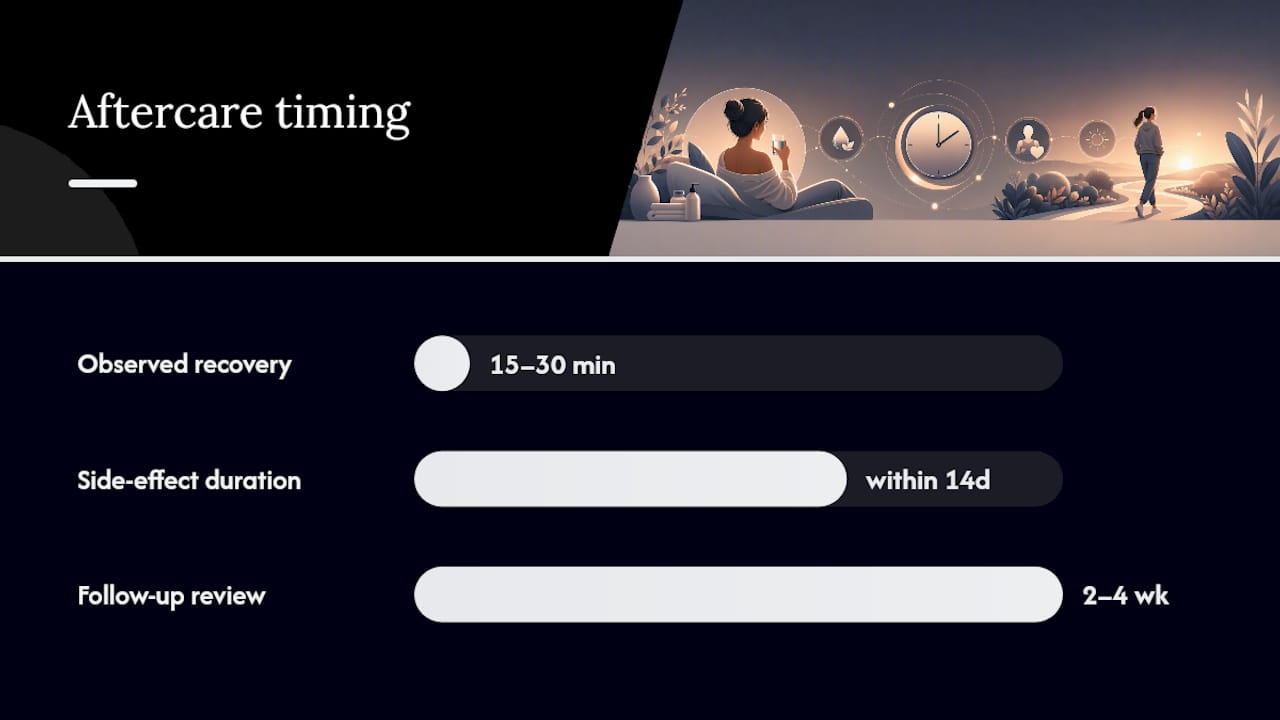
- You have waited the full observation period (typically 15–30 minutes, as recommended by the JCCP Standard Operating Procedure.pdf) for botulinum toxin and dermal fillers).
- You hold a written aftercare leaflet and a named emergency contact number.
- A follow-up appointment has been booked or clearly explained.
Red flags requiring immediate action:
- Vision changes, blurred or double vision, or sudden loss of sight
- Severe or rapidly worsening pain at or near the treatment site
- Skin pallor, mottling, or a purple or dusky discolouration
- Difficulty breathing or swallowing
- High fever or signs of spreading infection
If any of these occur, call the clinic’s emergency number first. If symptoms are life-threatening or the clinic cannot be reached, call 999 without delay.
The JCCP SOP is explicit: patients must be monitored after injectable treatments and provided with written post-treatment instructions and clear emergency contact details before discharge. These are not optional courtesies — they are professional standards.
Pro Tip: Before your appointment, save the clinic’s out-of-hours number in your phone. In the event of a complication, you will not want to search for it.
Key takeaways
Good post-procedure care after non-surgical aesthetic treatments requires written aftercare, an observed recovery period, clear emergency contact details, and a scheduled follow-up — all of which are professional standards under JCCP and RCS guidance.
| Point | Details |
|---|---|
| Written aftercare is mandatory | Your clinic must provide a written aftercare leaflet and discharge letter before you leave. |
| Observe for 15–30 minutes post-treatment | JCCP guidance requires a monitored recovery period before discharge from injectable treatments. |
| Red flags need immediate action | Skin pallor, vision changes, or worsening pain require urgent contact with the clinic or 999. |
| Most side effects resolve within 14 days | Swelling, bruising, and redness are normal; results are best assessed at the 2–4 week review. |
| Theaestheticsroom provides full aftercare | CQC-registered, with written aftercare, observed recovery, emergency contact, and follow-up included. |
Table of Contents
- What are the post-procedure care tips for the first 72 hours?
- What side effects are normal, and when do they settle?
- Which signs should prompt urgent clinical review?
- What medications and skincare products should you use or avoid?
- What should a proper discharge letter include?
- What does a safe UK clinic do after your treatment?
- What questions should you ask before you book?
- Why written aftercare and continuity of care genuinely matter
- Aftercare at Theaestheticsroom: what we provide
- Sources
What are the post-procedure care tips for the first 72 hours?
The first 72 hours after any non-surgical clinic treatment are when your skin and tissue are most responsive — and most vulnerable. Following the right aftercare advice during this window protects your results and reduces the risk of complications. Our detailed recovery guide covers procedure-specific timelines in full.
Do:
- Apply a clean, wrapped cold compress to reduce swelling — wrap ice in a cloth and apply for no more than 10 minutes at a time.
- Keep the treated area clean and gently moisturised as directed.
- Sleep on your back with your head slightly elevated for the first night after injectables.
- Take paracetamol if you need pain relief, unless your practitioner has advised otherwise.
- Attend your follow-up appointment as scheduled.
Avoid for at least 24 hours:
- Touching, rubbing, or massaging the treated area (particularly after fillers or Botox).
- Applying make-up directly over injection sites.
- Alcohol, which dilates blood vessels and worsens bruising.
- Strenuous exercise or anything that significantly raises your heart rate.
Avoid for 48–72 hours:
- Saunas, steam rooms, hot baths, and sunbeds.
- Facial treatments, waxing, or laser procedures near the treated area.
- Smoking, which impairs circulation and slows tissue repair.
For fat-dissolving injections, expect more pronounced swelling and tenderness in the treated area; avoid tight clothing over the site for at least 48 hours. After skin rejuvenation treatments, avoid active exfoliants and direct sun exposure for the period your practitioner specifies. IV therapy patients can typically resume normal activities the same day, though strenuous exercise is best left until the following morning.
Pro Tip: Ask your practitioner to mark the specific restrictions on your written aftercare leaflet — for example, “no exercise for 48 hours” rather than a generic “rest.” Precise written instructions make it far easier to follow the guidance correctly.
Before leaving the clinic, confirm that your discharge letter includes the products used, injection sites, and the follow-up plan. This matters for continuity of care, particularly if you need to contact a GP or seek urgent review.
What side effects are normal, and when do they settle?
Most people experience mild, short-lived side effects after non-surgical aesthetic treatments. Knowing what is normal prevents unnecessary worry and helps you spot the signs that genuinely need attention.
Common expected side effects and typical resolution windows:
- Redness and warmth at the treatment site: usually resolves within a few hours to 24 hours.
- Mild swelling: typically peaks at 24–48 hours and settles within 3–5 days for injectables; skin resurfacing treatments may involve swelling for up to 7–10 days.
- Bruising: can appear 24–48 hours after treatment and may take up to 14 days to fully resolve, particularly with dermal fillers or fat-dissolving injections.
- Tenderness or sensitivity at injection sites: usually settles within 2–3 days.
The JCCP SOP lists these as expected minor side effects for botulinum toxin and dermal filler treatments, and notes the signs that require urgent review.
A rough timeline to guide you:
- Days 0–3: Swelling, redness, and tenderness are at their peak. Rest, cold compresses, and avoiding heat are most important here.
- Week 1: Bruising fades, swelling reduces significantly. Most patients feel comfortable returning to normal activities.
- Weeks 2–4: Final results become visible as residual swelling resolves and product settles. This is why clinics schedule review appointments at this stage.
Dermal filler results, for example, are best assessed at the two-week mark once any swelling has fully cleared. Skin resurfacing results continue to improve for up to four weeks as collagen production responds to treatment.
Pro Tip: Do not judge your results in the first week. Swelling and bruising can temporarily alter the appearance of treated areas. Your follow-up appointment at two to four weeks is the right moment to assess the outcome and discuss any refinements.
Which signs should prompt urgent clinical review?
Side effects are expected; complications are different. The distinction lies in severity and progression. A small bruise that stays the same size is normal. Pain that worsens over 24 hours, or skin that changes colour and does not recover, is not.
Contact your clinic urgently if you notice:
- Pain that is severe, worsening, or disproportionate to the procedure.
- Skin that appears pale, white, or has a mottled, livedo, or purple discolouration near the treatment site — this can indicate vascular compromise.
- Any visual disturbance: blurring, double vision, or sudden loss of sight.
- Sudden or rapidly increasing swelling beyond the treated area.
- Fever, pus, or spreading redness suggesting infection.
The JCCP SOP specifically identifies skin pallor, visual changes, and severe pain as red flags requiring immediate clinical review after injectable treatments.
How to document and report a concern:
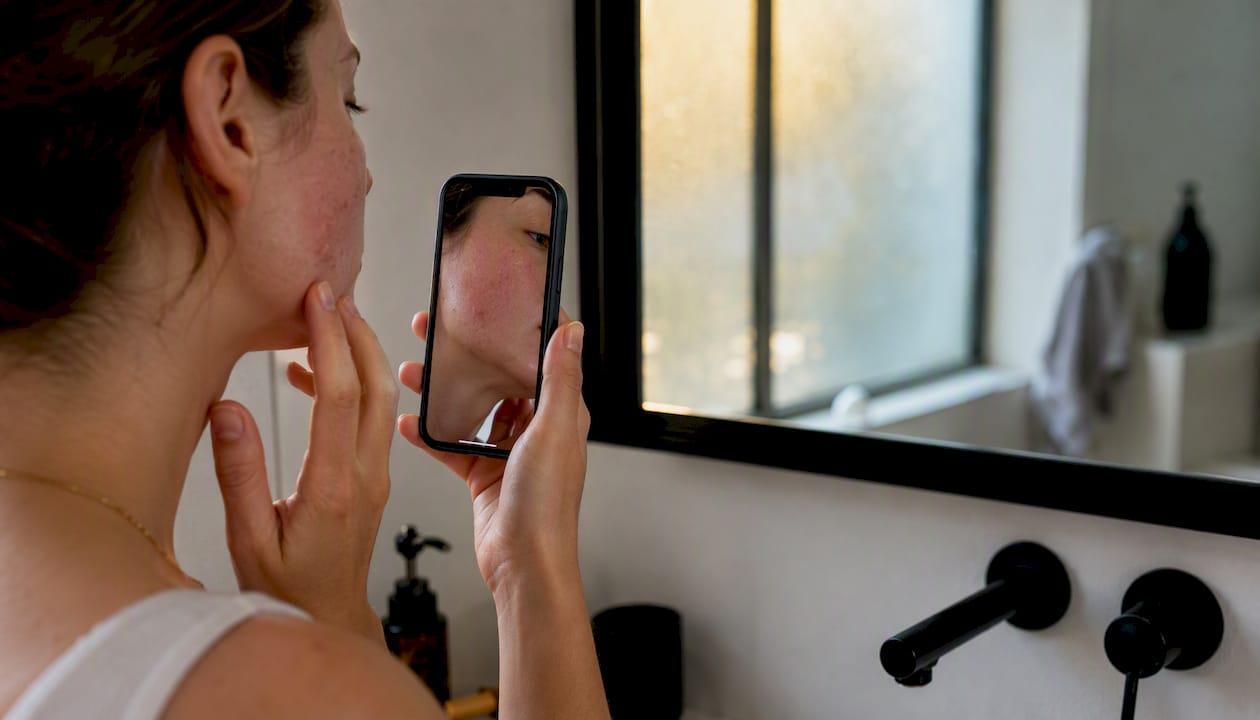
Take a dated photograph of the affected area as soon as you notice a change. This gives the clinic a visual baseline for remote triage and helps the practitioner assess whether the situation is progressing. Send the photo via the clinic’s preferred contact method alongside a brief description of when the symptom started and how it has changed.
Pro Tip: If you cannot reach the clinic and symptoms are worsening, do not wait. Go to your nearest A&E or call 999. Vascular complications from fillers, in particular, require rapid treatment.
What medications and skincare products should you use or avoid?
Pain relief: Paracetamol is generally the recommended choice for post-treatment discomfort. NSAIDs such as ibuprofen and aspirin can increase bruising by affecting platelet function, so many practitioners advise avoiding them for 24–48 hours after injectables unless you are taking them on prescription. If you are on prescribed anticoagulants or blood-thinning medication, consult your GP before making any changes.
Topical skincare:
- Avoid retinoids, AHAs, BHAs, and other active exfoliants for the period your practitioner specifies — typically 5–7 days after injectables and longer after resurfacing treatments.
- Apply a broad-spectrum SPF 30 or higher every morning, even indoors, once the skin has settled. Sun exposure on recently treated skin increases the risk of post-inflammatory hyperpigmentation.
- Use only gentle, fragrance-free moisturisers on treated areas until the skin has fully recovered.
Products and environments to avoid:
- Unclean make-up brushes or sponges applied directly over injection sites.
- Hot tubs, saunas, and steam rooms, which raise skin temperature and increase inflammation risk.
- Tanning beds and prolonged direct sun exposure.
For procedure-specific skincare guidance after dermal filler treatments, your practitioner will provide a tailored list. Always check with the clinic before introducing new prescription skincare or stopping regular medications around the time of treatment.
What should a proper discharge letter include?
A discharge letter is not a formality. It is a clinical record and a safety document. The JCCP Code of Practice requires that aftercare be provided in writing and that records include product details, treatment sites, and any complications for continuity and traceability.
A compliant discharge letter should include:
- The procedure performed and the date.
- Product name, batch number (where applicable), volume used, and injection sites.
- Observations made during the immediate post-treatment recovery period.
- Written aftercare instructions specific to the treatment received.
- The follow-up appointment date or how to book one.
- The clinic’s named emergency contact and out-of-hours arrangements.
- A note on GP notification, with the patient’s consent, where clinically relevant.
If your discharge letter is missing any of these items, ask the clinic to provide them before you leave. Sending a copy to your GP supports continuity of care, particularly if you develop a complication and need to be seen by another clinician.
What does a safe UK clinic do after your treatment?
A professionally run clinic does not simply complete a treatment and send you home. The RCS England Standards for Cosmetic Practice recommend observing patients after procedures to confirm recovery, issuing a discharge letter with follow-up details, and ensuring facilities match the level of procedure performed.
Trust signals to look for:
- An observed recovery period of 15–30 minutes before discharge.
- A written aftercare leaflet given to you at the appointment.
- A named emergency contact and clear out-of-hours arrangements.
- A follow-up appointment included or clearly explained.
- Practitioner registration with the GMC, GDC, or NMC, verifiable on the relevant register.
- CQC accreditation, where the clinic’s scope of practice requires it.
The JCCP Code of Practice requires practitioners to provide adequate time for informed consent, evidence-based written information, and named out-of-hours contacts as part of continuity of aftercare. Informed consent is not a signature on a form — it is an ongoing conversation that includes what to expect during recovery and how to get help if something goes wrong. You can read more about the role of consent in aesthetics and why it matters for your safety.
The NHS guidance on choosing a cosmetic procedure provider is direct: be cautious of any clinic that does not provide clear written aftercare or a transparent emergency contact plan. The absence of these is a warning sign about the clinic’s standards, not a minor administrative gap.
What questions should you ask before you book?
Asking the right questions at consultation tells you far more about a clinic’s safety culture than any marketing material. The RCS professional standards state that practitioners must arrange appropriate aftercare, including out-of-hours provision and clear emergency arrangements.
Questions to ask at consultation:
- Who will perform the treatment, and what are their qualifications and registration (GMC, GDC, or NMC)?
- Is the clinic CQC-registered, and can I verify this?
- What written aftercare will I receive, and does it include an emergency contact?
- How do I reach the clinic outside of normal hours if I have a concern?
- Is a follow-up appointment included, and when will it be scheduled?
- If a complication requires additional treatment, is there a cost, and what is the process?
What good answers look like: A confident, specific response — “You will receive a written aftercare leaflet before you leave, and our emergency number is available 24 hours” — is reassuring. Vague answers such as “just call us” with no named contact or written confirmation should prompt further questions or a second opinion.
Pro Tip: Ask to see the practitioner’s registration number and check it yourself on the GMC, GDC, or NMC register before your appointment. A reputable clinic will welcome this — not discourage it.
Why written aftercare and continuity of care genuinely matter
We see aftercare as an integral part of the treatment itself, not something that begins when you walk out of the door. At Theaestheticsroom, every patient receives a written aftercare leaflet before leaving the clinic, completes an observed recovery period, and has a follow-up appointment scheduled as standard. Our practitioners follow JCCP and RCS guidance on continuity of care, which means you have a named contact for any post-treatment concern and a clear plan for what happens next.
What we have observed is that patients who engage with their written aftercare and attend their review appointments consistently report better outcomes and greater confidence in their results. Written instructions remove ambiguity. A scheduled follow-up creates a structured moment to assess results, address questions, and make any refinements. These are not extras — they are the professional standard, and they are what the patient follow-up workflow at Theaestheticsroom is built around.
Aftercare at Theaestheticsroom: what we provide

Theaestheticsroom is a CQC-registered medical aesthetics clinic in Knightsbridge, with practitioners registered with the GMC and GDC; their tattoo aftercare instructions reflect careful attention to post-procedure skin care and safety. Every treatment includes a written aftercare leaflet, an observed recovery period, a named emergency contact, and a scheduled follow-up appointment. Whether you are considering Botox or dermal fillers, our approach to aftercare reflects the JCCP and RCS standards described throughout this article. You will leave with clear written instructions, a contact for any concern, and the confidence that your recovery is supported. To book a consultation or find out more about our aftercare protocols, visit Theaestheticsroom.
Sources
The following authoritative sources underpin the guidance in this article. Each covers a distinct aspect of safe practice for non-surgical aesthetic treatments in the UK.
- Standards for cosmetic practice (Royal College of Surgeons)
- Cosmetic procedures: choosing who will do your procedure (NHS)
Clinic-specific written aftercare should reflect these national standards. If your discharge letter or aftercare leaflet does not align with the JCCP and RCS guidance above, raise it with your practitioner before leaving the clinic.
This article is general information, not a substitute for advice from a qualified doctor. Consult a qualified healthcare professional about your own circumstances before acting on anything here.