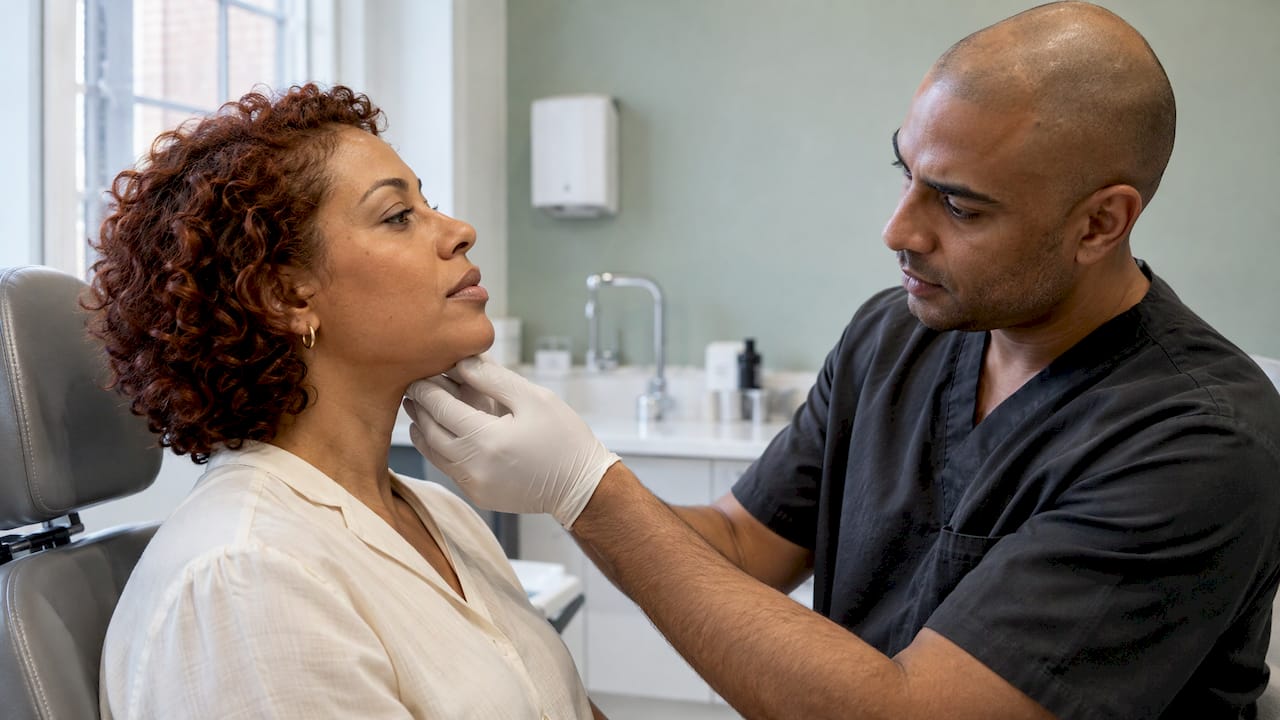
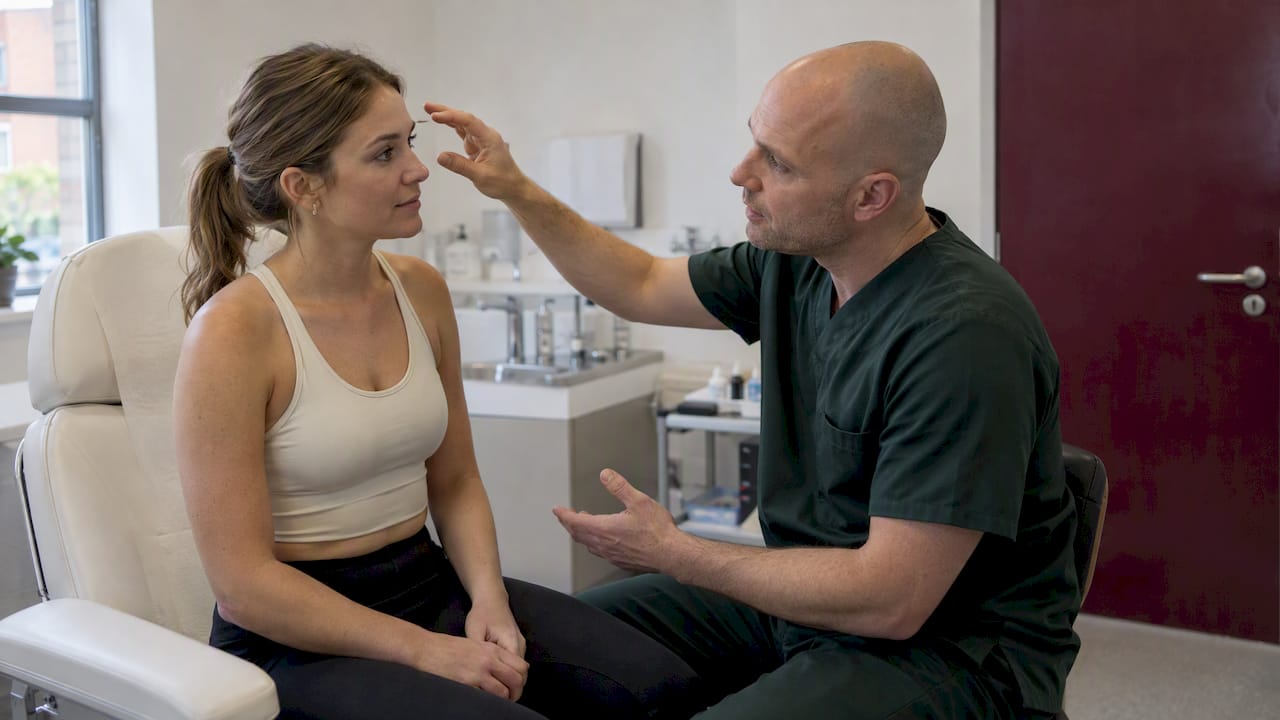

Avoid strenuous exercise for at least 24 hours after Botox. That is the advice in NHS patient guidance on head and neck injections, and it is what we tell every patient at The Aesthetics Room. Gentle movement, such as a slow walk, is usually fine sooner. A hard session, a run, heavy lifting or a hot class should wait until the next day.
Below you will find a clear timeline, what counts as strenuous, how to handle yoga and the gym, what to watch for, and how to plan your appointment so your training barely changes.
TL;DR
- Wait at least 24 hours before strenuous exercise, including running, heavy lifting, HIIT and hot yoga.
- For the first four hours, keep your head upright, avoid lying down and avoid bending forward.
- Avoid alcohol, saunas and hot baths for 24 hours, and do not rub or massage the treated areas.
- Mild redness, bruising or swelling is common. Difficulty breathing or swallowing needs urgent help.
- Book your treatment after a workout, not before, and the rule costs you very little.
Table of Contents
- The 24-hour rule in plain terms
- A timeline for the first day and the days after
- Why exercise is restricted after Botox
- What you can and cannot do
- Other things to avoid in the first 24 hours
- What can happen if you train too soon
- When to contact your clinic or call for help
- Does exercise affect how long Botox lasts?
- Plan your appointment around your training
- Our view: aftercare is part of the result
- Botox at The Aesthetics Room
- FAQ
- Sources
The 24-hour rule in plain terms
The guidance is consistent across UK hospital information leaflets. The Lancashire Teaching Hospitals leaflet says to avoid strenuous activity for at least 24 hours to reduce the risk of bruising and swelling. It also asks patients to follow the aftercare instructions to get the most from treatment and reduce side effects.
Some websites suggest 12 hours is enough. You will also see “as soon as you feel fine”. We do not recommend either. A full 24 hours costs you one rest day, while a bruise on a treated forehead or a swollen eyelid can last far longer.
The rule is about treated areas, but we apply it to everyone. Even if you had a small dose between the brows, the same injection technique, the same needle sites and the same aftercare apply.
A timeline for the first day and the days after
This is how we talk patients through it. Your own practitioner may adjust it for the areas treated and your health.
| Time after treatment | Exercise | What else to do |
|---|---|---|
| First 4 hours | None. Stay upright, move calmly. | Keep your head elevated, do not lie down or bend forward, do not rub the sites. |
| 4 to 24 hours | Easy walking only. No gym, no running. | No alcohol, saunas or hot baths. Avoid heavy lifting and straining. |
| 24 hours onwards | Return to your normal routine, building up if you feel any heat, tightness or headache. | Still avoid pressing on the treated area, for example tight headbands or face-down massage. |
| 3 to 5 days | Normal training. | First effects start to show. |
| About 2 weeks | Normal training. | Full effect is usually reached. |
The four-hour and 24-hour points come from NHS Lothian’s post-treatment care instructions and the Lancashire leaflet above. The timing of the results comes from Queen Victoria Hospital’s patient information, which says initial effects appear after about three to five days on average, with the maximum effect in around two weeks.
Why exercise is restricted after Botox
Hard exercise does three things that matter after injections: it raises your heart rate, it increases blood flow to the face, and it makes you hot. All three can make bruising and swelling more likely at the injection sites. That is the reason given in the NHS guidance: the aim is to reduce bruising and swelling, not to protect the product in some mysterious way.
Posture matters as well. Many exercises put the head below the heart or press on the face: downward dog, headstands, sit-ups with a strained neck, bench presses with a tight grimace, cycling with a tight helmet strap. In the first hours after treatment, NHS guidance asks you to avoid lying down or bending forward, and not to rub or massage the sites.
The aftercare is short and it works best when followed properly. Treat it as part of the treatment, not an optional extra.
What you can and cannot do
The searches we see most often are about specific activities. Here is how we would answer each.
Gym sessions and weights
Wait the full 24 hours. Lifting involves straining, breath holding and a flushed face, which is what you want to avoid in the early period. After 24 hours, return to your usual weights. If you notice a throbbing head or facial heat, drop the load for the day.
Avoid anything that puts pressure on the treated area, such as a face cradle or a tight strap, for the first day.
Running and cardio
Running raises your heart rate, heats you up and jolts the head with every stride. Leave it for the next day. If you want to move on the day of treatment, a slow, relaxed walk later that afternoon is the sensible alternative. Skip the treadmill incline and anything that has you breathing hard.
Yoga and Pilates
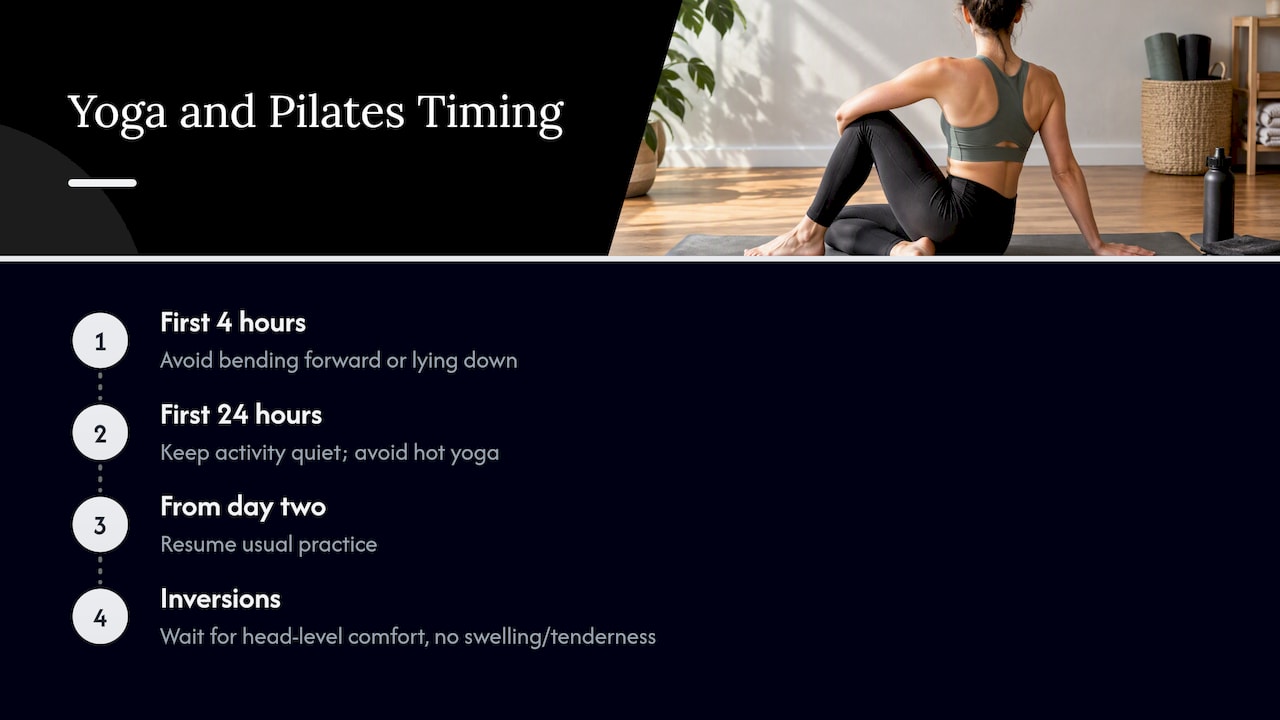
The NHS guidance on not bending forward or lying down for four hours rules out yoga on the day of treatment. After that, the first 24 hours should still be quiet. From day two, most people can return to their usual practice. If you do inversions, wait until you are comfortable at the head level and you have no tenderness or swelling. Hot yoga is a different category: the heat is something the guidance asks you to avoid for 24 hours, so treat it as strenuous.
Swimming
It is the intensity, not the water, that is the issue. A fast set of lengths is strenuous, so leave it for the following day. If you have any open pinpricks, tell your practitioner before getting into a pool.
Walking and daily movement
Normal daily life is fine. You can go to work, shop and walk the dog. Just keep your head up, avoid lifting heavy bags and do not carry out tasks that make you flush.
Other things to avoid in the first 24 hours
The same NHS leaflet that sets out the 24-hour rule also asks you to avoid alcohol and sources of heat, including saunas and hot baths, for 24 hours. Keep your head elevated for four hours. Do not rub or massage the sites, which means no facials, no face massage and no tight caps.
Make-up is generally a question for your practitioner, since pinpricks need a little time. We tell patients to wait until any marks have settled, and we explain this at the appointment.
If you are combining treatments, the alcohol rule is similar for fillers, and we explain the reasoning in our guide to alcohol after fillers.
What can happen if you train too soon
Exercising early does not usually cause anything dramatic. The most likely result is more bruising or swelling than you would otherwise have had, plus a headache or a flushed face. NHS information lists headache, redness, bruising and swelling as common side effects. They usually develop within a few days and can last up to two weeks.
Two rarer problems are worth knowing about so you can recognise them:
- Drooping of an eyelid (ptosis). This is an uncommon complication. The British Association of Medical Aesthetic Nurses guidance says that with experienced injectors the reported incidence is likely below 1%. That is a reason to choose a trained practitioner, and to follow aftercare, not a reason to avoid treatment.
- Spread of the toxin. Hospital information describes very rare cases where the toxin reaches distant muscles, causing general weakness or difficulty swallowing, and says this needs urgent medical assessment.
We do not want to alarm you. Serious problems are rare, and a missed gym session is a very small price. The point is that the aftercare advice exists for good reasons.
When to contact your clinic or call for help
Contact the clinic that treated you if you notice:
- bruising or swelling that is getting worse rather than settling;
- a drooping eyelid or brow, or double vision;
- a persistent headache after the first day;
- uneven results that concern you after two weeks.
Seek urgent help if you have trouble breathing, swallowing or speaking, or marked swelling. The NHS leaflet says to get immediate medical attention and call 999 for difficulty breathing or swelling. Do not wait for a clinic to reopen.
Swelling that lingers can be uncomfortable. If you are curious whether gentle techniques can help, read our article on whether lymphatic drainage reduces swelling after treatment. Do not start any massage on a Botox area without checking with your practitioner first, because the guidance is not to rub or massage the sites.
Does exercise affect how long Botox lasts?
This is a very common worry, and we want to be careful. The NHS guidance we have used gives the exercise rule as a way to reduce bruising and swelling. It does not claim that a workout on day two shortens your results. Online articles often say that, but we would not rely on it.
What does change how your results look is placement and dose, and treatment is repeated over time. If you want to understand how often people top up, see our Botox maintenance schedule. If you are a heavy exerciser or have a very active face, mention it at your consultation so your practitioner can plan accordingly.
Plan your appointment around your training
A little planning removes almost all the frustration.
- Train first, then treat. Book your appointment after your usual workout, ideally late in the day. Your 24 hours then pass mostly overnight.
- Pick a quiet next day. If you train most mornings, choose a day before a rest day, or the day before a lighter session.
- Avoid event clashes. Do not book your treatment the day before a race, a match or a heavy competition lift.
- Tell your practitioner about your routine. If you run, climb or play contact sport, say so. Facial pressure from a helmet or mask matters.
- Come with a plan for the first four hours. Wear loose, comfortable clothing, avoid a hot journey and keep your head up.
If this is your first time, our guide to London aesthetic consultations explains what happens before you are treated, including the questions worth asking.
Our view: aftercare is part of the result
At The Aesthetics Room, we treat aftercare as part of the treatment, not a footnote. Every treatment is carried out by medically trained professionals, and we are CQC registered and members of the ACE Group, which is focused on patient safety. That matters most in the hours after you leave the clinic, when you are the one in charge of the result.
Our approach is to be specific. Telling a patient to “take it easy” is not enough: we tell them what to do in the first four hours, what to avoid until tomorrow, and exactly what would make us want to see them. We also adapt it. A patient who runs every morning needs a different plan from one who works at a desk.
We also tend to be more cautious than the internet on one point. You will find sites that say 12 hours is fine. We would rather you wait a full day, because the cost is a single rest day and the benefit is fewer bruises before a meeting, a holiday or an event. A natural, balanced result starts with good technique and finishes with sensible aftercare.
— Vishul
Botox at The Aesthetics Room
Our anti-wrinkle treatments are priced from £200 to £358, depending on the areas treated, and our practitioners will walk you through aftercare before you leave. If you are treating excessive sweating, Hyperhidrosis treatment is priced at £300 to £450, and you can read about it in our hyperhidrosis Botox cost guide. You can see every treatment and price on our price list, and book a virtual or in-person consultation at our Knightsbridge, Harley Street or Mayfair locations.

If you train regularly, tell us when you book. We will help you pick an appointment time that fits your schedule.
FAQ
Can I run after Botox?
Not on the day of treatment. Running raises your heart rate and body temperature, which the NHS guidance asks you to avoid for at least 24 hours. From the next day, most people can return to their normal running. If you feel flushed, throbbing or notice swelling, ease off and speak to your practitioner.
How soon after Botox can I do yoga?
Avoid it for the first four hours at least, because you should not lie down or bend forward. We would also keep the first 24 hours calm. From day two, gentle yoga is usually fine, and you should leave inversions and hot yoga until you feel completely comfortable.
What should I not do for 24 hours after Botox?
Avoid strenuous exercise, alcohol, saunas and hot baths, and do not rub or massage the treated areas. For the first four hours, keep your head up and avoid lying down or bending forward. These points come from NHS aftercare leaflets.
Can I go to the gym the day after Botox?
In most cases, yes. Once 24 hours have passed, you can return to your usual routine. Build up if you feel any heat or headache, and avoid equipment that presses on the treated areas. If your practitioner gave you different advice, follow theirs.
What if I exercised too soon?
Do not panic. The most likely outcome is some extra bruising, swelling or redness, which usually settles within days. Stop exercising, rest and keep your head upright. Contact your clinic if it gets worse, and call 999 if you have trouble breathing or swallowing.
Sources
- Botulinum Toxin A Injections in the head and neck region, Lancashire Teaching Hospitals
- Treatment with Botulinum Toxin Type A, Queen Victoria Hospital
- Botulinum toxin injections, United Lincolnshire Hospitals
- Oral and Maxillofacial Surgery Botox post treatment care, NHS Lothian
- Management of Ptosis, British Association of Medical Aesthetic Nurses