

TL;DR:
- Irritated skin causes discomfort and often responds well to a simple, consistent home-care routine that addresses triggers.
- Understanding the root causes and maintaining a gentle skincare kit support barrier repair and reduce flare-ups effectively.
- Seek professional help if irritation persists beyond a week or shows signs of infection to prevent further skin damage.
Irritated skin is uncomfortable, distracting, and sometimes genuinely distressing. Whether you are dealing with redness, persistent itching, or a raw, tight feeling, knowing how to soothe irritated skin quickly and safely makes a real difference to your day. The good news is that most cases of skin irritation respond well to a clear, consistent approach at home. This guide walks you through identifying your triggers, building a gentle soothing routine, managing itch, and recognising when it is time to seek professional support.
Table of Contents
- Key takeaways
- How to soothe irritated skin: understanding causes first
- Building your soothing skincare kit
- Step-by-step routine to calm irritated skin
- When home care is not enough
- Managing itch and preventing flare-ups long term
- My honest take on soothing irritated skin
- How Theaestheticsroom can help restore your skin
- FAQ
Key takeaways
| Point | Details |
|---|---|
| Identify your triggers first | Track exposures in a diary to pinpoint the soaps, fabrics, or products worsening your skin. |
| Simplify your skincare routine | Use the fewest possible products during a flare to help skin repair and accurately assess what works. |
| Cool compresses reduce itch fast | Apply a cool, damp cloth for 5 to 10 minutes, then seal with a fragrance-free moisturiser. |
| Use hydrocortisone cautiously | Over-the-counter hydrocortisone is safe for short-term use but should not be applied to the face without medical guidance. |
| Seek help after one week | Persistent or worsening irritation that does not improve with home care warrants a consultation with a healthcare professional. |
How to soothe irritated skin: understanding causes first
You cannot reliably calm irritated skin without understanding what is provoking it. This is not about diagnosis. It is about making an informed connection between what touches your skin and how it responds.
Common sensitive skin triggers include everyday items many people overlook:
- Cleansers and soaps containing sulphates, alcohol, or synthetic fragrance
- Laundry detergents and fabric softeners, especially those with strong perfumes
- Synthetic fabrics such as polyester or nylon worn close to the skin
- Environmental factors including wind, cold temperatures, low humidity, and sun exposure
- Skincare products with active ingredients such as retinol, AHAs, or essential oils
- Household cleaning products used without gloves
The skin barrier is essentially a protective layer of lipids and proteins that keeps moisture in and irritants out. When that barrier is damaged, even mild exposures can trigger a disproportionate reaction. This is why someone can use the same washing powder for years and then suddenly react to it. The barrier was already weakened by something else, and that product simply pushed it over the edge.
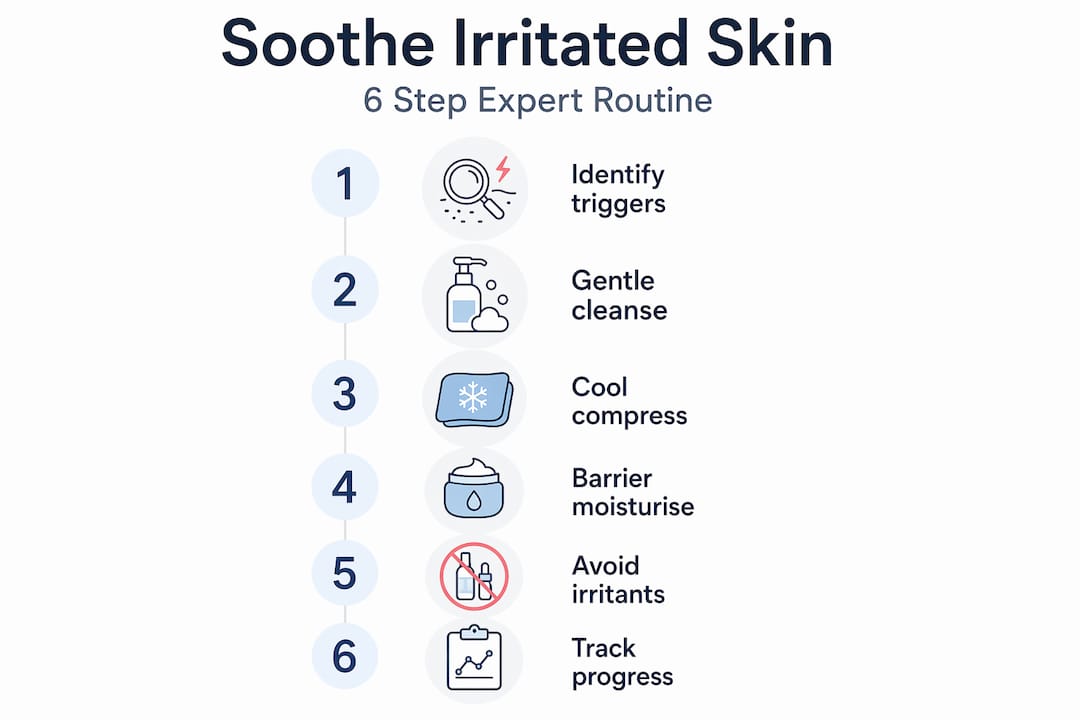
One practical tool that genuinely helps is a trigger diary. Write down what you used on your skin, what you wore, where you were, and what you ate for a week. Then note when symptoms flare. Patterns become visible quickly. Trigger identification and protective measures such as wearing gloves with chemicals and switching to fragrance-free products form the foundation of any successful soothing approach.
Building your soothing skincare kit
Before you start treating your skin, you need the right materials to hand. Reaching for the wrong product during a flare can set you back days.
| Product type | What to look for | What to avoid |
|---|---|---|
| Cleanser | Fragrance-free, pH-balanced, sulphate-free | Foaming formulas, exfoliating acids |
| Moisturiser | Ceramides, glycerin, petrolatum, colloidal oatmeal | Fragrance, essential oils, preservatives like methylisothiazolinone |
| Compress material | Clean cotton flannel or muslin cloth | Rough or synthetic fabrics |
| Sun protection | Mineral SPF with zinc oxide | Chemical UV filters such as oxybenzone |
The principle behind all of these choices is the same. You want to support barrier repair without introducing any new potential irritants. A simplified routine with a gentle cleanser and plain moisturiser promotes consistent improvement far more reliably than cycling through multiple soothing products hoping one will work.
Scrubs, exfoliating pads, sonic cleansing brushes, and any product containing retinoids, benzoyl peroxide, or vitamin C should be set aside completely during a flare. These ingredients serve an important role in a maintenance routine but they slow barrier repair when skin is already compromised.
Pro Tip: Keep a small, dedicated bag with your flare-up essentials, including your gentle cleanser, barrier moisturiser, cotton cloths, and mineral SPF. When your skin reacts, you will not have to think. You will just reach for the bag.
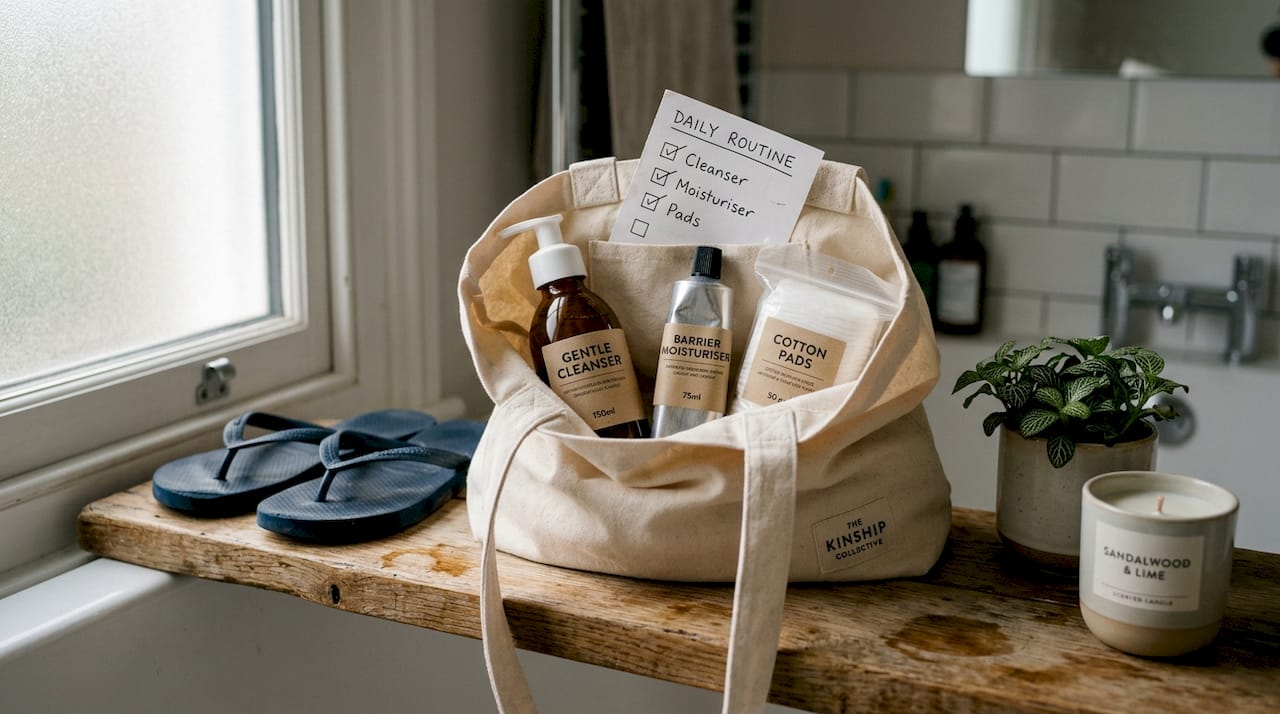
For natural remedies for skin irritation, simple plant-based options like colloidal oatmeal and aloe vera gel can be effective additions to your kit, provided they are in formulations without added fragrance or alcohol.
Step-by-step routine to calm irritated skin
Once you have your kit ready, follow these steps consistently. The order and the details matter.
-
Cleanse with lukewarm water only. Hot water strips the skin barrier. Cool water can feel refreshing but can also trigger reactions in some people. Lukewarm is the reliable middle ground. Use a small amount of your fragrance-free cleanser and apply it with clean fingertips only. No cloths or brushes on actively irritated skin.
-
Pat dry, never rub. Press a clean, soft cotton towel gently against your skin until the surface moisture is absorbed. Rubbing creates friction that worsens inflammation and prolongs redness.
-
Apply moisturiser within 60 seconds. This is the step most people delay and it is where the most moisture is lost. Applying your moisturiser while skin is still slightly damp traps water in the outermost layers and directly supports barrier repair. Products containing ceramides, glycerin, or petrolatum are particularly effective here.
-
Use a cool compress for itch relief. Cool compresses applied for 5 to 10 minutes reduce the sensation of itch by temporarily numbing nerve endings in the skin. Follow this immediately with a layer of moisturiser to seal in the benefit.
-
Strip back your routine to the minimum. A minimum viable routine during flares consists of a cleanser used only when genuinely needed, a barrier moisturiser, and sun protection if you are going outdoors. Nothing else. This approach is sometimes called a subtraction plan and it serves two purposes. It removes potential irritants and it allows you to accurately judge whether skin is actually improving.
-
Consider short-term OTC hydrocortisone if appropriate. NHS guidance advises once or twice daily use of hydrocortisone 1% cream for a maximum of one to two weeks. Do not apply it to the face without speaking to a pharmacist or doctor first, as it can worsen certain conditions including perioral dermatitis and rosacea.
Pro Tip: Photograph your skin at the same time each morning in the same light. After five days, compare the images. Visible progress is easy to overlook when you see your skin every day, and the comparison gives you confidence to stay the course rather than switching products.
When home care is not enough
Most mild irritation responds to the steps above within a few days. But there are situations where home care is insufficient and continuing without professional guidance can cause harm.
Watch for these signs that your skin needs more than at-home treatment:
- Irritation that has not improved at all after seven days of consistent gentle care
- Weeping, crusting, or warm skin that may indicate a bacterial infection requiring antibiotics
- Increased swelling or spreading redness beyond the original area
- Severe burning or stinging that worsens with moisturiser application
- Recurrent flares in the same location that may point to contact dermatitis or another diagnosable condition
If symptoms persist or feel bothersome, a GP or dermatologist can assess whether you need prescription treatments such as stronger topical corticosteroids, immunomodulator creams, or phototherapy.
On the topic of topical corticosteroids specifically: stronger does not automatically mean better. A Cochrane review found that once-daily use of a potent steroid can be as effective as twice daily, and that longer or heavier use is not more effective. It simply increases the risk of side effects including skin thinning. Apply only what is prescribed or labelled, for the duration stated, and no longer.
Seek urgent advice if your skin becomes hot, swollen, and painful with fever. These are signs of a skin infection that requires prompt medical attention, not continued home treatment.
Misuse of hydrocortisone is worth highlighting separately. Applying hydrocortisone incorrectly can worsen irritation rather than resolve it. Always apply a thin layer, wash your hands before and after use, and stop immediately if burning or swelling increase.
Managing itch and preventing flare-ups long term
Getting through a flare is one thing. Staying out of them is another. These practical strategies help both in the moment and over time.
- Cool the skin instead of scratching. Scratching releases histamine, which intensifies the itch. Breaking the itch-scratch cycle with a cool compress or a light tap is more effective and does not risk breaking the skin and introducing infection.
- Keep nails short and clean. This reduces the damage caused by unconscious scratching during sleep.
- Choose breathable fabrics. Loose-fitting cotton and bamboo reduce friction and allow skin to regulate temperature. Synthetic fabrics trap heat and moisture, both of which trigger itch.
- Moisturise every single day, not just during flares. Consistent daily moisturising maintains the skin barrier and makes it less reactive to everyday exposures. This is one of the most evidence-supported tips for irritated skin that many people skip during symptom-free periods.
- Adjust your sleep environment. A cool bedroom, cotton bedding, and a light duvet reduce night-time itching. Overheating during sleep is a significant but underappreciated trigger.
- Stay hydrated. Skin water content is partly maintained by the barrier but internal hydration supports overall skin health. Aim for 1.5 to 2 litres of water daily.
- Review your products every few months. Manufacturers change formulations. A product that worked well for two years may have been quietly reformulated. If a flare appears without obvious cause, check ingredient lists against previous versions.
For the best oils for irritated skin, gentle options such as squalane and sunflower seed oil have good tolerability profiles and support barrier function. Avoid highly fragranced botanical oils like lavender or ylang-ylang directly on reactive skin.
My honest take on soothing irritated skin
I have worked with clients who arrive having tried seven or eight different products in the space of a fortnight, each one promoted as a natural remedy or a fast solution for redness. Almost without exception, their skin is worse for the effort. They are treating symptoms with new potential irritants, which creates a cycle that feels genuinely impossible to break.
The contrarian truth about how to reduce skin inflammation and restore calm is that doing less almost always works better than doing more. Skin has a remarkable capacity for repair when you stop aggravating it. The barrier rebuilds. Redness fades. Itch subsides. But this takes days, not hours, and it requires you to resist the urge to intervene constantly.
What I have seen work consistently in practice is this: identify one or two suspected triggers, remove them, apply a barrier moisturiser twice daily, and photograph your skin each morning. Sit with the discomfort of not doing more. Check the photos after five days. In most cases, improvement is already visible.
The other lesson I would share is about patience with the skincare routine checklist approach. A structured, minimal routine is not the same as doing nothing. It is a deliberate, informed decision to support your skin without overwhelming it.
— Vishul
How Theaestheticsroom can help restore your skin

At Theaestheticsroom, we understand that persistent or recurring skin irritation sometimes points to something that goes beyond what home care can fully address. Our team of specialist practitioners at our Knightsbridge clinic works with clients to assess underlying skin concerns and recommend professional treatments tailored to your skin’s specific needs. Whether you are looking to rebuild skin resilience after a period of irritation or explore skin rejuvenation treatments once your skin has settled, we offer medically led options in a safe, accredited environment. For those considering more advanced aesthetic options including dermal fillers to restore volume and skin quality, we provide personalised consultations both virtually and in clinic. Book your consultation today and take the next step towards confident, healthy skin.
FAQ
What is the fastest way to soothe irritated skin at home?
Apply a cool, damp compress for five to ten minutes, then immediately follow with a fragrance-free barrier moisturiser. This combination reduces itch and supports skin repair more quickly than most topical treatments used alone.
Can I use hydrocortisone cream on my face?
NHS guidance advises against applying hydrocortisone to the face without medical guidance, as it can worsen conditions like rosacea and perioral dermatitis. Speak to a pharmacist or GP before using it on facial skin.
How long should it take for irritated skin to calm down?
Most mild skin irritation improves within three to seven days with consistent gentle care. If there is no improvement after one week, a healthcare professional can assess whether prescription treatment is needed.
What ingredients should I avoid during a skin flare?
Avoid fragrances, alcohol, essential oils, retinoids, AHAs, BHAs, and benzoyl peroxide during a flare. These ingredients slow barrier repair and can intensify redness and sensitivity even when used in small amounts.
When should I see a doctor about skin irritation?
See a doctor if your skin shows signs of infection such as weeping, warmth, or spreading redness, or if symptoms have not improved after seven days of home care. Persistent or recurrent flares may require a diagnosed treatment plan rather than continued self-management.
Recommended
- 7 Expert Professional Skin Treatment Tips for Radiant Results – The Aesthetics Room
- Skin rejuvenation benefits: expert guide for Londoners – The Aesthetics Room
- Top 6 professional acne treatments 2026 – The Aesthetics Room
- How to manage sensitive skin: expert strategies for calm skin – The Aesthetics Room