
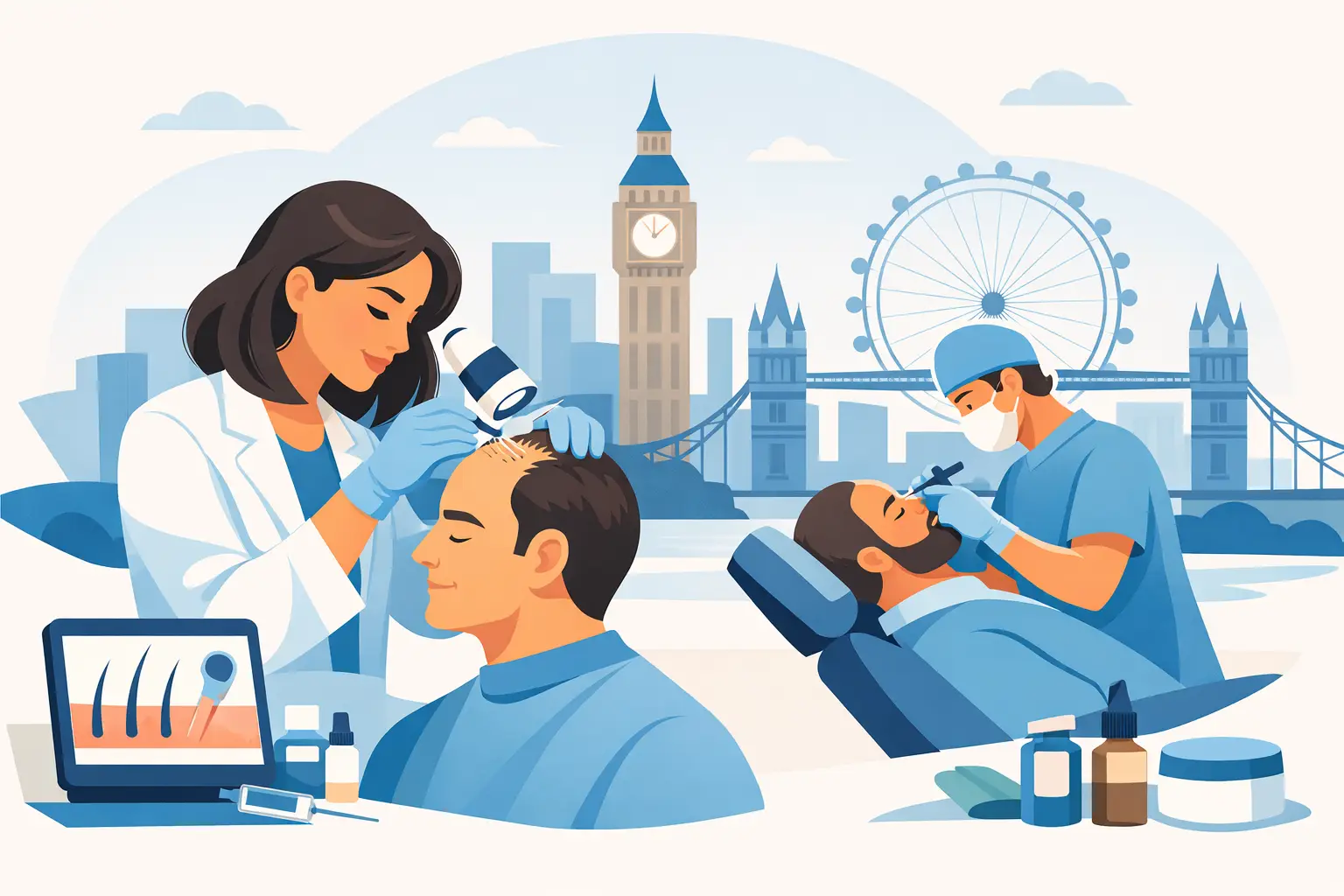

A receding hairline rarely feels like a small change when you notice it in the mirror every morning. For many patients, the search for hair restoration London options begins long before they mention it out loud. They may have tried supplements, changed shampoos or adjusted their styling, only to realise the issue is not cosmetic at all – it is clinical, personal and often closely tied to confidence.
That is why the right approach starts with diagnosis, not sales. Hair loss can look similar across patients, but the cause, pattern and pace can be very different. A medically led consultation matters because effective treatment depends on understanding what is actually driving the thinning.
Why hair restoration in London needs a medical approach
Hair loss is not one condition. Some patients are dealing with androgenetic hair loss, where genetics and hormones gradually miniaturise the follicles. Others may be experiencing shedding after stress, illness, hormonal change, weight loss or nutritional imbalance. In some cases, inflammation, scalp conditions or traction from styling habits may also be contributing.
This is where many people go wrong. They look for a single hero treatment when what they need is a proper assessment. A premium clinic should not treat hair restoration as a one-size-fits-all service. It should examine the scalp, review medical history, discuss timing and progression, and consider whether wider health factors may be involved.
For busy professionals and appearance-conscious patients in Central London, discretion and efficiency matter, but speed should never come at the expense of accuracy. A refined patient experience is important, yet safety and clinical judgement should remain at the centre of the plan.
What a good hair restoration London consultation should cover
A strong consultation is more detailed than many patients expect. It should include when the hair loss started, whether it is diffuse or localised, any family history, previous treatments, scalp symptoms and changes in health or medication. Photographs may be used to track progression over time, which is often more useful than relying on memory alone.
The consultation should also cover expectations. Some patients want fuller density through the crown. Others are more concerned about a widening parting, temple recession or loss of hair quality. These are not identical concerns, and they should not be treated as though they are.
A careful practitioner will also be honest about limits. Not every form of thinning can be reversed fully, and not every patient is suitable for every treatment. In some cases, the realistic goal is slowing loss, strengthening existing hair and improving overall scalp health rather than producing dramatic regrowth. Clear advice is a sign of quality, not hesitation.
The main treatment paths for hair restoration
Non-surgical hair restoration has become more sophisticated, which is good news for patients who want to improve hair quality without committing immediately to a transplant pathway. The right plan depends on severity, age, pattern of loss and how early the issue has been caught.
Regenerative treatments
Regenerative approaches are often chosen by patients who want to support weakened follicles and improve the environment of the scalp. These treatments are typically designed to stimulate the scalp and encourage healthier growth cycles. They are especially appealing to patients at an earlier stage of thinning, or to those who want to maintain existing hair while addressing gradual loss.
The benefit of this route is that it can fit well into a broader aesthetic and wellbeing plan. The limitation is that results are usually gradual, and consistency matters. Patients looking for overnight density are often disappointed if they have not been guided properly from the start.
Prescription-led support
Some patients may benefit from prescription treatment as part of a medically supervised plan. This can be very effective for the right candidate, particularly when there is a clear hormonal or genetic pattern. However, suitability must be assessed carefully, and treatment should be monitored rather than used casually.
This is another area where clinical oversight makes a real difference. Hair treatment should not sit in isolation from wider health considerations. A personalised plan may also involve blood testing or further investigation if deficiency, hormonal shifts or internal health issues are suspected.
Combination treatment plans
In practice, many of the best outcomes come from combination treatment. That might mean pairing in-clinic procedures with homecare, lifestyle support and regular review appointments. A patient with stress-related shedding and underlying nutritional issues needs a very different plan from someone with long-standing hereditary thinning.
Combination plans tend to produce stronger, more sustainable results because they address more than one factor at once. They also allow treatment to evolve as the hair responds.
Why timing matters more than most patients realise
One of the most common mistakes is waiting until the thinning is advanced before seeking help. Hair restoration is often more successful when follicles are weakened rather than inactive. Once a follicle has been dormant for too long, treatment options may become narrower.
Early intervention does not necessarily mean aggressive treatment. It simply means acting while there is still more to preserve. Even patients who are unsure whether the change is significant can benefit from a professional assessment, if only to establish a baseline and monitor over time.
This matters in a city like London, where high stress, demanding schedules and lifestyle pressures can all affect hair health. A subtle increase in shedding may not be harmless, and delaying assessment can make a manageable issue harder to treat later.
What natural-looking results really mean
When patients ask for natural results, they are usually asking for improvement that does not look forced, obvious or out of keeping with them. In hair restoration, that means respecting the patient’s age, features, pattern of loss and long-term goals.
The best treatment plans do not chase unrealistic density. They aim for healthier, stronger, more resilient hair that looks believable. Sometimes that means focusing on the frontal hairline. Sometimes it means improving coverage through the crown, reducing visible scalp show-through or restoring confidence in how the hair is styled.
A polished result often comes from restraint and planning. Patients with premium expectations usually value subtle progress they can build on, rather than a quick fix that does not suit them six months later.
Choosing a clinic for hair restoration London patients can trust
Not all clinics offering hair treatments work to the same standard. For patients investing in their appearance and wellbeing, credentials matter. So does the environment in which care is delivered.
A reputable clinic should be clear about who is carrying out the consultation, what the treatment is designed to do, what the possible side effects are and how progress will be reviewed. It should not rely on vague promises or pressure to book on the spot. Hair loss can feel emotional, which makes honest guidance even more important.
Patients should also consider whether the clinic takes a broader view of aesthetics and health. Hair quality does not exist separately from stress, nutrition, hormones, scalp condition and overall confidence. At The Aesthetics Room, that bespoke, consultation-led mindset is central to how patients are assessed and treated.
Luxury should never mean superficial. In the right setting, it means attentive care, privacy, well-trained practitioners and treatment planning that feels considered from the first conversation.
Setting realistic expectations after treatment
Hair restoration requires patience. Most patients will not see meaningful change immediately, and that is normal. Hair grows in cycles, which means visible improvement usually develops over months, not days. Shedding can also fluctuate during the process, and progress is rarely perfectly linear.
This is why review appointments matter. They help track response, refine the plan and make sure treatment is still aligned with the original goal. Some patients need maintenance. Others may need to adjust course if the underlying trigger changes.
The most satisfied patients tend to be those who understand from the outset that good treatment is a process. They are not buying a miracle. They are investing in a structured, personalised approach with a realistic timescale.
If you are considering hair restoration, the most useful first step is not choosing a treatment from a menu. It is choosing a clinic that will look properly at you, not just your hair.