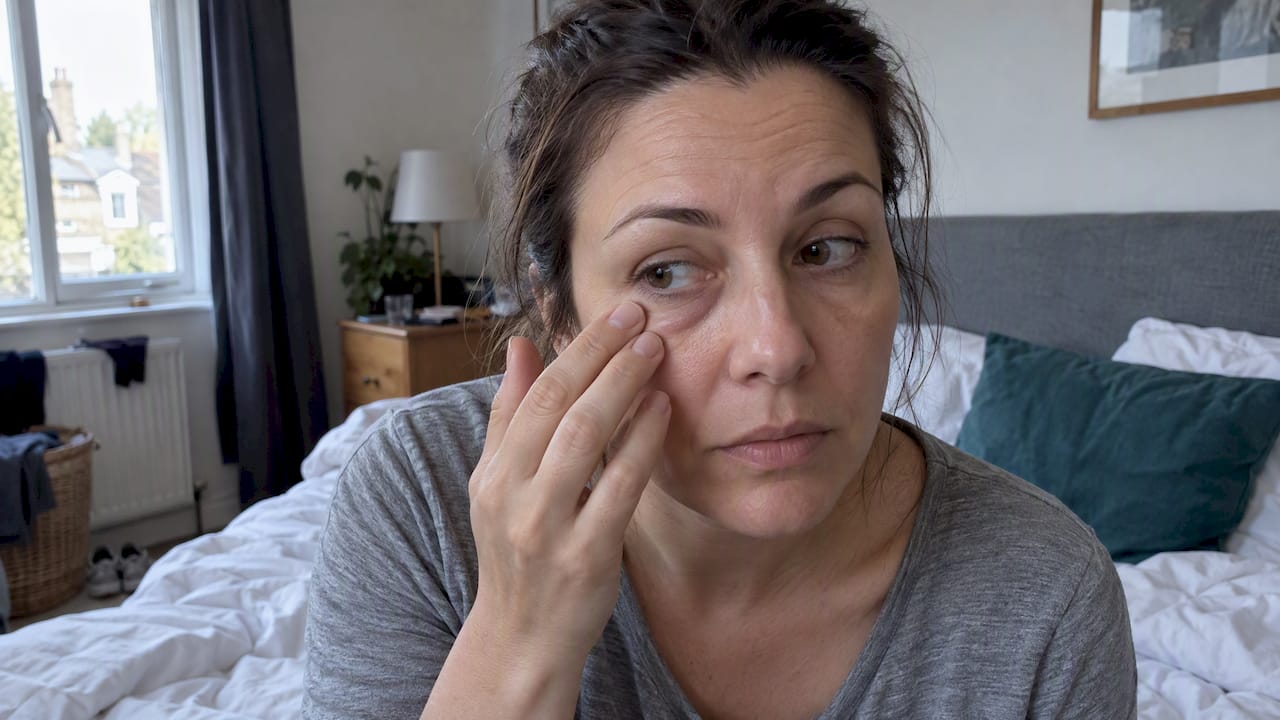


Aqualyx commonly causes short-lived swelling, bruising and tenderness that settle within days to a few weeks. Serious complications, such as skin necrosis or nerve injury, are rare and most often stem from incorrect technique, superficial injection or treatment by an untrained provider. Seek urgent review for spreading redness, an open wound, facial weakness, or breathing or swallowing difficulty.
TL;DR:
- Serious complications like skin necrosis and nerve injury are rare and mainly linked to improper technique, superficial injection, or untrained providers.
- Most side effects such as swelling, bruising, and tenderness are temporary, typically resolving within a few weeks with proper self-care.
- Proper training, clinic accreditation, and following standardized protocols significantly reduce the risk of adverse effects during treatment.
- Individuals who are pregnant, have active infections, autoimmune conditions, or are on blood thinners should avoid Aqualyx without medical consultation.
- Urgent medical review is necessary if spreading redness, open wounds, facial weakness, or swallowing difficulties develop post-treatment.
Table of Contents
- What is Aqualyx and how does it work?
- What are the common Aqualyx side effects and how long do they last?
- What are the serious Aqualyx complications to watch for?
- Who should not have Aqualyx?
- How do you reduce the risk of Aqualyx side effects?
- What does Aqualyx aftercare involve, and when should you get help?
- How does The Aesthetics Room approach fat-dissolving safety?
- Considering fat-dissolving treatment in London?
- Sources
What is Aqualyx and how does it work?
Aqualyx is an injectable, adipocytolytic solution built around deoxycholic acid (DC), a bile acid that breaks down the membrane of fat cells so the body can clear the released contents naturally over the following weeks. It’s not a surgical alternative; it’s a chemical process that depends heavily on precision.
How many side effects you experience often comes down to three variables: injection depth, dose per point, and how evenly the solution is spread across the treatment area. Go too shallow and you risk the skin itself. Overdose a single point and you raise the odds of a lasting nodule. This is why the same active ingredient can produce a smooth recovery in one clinic and a complicated one in another.
Aqualyx carries a CE mark in Europe, which governs manufacturing and device safety standards rather than the kind of large-scale efficacy trials the FDA requires. In the United States, the closest approved equivalent is a different deoxycholic acid product cleared specifically for submental fat. That regulatory gap is worth understanding before you compare Aqualyx to anything marketed as “FDA-approved fat dissolving.”
What are the common Aqualyx side effects and how long do they last?
The vast majority of reactions to Aqualyx sit firmly in the “expected, not alarming” category. If you’ve had a course of injections, you should anticipate some or all of the following:
- Swelling (oedema) around the treated area, often the most visible reaction.
- Bruising or haematoma, typically most obvious in the first few days.
- Pain or tenderness, ranging from mild to genuinely uncomfortable for 24 to 72 hours.
- Numbness or tingling (paraesthesia) as nerve endings react to the injection process.
- Redness (erythema) and itching, usually the quickest symptoms to fade.
Pro Tip: Keep a simple photo diary from day one. Swelling can mask early progress, and having a visual record makes it far easier for your practitioner to judge whether recovery is tracking normally at your follow-up.
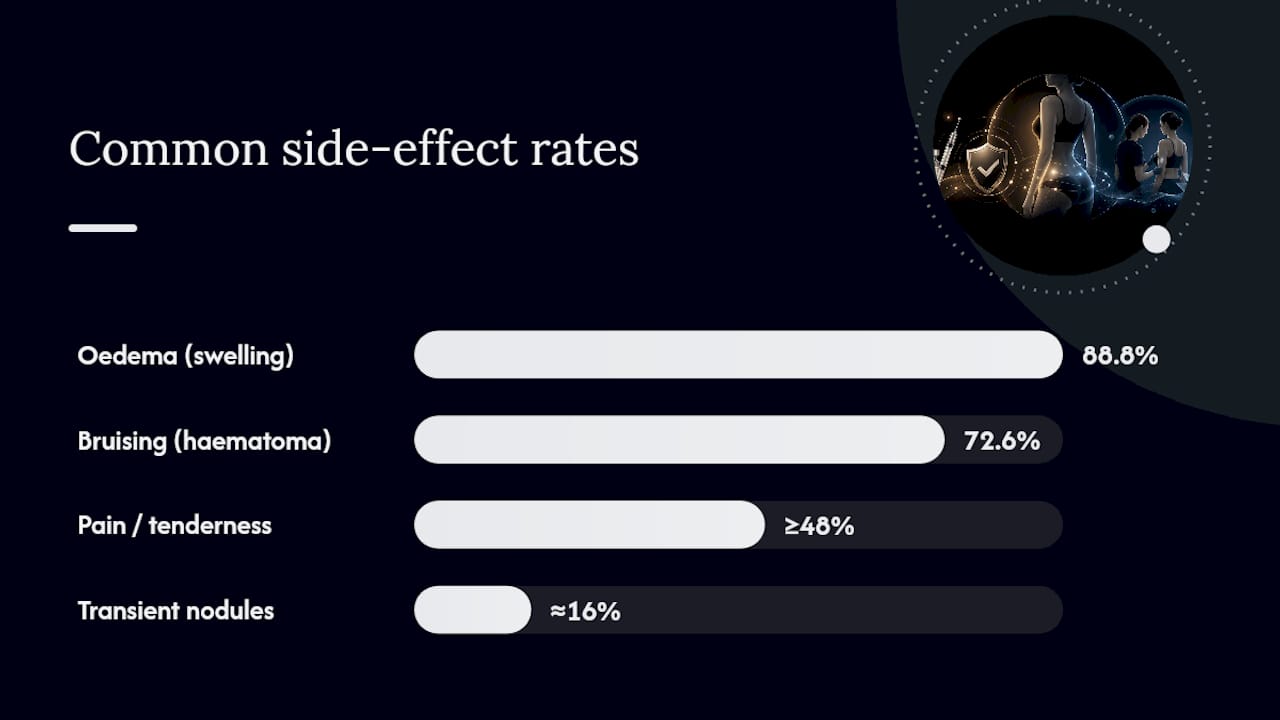
Aggregated clinical series give a useful sense of scale here. Reported rates include oedema in around 88.8% of patients, pain in over 48%, and bruising in roughly 72.6%, with transient nodules appearing in about 16% of cases in some series. Those figures sound high, but almost all of it is short-lived: most people see visible improvement within one to two weeks and full resolution within four.
Self-care during this window is straightforward. Cold compresses in the first 48 hours limit swelling, over-the-counter analgesia handles discomfort, and gentle movement (rather than bed rest) tends to speed circulation and reduce bruising. Contact your clinic if pain worsens after day three instead of easing, which is not the expected pattern.
What are the serious Aqualyx complications to watch for?
Rare doesn’t mean impossible, and it’s worth knowing exactly what “serious” looks like so you can recognise it early rather than second-guessing a normal bruise.
- Skin necrosis from injection that’s too superficial or from disrupting local blood supply, causing tissue death at the injection site.
- Persistent nodules that don’t resolve on their own and may need aspiration or further clinical intervention.
- Infection, occasionally requiring antibiotics if the skin barrier is compromised.
- Marginal mandibular nerve injury, relevant specifically to jawline and lower-face treatment, presenting as facial asymmetry or weakness.
- Localised alopecia in rare cases where treatment sits close to hair-bearing skin.
Case reports describe necrosis following superficial or improperly placed injections, with management involving early ultrasound imaging, targeted antibiotics for suspected infection, surgical debridement where tissue damage is significant, and negative-pressure wound therapy. Recovery in these documented cases generally occurred, but often only after weeks of active wound management and follow-up.
The pattern across published case reports is consistent: complications cluster around technique failures, not the drug itself. Too shallow an injection, an uneven bolus, or overdosing a single point shows up again and again as the common thread behind necrosis and nerve injury.
Deoxycholic acid’s own drug safety monograph lists nerve injury (an asymmetric smile) and dysphagia or oropharyngeal pain among recognised, if uncommon, adverse reactions. None of this is inherent to the ingredient. It’s a technique risk, and technique is the one variable you can actually control by choosing carefully.
Who should not have Aqualyx?
Certain people should not proceed, and others need a specialist assessment before booking anything.
- Pregnancy or breastfeeding, where injectable treatments are avoided as standard practice.
- Active infection at the intended injection site.
- Significant autoimmune conditions or organ disease, which can affect healing and inflammatory response.
- Known allergy to deoxycholic acid or any formulation ingredient.
- Current anticoagulant use, which raises bruising and bleeding risk substantially.
- Recent surgery near the treatment area, where tissue is still healing.
Age itself isn’t usually disqualifying, but skin laxity and healing capacity both shift with age and deserve an honest conversation before treatment. A proper consultation should include a documented medical history and clear, written informed consent, not a rushed five-minute chat before you’re on the couch.
How do you reduce the risk of Aqualyx side effects?
Choosing well is the single biggest lever you have over your own outcome. Before booking, work through this:
- Check training credentials. Ask specifically about documented intralipotherapy training, not just general aesthetics experience.
- Confirm clinic accreditation. Care Quality Commission (CQC) registration signals an external standard for safety and governance, not just a marketing claim.
- Ask about protocol. Does the practitioner follow a written technique covering needle gauge, injection pattern, maximum volume per session, and interval between sessions?
- Ask about ultrasound or mapping. Some manufacturers recommend it for even distribution; the more important point is whether any standardised, repeatable protocol is being followed.
- Ask what happens if something goes wrong. A clinic with a genuine escalation policy will answer this without hesitation.
Understanding basic facial anatomy considerations for injectables is part of what separates a trained injector from someone working off a short course certificate. Steer clear of any provider offering rock-bottom prices with no aftercare plan or non-medical staff administering injections.
Pro Tip: Ask to see evidence of training rather than just hearing about it. A confident, properly qualified practitioner will happily show certification without treating the question as an insult.
What does Aqualyx aftercare involve, and when should you get help?
Standard aftercare is simple: cold compression for the first 48 hours, avoiding strenuous exercise for around 48 to 72 hours, appropriate analgesia, and keeping the injection site clean while it heals. Most clinics schedule a follow-up review around two to four weeks post-treatment to assess progress and plan any further sessions.
- Prolonged swelling or a firm nodule beyond a few weeks warrants a clinic review rather than “waiting it out” indefinitely.
- Spreading redness or an open wound or ulceration at the site needs urgent assessment.
- Fever following treatment is not expected and should be checked promptly.
- Facial weakness or difficulty swallowing (dysphagia) requires immediate clinical review, not a wait-and-see approach.
Our broader aftercare guide for aesthetic patients covers the general recovery principles that apply across most injectable treatments, useful context alongside anything Aqualyx-specific your clinic gives you.
How does The Aesthetics Room approach fat-dissolving safety?
We work under CQC accreditation and ACE Group membership, both of which hold us to external, audited standards for patient safety rather than self-reported ones. Every fat-dissolving consultation includes a documented medical history, a candid discussion of realistic outcomes, and a written aftercare and escalation plan before treatment begins. If something looks unusual during recovery, we’d rather see you early than have you guess. Book an individual risk assessment before deciding what’s right for your case.
— Vishul
Considering fat-dissolving treatment in London?
Choosing where to have Aqualyx or an equivalent treatment matters more than choosing the treatment itself; the outcomes described throughout this article depend almost entirely on who’s holding the syringe, as detailed in this overview of what actually happens during a session. Theaestheticsroom is a medically led alternative to unregulated injector clinics: our practitioners are trained specifically in intralipotherapy technique, we’re CQC-registered, and every treatment plan includes a documented aftercare pathway rather than a quick jab and a goodbye.

If you’re weighing up whether fat-dissolving injections are the right option for your goals, our team can talk you through realistic expectations, timelines, and whether your medical history is suitable before you commit to anything. Explore our approach to safe fat dissolution and book a consultation to get a personalised risk assessment and treatment plan.
Sources
- Skin necrosis following adipocitolitic solution injections. Aesthetic Surgery Journal. 2015.
- Intralipotherapy: the state of the art. Plastic and Reconstructive Surgery – Global Open
- Drugs
This article is general information, not a substitute for advice from a qualified doctor. Consult a qualified healthcare professional about your own circumstances before acting on anything here.