


Every ambitious Londoner knows how persistent pockets of unwanted fat can undermine body confidence, no matter how dedicated you are to fitness and nutrition. For those seeking refined, lasting results without surgery, fat-dissolving injections offer a sophisticated solution that targets stubborn areas like the abdomen and chin. Discover how medically regulated treatments using deoxycholate can help you achieve subtle contouring in a luxury clinic setting while maintaining your active lifestyle.
Table of Contents
- Lipodissolve And Fat-Dissolving Injections Defined
- Active Ingredients And Treatment Process Explained
- Eligibility Criteria And Common Misconceptions
- Safety, Side Effects, And Regulatory Status In UK
- Comparing Lipodissolve To Alternative Fat Reduction Options
Key Takeaways
| Point | Details |
|---|---|
| Lipodissolve is for body contouring, not weight loss | This treatment is designed to target stubborn fat deposits in specific areas, working best for individuals near their ideal weight. |
| Multiple sessions are typically required | Patients commonly need 2-4 treatment sessions spaced out over several weeks for optimal results. |
| Safety and regulation are paramount | Fat-dissolving injections must meet UKCA or CE marking standards, and should only be administered by qualified professionals. |
| Understand the differences from alternatives | Lipodissolve is distinct from other fat reduction methods such as liposuction and fat freezing, catering to specific needs and preferences. |
Lipodissolve and fat-dissolving injections defined
Lipodissolve is a non-surgical treatment designed to break down localised fat deposits using specially formulated injections. Unlike weight loss treatments, it targets stubborn pockets of fat that resist diet and exercise in specific body areas.
At its core, the treatment uses injection lipolysis—a procedure where active ingredients are injected directly into fat cells to destroy them. The body then naturally eliminates these destroyed cells through the lymphatic system over several weeks.
The most common active ingredient in these injections is deoxycholate, which dissolves the membranes surrounding fat cells. This allows the body to process and remove them naturally without surgical intervention.
How lipodissolve differs from weight loss treatments
Lipodissolve is not a weight loss solution. It’s specifically designed for body contouring—reshaping and refining targeted areas where diet and exercise haven’t worked.
Common treatment areas include:
- Double chin (submental fat)
- Love handles and flanks
- Inner thighs
- Abdomen
- Upper arms
- Knees
It works best on small to medium fat deposits in people already close to their ideal weight. If you’re seeking general weight reduction, this treatment isn’t the right choice.
Understanding the science
The treatment evolved from medical procedures originally used to treat blood clots and fat embolism in healthcare settings. Over time, the procedure was adapted for cosmetic use, though the concept of using deoxycholate to dissolve fat isn’t new to medicine.
Fat-dissolving injections work by triggering controlled destruction of fat cell membranes. Once the cells are destroyed, they cannot regenerate or store fat again—the results are permanent in those specific cells.
Lipodissolve targets unwanted fat deposits permanently; destroyed fat cells cannot return, making results long-lasting when combined with a stable lifestyle.
However, it’s worth noting that regulatory bodies like the FDA have not formally approved lipodissolve for fat removal. This doesn’t mean the treatment is unsafe—it means the approval pathway differs from pharmaceutical medications.
The procedure requires precision and expertise. A qualified practitioner must inject the right amount into the correct tissue planes to achieve results safely and effectively.
Pro tip: During your consultation at The Aesthetics Room, ask your practitioner about the specific formulation they use and how many sessions you’ll need—most clients require 2-4 treatments spaced 4-6 weeks apart for optimal results.
Active ingredients and treatment process explained
Fat-dissolving injections work through a combination of chemical compounds that target fat cells directly. The two primary active ingredients are deoxycholic acid (DCA) and phosphatidylcholine (PC), which work together as detergents to break down fat cell membranes.
These ingredients don’t simply melt fat away—they trigger a controlled process called adipocytolysis, where fat cells are systematically destroyed. Once destroyed, your body’s lymphatic system naturally removes the cellular debris over several weeks.
How the ingredients work
Deoxycholic acid and phosphatidylcholine function as membrane-dissolving agents. They penetrate the outer layer of fat cells, causing the cell structure to break down and release fatty contents internally.
Your immune system then processes these released fats naturally. The body doesn’t simply excrete them—it metabolises them through normal biological pathways, making the process efficient and aligned with how your body typically handles lipids.
The specific concentration and ratio of these ingredients determines treatment effectiveness. Higher-quality formulations ensure better results with fewer side effects.
The injection process step by step
Treatment involves several distinct phases:
- Consultation and assessment – Your practitioner evaluates the target area and determines injection points
- Marking the treatment zone – The exact location is marked for precision
- Injection administration – Small amounts of solution are injected directly into subcutaneous fat
- Post-treatment care – You receive guidance on activity and aftercare
- Results development – Fat breakdown occurs over 4-6 weeks as your body processes destroyed cells
Quality matters significantly—products must meet UKCA or CE mark standards to ensure safety, purity, and consistent results.
Most clients need 2-4 treatment sessions spaced 4-6 weeks apart. This spacing allows your body to fully process destroyed fat before additional injections.
The procedure typically takes 15-30 minutes depending on treatment area size. You can return to normal activities immediately, though some practitioners recommend avoiding strenuous exercise for 24-48 hours.
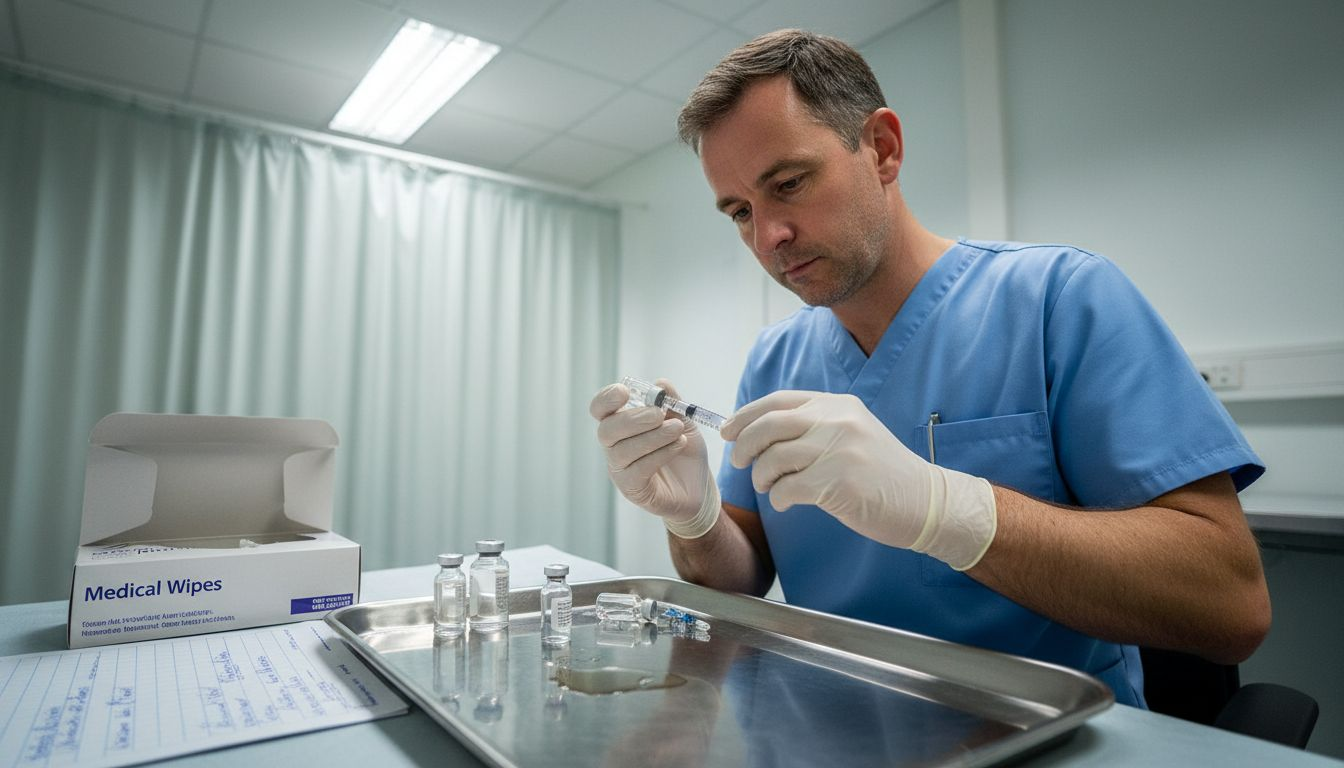
Pro tip: Ask your practitioner about the specific pharmaceutical formulation they use and request information about UKCA or CE certification—this confirms the product meets strict safety and quality standards rather than being an unregulated compound.
Eligibility criteria and common misconceptions
Not everyone is a suitable candidate for lipodissolve treatment. The ideal client has small pockets of stubborn fat that haven’t responded to diet and exercise, but is otherwise at a healthy weight.
Who makes a good candidate
The best candidates typically meet these criteria:
- Within 10-15 kg of their ideal body weight
- Have localised fat deposits in specific areas
- Are medically stable with no active health conditions
- Have realistic expectations about results
- Are committed to maintaining a stable lifestyle
- Understand the treatment is for body contouring, not weight loss
Age matters less than overall health and skin quality. Many successful treatments occur in people aged 30-60, though the procedure isn’t age-restricted.
You should also be a non-smoker or willing to stop smoking for at least two weeks before and after treatment. Smoking compromises healing and can reduce treatment effectiveness.
The biggest misconception: weight loss solution
This is where most confusion starts. Fat-dissolving injections are not weight-loss treatments—they’re body-contouring tools. If you’re seeking significant weight reduction, this isn’t the right procedure.
Think of the difference this way: weight loss addresses overall body composition, while lipodissolve reshapes specific areas. You might lose 2-3 kg after treatment, but that’s incidental to the real benefit—improved body shape and contour.
Other common misconceptions
Many clients arrive with unrealistic expectations. Here are the most common ones:
Misconception: Results appear within days.
Reality: Fat breakdown takes 4-6 weeks. Full results emerge over 8-12 weeks as your body processes destroyed cells.
Misconception: One treatment solves the problem.
Reality: Most areas need 2-4 sessions. Larger deposits require multiple treatments.
Misconception: It replaces liposuction.
Reality: Lipodissolve works best on smaller fat pockets. Liposuction remains superior for removing large volumes of fat.
Misconception: You can eat whatever you want afterwards.
Reality: Results depend on maintaining your current weight and lifestyle. Significant weight gain can obscure results.
The following table clarifies typical misconceptions about lipodissolve and the actual facts:
| Misconception | Actual Outcome | Timeline |
|---|---|---|
| Instant results | Gradual fat breakdown | 4-12 weeks |
| One session required | Multiple sessions needed | 2-4 treatments |
| Replaces surgical liposuction | Only for small, targeted fat pockets | Not surgical |
| Weight loss guaranteed | Body contouring only | Shape, not weight |
Realistic expectations are crucial—lipodissolve refines and reshapes, not transforms. Understand what the treatment can and cannot achieve before booking.
During your consultation, an honest practitioner will tell you whether you’re genuinely suitable. If you’re not a candidate, they’ll suggest alternatives like fat-freezing or other body-contouring options.
Pro tip: Before your consultation, write down your specific problem areas and what results you’re hoping for—this helps your practitioner assess suitability and discuss realistic outcomes based on your individual situation.
Safety, side effects, and regulatory status in UK
Lipodissolve is generally safe when administered by qualified medical professionals using properly regulated products. The UK has strict oversight ensuring treatments meet safety standards before reaching clinics.
What the regulations require
In the United Kingdom, fat-dissolving injections must be regulated as medical devices with either UKCA or CE marking. This certification confirms the product meets rigorous safety and performance standards set by regulatory authorities.
These marks aren’t optional—they’re mandatory. Any clinic offering lipodissolve using unmarked products is operating outside UK regulations, which puts you at risk.
Treatments must also be administered by trained medical professionals. This typically means doctors, nurses, or aesthetic practitioners with specific qualifications. The clinic should verify credentials before you book.
Common side effects
Mild side effects are normal and usually temporary. Most clients experience some combination of these:
- Redness at injection sites
- Swelling and bruising
- Mild to moderate discomfort
- Slight tenderness
These effects typically resolve within 3-7 days. They’re signs the treatment is working—your body is responding to the injections and beginning fat breakdown.
Some practitioners recommend avoiding strenuous exercise and heat exposure for 24-48 hours to minimise swelling.
Serious side effects (rare)
Whilst uncommon, serious complications can occur. These include:
- Infection at the injection site
- Allergic reactions to the solution
- Nerve damage causing numbness
- Persistent pain or sensitivity
Serious side effects happen in fewer than 1% of treatments when performed by qualified practitioners. However, they’re more likely if the clinic lacks proper training or uses unregulated products.
Choose a clinic with proven safety credentials—UKCA/CE marked products and trained practitioners dramatically reduce serious side effect risk.
If you experience unusual symptoms after treatment—excessive swelling, fever, severe pain, or numbness lasting more than two weeks—contact your practitioner or GP immediately.
Why clinic choice matters
Regulation protects you, but only if the clinic follows rules. Some unregulated clinics advertise lipodissolve using products that aren’t approved in the UK, offering suspiciously cheap prices.
These bargain treatments often come with hidden risks. Unregulated products may contain unsafe ingredients, incorrect concentrations, or bacterial contamination.
Safety in aesthetics requires practitioners who understand anatomy, infection control, and emergency protocols. The Aesthetics Room holds CQC accreditation and ACE Group membership, confirming our commitment to these standards.
Pro tip: Before booking, ask your clinic to confirm their UKCA/CE certification, provide practitioner qualifications, and explain their adverse event protocols—any reluctance to answer these questions is a red flag.
Comparing lipodissolve to alternative fat reduction options
Lipodissolve isn’t your only choice for non-surgical fat reduction. Several alternatives exist, each with distinct advantages and limitations. Understanding how they compare helps you choose the right treatment for your goals.
Lipodissolve versus liposuction
Liposuction remains the gold standard for removing large volumes of fat. It’s surgical, invasive, and delivers dramatic results in a single procedure. However, it requires general anaesthesia, involves significant downtime (2-4 weeks), and carries higher surgical risks.
Lipodissolve offers a non-surgical alternative for smaller fat deposits. You avoid surgery, anaesthesia, and extended recovery. The trade-off: you need multiple treatments and results take longer to appear.
Choose liposuction if you want one procedure removing large amounts of fat. Choose lipodissolve if you prefer minimal downtime and have modest, targeted concerns.
Fat freezing (cryolipolysis)
Fat freezing uses controlled cooling to destroy fat cells. It’s non-invasive, requires no injections, and produces results over 8-12 weeks. One treatment often suffices for visible results.
Lipodissolve differs by using chemical injection rather than temperature. Both are minimally invasive, but fat freezing doesn’t involve needle punctures, which some clients prefer.
Fat freezing works well for larger surface areas, whilst lipodissolve excels at small, deep pockets. Results are comparable, but treatment suitability depends on your specific problem area.
Here’s how lipodissolve compares to other fat reduction techniques in terms of suitability and effectiveness:
| Method | Ideal Candidates | Effectiveness | Downtime |
|---|---|---|---|
| Lipodissolve | Healthy adults, small fat areas | Noticeable | minimal |
| Liposuction | Larger fat volumes, surgical fit | Dramatic | 2-4 weeks |
| Fat Freezing | Moderate-size areas, needle-averse | Moderate | none |
| Radiofrequency | Skin tightening, mild fat reduction | Subtle | none |
Radiofrequency and laser treatments
These non-invasive options use heat or energy waves to stimulate collagen and potentially reduce fat. Results are subtle and gradual, typically requiring 6-8 sessions.
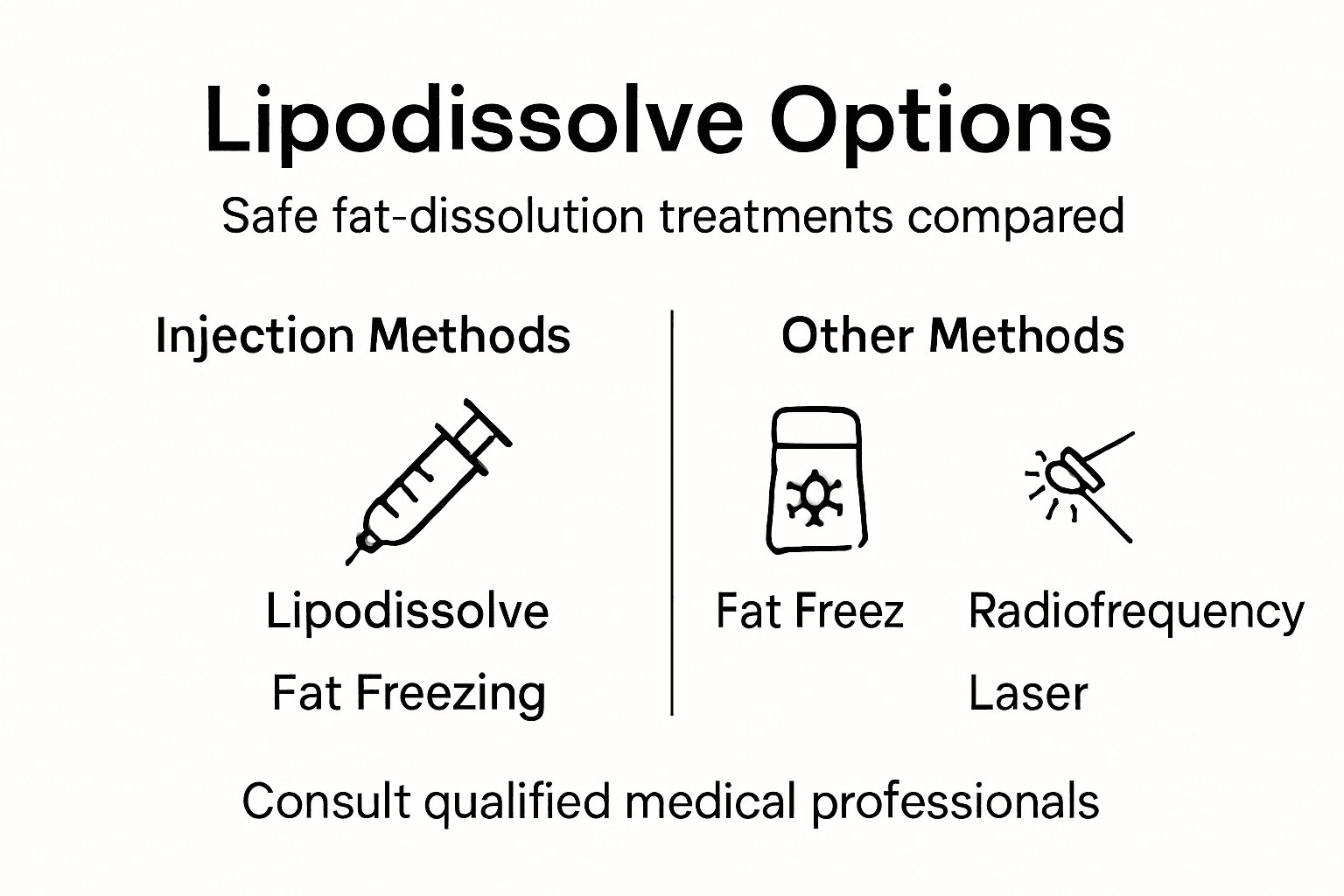
They’re gentler than lipodissolve but also less predictable. If you want measurable fat reduction rather than subtle skin tightening, lipodissolve delivers faster, more visible results.
Quick comparison table
| Treatment | Invasiveness | Sessions Needed | Recovery Time | Best For |
|---|---|---|---|---|
| Lipodissolve | Injections | 2-4 | Minimal | Targeted small deposits |
| Fat freezing | Non-invasive | 1-2 | None | Medium-sized areas |
| Liposuction | Surgical | 1 | 2-4 weeks | Large fat volumes |
| Radiofrequency | Non-invasive | 6-8 | None | Subtle skin tightening |
Choose based on your problem area size, desired timeline, and comfort with needles—not on price alone.
Your ideal treatment depends on three factors: the size and location of fat deposits, how quickly you want results, and your tolerance for downtime. A consultation at The Aesthetics Room helps identify which option suits your specific situation.
Pro tip: Book consultations with multiple clinics offering different treatments, ask to see before-and-after photos for your specific concern area, and choose based on realistic outcomes rather than aggressive marketing claims.
Discover Safe and Effective Fat Dissolving Solutions at The Aesthetics Room
If you are seeking to address stubborn pockets of fat that do not respond to diet or exercise, lipodissolve offers a non-surgical, targeted body contouring option. Understanding concepts like injection lipolysis and the role of deoxycholic acid can be overwhelming but choosing a clinic with expertise and regulated, UKCA or CE marked products is vital for your safety and desired results. At The Aesthetics Room, we specialise in fat dissolving treatments tailored to your unique goals, ensuring precision, professionalism and lasting outcomes.

Ready to reshape your silhouette with confidence? Start with a personalised assessment by booking your consultation today. Explore our comprehensive range of fat dissolving treatments delivered in London’s prestigious Knightsbridge. Visit us at The Aesthetics Room to learn more or secure your appointment now.
Frequently Asked Questions
What is lipodissolve and how does it work?
Lipodissolve is a non-surgical treatment that uses specially formulated injections to break down localised fat deposits. It employs injection lipolysis, where active ingredients like deoxycholate are injected directly into fat cells, destroying their membranes so the body can naturally eliminate them through the lymphatic system.
Who are the ideal candidates for lipodissolve treatment?
Ideal candidates are individuals who are within 10-15 kg of their ideal body weight and have localised fat deposits unresponsive to diet and exercise. They should also be medically stable, non-smokers, and possess realistic expectations about results, understanding that lipodissolve is for body contouring, not weight loss.
How many treatment sessions are typically required for lipodissolve?
Most clients require 2 to 4 treatment sessions spaced 4 to 6 weeks apart for optimal results. This allows the body to process the eliminated fat cells fully before additional injections.
What are the common side effects of lipodissolve?
Mild side effects include redness, swelling, bruising, discomfort, and tenderness at injection sites. These effects usually resolve within 3 to 7 days. Serious side effects are rare but can include infection, allergic reactions, and nerve damage if not administered correctly.
Recommended
- Fat Dissolving – The Aesthetics Room
- Fat – The Aesthetics Room
- Do fat-dissolving injections work? – The Aesthetics Room
- Fat Freezing: Non-Surgical Body Contouring Explained – The Aesthetics Room
- Процес на детокс с добавки: стъпка по стъпка за жени – Vitaminsflow
- THE POTENT INGREDIENTS IN TMRG SOLUTIONS AND THEIR EFFECT – TMRG Solutions