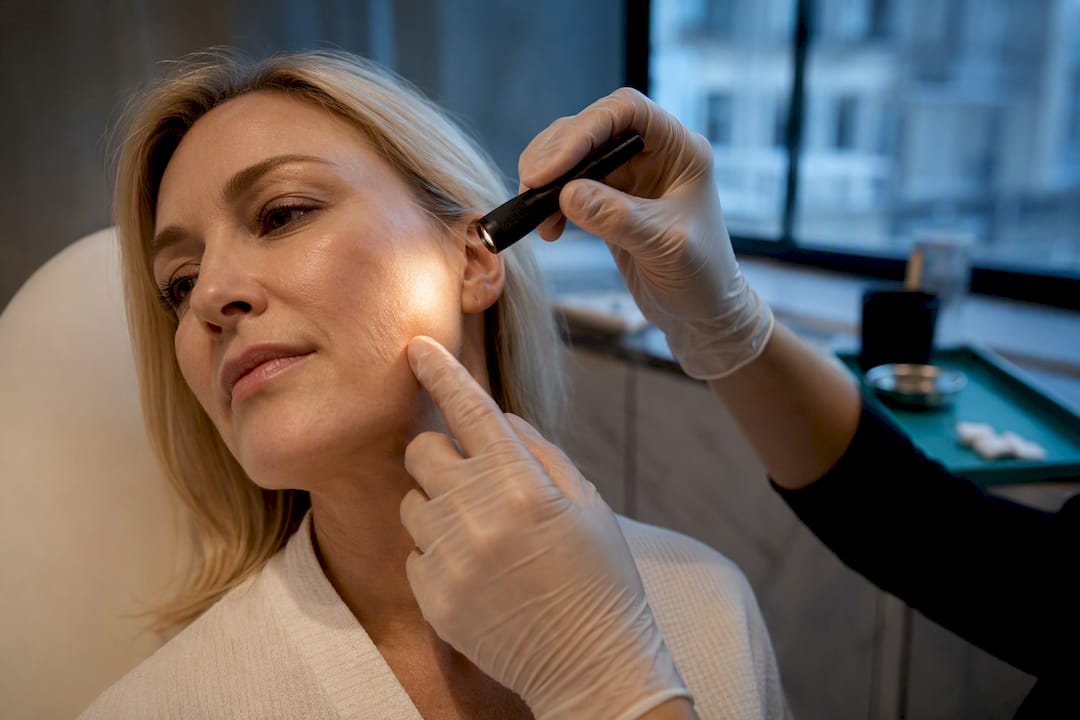
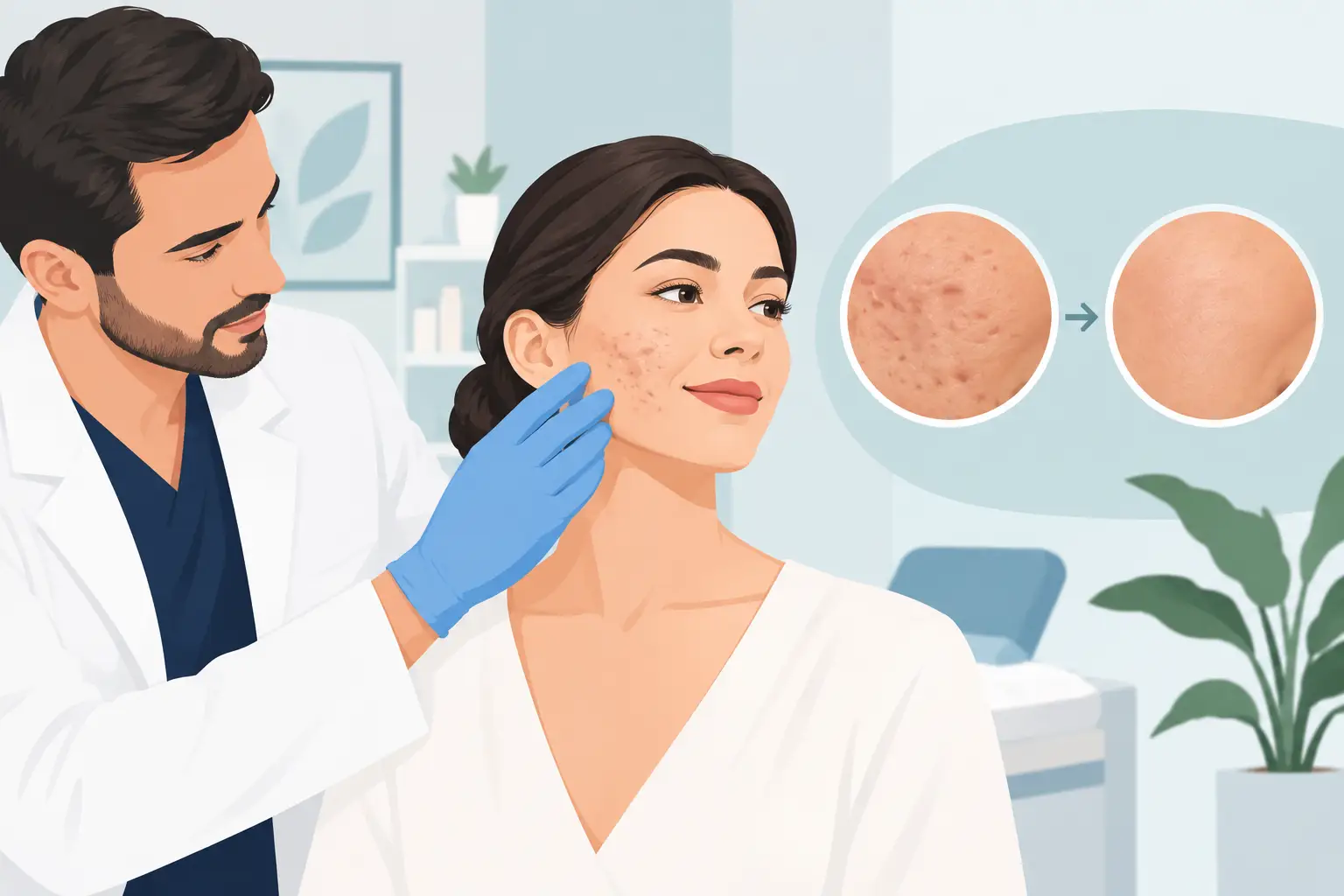

A photograph taken under bright overhead lighting can make acne scarring feel far more noticeable than it does in everyday life. Yet the most meaningful acne scar treatment results are rarely about chasing poreless skin. They are about softening shadows, smoothing texture, improving skin quality and helping your complexion look more even and confident from every angle.
The right result is highly individual. Acne scars vary in depth, shape and behaviour, while factors such as skin tone, active breakouts, collagen production and lifestyle all influence how your skin responds. A medically led assessment is therefore not an optional extra. It is the starting point for a treatment plan that is both safe and worthwhile.
What do acne scar treatment results look like?
For most patients, improvement appears gradually rather than overnight. Depressed scars can look shallower, their edges less defined and the surrounding skin more refined. Make-up may sit more smoothly, and you may find yourself less conscious of side lighting, close-up photographs or going bare-faced.
It is important to distinguish improvement from complete removal. Established acne scarring changes the structure of the skin, so no responsible practitioner should promise to erase every mark. The aim is considered, natural-looking refinement: creating a smoother overall surface and reducing the contrast that makes scars stand out.
Results are often best judged in consistent photographs, taken in the same light and without filters. Day to day, you may focus on temporary redness or one stubborn area. Comparing your skin after each stage of treatment provides a more accurate picture of the progress being made.
Why scar type determines the right treatment
The term “acne scars” covers several different concerns. Treating them all in the same way can lead to disappointing results, unnecessary downtime or increased risk of pigmentation changes.
Ice-pick scars are narrow and deep, often appearing like tiny punctures in the skin. Boxcar scars have clearer, more angular edges and may be shallow or deep. Rolling scars create an undulating texture because fibrous bands pull the skin down from beneath. Some people also have persistent red, brown or grey marks after acne, which are not true scars but can still affect the appearance of the complexion.
A treatment that helps superficial texture may not release the tethering beneath a rolling scar. Equally, treating post-inflammatory pigmentation too aggressively can prolong discolouration, particularly in deeper skin tones. This is why a bespoke approach may combine techniques rather than relying on one fashionable treatment.
Matching the method to the concern
Microneedling can support collagen renewal and improve general texture, making it a valuable option for mild to moderate atrophic scarring. Radiofrequency microneedling may be considered where a practitioner feels controlled heat energy could offer additional collagen stimulation, though suitability depends on skin condition and medical history.
Subcision is often used for scars that are tethered beneath the surface. By carefully releasing the fibrous bands, it can allow the skin to lift more naturally. In selected cases, a small amount of injectable treatment may be discussed to support the released area, although this is not right for everyone.
Targeted chemical reconstruction techniques, such as TCA CROSS, can be appropriate for certain narrow, deep scars. Fractional resurfacing treatments and professional skin peels may help improve wider textural irregularity, pigmentation and skin radiance. Each carries different recovery expectations and risk considerations, particularly for patients prone to post-inflammatory hyperpigmentation.
The most effective plan is sometimes a sequence: address active acne first, release tethered scars, then support collagen and surface quality over a number of months. This measured approach is more refined than trying to correct every issue in one appointment.
When will you see changes?
Some treatments create an early glow once initial redness settles, but collagen remodelling takes time. Following microneedling or energy-based treatments, visible improvement often develops over six to twelve weeks as the skin repairs and reorganises collagen. Deeper scars may require several sessions, spaced appropriately to give the tissue time to respond.
After subcision, swelling can temporarily make an area appear smoother. The more reliable assessment comes after the healing phase, when swelling has resolved and the longer-term remodelling process is under way. Pigmentation treatments can also require patience: marks may fade progressively, but sun exposure, irritation and new breakouts can set the process back.
Your practitioner should explain both the immediate healing period and the realistic treatment timeline before you begin. Planning around work, events and travel is particularly sensible if you are considering a treatment with visible redness, dryness, peeling or bruising.
The factors that shape your outcome
Your treatment choice matters, but it is not the only factor behind successful acne scar treatment results. Skin must be stable enough to tolerate treatment, and ongoing inflammation needs proper attention. Treating scars while cystic acne remains active can create new marks before the existing ones have had a chance to improve.
Skin tone and tendency towards pigmentation also influence the safest route forward. More intensive is not automatically better. The correct intensity is the one that encourages meaningful improvement while respecting your skin’s capacity to heal well.
Your home routine has a role too. Daily broad-spectrum SPF helps prevent darkening of marks and protects newly treated skin. A calm, consistent routine that supports the skin barrier is generally more helpful than introducing multiple strong acids, scrubs and retinoids at once. Your practitioner may ask you to pause certain active ingredients before and after a procedure to minimise irritation.
Lifestyle factors can affect recovery as well. Smoking, poor sleep, dehydration and inconsistent sun protection can all work against skin healing. None of these needs to be approached with perfectionism, but small, sustained choices can support the investment you are making in your skin.
How to assess results fairly
It is natural to inspect your skin closely after treatment, but magnifying mirrors and harsh bathroom lights are not neutral judges. Scars become more or less visible depending on facial movement, dehydration, redness and lighting direction. A fair review considers texture, depth, colour and how confident you feel in normal social settings.
At a review appointment, your clinician should assess whether the skin is responding as expected, whether treatment settings or techniques need adjustment, and whether any further sessions are likely to deliver a proportionate benefit. There is a point at which further intervention may offer only a small gain, and an ethical practitioner will be open about that balance.
This is especially relevant when patients have had previous treatments elsewhere. A new consultation should not assume that more of the same treatment is the answer. It should revisit the scar type, your healing history and what has, or has not, worked so far.
Why consultation-led care matters
Acne scarring can carry years of emotional weight, so it deserves more than a one-size-fits-all booking. A thorough consultation considers your skin concerns, medical history, current products, pigmentation risk, tolerance for downtime and the level of change you hope to achieve.
At The Aesthetics Room, a bespoke plan can also consider wider skin health through a structured approach to optimisation, rather than viewing a scar in isolation. For some patients, the best first step is strengthening the skin barrier and controlling breakouts. For others, it is a carefully chosen corrective procedure followed by maintenance that protects the gains achieved.
Safety should remain central throughout. Treatments should be delivered by appropriately trained professionals in a clinical environment, with clear aftercare and a plan for managing unexpected reactions. Premium care is not about making a treatment sound effortless. It is about being precise, transparent and attentive from consultation through to review.
Protecting the progress you make
Once scars have improved, preventing new inflammation becomes part of preserving the result. This may mean reviewing acne management, avoiding picking, using SPF daily and seeking advice promptly if breakouts return. Maintenance skin treatments can be useful for some patients, but the right frequency depends on your goals, skin response and the treatments already completed.
The most satisfying outcomes tend to come from a plan that respects time as much as technique. When your treatment is selected for your scar pattern, your skin is properly prepared and healing is allowed to do its work, improvement can look subtle to others but feel transformative to you. That is the standard worth aiming for: healthier-looking skin, softened scarring and confidence that feels entirely your own.