

Many premium aesthetics clinics in London quietly lose profits by underpricing treatments, often neglecting indirect costs like rent and marketing in their calculations. Setting strategic, transparent prices is essential to sustain profitability whilst maintaining your clinic’s premium brand positioning in London’s competitive market. This comprehensive guide walks you through cost analysis, competitor research, tiered pricing models, ethical communication training, and data-driven adjustments to help you confidently price treatments that reflect true value, attract discerning clients, and secure long-term growth for your clinic.
Table of Contents
- Prerequisites: Understanding Costs And Regulatory Requirements
- Step 1: Conduct Market Research And Competitive Analysis
- Step 2: Calculate Your Treatment Costs Accurately
- Step 3: Implement Tiered And Bundled Pricing Models
- Step 4: Upskill Your Team In Ethical Sales And Pricing Communication
- Step 5: Use Data And KPIs To Review And Adjust Pricing
- Common Pricing Mistakes And How To Avoid Them
- Expected Outcomes: Profitability Benchmarks And Client Retention
- Discover Premium Treatments At The Aesthetics Room
- FAQ
Key takeaways
| Point | Details |
|---|---|
| Calculate all costs accurately | Include direct treatment costs and allocated overheads to avoid losses and ensure profitable pricing. |
| Research competitors strategically | Position your pricing for value and differentiation, not just cost matching, in London’s premium market. |
| Use tiered and bundled pricing | Offer flexible options to cater to various budgets whilst increasing average client spend and retention. |
| Train your team ethically | Equip staff with transparent pricing communication skills to build trust and boost bookings. |
| Monitor KPIs regularly | Review performance data monthly and adjust prices strategically to sustain profitability and growth. |
Prerequisites: understanding costs and regulatory requirements
Before setting treatment prices, you must understand the full scope of costs involved and the regulatory landscape affecting your clinic. Many clinic owners focus solely on direct costs like products and staff time but overlook indirect expenses such as rent, utilities, marketing, and administrative overheads. Direct and indirect cost components must be fully accounted to determine minimum viable pricing. Failing to include all overheads can lead to unsustainable pricing that quietly erodes profitability over time.
UK regulations and safety standards also influence your pricing structure. Clinics must comply with CQC accreditation, insurance requirements, and ongoing professional development for practitioners. These regulatory obligations add costs that should be factored into your pricing models. Investing in medical aesthetics workflow optimisation helps streamline operations and reduce waste, improving your cost efficiency.
Key cost components to identify include:
- Direct costs: treatment materials, consumables, practitioner time per session
- Indirect costs: clinic rent, utilities, marketing spend, receptionist wages, insurance premiums
- Regulatory costs: certifications, training, compliance audits, safety equipment
- Overhead allocation: proportionally assign indirect costs to each treatment based on time or revenue contribution
Comprehensive cost analysis is the foundation for profitable pricing decisions. Without this clarity, you risk setting prices too low to cover expenses or too high to remain competitive. Use a detailed treatment pricing cost calculation guide to map every expense accurately before moving to the next step.
Step 1: conduct market research and competitive analysis
Understanding your competitive landscape is essential for positioning your clinic effectively in London’s premium aesthetics market. Start by identifying clinics that target similar clientele in Knightsbridge, Mayfair, Harley Street, and nearby affluent areas. Research their treatment menus, pricing structures, and service offerings to gauge where your clinic fits within the spectrum. Competitive pricing analysis is essential for positioning in the London premium aesthetics market.
Avoid the trap of competing solely on price. Premium clients choose clinics based on perceived value, expertise, safety standards, and personalised care, not just the lowest cost. Your research should reveal opportunities to differentiate your services through unique treatment combinations, superior outcomes, or exceptional client experiences. This insight helps justify premium pricing and strengthens your brand identity.
Follow these steps for effective market research:
- Identify 5 to 10 comparable premium aesthetics clinics in central London targeting similar demographics.
- Collect pricing data for identical or similar treatments like Botox, dermal fillers, and skin rejuvenation from their websites or enquiries.
- Analyse each competitor’s positioning: do they emphasise luxury, medical expertise, technology, or personalised care?
- Note additional value they offer, such as free consultations, aftercare packages, or loyalty programmes.
- Determine where your clinic can differentiate and which pricing tier aligns with your brand vision.
- Update your research quarterly to stay aware of market shifts and new competitors entering the space.
For clinic owners just starting a medical aesthetics clinic in London, this research informs your initial pricing strategy and brand positioning. Use these cosmetic procedure pricing strategies to refine your approach and avoid common missteps that undermine profitability.
Step 2: calculate your treatment costs accurately
With market insights gathered, turn your attention inward to calculate precise treatment costs. This step establishes your pricing floor, the minimum price needed to cover expenses and generate profit. Begin by listing all direct costs associated with each treatment: materials, consumables, and practitioner time at their hourly rate. Then allocate a proportional share of indirect costs like rent, utilities, and marketing based on treatment duration or revenue contribution.

Ensures pricing covers all costs and targets profitable margins. For example, if your clinic’s monthly overheads total £10,000 and you deliver 200 treatments per month, allocate £50 of indirect cost to each treatment. Add this to your direct costs to find the total cost per treatment. Finally, apply your desired profit margin, typically 20% to 40% for premium clinics, to set your minimum price.
Key steps for accurate cost calculation:
- List direct costs: product per treatment (£15), consumables (£5), practitioner time (£30 for 30 minutes)
- Calculate allocated indirect costs: total monthly overheads divided by number of treatments (£50 per treatment)
- Sum total cost per treatment: £15 + £5 + £30 + £50 = £100
- Add profit margin: £100 × 1.30 = £130 minimum price for 30% margin
- Review and update costs quarterly as supplier prices or overheads change
Here’s a sample cost breakdown table for a dermal filler treatment:
| Cost Category | Amount (£) | Notes |
|---|---|---|
| Product (filler syringe) | 80 | Wholesale cost per syringe |
| Consumables (needles, gloves) | 10 | Per treatment session |
| Practitioner time (45 min) | 45 | Based on £60/hour rate |
| Allocated overheads | 60 | Rent, utilities, marketing share |
| Total cost | 195 | Minimum to break even |
| Profit margin (25%) | 49 | Target margin for sustainability |
| Recommended price | 244 | Rounded to £245 for menu |
Pro Tip: Track cost changes monthly using a simple spreadsheet or clinic management software. Rising product costs or increased rent should trigger immediate pricing reviews to protect your margins. Integrate this discipline into your medical aesthetics workflow optimisation for seamless financial management. Use this calculating treatment costs guide as a reference template.
Step 3: implement tiered and bundled pricing models
Flexible pricing structures accommodate diverse client budgets whilst driving higher revenue per client. Tiered pricing offers basic, midrange, and premium options within your treatment categories, allowing clients to choose based on their financial comfort and desired outcomes. Bundled packages combine multiple treatments or sessions at a discount, encouraging clients to commit to comprehensive treatment plans that deliver better results and increase loyalty.
Tiered pricing models increase client return rates and average spend per visit. For instance, offer a single Botox session at full price, a package of three sessions at 10% discount, and a premium annual plan with added skincare products at 15% discount. This structure makes your services accessible to more clients without diluting your premium brand. Package deals can improve patient loyalty and increase average transaction values significantly.
Benefits of tiered and bundled pricing include:
- Wider client reach: attract budget-conscious clients with entry tiers whilst retaining high-spenders with premium options
- Increased loyalty: clients who purchase bundles return more frequently and stay engaged longer
- Higher revenue per client: bundles boost average transaction value by 15% to 25% compared to single treatments
- Simplified decision-making: clear tiers reduce client confusion and speed up booking decisions
- Marketing advantages: promote bundles as limited-time offers to drive urgency and conversions
Compare single treatment pricing to bundled packages:
| Pricing Model | Example | Price per Session (£) | Total Revenue (£) | Client Commitment |
|---|---|---|---|---|
| Single session | 1 Botox treatment | 250 | 250 | Low, one-off visit |
| 3-session bundle | 3 Botox treatments | 225 | 675 | Medium, 3 visits over 6 months |
| Annual plan | 4 Botox + skincare | 212 | 850 | High, 4+ visits over 12 months |
Pro Tip: Name your bundles creatively to emphasise outcomes rather than discounts. Instead of “3-session package,” use “Radiance Renewal Plan” or “Confidence Builder Bundle.” This outcome-focused language reinforces your premium positioning and makes clients feel they’re investing in transformation, not just saving money. Leverage medical aesthetics marketing strategies to promote these packages effectively across your channels. Explore more tiered and bundled pricing strategies to refine your approach.
Step 4: upskill your team in ethical sales and pricing communication
Your pricing strategy only succeeds if your team communicates it confidently and ethically. Staff must understand client psychology, present treatment options transparently, and recommend services based on genuine client needs rather than commission incentives. Clinics report measurable increases in bookings and client satisfaction post training. Ethical sales training builds trust, reduces client hesitation, and positions your clinic as a partner in their aesthetic journey.
Transparent communication is particularly vital when discussing pricing. Clients expect clarity about what each treatment includes, potential additional costs, and realistic outcome timelines. Train your reception and practitioner teams to explain pricing structures clearly, answer questions without defensiveness, and highlight the value clients receive at each price point. This openness differentiates premium clinics from competitors who obscure costs or pressure clients into decisions.
Key training areas for your team:
- Client psychology: recognise buying signals, address objections empathetically, and tailor recommendations to individual goals
- Transparent pricing communication: clearly explain what’s included, avoid hidden fees, and present tiered options without bias
- Ethical recommendation practices: prioritise client wellbeing and realistic outcomes over upselling unnecessary treatments
- Handling price objections: confidently justify premium pricing by emphasising safety, expertise, and superior results
- Building long-term relationships: focus on client satisfaction and retention rather than one-off transactions
Schedule quarterly training sessions to refresh skills and introduce new pricing models or packages. Role-play common client scenarios to build confidence in handling difficult pricing conversations. Empower your team to refer complex pricing questions to senior staff without feeling inadequate. Integrate these practices into your medical aesthetics workflow optimisation for consistent client experiences. Learn more about ethical sales training impact on clinic growth and client trust.
Pro Tip: Create a pricing FAQ document for your team to reference during consultations. Include answers to common questions like “Why are your prices higher than competitors?” or “What’s included in this package?” This resource ensures consistent, confident messaging across all client interactions.
Step 5: use data and KPIs to review and adjust pricing
Pricing is not a one-time decision but an ongoing process informed by real performance data. Tracking key performance indicators (KPIs) reveals whether your prices achieve profitability goals, attract the right clients, and sustain long-term growth. Consistent monthly KPI review improves financial performance by identifying trends, inefficiencies, and opportunities for strategic adjustments.
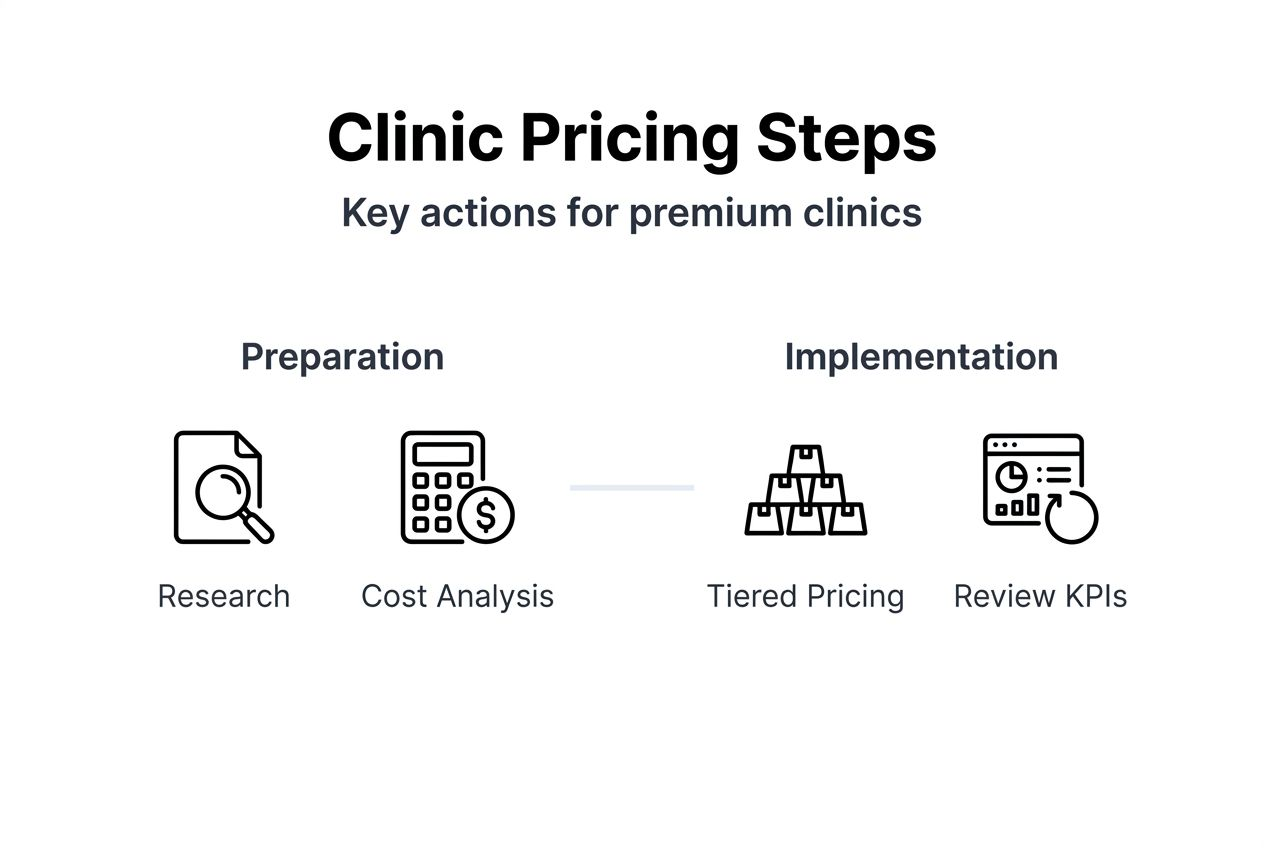
Essential KPIs to monitor include conversion rates (consultations to bookings), average client spend per visit, client retention rate, treatment utilisation rates, and profit margins per treatment. Set up a dashboard using clinic management software or spreadsheets to visualise these metrics monthly. When data shows high demand for a treatment with strong margins, consider modest price increases. Conversely, low conversion rates may signal pricing misalignment with perceived value, prompting you to enhance service delivery or adjust positioning.
Steps for effective data-driven pricing:
- Identify KPIs: focus on conversion rate, average transaction value, client lifetime value, retention rate, and profit per treatment.
- Set up monthly tracking: use software dashboards or manual reports to compile data consistently.
- Analyse trends: compare month-over-month and year-over-year performance to spot patterns.
- Adjust prices strategically: raise prices where demand exceeds capacity or margins are thin; consider discounts or bundles for underperforming treatments.
- Communicate changes transparently: notify clients of price increases with sufficient notice (4 to 6 weeks) and explain the reasons, such as rising costs or enhanced service quality.
- Review annually: schedule a comprehensive pricing audit each year, typically in Q1, to align prices with market conditions and cost structures.
Sample KPI tracking table:
| KPI | Current Month | Previous Month | Target | Action Needed |
|---|---|---|---|---|
| Conversion rate | 62% | 58% | 65% | Improve consultation follow-up |
| Avg. client spend | £420 | £395 | £450 | Promote bundles more actively |
| Retention rate | 74% | 72% | 80% | Enhance aftercare engagement |
| Profit margin | 28% | 26% | 30% | Review cost allocation |
Pro Tip: Schedule annual price increases in January or April to align with common business cycles and client budget planning. Communicate changes via email, social media, and in-clinic signage at least one month in advance. Frame increases positively by highlighting service improvements, new equipment, or enhanced safety protocols that justify the adjustment. Integrate this process into your medical aesthetics workflow optimisation routine. Explore using KPIs for pricing adjustments for deeper insights.
Common pricing mistakes and how to avoid them
Even experienced clinic owners make pricing errors that quietly undermine profitability or damage brand perception. Many clinics underestimate treatment costs leading to losses or reduced profitability by neglecting indirect overheads. Recognising these pitfalls helps you implement preventive measures and maintain sustainable pricing strategies.
One frequent mistake is underpricing to compete directly on cost with lower-tier clinics. Price-driven competition can reduce perceived value and brand positioning, making it difficult to attract premium clients who equate higher prices with superior quality and safety. Another error is inconsistent or frequent price changes, which confuse clients and erode trust. Clients expect pricing stability and transparency, so arbitrary adjustments can harm loyalty.
Neglecting ethical sales training also limits your team’s ability to communicate pricing confidently, leading to lost bookings and client dissatisfaction. Without proper training, staff may avoid discussing prices altogether or present options defensively, which undermines the premium experience you aim to deliver.
Common pricing mistakes to avoid:
- Ignoring indirect costs: calculate and allocate all overheads proportionally to ensure pricing covers true expenses
- Competing on price alone: differentiate through expertise, safety, and personalised care rather than undercutting competitors
- Frequent price changes: limit adjustments to annual reviews and communicate transparently to maintain client trust
- Lack of tiered options: offer flexible pricing tiers and bundles to accommodate diverse budgets without diluting brand perception
- Neglecting team training: invest in ethical sales and transparent pricing communication to boost booking rates and satisfaction
- Failing to track KPIs: monitor performance data regularly to identify pricing issues early and adjust strategically
To correct these mistakes, conduct a thorough cost analysis using a pricing mistakes to avoid checklist. Reposition your clinic around value rather than cost, emphasising your CQC accreditation, expert practitioners, and commitment to patient safety. Establish a predictable annual pricing review cycle and train your team continuously. By avoiding these pitfalls, you protect your profitability and strengthen your anti-ageing treatments in London brand reputation. Learn more about brand damage by underpricing in premium markets.
Expected outcomes: profitability benchmarks and client retention
Implementing the pricing strategies outlined in this guide delivers measurable financial and client engagement benefits. Sustainable profit margins exceeding 20% become achievable when you accurately calculate costs, include all overheads, and maintain pricing discipline. Premium aesthetics clinics in London targeting affluent clients often achieve margins between 25% and 40% with strategic pricing and efficient operations.
Tiered and bundled pricing models can boost average client spend by 15% to 25% compared to single-treatment pricing. Clients who purchase bundles return more frequently, increasing lifetime value and reducing marketing costs per acquisition. Regular KPI tracking improves revenue predictability, enabling you to forecast cash flow accurately and invest confidently in clinic growth initiatives like new equipment or expanded service offerings.
Transparent and ethical pricing communication enhances client trust and loyalty, reducing churn and improving retention rates. Clients who feel informed and respected are more likely to recommend your clinic to friends and family, generating valuable word-of-mouth referrals. Over time, this trust compounds into a strong brand reputation that supports premium positioning and justifies higher prices than competitors.
Key outcomes to expect:
- Profit margins of 20% to 40%: achievable with comprehensive cost coverage and strategic pricing discipline
- 15% to 25% increase in average client spend: driven by tiered pricing and attractive bundled packages
- Improved client retention rates: transparent communication and value-focused pricing build long-term loyalty
- Predictable revenue growth: monthly KPI tracking enables proactive adjustments and financial forecasting
- Enhanced brand reputation: ethical pricing and premium service delivery strengthen market positioning and referrals
These financial goals align with long-term clinic growth and solidify your status as a trusted premium provider in London’s competitive aesthetics market. By applying the steps in this guide consistently, you create a sustainable pricing foundation that supports both profitability and client satisfaction.
Discover premium treatments at The Aesthetics Room
If you’re seeking expertly delivered aesthetic treatments that reflect the transparent, value-driven pricing principles discussed in this guide, explore The Aesthetics Room’s comprehensive offerings. Our Knightsbridge clinic specialises in Botox aesthetic treatments, dermal filler services, and advanced skin rejuvenation procedures tailored to your unique goals.
Every treatment is delivered by CQC-accredited practitioners who prioritise safety, personalised care, and natural-looking results. We believe in complete pricing transparency, so you’ll always understand what’s included and the value you receive. Whether you’re exploring anti-ageing solutions or enhancing your natural features, our team provides expert guidance and flexible treatment plans designed for your lifestyle. Discover why discerning Londoners trust The Aesthetics Room for premium skin rejuvenation treatments and bespoke aesthetic care. Book your consultation today and experience the difference that transparent pricing and expert care make.
FAQ
How often should I review and adjust treatment prices?
Annual price reviews are standard practice to keep prices aligned with rising costs, market conditions, and inflation. Price adjustments usually made once a year, such as April 1st in salon contexts. Communicate changes transparently to clients at least one month in advance, explaining the reasons and emphasising service improvements that justify the increase. This predictable cycle maintains trust whilst protecting profitability.
What key costs should be included in my treatment pricing?
Direct costs include treatment products, consumables, and practitioner time calculated at their hourly rate. Indirect costs encompass clinic rent, utilities, marketing expenses, administrative wages, insurance premiums, and regulatory compliance costs. Allocate indirect costs proportionally to each treatment based on time or revenue contribution. Ignoring indirect costs risks unsustainable pricing that quietly erodes profitability over time, so thorough cost analysis is essential.
How can tiered pricing benefit my aesthetics clinic?
Tiered pricing offers flexible treatment options catering to different client budgets within your premium framework. It encourages client retention by providing entry-level, midrange, and premium tiers that accommodate diverse financial comfort levels. Clients who start with basic tiers often upgrade to premium options as trust builds, increasing average spend per visit by 15% to 25% and improving long-term loyalty.
Why is ethical pricing communication important in premium aesthetics?
Ethical pricing communication builds client trust and reduces booking hesitations by ensuring transparency about costs, treatment inclusions, and realistic outcomes. Clients who feel informed and respected are more likely to commit to treatments, return for future sessions, and recommend your clinic to others. This transparent approach supports your premium brand reputation and differentiates you from competitors who obscure costs or pressure clients into decisions.