

Sclerotherapy is a medical procedure that treats varicose veins and spider veins by injecting a chemical solution directly into the affected vein, causing it to collapse, scar, and gradually fade from view. The solution most commonly used is sodium tetradecyl sulphate (STS), a detergent-based sclerosant that is often mixed with air to create a foam, which improves contact with the vein wall and enhances efficacy. The procedure is minimally invasive, performed in a clinic or hospital setting, and has been in widespread use across the NHS for over two decades.
Here is a quick overview of what to expect:
- Veins treated: varicose veins and spider veins, typically in the legs
- Procedure time: generally brief and completed within a short outpatient visit
- Anaesthetic: local anaesthetic may be used, though many patients need none
- Recovery: most people return to daily activities within 48–72 hours
- Sessions needed: two to three sessions are often required for full results
- Compression stockings: typically worn for several weeks post-treatment
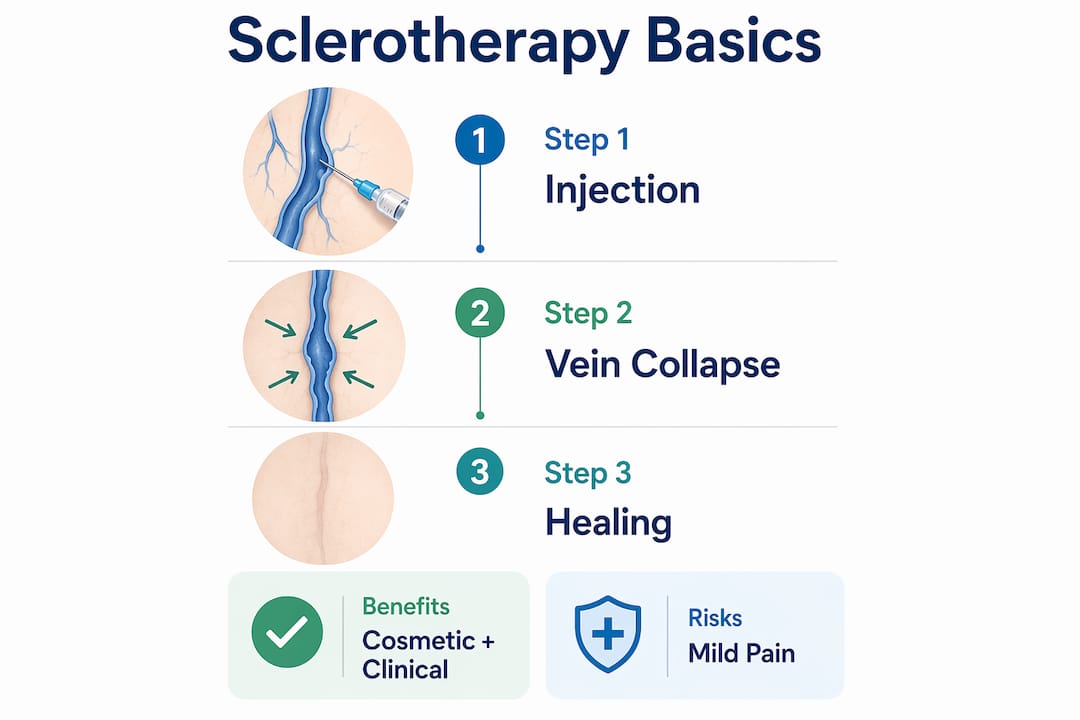
Sclerotherapy works by damaging the internal lining of the vein, triggering scarring and inflammation. Over time, the body absorbs the treated vein and it disappears. The result is both cosmetic improvement and relief from symptoms such as aching, swelling, and heaviness in the legs.
How is sclerotherapy performed?
The sclerotherapy procedure is straightforward, well-tolerated, and carried out entirely as an outpatient appointment. Understanding each step helps you feel confident and prepared before your first session.
-
Consultation and vein assessment. A clinician examines the veins to be treated, often using duplex ultrasound to map their location and size. This imaging is particularly important for deeper varicose veins that are not visible to the naked eye.
-
Preparation of the sclerosant. The clinician prepares the sclerosant solution, typically sodium tetradecyl sulphate, at a concentration matched to the size of the target vein. For larger veins, the solution is mixed with air to produce a foam that spreads more effectively along the vein wall.
-
Injection into the vein. Using a fine needle, the clinician injects the sclerosant directly into the vein at one or more sites. Ultrasound guidance ensures the injections reach the correct location, maximising precision and limiting the risk of affecting surrounding tissue.
-
Compression applied. Immediately after injection, a pad is placed over each injection site and a compression bandage or stocking is applied to the leg. This pressure keeps the vein walls in contact and supports the closure process.
-
Monitoring during the session. You remain awake throughout. Pain is minimal, with most patients experiencing only mild stinging or itching at the injection site. Local anaesthetic is sometimes used, though many sessions proceed without it.
-
Post-procedure observation. You are observed briefly before being discharged. The entire appointment typically lasts under an hour, and you go home the same day.
-
Repeat sessions as needed. Because the body takes time to absorb treated veins, results are not immediate. Multiple sessions are usually needed, with appointments spaced several weeks apart to allow healing between treatments.
Benefits, success rates, and risks you should know
Sclerotherapy delivers both cosmetic and clinical benefits. For many patients, the most noticeable improvement is a visible reduction in the appearance of veins, but the treatment also addresses physical symptoms such as aching, swelling, and the sensation of heaviness in the legs. Spider veins, being smaller and more superficial, tend to respond particularly well.
Success depends on vein size, location, and the number of sessions completed. Smaller spider veins often clear significantly after one or two treatments, while larger varicose veins may require a full course of sessions before results become apparent. Patients should approach sclerotherapy with realistic expectations: the process is gradual, and the body continues to absorb treated veins for several weeks after each session.
Benefits of sclerotherapy at a glance:
- Reduced visibility of varicose and spider veins
- Relief from leg aching, heaviness, and swelling
- Minimally invasive with no surgical incisions
- Outpatient procedure with same-day discharge
- Suitable for veins too small or awkwardly positioned for surgery
Side effects and risks
| Side effect / risk | Severity | Frequency |
|---|---|---|
| Mild pain or stinging at injection site | Mild | Common |
| Bruising and skin discolouration | Mild | Common |
| Temporary swelling | Mild | Common |
| Skin pigmentation (brown staining) | Mild to moderate | Occasional |
| Allergic reaction to sclerosant | Moderate | Rare |
| Foam embolisation (foam entering circulation) | Serious | Rare |
| Deep vein thrombosis | Serious | Very rare |
Foam embolisation is the most clinically significant rare risk. It occurs when foam travels beyond the treated vein into the wider circulation. This is why clinical governance and thorough consent procedures are non-negotiable requirements for any practitioner performing the procedure.
Who should avoid sclerotherapy?
Sclerotherapy is not suitable for everyone. Contraindications include:
- Pregnancy or breastfeeding
- Known allergy to sclerosant agents
- Active deep vein thrombosis or a history of significant clotting disorders
- Severe peripheral arterial disease
- Immobility or inability to walk post-procedure
A thorough pre-treatment assessment by a qualified clinician will identify any contraindications before treatment begins. If you are considering a minimally invasive treatment for vein concerns, this assessment is the essential first step.
How does sclerotherapy compare to laser therapy?
Laser therapy uses focused light energy to heat and close veins, making it well-suited to very fine surface spider veins on the face or ankles where needles are impractical. Sclerotherapy, by contrast, works across a wider range of vein sizes and depths, particularly in the legs, and is generally more cost-effective for larger areas. For deeper varicose veins, endothermal ablation (which uses heat delivered via a catheter) is typically the first-line option, with sclerotherapy recommended when ablation is unsuitable.
Recovery and aftercare after sclerotherapy
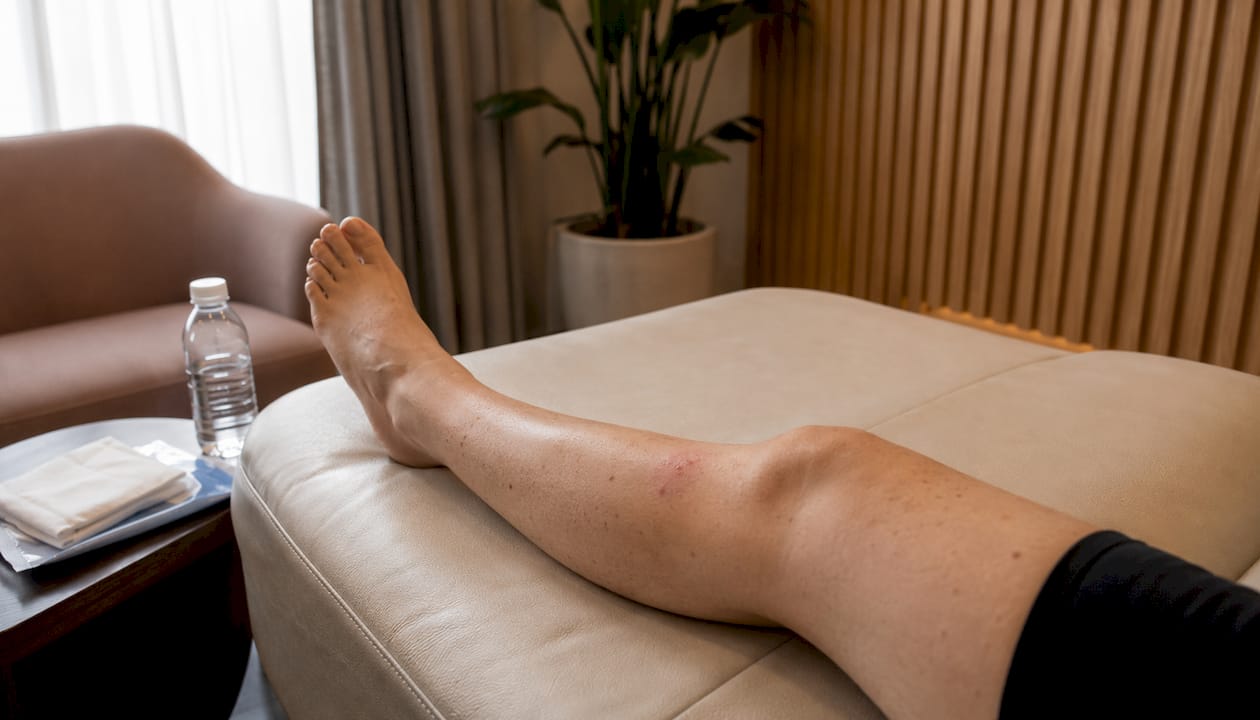
Most patients return home the same day and resume the majority of daily activities within 48–72 hours. Mild pain and bruising are normal and typically subside within three days. Those with physically demanding jobs may need one to two weeks away from work, depending on the nature of their role.
Key aftercare steps:
- Walk regularly. Walking post-procedure helps clear the sclerosant from the system and supports healthy circulation. Avoid standing still for extended periods in the days following treatment.
- Wear compression stockings. These are typically worn for two to four weeks after treatment. You can usually stop wearing them once you can stand comfortably without pain.
- Avoid strenuous exercise. High-impact activity should be avoided for at least 48 hours post-procedure to reduce the risk of complications.
- Protect treated skin from sun exposure. UV exposure can worsen temporary skin pigmentation changes at injection sites.
- Seek medical advice promptly if you notice: sudden leg swelling, severe pain, skin ulceration, chest pain, or shortness of breath. These may indicate a complication requiring urgent assessment.
Pro Tip: Wear your compression stockings consistently, even on days when your legs feel fine. The pressure supports the vein closure process from the inside, and removing stockings too early can reduce the effectiveness of your treatment.
For a full breakdown of post-treatment care, our recovery guide covers everything you need to know about healing well after aesthetic and medical procedures.
Clinical safety, NICE guidance, and expert standards in the UK
Sclerotherapy sits within a well-defined framework of UK clinical guidance. NICE recommends ultrasound-guided foam sclerotherapy as a treatment option for varicose veins, specifically positioning it as an alternative when endothermal ablation is unsuitable or declined by the patient. This guidance reflects the procedure’s established safety record and clinical effectiveness across NHS and private settings.
Sclerotherapy is not always the first treatment offered, but for patients who cannot undergo thermal ablation, it remains a highly effective and well-evidenced option. The key to good outcomes lies in rigorous clinical governance: proper patient selection, informed consent, ultrasound guidance, and post-procedure audit.
Clinical governance standards for sclerotherapy include thorough pre-treatment consent, accurate ultrasound imaging during the procedure, and ongoing audit of outcomes and adverse events. These protocols exist specifically to manage rare but serious risks such as foam embolisation, where foam travels into the wider circulation. Trained professionals performing the procedure under these protocols significantly reduce the likelihood of complications.
Patient comfort during injection-based procedures is also a clinical priority. Understanding how local anaesthetics improve comfort during aesthetic treatments helps patients make informed decisions about their care.
At Theaestheticsroom, safety and professional standards underpin every treatment we offer. Our CQC accreditation and membership of the ACE Group reflect our commitment to patient safety across all procedures. If you are exploring aesthetic and medical treatments in a premium clinical environment, our medical aesthetics safety guidance outlines the standards you should expect from any reputable provider.
Key takeaways
Sclerotherapy is a clinically proven, minimally invasive procedure that closes varicose and spider veins using a sclerosant injection, with most patients resuming daily activities within a few days and achieving full results after multiple treatment sessions.
| Point | Details |
|---|---|
| How it works | A sclerosant such as sodium tetradecyl sulphate damages the vein lining, causing it to collapse and be absorbed by the body. |
| Sessions required | Two to three sessions are often needed, spaced several weeks apart to allow the body to absorb treated veins. |
| Recovery timeline | Most patients return to daily activities within 48–72 hours; compression stockings are worn for two to four weeks. |
| Who should avoid it | Contraindications include pregnancy, active deep vein thrombosis, known sclerosant allergy, and severe arterial disease. |
| Clinical governance | NICE recommends ultrasound-guided foam sclerotherapy with rigorous consent, imaging, and audit protocols in place. |