

TL;DR:
- Hormonal shifts during aging affect skin, bones, muscle, and cognition, impacting overall health and appearance.
- Early intervention through hormone therapy and lifestyle measures can improve quality of life and aesthetic outcomes.
Hormones are the body’s chemical messengers, and their shifting levels are one of the most powerful forces shaping how you age. Oestrogen, testosterone, growth hormone, and cortisol each regulate critical functions, from skin collagen production and bone density to memory and metabolism. As these levels change with age, the effects show up everywhere: in your skin’s texture, your body composition, your mood, and your cognitive sharpness. Understanding the role of hormones in aging is not just academically interesting. It is the foundation for making informed decisions about your health, your appearance, and your quality of life.
Key hormonal shifts at a glance:
- Declining with age: oestrogen, progesterone, testosterone, growth hormone (GH), melatonin, DHEA, and aldosterone
- Rising with age: Follicle-Stimulating Hormone (FSH), Luteinizing Hormone (LH), and parathyroid hormone
- Broadly stable but dysregulated: cortisol (production preserved but diurnal rhythm flattened)
- Consequences: skin thinning and loss of elasticity, reduced muscle mass, increased visceral fat, cognitive changes, bone density loss, and mood disturbances
- Guidance sources: NHS, NICE menopause guidelines, and the Endocrine Society’s scientific statements all inform current clinical practice
How hormonal changes during aging affect your body
The endocrine system does not age uniformly. Some hormones fall sharply; others rise in compensation; and tissue sensitivity to hormones can decline with age even when blood levels appear normal. That last point is often overlooked: you can have “normal” hormone readings and still experience symptoms because your receptors have become less responsive.
Oestrogen and progesterone are the most discussed hormones in the context of female aging. Menopause typically affects women aged 45–55, with the steep decline in oestrogen and progesterone driving symptoms including hot flushes, night sweats, sleep disruption, vaginal dryness, brain fog, mood disturbances, and joint pain. Perimenopause, the transitional phase before periods stop, can begin years earlier. Brain fog, poor sleep, and anxiety in women in their late 30s and early 40s are frequently early perimenopause signs, yet they are often attributed to stress or depression rather than hormonal change.
Testosterone declines gradually in men from their 30s onwards, contributing to reduced muscle mass, lower libido, fatigue, and changes in mood. Women also produce testosterone, and its decline after menopause affects sexual desire and energy.
Growth hormone (GH) secretion decreases by approximately 15% every decade after the third decade of life. This reduction correlates with increased body fat, particularly visceral fat, decreased muscle mass, reduced bone density, and declining immune function.
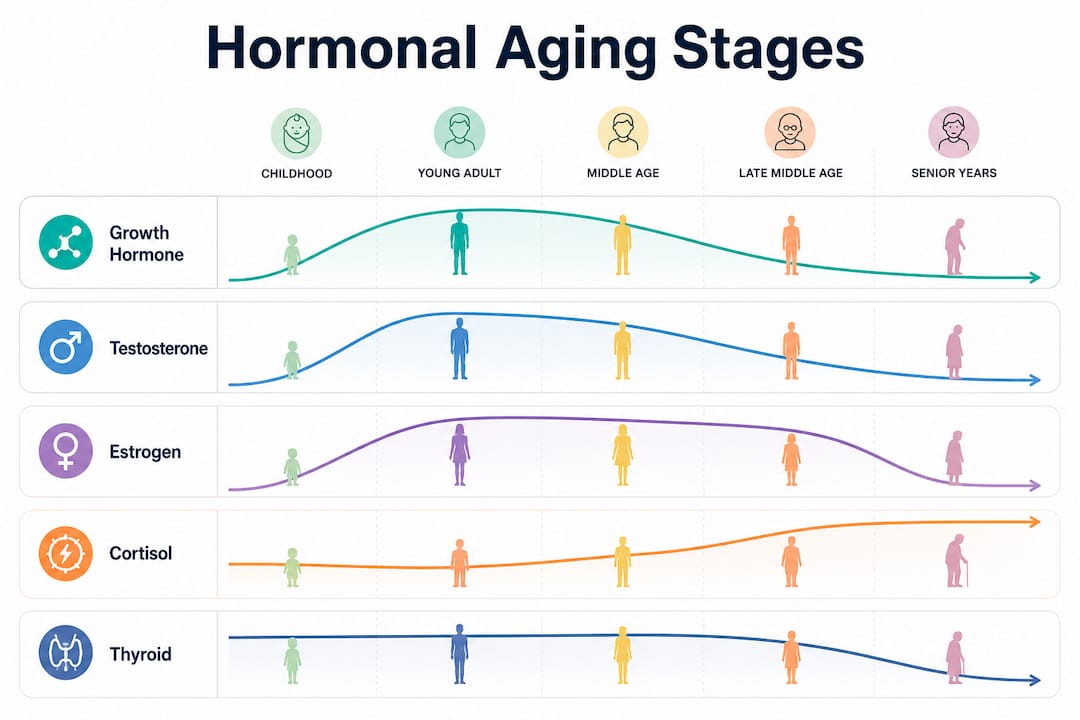
Cortisol tells a more complex story. Its blood level stays broadly stable with age, but the diurnal rhythm flattens and the stress response becomes more reactive. Higher 24-hour cortisol production rates in older adults mean the body is exposed to more of this catabolic hormone over time, with consequences for collagen synthesis, immunity, and tissue integrity.
Specific hormonal changes by system:
- Skin: Declining oestrogen directly causes skin thinning, loss of elasticity, and reduced hydration. Elevated cortisol further reduces collagen synthesis and accelerates tissue breakdown.
- Bone: Parathyroid hormone rises with age, contributing to calcium loss and osteoporosis risk. Oestrogen loss removes its protective effect on bone remodelling.
- Muscle and fat: Lower GH and testosterone promote sarcopenia (age-related muscle loss) and redistribution of fat to visceral stores.
- Brain: Oestrogen supports serotonin and dopamine pathways. Its decline is linked to mood changes, memory lapses, and increased dementia risk in women.
- Metabolism: Fasting glucose levels tend to rise after age 50 as cells become less sensitive to insulin, increasing type 2 diabetes risk.
- Sleep: Declining melatonin disrupts circadian rhythms, reducing sleep quality and compounding the effects of other hormonal shifts.
Lifestyle and diet influence this picture meaningfully. Chronic stress sustains elevated cortisol. Poor sleep suppresses GH secretion. Diets low in phytoestrogens, vitamin D, and magnesium can worsen hormonal imbalance. Regular resistance training supports testosterone and GH levels, while adequate sleep is one of the most effective tools for maintaining healthy cortisol rhythms.
Clinical management of hormonal aging: what are your options?
The symptoms of hormonal aging are not inevitable in their severity. Several evidence-based interventions can restore quality of life and protect long-term health.
Hormone Replacement Therapy (HRT) is the first-line treatment for menopausal symptoms according to NICE menopause guidelines. It replaces the oestrogen and progesterone that fall during perimenopause and menopause, addressing hot flushes, mood swings, vaginal dryness, and sleep disruption. The NHS confirms HRT also helps prevent osteoporosis. Women who have not had a hysterectomy take a combination of oestrogen and progestogen; those who have had a hysterectomy can take oestrogen alone. HRT is available as tablets, patches, gels, and sprays.

Testosterone supplementation is used for persistent low sexual desire in women where HRT alone has not resolved the issue. It is available as a gel or cream and is prescribed by menopause specialists.
Local vaginal oestrogen deserves particular attention. Vaginal oestrogen can safely address genitourinary symptoms long-term, even alongside systemic HRT, without the systemic risks associated with oral oestrogen. Many women who cannot or choose not to use systemic HRT can still benefit from this localised treatment.
Distinguishing normal aging from endocrine disease is a genuine clinical challenge. The boundary between age-related hormonal change and diagnosable endocrine disease is not always clear, and modern geroscience increasingly views the two as interacting rather than separate. Thyroid disorders, adrenal dysfunction, and insulin resistance all become more prevalent with age and can amplify the effects of normal hormonal decline.
Clinical note: HRT carries individual risk profiles. Risks and benefits depend on age, personal and family medical history, the type of HRT used, and duration of use. Always discuss your specific situation with a qualified healthcare professional before starting or changing any hormone therapy.
Lifestyle strategies that support hormonal health:
- Resistance training two to three times per week to maintain testosterone and GH levels
- Prioritising seven to nine hours of sleep to support melatonin and cortisol regulation
- A diet rich in calcium, vitamin D, and phytoestrogens (found in soy, flaxseed, and legumes) to support bone and oestrogen pathways
- Stress management practices such as mindfulness or yoga to moderate cortisol output
- Limiting alcohol, which disrupts oestrogen metabolism and sleep quality
Monitoring is part of responsible management. Blood tests for FSH, LH, oestradiol, testosterone, thyroid function, and vitamin D give a baseline picture. Regular bone density scans (DEXA) are recommended for women post-menopause and for anyone on long-term corticosteroids.
Expert perspectives on hormonal aging and aesthetic wellbeing
Aging is not driven by a single “pro-aging” hormone. It results from a complex interplay of hormonal imbalances, with some levels falling, others rising, and receptor sensitivity shifting across tissues. That complexity is why a one-size-fits-all approach to hormonal health rarely works.
Dr. Louise Newson, a leading menopause specialist, has highlighted a troubling pattern: women often wait years for a correct hormonal diagnosis, and many are incorrectly prescribed antidepressants for mood symptoms that are actually driven by perimenopause. Early recognition of hormonal shifts, and proactive consultation with a specialist, changes outcomes significantly, particularly for bone density and cognitive health.
Cortisol’s role in accelerating visible aging is well established clinically. Elevated cortisol reduces collagen synthesis, impairs immunity, and promotes tissue breakdown. For people managing chronic stress, this is not an abstract risk. It shows up in skin texture, wound healing, and recovery from aesthetic treatments.
How hormonal health intersects with aesthetic outcomes:
- Oestrogen loss directly impairs skin quality, reducing the collagen density that makes aesthetic treatments like dermal fillers and anti-wrinkle injections more effective and longer-lasting. Optimising hormonal health before or alongside aesthetic treatment produces better results.
- Testosterone decline in both men and women affects skin thickness and facial volume, making the face appear more hollow or aged.
- GH decline reduces skin thickness and elasticity, compounding the visible effects of oestrogen loss.
- Local vaginal oestrogen improves tissue quality and comfort without systemic exposure, a nuance that matters for women managing multiple symptoms simultaneously.
- Integrating hormone therapy with nutrition, sleep, and stress management produces more durable aesthetic and health outcomes than any single intervention alone.
At Theaestheticsroom, we see the connection between hormonal health and aesthetic results every day. Clients who have addressed underlying hormonal imbalances respond better to skin rejuvenation treatments and maintain results for longer. Our menopause skincare guidance reflects this integrated approach, combining evidence-based skincare with an understanding of how shifting hormones alter skin behaviour. For those exploring anti-aging strategies after 30, addressing hormonal health is a foundational step, not an afterthought.
When you are ready to take the next step, Theaestheticsroom’s team of medical practitioners at our Knightsbridge clinic can help you understand how hormonal changes are affecting your skin and appearance, and which treatments will deliver the best results for you. From dermal fillers that restore lost facial volume to anti-wrinkle treatments tailored to your skin’s current condition, every plan is built around your biology, not a generic template.

Book a consultation at Theaestheticsroom today and let us help you look and feel your best at every stage.
Key takeaways
Hormonal changes during aging are multidirectional, affecting skin, bone, muscle, cognition, and metabolism, and addressing them early produces the best long-term outcomes.
| Point | Details |
|---|---|
| Hormones rise and fall with age | FSH, LH, and parathyroid hormone increase while oestrogen, testosterone, and growth hormone decline. |
| Oestrogen loss drives visible aging | Declining oestrogen directly causes skin thinning, reduced elasticity, and lower collagen density. |
| HRT is first-line for menopause | NICE guidelines recommend HRT as the primary treatment for menopausal symptoms and bone protection. |
| Early diagnosis changes outcomes | Women often wait years for correct hormonal diagnosis; early recognition prevents bone loss and misdiagnosis. |
| Lifestyle supports hormonal health | Resistance training, quality sleep, and stress management all help regulate cortisol, testosterone, and GH levels. |