

TL;DR:
- Preventative aging focuses on maintaining functional health, mental sharpness, and physical capability for as long as possible through proactive lifestyle and clinical interventions. It emphasizes risk reduction before decline, prioritizing healthspan over mere lifespan extension. Integrating healthy habits with evidence-based skincare and aesthetic treatments enhances overall well-being and aging outcomes.
Preventative aging is not about stopping the clock. It is about staying functionally well, mentally sharp, and physically capable for as long as possible. Many people assume the term refers to anti-wrinkle creams or cosmetic tweaks, but the reality is far more substantive. What is preventative aging, properly understood, is a proactive approach to managing your health before decline sets in. It draws on evidence-based medicine, smart lifestyle changes for aging, and targeted clinical interventions to protect your quality of life. This guide breaks down exactly what that means and how to apply it.
Table of Contents
- Key takeaways
- The science behind preventative aging
- Lifestyle changes for effective preventative aging
- Preventative skin aging: evidence-based approaches
- Integrating aesthetics with preventative healthcare
- My perspective on sustainable preventative aging
- How Theaestheticsroom supports your preventative aging plan
- FAQ
Key takeaways
| Point | Details |
|---|---|
| Preventative aging is proactive | It targets risk factors before symptoms or disease appear, not after. |
| Healthspan is the real goal | Functional ability and wellbeing matter more than simply living longer. |
| Lifestyle habits carry the most weight | Exercise, nutrition, sleep, and stress management form the most impactful foundation. |
| Skin protection starts early | Consistent sun protection and clinician-guided retinoids are the gold standard for skin preservation. |
| Aesthetic treatments complement, not replace | Medical aesthetics work best alongside foundational health and clinical prevention. |
The science behind preventative aging
The term “preventative aging” sits at the intersection of public health and clinical medicine. Its foundations rest on two well-established concepts: primary and secondary prevention. Primary prevention reduces risk factors before any clinical disease develops. Secondary prevention catches problems early through screening and intervention, before they progress.
What this means practically is that preventative aging is not reactive. You are not waiting for high blood pressure, insulin resistance, or joint deterioration to appear before acting. You are managing the conditions that lead there. Think of it as building a buffer between where you are today and where biological aging tends to take most people.
The more meaningful target here is healthspan rather than lifespan. Anyone can live longer. The question worth asking is: longer doing what? Healthspan refers to the years you spend with strong cognitive function, physical mobility, emotional resilience, and genuine wellbeing. That is the metric preventative aging actually optimises for.
Key risk factors that accelerate age-related decline include:
- Smoking and chronic alcohol use
- Physical inactivity and prolonged sedentary behaviour
- Poor dietary patterns high in ultra-processed foods
- Unmanaged stress and poor sleep quality
- Unaddressed metabolic risk factors such as blood glucose dysregulation
Pro Tip: Request a comprehensive health screen from your GP that includes lipid profile, blood glucose, blood pressure, and inflammatory markers. Having a clear baseline in your 30s or 40s gives you something concrete to manage against.
Preventive healthcare services such as screenings, counselling, and preventive medicines can substantially reduce risks of disease, disability, and premature death when combined with healthy lifestyle choices.
Lifestyle changes for effective preventative aging
Lifestyle is where most of the leverage lives. The research is consistent and clear: the daily habits you build now will shape your biological age ten and twenty years from now. There is no single intervention that matches the cumulative benefit of consistently healthy behaviour.
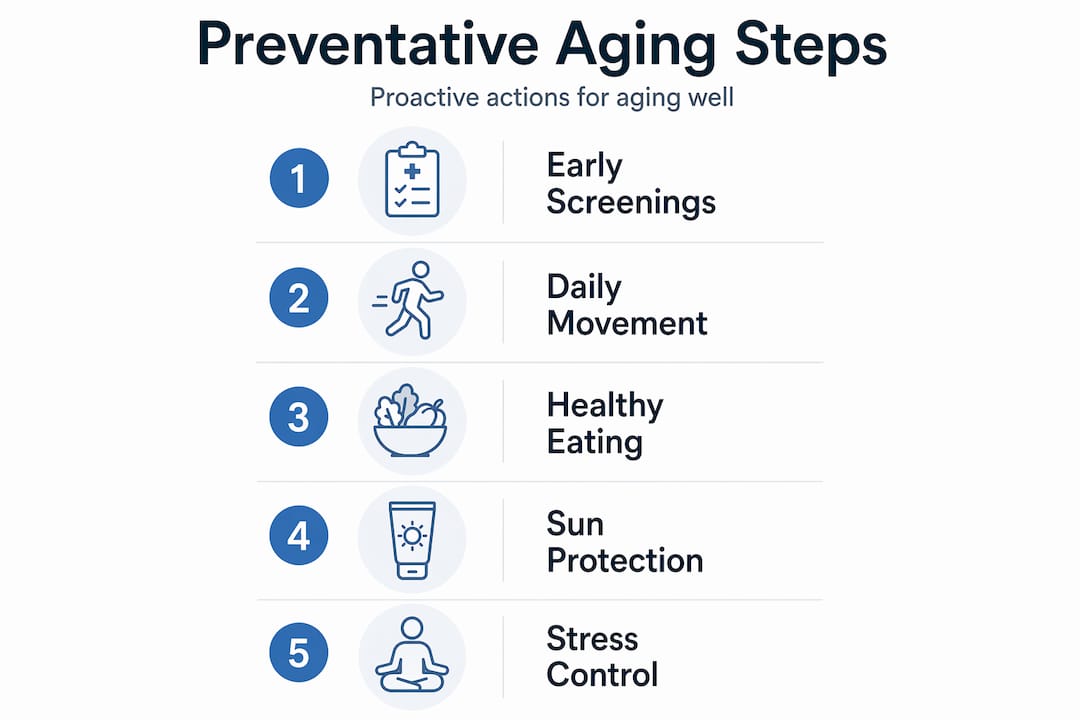
Here is a practical framework for the highest-impact lifestyle changes for aging well:
-
Commit to regular physical activity. Aerobic, strength, and balance exercise are all recommended for adults across every age group. Aerobic work supports cardiovascular and metabolic health. Strength training preserves muscle mass, which naturally declines after the mid-30s. Balance training reduces fall risk and maintains coordination as you age. The encouraging news is that starting at any age yields genuine health improvements.
-
Prioritise nutrient-dense eating. No specific diet has a monopoly on results, but the pattern matters. A dietary approach rich in vegetables, legumes, whole grains, lean proteins, and healthy fats consistently supports metabolic health, reduces systemic inflammation, and protects against cognitive decline.
-
Manage stress as a clinical priority. Chronic psychological stress accelerates cellular aging. It raises cortisol, disrupts sleep architecture, and promotes inflammation. Mindfulness practices, adequate rest, and social connection all attenuate these effects. Healthy aging includes social connection, stress management, and regular clinical check-ups as core pillars, not optional extras.
-
Attend regular health screenings. Blood pressure, cholesterol, blood glucose, and cancer screenings are all part of the age management toolkit. These are not just box-ticking exercises. They are the earliest warning systems available to you.
-
Eliminate tobacco and limit sun exposure. These two factors are among the most significant accelerants of both internal and external aging. Tobacco damages vascular health, lung function, and skin integrity simultaneously. Unprotected sun exposure is the leading cause of premature skin aging.
Pro Tip: Physical activity also reduces risks of depression, dementia, and cognitive decline in older adults. Exercise is not purely physical medicine. It is one of the most potent mental health interventions available.
Movement, weight management, smoking avoidance, sleep, and stress management collectively form a foundational health stack that targets multiple aging pathways at once. No single supplement or treatment replicates what these habits do in combination.
Preventative skin aging: evidence-based approaches
Visible skin aging is often the first place people notice the effects of time. Fine lines, loss of firmness, uneven tone, and textural changes all begin years before most people start addressing them. The good news is that the most effective age management techniques for skin are straightforward and accessible.
Here is how preventative skin approaches break down by evidence quality:
| Approach | Evidence level | Key notes |
|---|---|---|
| Daily broad-spectrum SPF | Very strong | Prevents photoaging, the single leading cause of premature skin aging |
| Topical retinoids | Strong | Stimulate collagen production; best used with clinician guidance |
| Antioxidant serums (Vitamin C) | Moderate | Reduces oxidative stress; use in the morning under SPF |
| Botox for preventative use | Emerging | Promising but requires further high-quality evidence |
| Cosmetic claims without evidence | Weak to none | Marketing does not equal efficacy |
Sun protection is the most evidence-backed strategy to prevent premature skin aging, full stop. If you do nothing else, wearing a broad-spectrum SPF every day will deliver more benefit than any expensive serum or procedure.
The concept of “prejuvenation” is worth understanding. It describes the practice of beginning skin preservation habits early in life, before visible signs of aging appear. Rather than correcting damage, you are preventing it from accumulating. This means starting consistent skincare routines in your 20s rather than your 40s.
Retinoids remain one of the most clinically supported topical treatments for skin aging. They increase cell turnover, stimulate collagen, and smooth surface texture over time. They do require correct use and are best introduced with professional advice to avoid irritation. If you are considering adding retinoids to your routine, find out whether retinoids suit your skin before diving in.
Key points on cosmetic procedures marketed as preventative:
- Botox used early may reduce the formation of deep-set lines, but the evidence base is still developing
- Cosmetic treatments address visible signs and do not alter the underlying biological aging process
- Personalised assessment by a qualified clinician is non-negotiable before any procedure
- A strong skincare and lifestyle foundation should always precede cosmetic intervention
Integrating aesthetics with preventative healthcare
Medical aesthetics and preventative healthcare are not competing disciplines. They address different dimensions of aging, and when used thoughtfully, they complement each other well. The mistake is treating aesthetic treatments as a substitute for the foundational work rather than as an addition to it.
Aesthetic treatments primarily target visible signs of aging. Botox relaxes the muscles that form expression lines, slowing the progression of deeper wrinkles. Dermal fillers restore volume loss that occurs as the face naturally loses fat and bone density with age. Skin rejuvenation treatments address texture, pigmentation, and collagen decline. These are real, clinically delivered benefits. However, they do not lower your blood pressure, improve your insulin sensitivity, or protect your cardiovascular system.
The benefits of preventative aging through medical aesthetics are most meaningful when they sit within a broader picture of health:
- Clinical risk factor management (blood pressure, cholesterol, metabolic health) remains the cornerstone
- Vaccinations and cancer screenings are non-negotiable components of any age management plan
- Aesthetic treatments work best when the skin and body beneath are well nourished and cared for
- Cosmetic interventions require careful individualised assessment rather than off-the-shelf treatment protocols
- Ongoing health monitoring with your GP or specialist ensures problems are caught early, not just managed cosmetically
The most effective approach to preventative aging combines medical oversight, consistent lifestyle habits, and well-chosen aesthetic treatments where appropriate. No single element carries the full load. The power is in the integration.
My perspective on sustainable preventative aging
I have worked with enough clients over the years to say this with confidence: the people who age best are rarely the ones who spend the most on treatments. They are the ones who show up consistently for the unglamorous work.
What I have seen, time and again, is that people arrive seeking a quick fix for something that accumulated slowly over decades. They want a procedure to undo what years of poor sleep, chronic stress, and inconsistent nutrition have built up. Sometimes aesthetic treatments can absolutely help. But they work best when they are the finishing layer on a foundation that is already solid.
My honest take on the preventative aging space is that the marketing has got well ahead of the evidence in certain areas. I would rather guide someone towards SPF, strength training, and stress reduction than sell them a treatment they do not yet need. The benefits of preventative aesthetics are genuine, but they are most meaningful as part of a broader health picture.
The most encouraging thing I can tell you is that it is never too late to start. Small, consistent changes in how you move, eat, sleep, and manage stress will compound over time in ways that no single treatment can replicate. Start with the foundations. Build from there.
— Vishul
How Theaestheticsroom supports your preventative aging plan

At Theaestheticsroom, we believe preventative aging works best when it combines clinical expertise with treatments that are genuinely tailored to you. Based in Knightsbridge and serving clients across London, we offer a range of medical aesthetic treatments designed to support your skin health at every stage. Whether you are exploring Botox for preventative purposes or looking to address early volume loss with dermal fillers, our CQC-accredited team builds bespoke treatment plans grounded in evidence rather than trend.
Every consultation begins with an honest assessment of where you are and what will actually serve you. We do not recommend treatments for the sake of it. Our approach positions aesthetic care as a complement to good lifestyle habits and clinical health management. To explore your options and take a confident next step in your preventative aging journey, book a consultation with our specialists today. You can also explore our skin rejuvenation guide to understand the full range of treatments available to you.
FAQ
What is preventative aging in simple terms?
Preventative aging is the practice of managing your health proactively before decline begins, targeting risk factors for disease, functional loss, and visible aging through lifestyle, clinical screening, and targeted treatments.
What are the most effective preventative health tips for aging?
Regular exercise, a nutrient-rich diet, consistent sun protection, quality sleep, stress management, and routine health screenings form the most evidence-backed foundation for healthy aging.
When should I start preventative aging strategies?
The earlier the better, but starting at any age yields real benefits. Research confirms that physical activity improves health regardless of when you begin.
Does Botox count as a preventative aging treatment?
Botox is sometimes used preventatively to slow the formation of deep lines, but it currently has emerging evidence and should be considered alongside foundational lifestyle and clinical prevention, not instead of it.
What is the difference between lifespan and healthspan?
Lifespan is the total number of years you live. Healthspan refers to the years spent in genuine functional health and wellbeing, which is the real goal of preventative aging.
Recommended
- Preventative skincare for Londoners: lasting radiance – The Aesthetics Room
- The ultimate anti-aging checklist for radiant, youthful skin – The Aesthetics Room
- What Is Facial Rejuvenation and Why It Matters – The Aesthetics Room
- Anti-Aging Skincare Workflow for Radiant Complexion – The Aesthetics Room