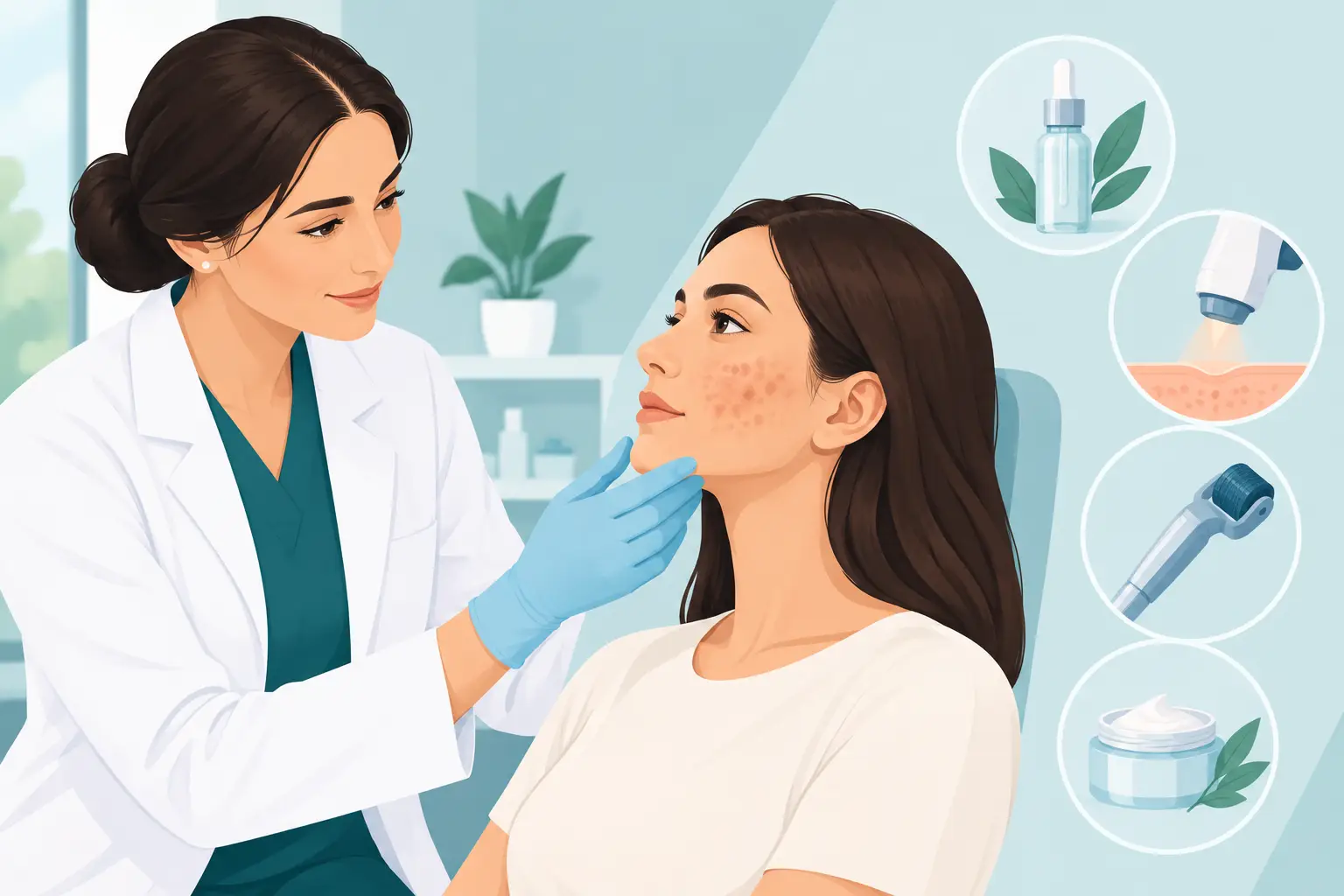

Acne scarring is often mistaken for a single concern, but the top options for acne scars depend entirely on what is happening beneath the skin. A shallow mark, a narrow ice-pick scar and a tethered rolling scar may all look like ‘acne scars’ in the mirror, yet they respond to very different treatments. The most effective route is rarely one treatment performed once. It is a carefully sequenced plan that respects your scar type, skin tone, active acne history and desired downtime.
At a medically led clinic, the goal is not to chase perfectly airbrushed skin. It is to soften textural irregularity, improve skin quality and help your complexion look clearer, smoother and more confident in natural light.
Why the type of acne scar matters
Acne can leave behind colour changes, raised scars and indented scars. These are not interchangeable, and treating them as though they are can lead to disappointing results.
Post-inflammatory redness or pigmentation is technically not permanent scarring. It is the lingering pink, red, brown or grey discolouration that can remain after a blemish has healed. It may improve with tailored skincare, carefully selected peels and light-based treatment, but it needs a different approach from a true indentation.
Indented atrophic scars are the most common concern. They are generally grouped into four patterns:
- Ice-pick scars are narrow, deep channels that extend into the skin.
- Boxcar scars have defined edges and can be shallow or deep.
- Rolling scars create a wave-like texture, often because scar tissue is pulling the skin down.
- Raised scars, including hypertrophic scars and keloids, sit above the surrounding skin and require a more cautious medical approach.
Most people have a combination. This is why a bespoke treatment plan can be more valuable than booking the latest device or choosing a treatment purely from before-and-after photographs.
Top options for acne scars in a clinical plan
Medical-grade skincare and skin preparation
For mild textural change, persistent pigmentation or patients beginning their scar journey, a considered homecare plan is often the foundation. Prescription-strength vitamin A derivatives, where clinically suitable, can support cell turnover and collagen production. Antioxidants, pigment-regulating ingredients and daily broad-spectrum SPF also help protect progress and reduce the risk of uneven pigmentation.
Skincare will not lift a deep tethered scar on its own. However, preparing the skin properly can improve treatment tolerance, support healing and make the outcome of procedures more consistent. It is particularly important for patients prone to post-inflammatory hyperpigmentation.
Microneedling and radiofrequency microneedling
Microneedling creates controlled microchannels in the skin, encouraging a wound-healing response and new collagen formation. It can improve overall texture, fine lines and superficial atrophic scars with relatively manageable downtime.
Radiofrequency microneedling combines this process with targeted heat delivered deeper into the dermis. This can be particularly useful where acne scars sit alongside laxity, enlarged pores or more widespread textural irregularity. Improvement develops gradually as collagen remodels, so a course of treatments is usually recommended rather than a single session.
Neither option is a shortcut for every scar. Deep ice-pick scars or heavily tethered rolling scars often need a more targeted technique alongside collagen-stimulating treatment. A practitioner should also adjust energy settings, needle depth and treatment intervals for your skin type and scar pattern.
Fractional laser resurfacing
Fractional laser treatment creates precise columns of controlled injury to resurface the skin and stimulate collagen renewal. It can offer meaningful improvement in boxcar scars, surface texture and acne-related pigmentation when selected and performed appropriately.
The trade-off is downtime. Depending on the laser used and the intensity of treatment, skin may be red, swollen, dry or flaky for several days. More intensive resurfacing can produce stronger results, but it is not automatically the right choice for every lifestyle, skin tone or season.
For darker skin tones, laser treatment requires particular expertise. The risk of post-inflammatory pigmentation must be assessed carefully, and pre-treatment skincare, conservative settings or a different modality may be the safer recommendation. Responsible treatment planning means being honest when another option is better suited to your skin.
TCA CROSS for deep, narrow scars
TCA CROSS uses a very small amount of trichloroacetic acid placed precisely into individual scars. It is most often considered for ice-pick scars and narrow boxcar scars, where broad resurfacing alone may not reach the base of the indentation.
The treated point forms a small crust before healing, and several sessions may be needed. Precision is essential: this is not a treatment to attempt at home or through a one-size-fits-all facial. In experienced hands, it can be a valuable part of a combination plan for stubborn, deep scars.
Subcision for tethered rolling scars
If a scar appears to pull inward when you smile or move your face, it may be tethered by fibrous bands below the skin. Subcision is a technique that releases these bands with a specialised instrument, allowing the surface to lift and remodel more naturally.
This can be one of the most effective treatments for rolling scars because it addresses the structural cause rather than only treating the surface. Bruising and swelling are common afterwards, so timing matters if you have an event, work presentation or holiday planned.
Subcision may be combined with collagen-stimulating treatments once the area has healed. In selected cases, a small amount of dermal filler can provide immediate support beneath a released scar. Filler is not a permanent cure for acne scarring, but it can be a refined option when used conservatively and with a clear understanding of the likely maintenance required.
Chemical peels for tone and superficial texture
Professional chemical peels can help brighten dullness, improve post-acne marks and refine superficial texture. They are often a useful addition for patients who still experience congestion or who want to maintain results between more intensive treatments.
They are less likely to transform deep indented scars on their own. The right peel, strength and schedule should be selected after assessing skin sensitivity, current skincare, previous reactions and pigmentation risk. Stronger is not always better, particularly when skin is already inflamed or compromised.
When active acne needs attention first
Treating scars while new inflammatory acne is still forming can be frustrating and inefficient. Each new breakout has the potential to create a new mark, while inflamed skin may not be ready for more intensive procedures.
The first priority may be getting acne under control through a medical assessment, appropriate skincare and, where indicated, referral for prescription treatment. Once the skin is calmer, scar treatment can be planned with greater confidence. This staged approach protects your investment and helps prevent the cycle of treating old scars while new ones develop.
What a tailored acne scar consultation should include
A high-quality consultation looks beyond a close-up photograph. Your practitioner should assess scar depth and distribution, active acne, skin tone, sensitivity, pigmentation history, medical history and any medication that could affect healing. They should also ask how much downtime is realistic for you and what result would feel worthwhile.
At The Aesthetics Room, this kind of consultation-led approach is central to skin optimisation. Rather than relying on one modality, a treatment plan can combine in-clinic procedures with targeted homecare, skin health support and review appointments. The sequence matters. For example, releasing tethered scars before resurfacing may create a more noticeable improvement than repeating surface treatments alone.
Ask practical questions before committing: how many sessions are likely, how far apart should they be, what downtime should you allow, and what complications should be reported? You should feel informed, not rushed into a package.
How long do acne scar results take?
Collagen remodelling takes time. Some treatments give an early glow or temporary plumping effect, but the more meaningful changes usually emerge over several weeks to months. A course may be spaced across three to six months, with reassessment as your skin responds.
Results vary because scars vary. The aim is typically visible improvement rather than total erasure, and realistic expectations are an important part of a positive experience. Good lighting, makeup and confidence can all change quickly; structural skin remodelling is slower and deserves patience.
If acne scars have made you avoid close-up photographs, certain lighting or going bare-faced, the right next step is not to choose the most dramatic treatment online. It is to have your skin assessed carefully, then build a plan that suits your scars, your schedule and the result you genuinely want to see.