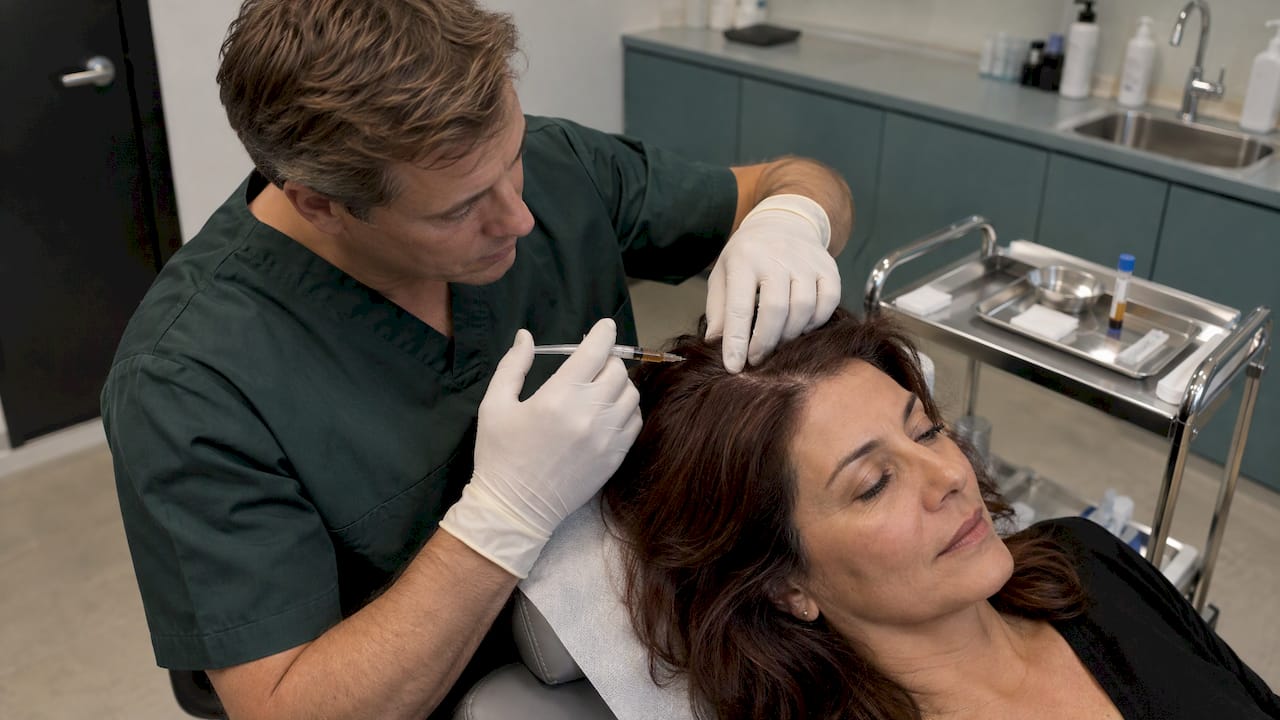
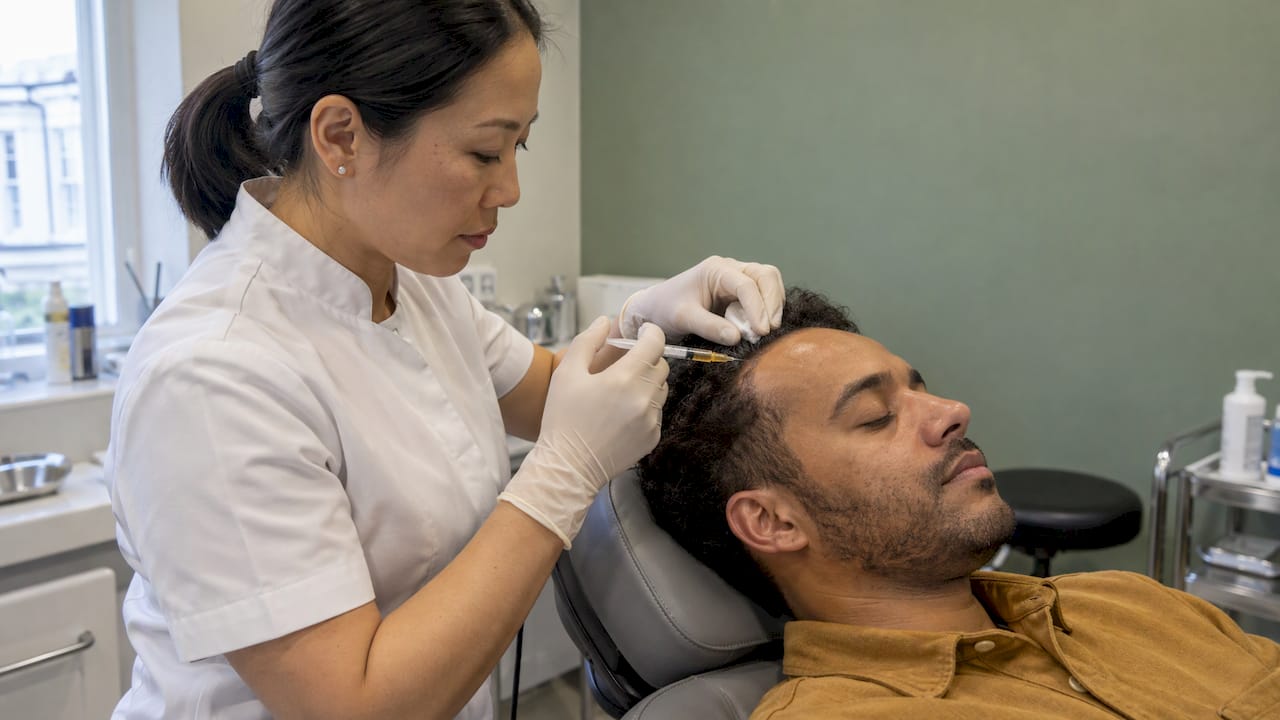

PRP for hair loss is a private treatment in the UK, and a single session typically costs between £200 and £600. A course of three sessions usually runs to £600 to £2,000, depending on the clinic and its location. At The Aesthetics Room, PRP for hair is £450 per session. Below we explain what sits behind those figures, what is and isn’t included, and how to judge a quote.
TL;DR
- A single PRP hair session in the UK typically costs £200 to £600, with central London doctor-led clinics at the upper end.
- Most people are advised an initial course of three sessions, so budget for the course, not one appointment.
- PRP hair treatment at The Aesthetics Room is £450 per session, and PRP for facial hair is £258.
- PRP is not routinely available on the NHS, so it is paid for privately.
- Check that the clinic is CQC-registered and that a doctor, dentist or other registered professional is responsible for your care.
Table of Contents
- How much does PRP hair treatment cost in the UK?
- What a full course costs
- Why prices differ between clinics
- What should be included in the price
- What results PRP can achieve
- Safety and who should speak to a doctor first
- Is PRP available on the NHS?
- Our perspective
- Book a PRP hair consultation
- How to judge a PRP quote
- FAQ
- Sources
How much does PRP hair treatment cost in the UK?
The most useful way to read UK pricing is in three bands.
| Clinic type | Typical price per session |
|---|---|
| Regional clinics | Around £150 to £300 |
| Most UK private clinics | £200 to £600 |
| Premium central London | £500 to £850 or more |
These bands come from a UK price guide published in August 2026, which puts a single scalp session at £200 to £600, regional starting points at roughly £150 to £300, and doctor-led central London sessions commonly at £350 to £600. A pharmacy guide published in March 2026 gives the same £200 to £600 range per session and notes that PRP for hair loss is available only privately.
At our clinic, PRP for hair is £450 per session. That sits inside the typical range, in a Knightsbridge, Harley Street and Mayfair setting, with treatment carried out by medically trained professionals. You can see every price on our price list.
What a full course costs
One session rarely tells the whole story. PRP for hair is normally planned as a course, then topped up. The same pharmacy guide gives £600 to £2,000 for an initial course. The August 2026 price guide breaks it down further:
- Three sessions: £600 to £1,500
- Four sessions: £800 to £2,000 or more
- Maintenance session: £200 to £600
- Annual maintenance, if needed: £200 to £1,200 or more
The same guide suggests a realistic first-year budget of roughly £800 to £2,500. Its example plans start at about £1,000 (three sessions at £250 plus one maintenance session) and reach £2,500 for a premium course.
A sensible way to plan is to take the per-session price, multiply by three for the initial course, and add one maintenance appointment for the months that follow. At £450 per session, we would explain your own course length and spacing at consultation, because that depends on your hair pattern and goals.
Why prices differ between clinics
Two clinics can quote very different figures for what sounds like the same treatment. The main drivers are these.
Who carries out the treatment. A doctor-led, CQC-registered clinic carries clinical governance costs that a low-cost provider may not. The Joint Council for Cosmetic Practitioners states that PRP for hair loss, where a medical claim or diagnosis is made, is restricted to doctors and dentists working in CQC-registered facilities in England. That regulatory setup is part of what you pay for.
Location. Rent and overheads in central London push prices up. That is why the premium band is concentrated there.
Kit and preparation method. Single-use, UKCA or CE-marked preparation kits are advised by the pharmacy guide, along with robust infection prevention. Systems differ in cost and in how the plasma is prepared.
Activation and add-ons. A 2025 meta-analysis found that activated PRP was associated with a significant rise in hair density, while non-activated PRP did not reach significance. Upgrades such as PRF, growth-factor or exosome add-ons, or combining PRP with microneedling, change the price.
Package pricing. Many clinics reduce the per-session cost when you book a course upfront. Ask how a package is structured and what it covers.
What should be included in the price
A comprehensive PRP hair service should cover more than the injections. According to the UK price guide, look for:
- A medical history and scalp examination
- Assessment of your hair loss pattern and progression
- Standardised photographs
- Dermoscopy or digital trichoscopy
- Blood collection and PRP preparation
- Scalp cleansing and numbing measures
- The injections themselves
- Aftercare instructions and a follow-up review
- Repeat photographs or density measurements
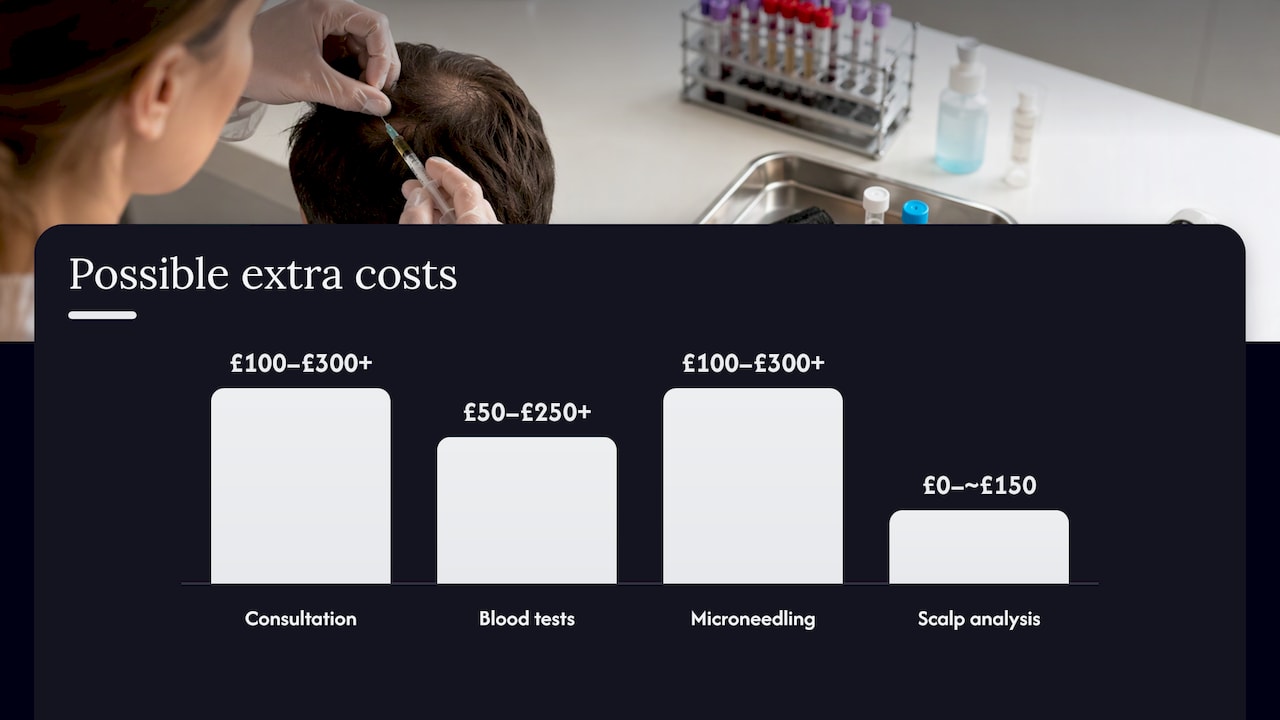
Possible extras on the same guide include a medical consultation (£100 to £300 or more), blood tests (£50 to £250 or more), prescription medication, microneedling (£100 to £300 or more) and digital scalp analysis (free to around £150). Ask for the quote in writing and confirm which of these are inside it.
If you want to see how a consultation works at our clinics before you commit, our guide to London aesthetic consultations walks through it.
What results PRP can achieve
PRP uses a concentrate of your own platelets, injected into the scalp to support hair follicles. The research is encouraging, with honest limits you should know about before you spend.
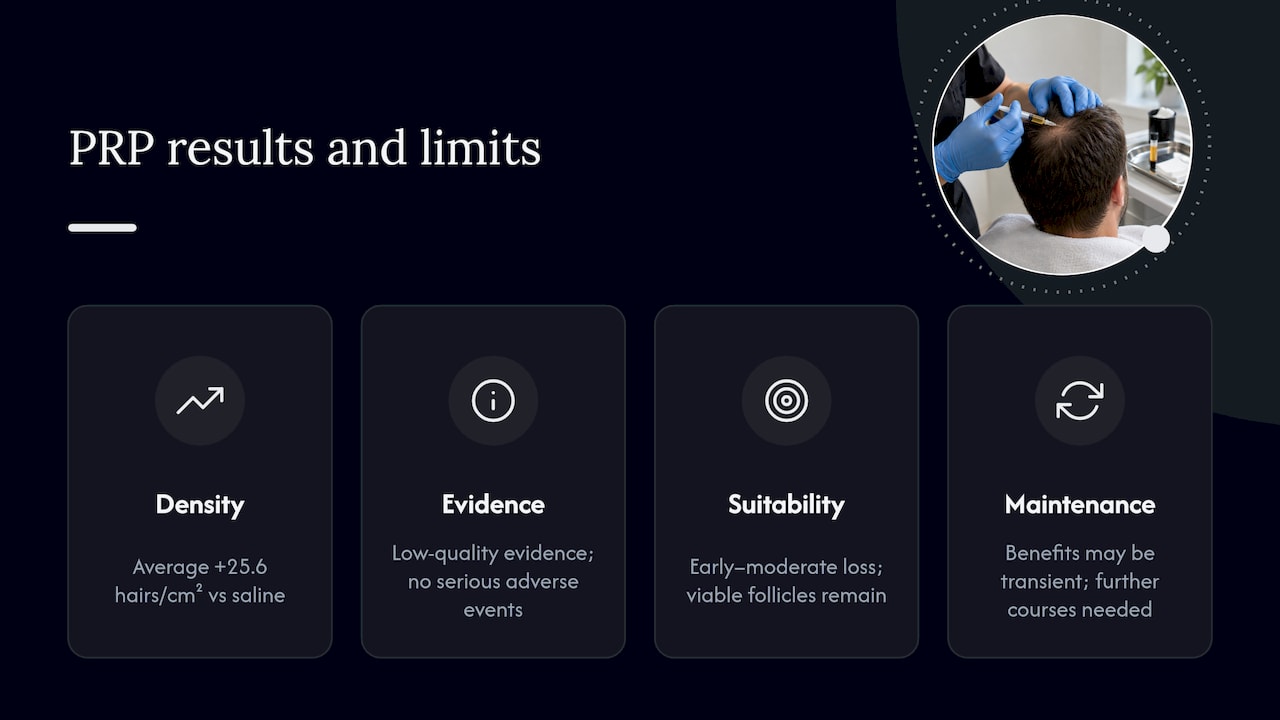
A systematic review and meta-analysis of 27 controlled trials with 1,117 participants found that PRP increased hair density against saline injections over a medium-term follow-up, by an average of 25.6 hairs per square centimetre. The reviewers rated the evidence as low quality, and reported no serious adverse events linked to PRP. The 2025 analysis of 24 studies and 1,198 participants also found a significant overall increase in hair density.
PRP is most likely to suit adults with early to moderate androgenetic alopecia (pattern hair loss) who still have viable follicles, according to the pharmacy guide. It supports follicles that are still active and cannot bring back follicles that are no longer there. That is why an early assessment matters.
Results are not permanent. A 2024 review in the Journal of Cosmetic Dermatology notes that benefits may be transient for some patients, who may need further courses. Plan maintenance into your budget from the start, and it will hold few surprises.
Safety and who should speak to a doctor first
PRP uses your own blood, but it is still a medical procedure. The pharmacy guide lists situations where PRP needs careful medical review or may not be suitable:
- Active scalp infection or inflammation
- Platelet disorders
- Anticoagulant or antiplatelet medication
- Active cancer or recent chemotherapy
- Pregnancy
- Uncontrolled systemic disease
- A tendency to keloid scarring
- Certain autoimmune conditions
If any of these apply, tell the practitioner at consultation and speak to your GP or specialist about your medication before booking. Hair loss can also have causes that need a blood test or a different treatment, so a proper assessment comes first.
Before you book anywhere, check three things:
- The clinic is registered with the CQC in England.
- The practitioner’s registration with the GMC, NMC or HCPC.
- Single-use, UKCA or CE-marked PRP kits and clear infection control.
The JCCP also notes that the MHRA treats claims to reverse permanent hair loss or regrow lost hair as medicinal claims. A clinic that promises guaranteed regrowth is not speaking the language of regulated care.
Is PRP available on the NHS?
No, not routinely. The pharmacy guide states there is currently no NICE guidance recommending PRP for hair loss, and that it is available privately. If you want to discuss hair loss through the NHS first, your GP is the starting point, and a private PRP course can follow once you have a clear diagnosis.
Our perspective
We see hair loss as a medical question first and a cosmetic one second. The first conversation should never be about the price of a session. It should be about why your hair is thinning, how far it has progressed and whether your follicles are still responding.
That is why our approach is medically led. Treatments are performed by medically trained professionals, in a CQC-registered setting, as part of a bespoke plan built around you. We are also members of the ACE Group, which is dedicated to patient safety.
At £450 per session, our PRP hair treatment is designed to give you a clear, transparent starting point. We also offer PRP for facial hair at £258 and Vitamin Hair Therapy at £218, so that your plan can reflect what your hair and scalp actually need. Hair is closely tied to confidence, and we want you to feel informed and supported at every step.
Vishul
Book a PRP hair consultation
If you are weighing up PRP, the best next step is a conversation about your own hair. At The Aesthetics Room we offer in-person and virtual consultations, and we will talk through your hair pattern, your goals and a plan that fits. Our PRP for hair is £450 per session, PRP for facial hair is £258 and Vitamin Hair Therapy is £218.
See every treatment and price on our price list, or book a consultation through our website.
If your hair loss is linked to a specific life stage or pattern, these guides may help first: postpartum hair loss and PRP and male hair thinning at the temples.
How to judge a PRP quote
When you compare quotes, compare like with like. Use this short checklist:
- Price per session and number of sessions. Work out the total for the initial course, not just the first appointment.
- What is included. Consultation, photographs, scalp assessment and follow-up review should be named.
- Maintenance. Ask what a top-up costs and roughly when it is usually advised. A course of three sessions spaced four to six weeks apart is a common pattern, with maintenance after that.
- Who treats you. Confirm their registration and the clinic’s CQC status.
- How the claims are worded. Honest clinics talk about supporting hair density, not guaranteed regrowth.
A low price for a single session can end up costing more once add-ons and extra sessions are included. A clear, itemised quote is a sign of a well-run clinic.
FAQ
How expensive is PRP for hair in the UK?
A single session typically costs £200 to £600, and premium central London sessions can reach £850 or more. An initial course of three sessions usually totals £600 to £2,000. Our PRP for hair is £450 per session.
How many PRP sessions will I need?
An initial course is commonly three sessions, followed by maintenance sessions when needed. The number depends on your hair pattern and how you respond. We would set this out at your consultation.
Can I get PRP for hair loss on the NHS?
Not routinely. There is currently no NICE guidance recommending PRP for hair loss, so it is offered privately. Your GP can help with diagnosing the cause of your hair loss.
How long do the results of PRP last?
Results are not permanent. Many people notice improvement after an initial course, and maintenance sessions help sustain it. The exact timing varies from person to person, so your practitioner will advise on a schedule.
Sources
- PRP Hair Treatment Cost UK: Sessions and Results
- PRP Hair Loss Treatment: UK Guide, Bolt Pharmacy
- Platelet-Rich Plasma (PRP) in Aesthetic Procedures, JCCP
- Platelet-rich plasma for the treatment of alopecia: a systematic review and meta-analysis, PMC
- Platelet-Rich Plasma in the Management of Alopecia, Dermatology and Therapy
- The role of platelet-rich plasma in androgenetic alopecia, Journal of Cosmetic Dermatology