
Hair loss after having a baby is common, and in most women it is a temporary reset of the hair cycle. The best postpartum hair loss treatment starts with understanding what is happening, then supporting the scalp and hair while it recovers. If your shedding is heavy, patchy or slow to settle, a proper assessment comes first. At The Aesthetics Room, our CQC-registered clinic in Knightsbridge, we offer PRP hair treatment and Vitamin Hair Therapy as part of a bespoke plan for that stage.
TL;DR
- Postpartum shedding is caused by falling oestrogen after delivery. It usually peaks around four months after birth and most women regain normal fullness by their baby’s first birthday.
- Gentle hair care, a volumising shampoo and a lightweight conditioner on the ends help hair look fuller while it recovers.
- See your GP if you are worried, if you have bald patches, or if shedding continues beyond six months. Iron, thyroid and vitamin levels are worth checking.
- Once other causes are ruled out, we offer PRP hair treatment at £450 and Vitamin Hair Therapy at £218 at our London clinic.
Table of Contents
- Why hair sheds after pregnancy
- How long postpartum shedding lasts
- What helps your hair look and feel fuller
- Vitamins, iron and what a blood test can show
- When to see a GP or a specialist first
- Postpartum hair loss treatment in clinic: where PRP fits
- Looking after the whole of you after birth
- Our perspective
- Book a hair consultation in Knightsbridge
- FAQ
- Sources
Why hair sheds after pregnancy
During pregnancy, higher oestrogen and progesterone keep more hairs in the growth phase, so fewer fall out than usual. Patient.info explains that after delivery these hormone levels fall and the hairs that were held back shed together. That is why the loss can feel sudden and dramatic.
The medical name is telogen effluvium. The Irish HSE describes it as diffuse shedding triggered by rapid hormone changes that move hair from the growing phase into the shedding phase. The American Academy of Dermatology (AAD) calls it temporary excessive shedding rather than true hair loss. Your follicles are not destroyed. They are working through a backlog.
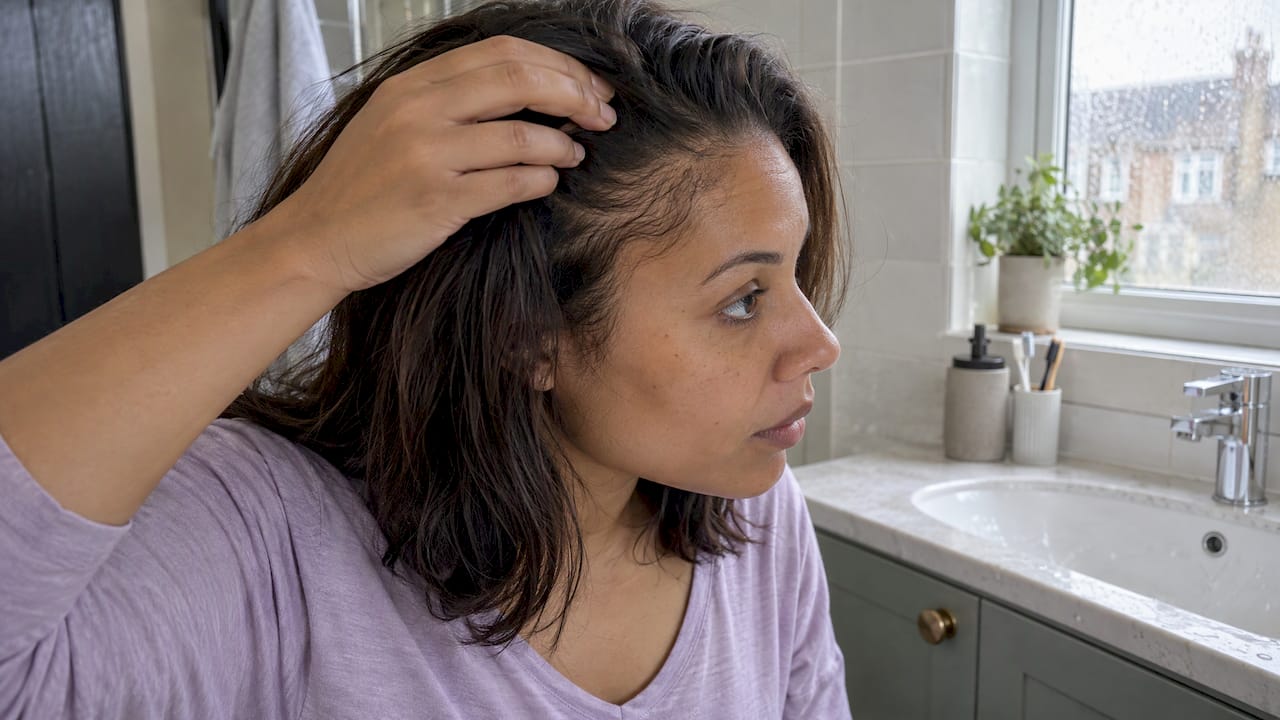
In practice you will notice more hair in the shower drain, on your brush and on the pillow. Many women also see short, fine regrowth hairs around the hairline, often described as a fringe of baby hairs, as the cycle restarts.
How long postpartum shedding lasts
The timeline matters, because it tells you what is normal and when to look further.
- Onset: shedding typically begins a few months after birth.
- Peak: the AAD says it commonly peaks about four months after birth.
- Settling: the HSE says telogen effluvium usually resolves after three to six months.
- Full recovery: the AAD says most women regain normal fullness by the baby’s first birthday, often earlier.
A 2023 Japanese study of 331 mothers found that 91.8% reported some postpartum hair loss, with an average onset of 2.9 months, a peak at 5.1 months and an end at 8.1 months after delivery. The women answered a questionnaire some months after birth, so treat the figures as a guide rather than a promise. Your own pattern can run earlier or later.
A worked example: you give birth in March. Expect noticeable shedding from roughly June, the heaviest weeks around July to September, and visibly thicker regrowth by the turn of the year. By the first birthday the following March, most women are back to their usual density.
What helps your hair look and feel fuller
The first layer of treatment is simple daily care. The AAD suggests a volumising shampoo, a lightweight conditioner applied mainly to the ends, and avoiding heavy conditioning shampoos or intensive conditioners while fullness returns. Patient.info adds that these products make hair look fuller but do not change how fast it grows, which is the right expectation to hold.
Practical habits that protect the hair you have:
- Brush gently, starting from the ends and working up.
- Avoid tight ponytails, buns and braids that pull on the hairline.
- Keep heat styling low while the hair is fragile.
- Pause harsh chemical colouring and straightening treatments.
- Ask your stylist about a shorter cut with layers, which can make thinner hair look denser.
These steps keep the hair in good condition. They do not tell you why the hair is shedding, and that is where a clinical look at the scalp adds something.
Vitamins, iron and what a blood test can show
It is tempting to buy a high-dose hair supplement. Patient.info says no specific vitamin has been shown to treat postpartum shedding, but it lists iron, thyroid function, vitamin D, zinc and vitamin B12 or folate as factors clinicians consider in hair health. Pregnancy, birth blood loss and broken sleep can all drain these.
The NHS notes that iron deficiency can cause temporary hair loss and advises establishing the cause before turning to a commercial hair clinic. If you are breastfeeding, check any supplement with your GP, midwife or health visitor before starting it. Your GP can arrange blood tests for iron and thyroid function, which is the sensible first step if you feel exhausted or your shedding seems out of proportion.
Our Vitamin Hair Therapy (£218) and Vitamin D Shot (£150) are available at the clinic for clients whose plan includes nutritional support. Both are priced on our published price list.
When to see a GP or a specialist first
Postpartum shedding follows a recognisable pattern: diffuse thinning all over, starting a few months after birth, then recovery. Seek assessment when the picture differs. The NHS advises seeing a GP if you are worried; they can assess the hair and discuss treatments.
Book a medical review if you notice any of these:
- Bald patches, or hair loss elsewhere on the body. University of Utah Health lists these as reasons to check for iron deficiency, thyroid disease or scalp conditions.
- Shedding that continues beyond six months, or hair that becomes progressively sparser with more visible scalp. The Trichological Society says another disorder may be overlapping in these cases.
- Normal fullness not back by your baby’s first birthday. The AAD recommends a dermatology assessment at that point.
This step matters for a reason beyond reassurance. A treatment plan works best when it is built on a clear diagnosis.
Postpartum hair loss treatment in clinic: where PRP fits
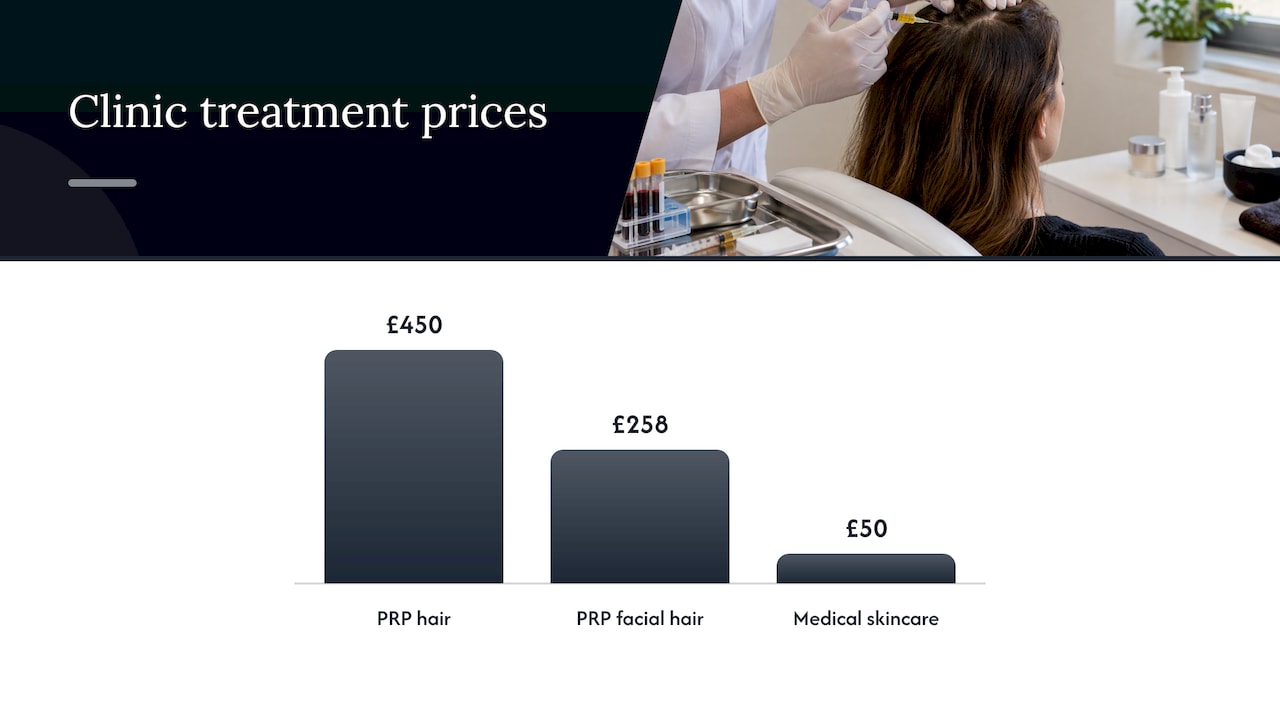
Platelet-rich plasma (PRP) uses a small sample of your own blood, spun to concentrate the platelets, which is then injected into the scalp. At The Aesthetics Room, PRP for hair is one of our treatments, and a session of PRP — Hair is priced at £450. PRP for facial hair is £258.
We think of PRP as support for a scalp in recovery, particularly for women whose density is slow to return after the usual shedding window and whose medical checks are clear. We have written separately about postpartum hair loss and PRP: when it helps and when to wait, and about PRP hair treatment for women. If you want to understand the investment, our guide to PRP hair treatment cost in the UK sets it out, and the guide to PRP maintenance and top-ups explains how often women return. If you are curious about comfort, we answer how painful PRP hair treatment is.
A typical route with us looks like this:
- A consultation, in person or virtual, where we discuss your birth timeline, your shedding pattern and any medical checks you have had.
- A bespoke plan. All treatments are carried out by medically trained professionals, and we build each plan around the individual.
- Where it suits you, PRP, Vitamin Hair Therapy or a Medical Skincare Prescription (£50) for the scalp and skin.
Timing is the point. Starting at the stage where the natural cycle is already turning, rather than in the middle of peak shedding, lets you judge your results against a hair cycle that is recovering.
Looking after the whole of you after birth
Hair is one part of postnatal recovery. Sleep, nutrition and gentle movement all shape how you feel. If you had a caesarean, rebuilding core strength is its own process, and this guide to diastasis recti recovery after a C-section sets out a staged approach.
Many of our clients also ask about the fluid retention and heaviness that follow pregnancy. We cover timing in our guide to lymphatic drainage after pregnancy, and lymphatic drainage is part of our holistic offering.
Skin often changes too. Our Mild Skin Peel (£120), Micro-needling (£300) and Profhilo (£350) are treatments many clients explore as their routine returns, and your practitioner can talk you through what suits your skin at each stage.
Our perspective
We meet many mothers who feel they have lost something of themselves along with the hair on the brush. Our view is simple: the shedding is a normal hormonal event, and you deserve a clear explanation before anyone talks about a treatment.
That is why we start with a conversation. We want to know when you gave birth, whether you are breastfeeding, what your GP has checked and how your hair has changed. Our approach is medically led and holistic: we look at the internal factors, such as nutrition and iron, alongside the external ones, such as scalp health and density.
We are CQC-registered, we are members of the ACE Group, which is dedicated to patient safety, and every treatment is delivered by a medically trained professional. When the time is right, PRP and Vitamin Hair Therapy give you an active, personalised way to support your hair as it grows back, in a calm setting in Knightsbridge.
Vishul
Book a hair consultation in Knightsbridge
If your shedding has settled but your hair has not caught up, or you simply want a plan, we are ready to help. Our clinics are in Knightsbridge, with locations on Harley Street and in Mayfair, and consultations can be virtual or in person. PRP — Hair is £450 and Vitamin Hair Therapy is £218. See every treatment on our price list, or start from theaestheticsroom.co.uk.
FAQ
How long does postpartum hair loss last?
For most women, shedding peaks around four months after birth and settles within three to six months of starting. The AAD says normal fullness usually returns by the baby’s first birthday, often sooner. Your own timeline may differ, especially if you are breastfeeding or sleep-deprived.
Should I cut my hair after having a baby?
A shorter or layered cut can make thinner hair look fuller and reduces pulling and tangling. It does not change the shedding itself, which comes from the follicle. Choose the length you enjoy, and keep styling gentle.
Can I have PRP while breastfeeding?
PRP uses your own blood, but breastfeeding is a point to raise at your consultation. Tell your practitioner about it and about any medication or supplements, and we will discuss whether and when treatment suits you. If your GP or health visitor has advised anything specific, share that too.
When is postpartum hair loss not just postpartum hair loss?
See your GP if you have bald patches, hair loss on other parts of the body, shedding past six months, or no recovery by your baby’s first birthday. These can point to iron deficiency, thyroid problems or a scalp condition that needs its own treatment.
Is hair regrowth after pregnancy guaranteed?
For typical postpartum shedding, the follicles are intact and the hair cycle resets, so regrowth is expected. How quickly density returns varies between women, and a consultation can help you plan support for the months ahead.
Sources
- Hair loss in new moms: Dermatologist tips, American Academy of Dermatology
- Hair loss after giving birth, HSE
- How to cope with hair loss after having a baby, Patient.info
- Investigation of exacerbating factors for postpartum hair loss, Skin Appendage Disorders
- Hair loss, NHS
- Postpartum Hair Loss: When It Starts, When It Stops, University of Utah Health
- Post Natal concerns, The Trichological Society
- Diastasis recti after C-section recovery guide