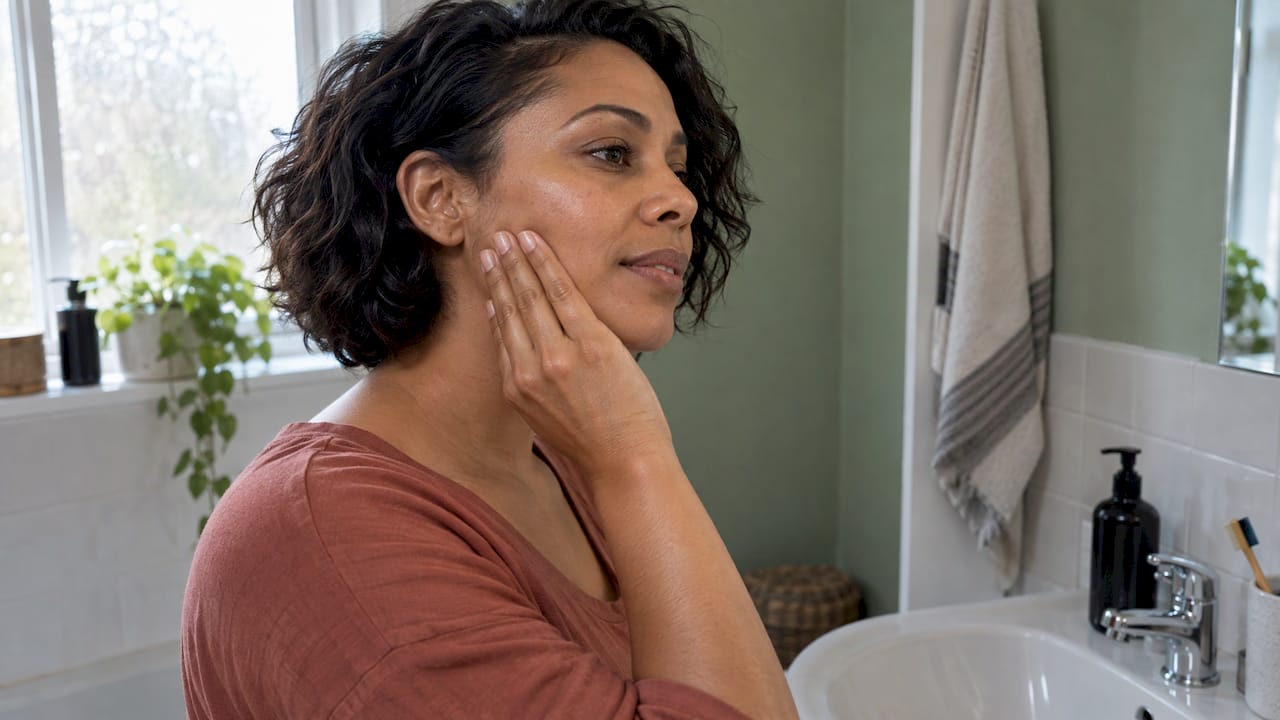

Lymphatic drainage and sinus drainage are two different processes. Lymphatic drainage moves excess tissue fluid in the skin and soft tissues of your face and neck. Your sinuses clear mucus through their own small openings inside the nose. A gentle lymphatic massage can ease the heavy, puffy, pressured feeling across the cheeks and brow, and that comfort is what most people are after. We explain how it works, how to do a light-touch routine, and when congestion needs a GP or pharmacist rather than massage.
TL;DR
- Sinuses empty mucus through small openings (ostia) inside the nose. Lymphatic drainage moves fluid in the skin and soft tissue around them.
- A light facial massage can relax the face and ease the feeling of pressure and puffiness. A small 2014 study of 35 women found sinus-headache pain scores fell after a 15-minute massage.
- Use very light pressure, warm hands, slow circles and stay clear of the eyes. Stop if anything hurts.
- See a pharmacist if you suspect sinusitis, and a GP if symptoms last beyond three weeks or you feel very unwell.
- If your concern is facial puffiness or swelling after treatment, we can assess it in a consultation, in person or virtually.
Table of Contents
- Sinus drainage and lymphatic drainage: two systems
- Why your face feels full when your sinuses are inflamed
- What the evidence shows
- A gentle at-home routine for facial pressure
- When to see a pharmacist, GP or NHS 111
- Where lymphatic drainage really helps your face
- Perspective
- Your next step with us
- FAQ
- Sources
Sinus drainage and lymphatic drainage: two systems
The two terms sound alike, which is why so many pages blur them. They describe different jobs.
Sinus drainage is mucus clearance. Your nose and sinuses make a large amount of mucus every day. The Royal Wolverhampton NHS Trust’s patient information says the nose and sinuses normally produce about a pint and a half of mucus per day, swept backwards by millions of tiny hair-like cilia and swallowed without you noticing. A peer-reviewed physiology review describes how mucus streams are always oriented towards the natural opening of each sinus, which empties into the nose.
Lymphatic drainage is fluid management in the tissue itself. The lymphatic system collects excess fluid from the spaces between cells and carries it towards lymph nodes. In the face and neck, that fluid sits in the skin, fat and soft tissue, not inside the sinus cavity. A manual lymphatic technique uses very light, rhythmic strokes to encourage that fluid along its normal pathways, usually towards the nodes at the sides of the neck.
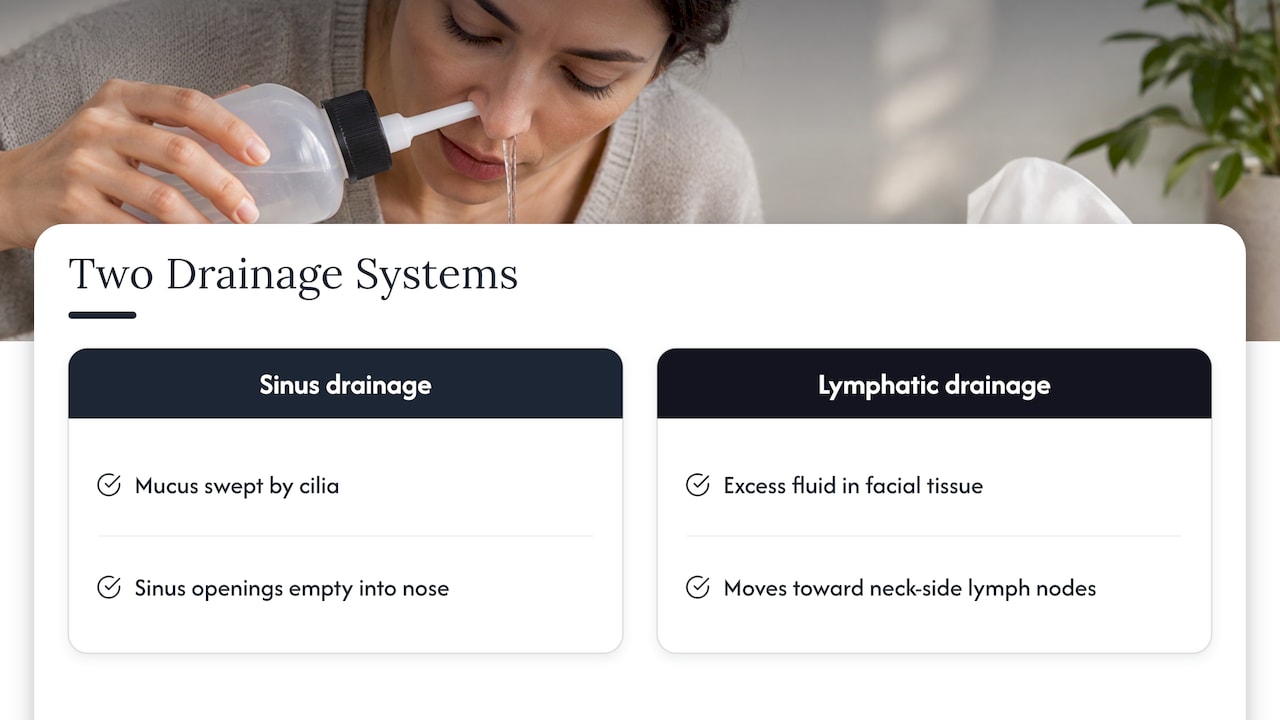
An ENT surgeon writing for ENT Health360 puts the practical difference this way: massage can warm the skin, relax facial muscles and sometimes set off a sneeze or runny nose, so the face feels lighter. Sinuses themselves empty through small openings behind bone, which touch alone does not open.
That distinction tells you what to ask of a lymphatic massage: relief from puffiness and the sensation of pressure, and a calmer, more comfortable face. It is a comfort treatment for the tissues around your sinuses, and it sits alongside the medical care that clears an actual infection.
Why your face feels full when your sinuses are inflamed
When sinus linings swell, the sinus openings can narrow and mucus builds up. The NHS explains sinusitis as swelling of the sinus lining that can stop mucus draining normally into the nose and throat. Pain usually follows when that opening is blocked by infection, irritants, allergies or a structural issue, as the Royal Wolverhampton NHS Trust information describes.
The result is the familiar picture: a dull ache across the cheeks, pressure behind the eyes or forehead, a blocked nose and a puffy look in the morning. Part of that puffiness is fluid in the soft tissue of the face. That is the part a lymphatic technique is designed to address.
A massage therapist quoted by Cleveland Clinic explains that inflammation leads to fluid build-up, which causes puffiness and pressure, and that the aim is to let the body release itself rather than force it. Her advice is to use the weight of a penny on your face, not digging fingers.
What the evidence shows
Honest expectations matter here, so these are the facts as they stand.
- WebMD notes that only a few small studies support sinus massage, including one where massage combined with other treatments relieved pain and pressure more than medical treatment alone.
- A 2014 study in the Journal of Paramedical Sciences & Rehabilitation found that a 15-minute facial and head massage lowered sinus-headache pain scores from about 6.2 to 3.3 out of 10 in 35 women. It had no control group, so it shows comfort rather than proof of a cure.
- The NHS self-care advice for mild sinusitis centres on rest, fluids, pain relief, avoiding allergy triggers, not smoking and cleaning the nose with salt water. Massage is a gentle extra for comfort, not a replacement for those steps.
In short, a light facial massage is low-risk, feels good and can reduce the sense of pressure. It is not a treatment for infection.
A gentle at-home routine for facial pressure
If you want to try a light-touch routine at home, here is the approach Cleveland Clinic describes for the sinus areas, adapted for a calm five-minute session.
- Warm up. Wash your hands and warm them together. A warm flannel over the face first helps the skin relax. WebMD also advises warming your hands first.
- Frontal area (brow). Trace your index fingers up the sides of your nose to where it meets the bone near the eyebrows. Apply very light pressure for 5 to 10 seconds, or rotate in very small circles. Your eyebrows should not move.
- Cheek area. Place your index fingers where the nostrils meet the cheeks and apply very light pressure for 5 to 10 seconds.
- Sweep outwards. Circle under the cheekbones towards the ears, up to the temples, over the eyebrows and down the sides of the nose, about five circles in each direction.
- Finish at the neck. Use the flat of your fingers to stroke lightly down the sides of the neck, the direction in which lymphatic fluid travels.
Keep the pressure light
Lymphatic vessels sit just under the skin, so deep pressure is unnecessary. Slow, small circles with the pads of your fingers are enough. Take extra care around the eyes and never press on the eyeballs. If you feel pain or discomfort, stop. WebMD gives the same advice.
On the principle of gentle pressure, this lymphatic compression therapy guide is a useful companion read.
Other comfort measures
The NHS gives a homemade nasal rinse: about 570 ml of boiled and cooled water, one teaspoon of salt and one teaspoon of bicarbonate of soda, made fresh each time and used up to three times a day. A UK clinician guide notes that NICE says the trial evidence for saline is limited, but it is harmless, costs pennies and many patients find it the single most useful step. Sleeping propped up and a warm flannel over the face also help.
When to see a pharmacist, GP or NHS 111
This is where massage stops and medical care starts. The NHS advises:
- See a pharmacist if you think you have sinusitis.
- See a GP if symptoms keep coming back, have not improved after three weeks of self-care, or have not improved after seven days of pharmacy or GP treatment.
- Get urgent help from a GP or NHS 111 if you are very unwell, painkillers do not help or symptoms get worse, or you have a weakened immune system.
Acute sinusitis usually takes two to three weeks, and NICE guideline NG79 recommends no antibiotic for symptoms lasting around 10 days or less. If you have no improvement at all after 10 days, get assessed. Do not massage over a hot, red, very tender or newly swollen area of the face; that is a reason to speak to a doctor first. Our own lymphatic drainage contraindications guide lists who should wait or avoid the treatment.
Where lymphatic drainage really helps your face
Much of what people want from “sinus massage” is a lighter, less swollen face. That is where lymphatic technique earns its place.
- Morning puffiness. Fluid pools around the eyes and cheeks overnight, especially when you are congested or sleeping flat. Our guide to what helps reduce facial puffiness sets out eight practical steps.
- Swelling after aesthetic treatment. Anti-wrinkle injections, fillers and other treatments can leave temporary swelling. We explain whether lymphatic drainage reduces swelling after treatment and how to reduce post-treatment swelling safely.
- Tear trough area. The under-eye area is sensitive to fluid. Read our tear trough filler recovery notes before you plan any massage nearby.
If you have had filler recently, ask your practitioner before massaging the treated area. Pressure in the wrong place in the first days can affect how product settles, so follow your aftercare instructions.
Perspective
Most people who search for lymphatic drainage for sinuses want one thing: to feel lighter and less pressured through the face. We think that is a reasonable thing to want, and it is something skilled, gentle hands can help with.
The key is to be clear about which system you are working with. Mucus clearance happens inside the nose. Tissue fluid sits in the skin and soft tissue around it. When we assess a face, we look at the whole picture: puffiness, skin quality, recent treatments and overall wellbeing. Our protocols are medically led and designed to look at both the internal and external factors behind how a face looks and feels.
Every plan we build is bespoke, delivered by medically trained professionals. We are CQC registered and members of the ACE Group, which is dedicated to patient safety. If your symptoms point to infection or last more than a few weeks, we will always encourage you to see your GP first, then come back to us for comfort and facial care.
Vishul
Your next step with us
If your concern is a puffy, heavy-feeling face, or swelling after a treatment, a consultation with us is the best place to start. We offer in-person and virtual consultations and work from Knightsbridge, Harley Street and Mayfair. Every treatment is performed by medically trained professionals, with a plan built around you.

If you would like to see what we offer for skin and facial wellbeing, see our full treatment price list, which includes Profhilo at £350, micro-needling at £300 and a mild skin peel at £120. You can also start from our home page to book. If you are new to us, our guide to London aesthetic consultations explains what happens at a first appointment.
FAQ
Can lymphatic drainage clear sinuses?
Lymphatic drainage moves tissue fluid in the skin and soft tissue, so it does not empty mucus from inside the sinuses. What it can do is relax the face and ease the feeling of pressure and puffiness. If you are blocked for more than a few days, follow NHS self-care and speak to a pharmacist.
How do I massage my sinuses to drain?
Warm your hands, then use very light pressure with your index fingers beside the nose and under the cheekbones, holding for 5 to 10 seconds or making small slow circles. Sweep out towards the ears and temples, and finish down the sides of the neck. Avoid the eyes and stop if anything hurts.
How long should a sinus massage last?
A few minutes is enough. The 2014 study used a 15-minute session of facial and head massage, but at home a calm five minutes with light pressure is a sensible start. Gentle and consistent matters more than long or firm.
When should I see a doctor about sinus symptoms?
See a pharmacist if you suspect sinusitis. See a GP if symptoms recur, have not improved after three weeks of self-care, or have not improved seven days after treatment. Seek urgent help from a GP or NHS 111 if you are very unwell, painkillers are not working, symptoms worsen, or your immune system is weakened.
Sources
- Sinusitis (sinus infection), NHS
- Sinusitis (acute): antimicrobial prescribing, NICE guideline NG79
- ENT Conditions and Procedures, Royal Wolverhampton NHS Trust
- Physiology and pathophysiology of respiratory mucosa, GMS Current Topics in Otorhinolaryngology
- Does Sinus Drainage Massage Work? ENT Health360
- Sinus Massage To Drain and Relieve Pressure, Cleveland Clinic
- Sinus Massage: Techniques for Relieving Pressure, WebMD
- How to Relieve Sinus Pressure, Access Doctor
- Lymphatic Compression Therapy: A Complete Clinical Guide