
Most people look socially presentable within 3 to 7 days of a microneedling session, with visible redness peaking hard in the first 24 to 72 hours before it fades. Deeper treatments, or microneedling paired with radio frequency, stretch that visible window further, even though the real work, new collagen formation, keeps building quietly for months afterwards. Sun protection and a gentle skincare routine in that first week matter more than most people expect, mainly because broken skin is more vulnerable to irritation and infection.
TL;DR:
- Redness and skin irritation peak within the first 24 to 72 hours, with swelling and pinpoint bleeding common, and sun protection and gentle skincare are critical during this period.
- Day 3 to 5 typically involves skin flaking and a sandpaper-like texture, but redness and signs of irritation largely subside by week one, while collagen remodeling continues for three to six months.
- Using fragrance-free moisturizers and diligent broad-spectrum sunscreen is essential for at least two weeks post-treatment, while active ingredients like retinoids and exfoliants should be avoided for 48 to 72 hours or longer.
- Most clients require 4 to 6 sessions spaced four to eight weeks apart to see significant visible and structural improvements, with results continuing for months after treatment completion.
- Serious side effects are rare; any spreading redness, unusual discharge, or prolonged bleeding warrants medical attention, especially for clients with active skin conditions or darker skin tones.
Table of Contents
- What does microneedling downtime actually look like in the first 24 hours?
- What happens day by day during the microneedling recovery process?
- What should your microneedling aftercare routine include?
- When will you see actual microneedling results, and how many sessions does it take?
- What side effects are normal, and which ones need medical attention?
- Who should delay or avoid microneedling treatment?
- Why does clinician choice matter for a safe recovery?
- Why the standard downtime advice misses the point
- Ready to plan your treatment with proper aftercare support?
- Sources
- FAQ
What does microneedling downtime actually look like in the first 24 hours?
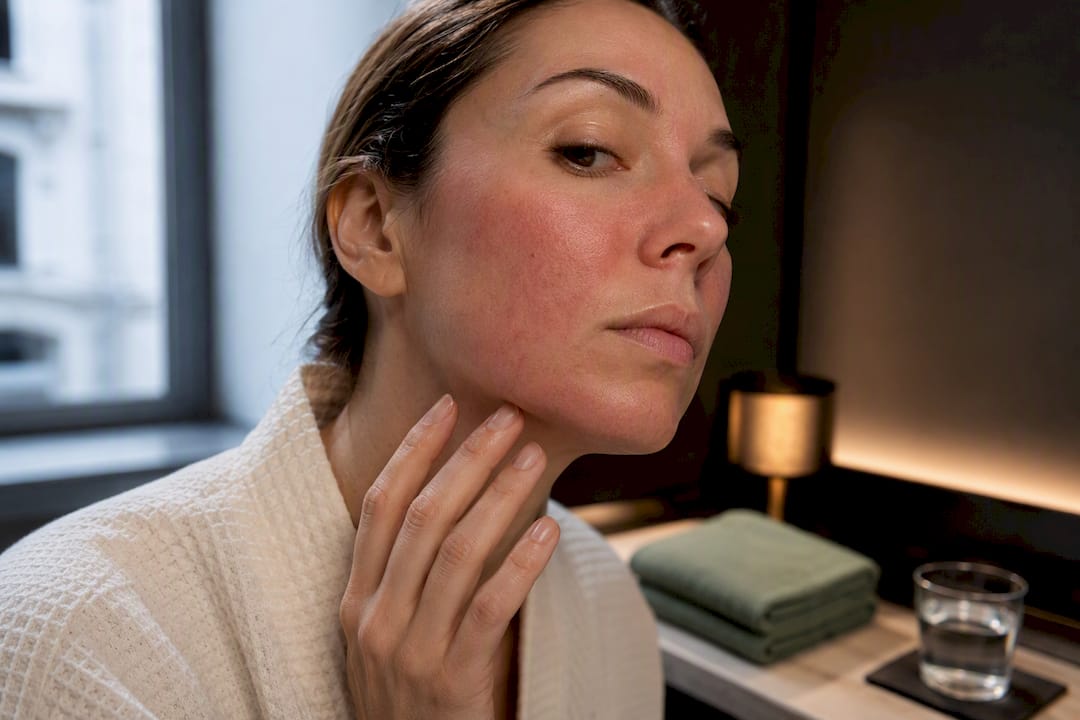
Expect your skin to look like a moderate sunburn straight after treatment. Redness, warmth, and a tight, slightly swollen feeling across the treated area are all normal, and some clients notice tiny pinpoints of bleeding or a light straw coloured fluid weeping from the skin. This is the skin’s own repair response kicking in, not a sign anything has gone wrong.
Clinicians typically apply a cooling gel immediately after the needling to calm the surface and reduce swelling, and some cover the area briefly with a light dressing. Follow whatever specific instructions your practitioner gives you for removing or reapplying that dressing, since protocols vary depending on the device and depth used.
For the first 24 hours, a few simple rules make a real difference to comfort and healing:
- Skip hot water on the treated area. Lukewarm water only, and pat dry rather than rubbing.
- Blot gently with clean gauze if any fluid weeps from the skin. Do not wipe.
- Keep your hands off your face. Touching introduces bacteria to skin that has thousands of microscopic channels open.
- Leave active cosmetics alone entirely, including foundation, concealer, and tinted moisturiser.
Pro Tip: A cool pack wrapped in a clean cloth, held against the skin for a few minutes at a time, takes the edge off swelling far better than reaching for anti-inflammatory tablets.
If you need pain relief, paracetamol is generally the safer option. NHS aftercare guidance for microneedling recommends cooling gel and simple moisturiser in the first 24 hours, alongside avoiding hot water, while clinicians often advise against NSAIDs like ibuprofen early on, since anti-inflammatories can blunt the very inflammatory response that drives collagen remodelling.
What happens day by day during the microneedling recovery process?
The visible side of microneedling downtime follows a fairly predictable pattern, though individual skin type and needle depth shift the timing at the edges.
- Day 0. You will leave the clinic looking flushed, sometimes quite red, with visible pinpoint marks across the treated area. Staff will usually check the skin has calmed enough before you go and confirm your aftercare plan.
- Day 1 to 2. Redness and swelling typically peak here. Showering is fine, but keep the water cool and avoid direct pressure or scrubbing on the treated area. Skip exercise that raises your core temperature or makes you sweat heavily. Makeup should stay off completely.
- Day 3 to 5. Skin often starts to flake or develop a fine, sandpaper-like texture as old surface cells shed. This is when very gentle, fragrance-free moisturisers can be reintroduced if your clinician gives the go-ahead. StatPearls’ clinical overview of microneedling notes that transient erythema, mild swelling, and exfoliative scaling typically resolve within 2 to 3 days for standard depths, though the sandpaper texture can linger a little longer.
- Day 5 to 7. For many clients, the obvious signs have settled by now. This is usually the point where light, non-irritating makeup becomes appropriate again, and gentle activities can resume without much thought.
- Week 2 onward. Surface irritation is gone for most people, but the deeper story is only just starting. Collagen remodelling continues quietly for three to six months, which is why patience with the process pays off far more than any product marketed to “speed up” results.
What should your microneedling aftercare routine include?
Good aftercare is less about doing more and more about doing the right, minimal things consistently. Skin that has just been needled is a compromised barrier for several days, so the priority is protection and hydration, not stimulation.
Do this:
- Use bland, fragrance-free moisturisers. Hyaluronic acid-based formulas are a sound choice when your clinician confirms your skin is ready for them.
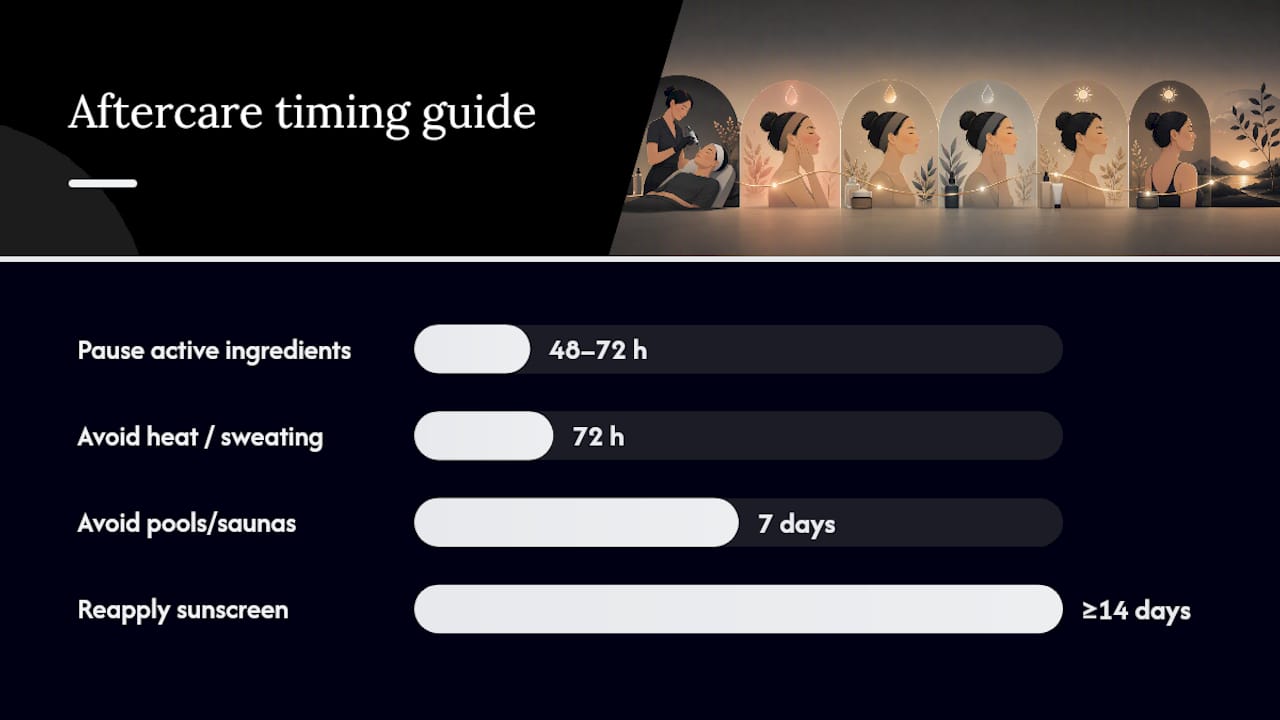
- Reapply a broad-spectrum sunscreen diligently for at least two weeks. Freshly treated skin burns and pigments more easily than usual.
- Keep hydration simple and consistent rather than layering multiple new products at once.
Avoid this:
- Retinoids, AHAs, BHAs, vitamin C serums, and physical exfoliants for at least 48 to 72 hours, longer still if you had a deeper or combination treatment. If you already use retinoids as part of your regular routine, pause them until your clinician gives the green light to resume.
- Sweating, saunas, swimming pools, and hot baths for 72 hours at minimum. NHS guidance goes further and recommends avoiding pools and saunas for a full week after treatment.
- Makeup, dirty phone screens against the face, and unwashed pillowcases in the first couple of days. Wash your hands before any contact with the treated area.
Dermatological guidance on this point is consistent: aftercare should focus on protecting and hydrating the skin rather than pushing early active ingredients, since chasing faster results with strong actives usually just increases irritation and pigmentation risk.
Pro Tip: If the sandpaper-like crusting shows up around day 3 or 4, resist the urge to pick or scrub it off. That fragile new surface is protecting freshly forming collagen underneath, and scraping it away increases the risk of dark marks, particularly on deeper skin tones. For readers who want the clinic’s own step-by-step version of this routine, Theaestheticsroom sets it out in full in its before and after care guide.
When will you see actual microneedling results, and how many sessions does it take?
The gap between how your skin looks a week after treatment and how it looks three months later is often the biggest surprise for first-time clients. Surface healing happens fast. Structural improvement does not.
Neocollagenesis, the process of laying down fresh collagen, continues for three to six months after each session, which is why one treatment rarely tells the full story on its own. Most treatment plans call for 4 to 6 sessions, spaced roughly four to eight weeks apart, depending on what you are treating, whether that is acne scarring, general texture, or fine lines. Deeper needle penetration and more intensive devices tend to produce more dramatic change per session, but they also extend visible downtime, so the trade-off between speed of results and comfortable recovery time is worth discussing openly at your consultation. Collagen itself is a slow-building protein, a point echoed in broader research on peptides and collagen production, which underlines why patience during the months between sessions matters as much as the sessions themselves.
Once you have completed an initial course, most clinics recommend a maintenance session every few months to sustain results, timed around how your skin is holding up rather than a fixed calendar date.
What side effects are normal, and which ones need medical attention?
Mild erythema, some oedema, and light flaking for a few days are expected and not cause for concern. What is not normal: redness that spreads well beyond the treated area, yellow or green discharge, fever, or bleeding that continues past 24 hours. Serious complications from microneedling are uncommon but do include infection, prolonged bleeding, and blistering, and any of those warrant contacting your clinic rather than waiting it out.
People with active acne, those on anticoagulant medication, and clients with darker skin tones face a somewhat higher risk of complications or post-inflammatory hyperpigmentation, so extra vigilance in that first week is sensible. If something feels wrong, call the clinic first. Avoid home remedies or over-the-counter creams you have not cleared with a professional, since some can make irritation or infection worse rather than better.
Who should delay or avoid microneedling treatment?
A responsible clinician will postpone treatment for anyone with an active skin infection, open wounds, or poorly controlled inflammatory conditions like active eczema or psoriasis flare-ups on the area being treated.
Recent use of isotretinoin is another reason for delay. Your clinician will advise on an appropriate waiting period based on your specific history. The same caution applies to recent sunburn or recent laser and other ablative procedures, since stacking two skin-disrupting treatments close together raises the risk of complications without adding much benefit. This is exactly why a proper consultation, covering your medications and full medical history, comes before anyone reaches for a needling device. Theaestheticsroom’s pre-treatment checklist walks through the questions worth raising before you book.
Why does clinician choice matter for a safe recovery?
Downtime and results both depend heavily on who is holding the device, not just which device it is. Theaestheticsroom operates with CQC accreditation and membership of the ACE Group, a patient safety body, and clinicians there work from clear, documented aftercare plans rather than generic handouts.
Before booking anywhere, it is worth asking a few direct questions: What needle depth and device will be used? What downtime should you realistically expect for your skin type? What does the written aftercare plan actually cover? Clinics often offer both virtual and in-person consultations, so these questions can be worked through before you commit to a date, which matters if you are trying to time a treatment around work or an event.
Why the standard downtime advice misses the point
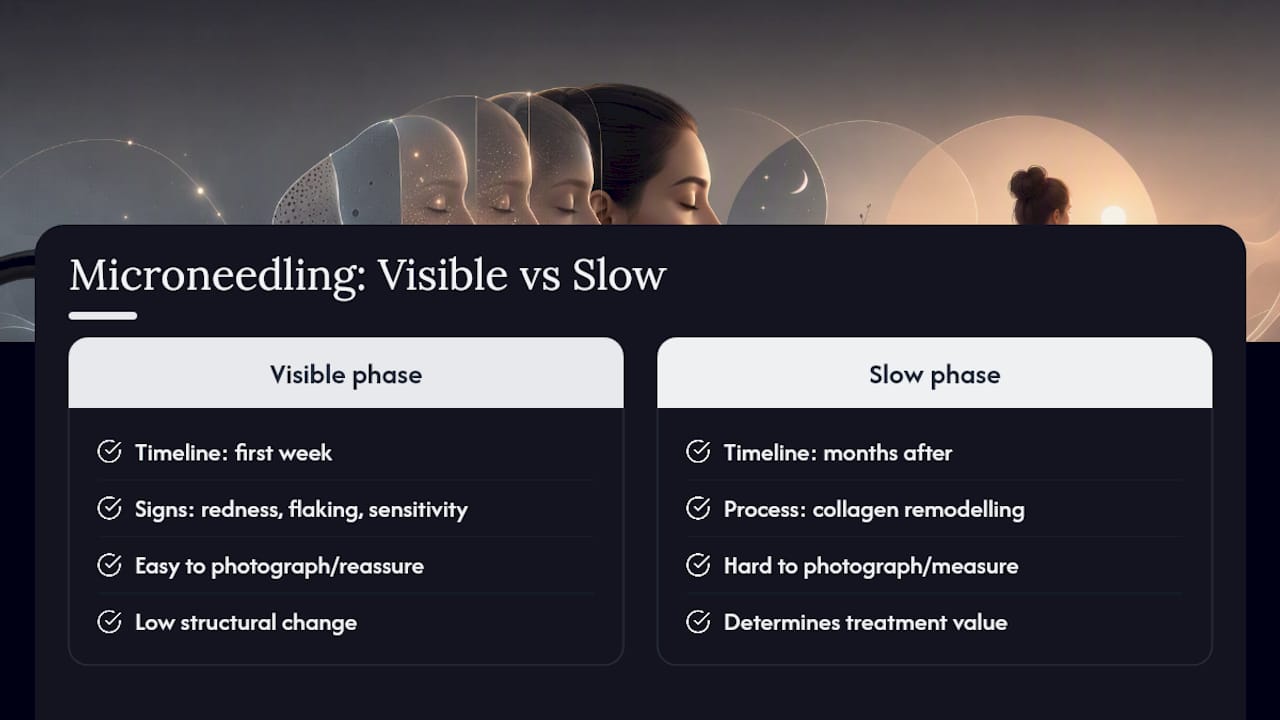
Most guidance on microneedling downtime treats the first week as the whole story, and it is not. The visible redness, flaking, and sensitivity that dominate online advice are the easy part to photograph and the easy part to reassure people about. The part that actually determines whether a course of treatment was worth doing, the collagen remodelling that runs for months after the skin has already stopped looking irritated, gets far less attention because it does not fit neatly into a “day by day” checklist.
That gap matters most for people with darker skin tones, where the risk of post-inflammatory hyperpigmentation is higher and often understated in generic aftercare leaflets written without that skin type in mind. It also matters for anyone tempted to layer in retinoids or exfoliating acids the moment their skin looks calm again, because “looking healed” and “being structurally ready for actives” are not the same thing.
If there is one priority worth taking from this, it is to plan around the slow phase, not just the visible one, and to treat a clinician’s aftercare plan as a schedule to follow rather than a suggestion to improvise on.
— Vishul
Ready to plan your treatment with proper aftercare support?
Knowing the general downtime pattern is useful, but your own recovery depends on your skin type, your medical history, and the depth of treatment that actually suits your goals, which is exactly what a proper consultation is for. Clinicians may adjust treatment intensity and timing to fit around real life, whether that means a lighter session before a big event or a deeper course booked with recovery time built in.

If you have a wedding, a work trip, or any date you cannot look flushed and flaking for, mention it when you book so your clinician can plan the treatment around it rather than around a generic timeline. Microneedling sits alongside a broader range of options at the clinic, including dermal fillers and skin rejuvenation treatments, so a consultation can also flag whether a different approach might suit your skin and your calendar better. Book a virtual or in-person consultation through the Theaestheticsroom homepage to get a personalised recovery plan before you commit to a date.
This article is general information, not a substitute for advice from a qualified doctor. Consult a qualified healthcare professional about your own circumstances before acting on anything here.
Sources
- StatPearls — Microneedling
- Microneedling post-treatment information — Worcestershire Acute / NHS
- Healthline — Microneedling aftercare
FAQ
How long should I rest after microneedling?
Most people need little formal rest, though avoiding exercise, hot water, and sweating for the first 72 hours is standard advice, with normal appearance often returning within 3 to 7 days.
Is microneedling three times a year enough?
It depends entirely on your goals; most courses involve 4 to 6 sessions spaced weeks apart initially, with occasional maintenance sessions afterwards rather than a fixed annual number.
How long until I look normal after microneedling?
Visible redness typically peaks in the first 24 to 48 hours and settles substantially within 3 to 7 days, though deeper treatments can take a little longer to calm fully.
Is one session of microneedling worth it?
A single session can produce mild improvement, but because collagen remodelling builds over months and most protocols call for multiple sessions, one treatment alone rarely delivers the full result most people are hoping for.
When can I wear makeup after microneedling?
Most guidance recommends avoiding makeup for at least 24 to 48 hours, with light, non-irritating products becoming appropriate again once the skin has settled, typically around day 3 to 5.