

Juggling demanding careers, social commitments, and personal wellbeing leaves little time for elaborate skincare rituals, yet your skin deserves consistent, effective care. Whether you’ve invested in professional aesthetic treatments or simply want to maintain healthy, glowing skin, establishing a streamlined at-home skincare workflow transforms your complexion without adding hours to your day. This guide breaks down the essential steps, products, and techniques that busy urban professionals need to achieve radiant skin through practical, sustainable daily habits that complement your lifestyle and enhance treatment results.
Table of Contents
- Key takeaways
- What you need: essential tools and products
- Step-by-step at-home skincare workflow
- Troubleshooting common mistakes and how to avoid them
- Expected results and maintaining your skincare workflow long term
- Enhance your skincare journey with professional treatments
- Frequently asked questions
Key Takeaways
| Point | Details |
|---|---|
| Cleansing and hydration | Establishing a regular cleansing and hydration routine supports skin health and prepares it for active ingredients. |
| Product layering order | Applying skincare in the recommended sequence improves absorption and enhances treatment results. |
| Daily SPF essential | Using SPF 30 or higher provides daytime protection and helps preserve anti ageing benefits. |
| Patch testing advised | Patch testing new products on your inner arm before full facial use helps prevent adverse reactions. |
| Massage techniques boost results | Incorporating facial massage during application can boost circulation and promote lymphatic drainage. |
What you need: essential tools and products
Building an effective at-home skincare workflow starts with selecting quality products tailored to your skin type and concerns. You don’t need dozens of products cluttering your bathroom shelf, just strategic essentials that work harmoniously together.
Your core product lineup should include a gentle cleanser suited to your skin type, whether that’s cream-based for dry skin, gel for oily, or micellar for sensitive. A hydrating toner or essence follows, preparing skin to absorb subsequent treatments. Serums targeting specific concerns like vitamin C for brightness, hyaluronic acid for hydration, or retinol for anti-ageing form the treatment layer. Day and night moisturisers complete the basics, with SPF 30 or higher essential for daytime protection. Using effective skincare products consistently supports skin health and enhances the longevity of aesthetic treatment results.
Product selection guidelines:
- Choose fragrance-free formulations to minimise irritation risk
- Select one active ingredient per product category to avoid overloading skin
- Invest in quality SPF as your primary anti-ageing defence
- Consider your personalised skincare guide needs based on skin analysis
- Patch test new products on your inner arm before full facial application
| Product category | Morning use | Evening use | Key function |
|---|---|---|---|
| Cleanser | Light gel or foam | Oil-based or balm | Removes impurities without stripping |
| Toner/Essence | Hydrating formula | Same or treatment toner | Balances pH and preps skin |
| Serum | Antioxidant (vitamin C) | Retinol or peptides | Targets specific concerns |
| Moisturiser | Lightweight with SPF | Richer, nourishing | Seals in hydration |
| SPF | Broad spectrum 30+ | Not needed | Prevents UV damage |
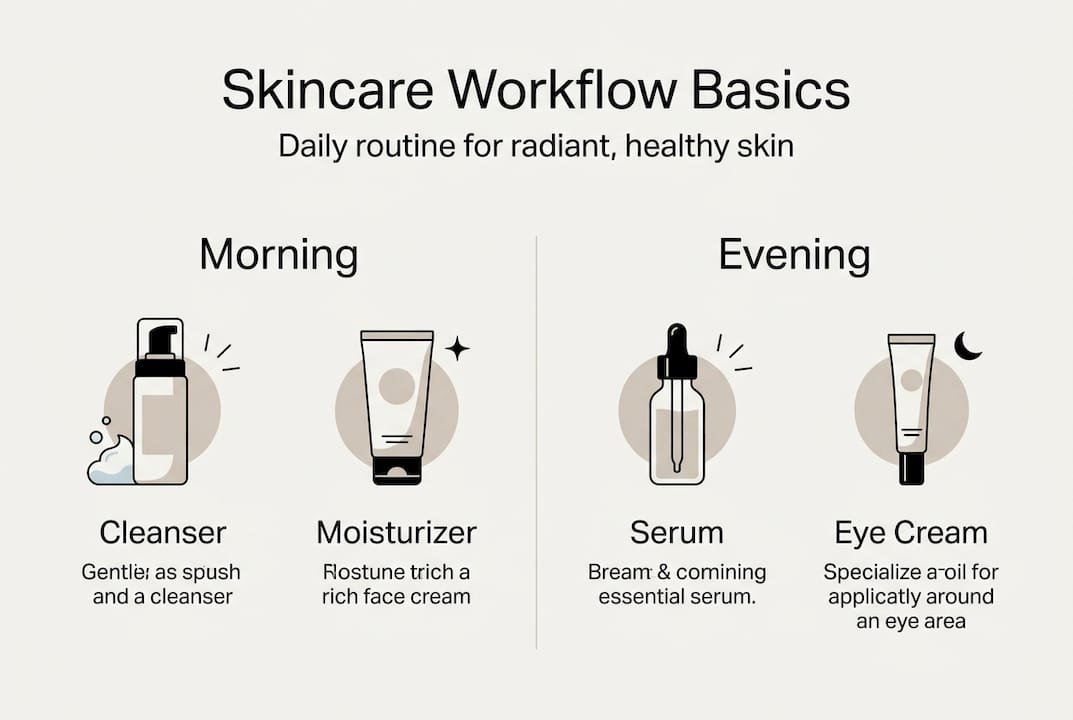
Optional tools can elevate your routine without complication. A jade roller or gua sha tool promotes lymphatic drainage and product absorption when used with gentle pressure. Facial cleansing brushes offer deeper cleansing for congested skin but shouldn’t be used daily. Silk pillowcases reduce friction and help maintain skin hydration overnight.
Pro Tip: Avoid harsh ingredients like alcohol denat, synthetic fragrances, and excessive essential oils that compromise your skin barrier. Your routine should strengthen, not stress, your complexion.
Step-by-step at-home skincare workflow
Executing your skincare routine in the correct sequence ensures each product performs optimally. Think of it as a carefully choreographed process where timing and order matter as much as the products themselves.
Morning routine (5-7 minutes):
- Splash face with lukewarm water or use a gentle cleanser if needed
- Apply hydrating toner with palms, pressing gently into skin
- Smooth vitamin C serum across face and neck whilst still damp
- Wait 60 seconds for serum absorption
- Apply lightweight moisturiser using upward strokes
- Finish with broad-spectrum SPF, allowing it to set before makeup
Evening routine (8-10 minutes):
- Remove makeup with micellar water or cleansing balm
- Follow with water-based cleanser for thorough cleansing
- Apply treatment toner or essence
- Use targeted serums (retinol, peptides, or hydration boosters)
- Allow 2-3 minutes between active ingredients
- Seal everything with nourishing night moisturiser
- Add eye cream using gentle tapping motions
Following a structured skincare routine enhances product absorption and maximises the benefits each ingredient delivers to your skin.

Incorporating facial massage guide techniques during application boosts circulation and promotes lymphatic drainage. Use your fingertips or a tool to sweep upward from your jawline to temples, from nose to ears, and from centre forehead outward. These movements take just 30 seconds but significantly improve product penetration and reduce puffiness.
Timing between product layers matters more than you might think. Water-based products like toners and serums absorb quickly, needing only 30-60 seconds. Oil-based products and treatments with active ingredients benefit from 2-3 minutes of absorption time. Rushing through your routine reduces efficacy by diluting products before they penetrate.
Pro Tip: Keep your skin health checklist handy and avoid layering more than three treatment products at once. Your skin can only absorb so much, and overloading creates congestion rather than benefits.
Troubleshooting common mistakes and how to avoid them
Even with the best intentions, skincare workflows can go wrong. Recognising these pitfalls helps you maintain healthy skin and avoid setbacks that undermine your efforts.
Skipping or inconsistently applying SPF remains the most damaging mistake. UV exposure causes 80% of visible facial ageing, yet many skip protection on cloudy days or during winter months. Your SPF should be applied every single morning, regardless of weather or indoor plans. Reapply every two hours if you’re outside for extended periods.
Using too many active ingredients simultaneously creates irritation rather than results. Combining retinol, vitamin C, AHAs, and BHAs in one routine overwhelms skin, compromising the barrier and causing sensitivity. Common skincare mistakes can reduce effectiveness and increase irritation risk, particularly when introducing multiple new products at once.
Frequent workflow errors to avoid:
- Neglecting hydration in favour of active treatments leads to dehydrated, sensitised skin
- Failing to adapt your routine to seasonal changes leaves skin unprotected against environmental stressors
- Over-cleansing strips natural oils, triggering excess sebum production
- Under-cleansing allows makeup and pollution to clog pores overnight
- Applying products to completely dry skin reduces absorption capacity
- Using hot water during cleansing dilates capillaries and causes inflammation
Many professionals make the mistake of maintaining identical morning and evening routines. Your skin has different needs at different times. Mornings require protection and preparation for environmental exposure, whilst evenings focus on repair and treatment. Adjust your product selection accordingly rather than using the same lineup twice daily.
“Your skincare routine should evolve with your skin’s changing needs. What works in summer may not suit winter conditions, and your skin at 30 differs from skin at 40. Regular assessment and adjustment keep your workflow effective.”
Incorporating reduce wrinkles tips into your routine requires strategic timing. Introduce one new active ingredient every four weeks, allowing your skin to adjust before adding another. This methodical approach prevents overwhelm and helps you identify which products deliver genuine results versus those causing problems.
Expected results and maintaining your skincare workflow long term
Realistic expectations keep you motivated whilst preventing disappointment. Your at-home workflow won’t deliver overnight transformations, but consistent application produces visible improvements that compound over time.
Within four to six weeks of following a structured routine, most people notice enhanced hydration, improved texture, and increased radiance. Fine lines appear softened, pores look refined, and skin tone becomes more even. These initial changes encourage continued adherence and signal that your product selection suits your skin’s needs.
Consistent skincare contributes to visible improvements and prolongs the effects of professional aesthetic treatments, making your investment in procedures like Botox or dermal fillers last longer and look more natural.
| Timeline | Expected changes | Maintenance actions |
|---|---|---|
| Weeks 1-2 | Improved hydration, reduced tightness | Monitor for any irritation, adjust if needed |
| Weeks 3-6 | Enhanced radiance, smoother texture | Continue routine consistently |
| Months 2-3 | Reduced fine lines, more even tone | Photograph progress for comparison |
| Months 4-6 | Sustained improvements, healthier barrier | Schedule professional review |
| 6+ months | Cumulative anti-ageing benefits | Adjust for seasonal or age-related changes |
Long-term maintenance requires periodic assessment and adjustment. Your skin responds to hormonal fluctuations, stress levels, seasonal changes, and ageing. What works brilliantly in your thirties may need modification in your forties. Review your routine every three to six months, evaluating whether products still deliver results or if concerns have shifted.
Sustainability strategies for lasting success:
- Set phone reminders for morning and evening routines until they become automatic
- Keep travel-sized versions of essential products for consistent care away from home
- Photograph your skin monthly in consistent lighting to track subtle improvements
- Journal any reactions or changes to identify patterns and triggers
- Schedule annual professional skin assessments to catch concerns early
Combining your at-home workflow with professional skin treatment tips creates synergy between daily maintenance and clinical interventions. Professional treatments address concerns beyond what topical products can achieve, whilst your home routine maintains and extends those results between appointments.
Your skincare workflow should feel sustainable, not burdensome. If you’re dreading your routine or skipping steps regularly, simplify rather than abandon it entirely. Three products used consistently outperform ten products applied sporadically. Focus on the essentials that deliver results and enjoy the process of caring for your skin.
Enhance your skincare journey with professional treatments
Whilst a diligent at-home workflow forms the foundation of healthy skin, professional aesthetic treatments elevate your results beyond what topical products alone can achieve. Combining daily skincare habits with expert clinical procedures creates comprehensive skin health that addresses both surface concerns and deeper structural changes.

Professional Botox treatments smooth dynamic wrinkles that skincare cannot address, whilst dermal fillers restore volume loss that occurs naturally with ageing. These procedures work synergistically with your home routine, with each element supporting and enhancing the other. Your consistent at-home care prepares skin optimally for treatments and maintains results longer between appointments. Consulting with aesthetic specialists ensures your workflow complements professional interventions rather than conflicting with them. Explore our comprehensive skin rejuvenation guide to discover how clinical treatments and home care create transformative, lasting results for London professionals seeking radiant, healthy skin.
Frequently asked questions
Can I use the same skincare products after aesthetic treatments?
Generally yes, but you should avoid products containing retinol, acids, or other irritants for several days post-treatment as your practitioner advises. Your skin needs gentle, hydrating care immediately following procedures like Botox or dermal fillers. Consult your aesthetician for personalised recommendations based on your specific treatment and skin type. They’ll provide a timeline for safely reintroducing active ingredients without compromising results or causing irritation.
How long does it take to see results from an at-home skincare workflow?
Most people notice initial improvements in hydration and texture within four to six weeks of consistent daily care. Visible changes in fine lines, tone, and radiance typically emerge between two and three months. Long-term anti-ageing benefits develop over six months to a year with dedicated adherence to your routine. Patience proves essential, as skincare works through cumulative effects rather than instant transformations.
What are common mistakes to avoid in my skincare routine?
Skipping sunscreen remains the most damaging error, followed closely by over-exfoliating and mixing incompatible active ingredients simultaneously. Using too many products at once overwhelms skin rather than enhancing it. Not adapting your routine to seasonal changes or skin evolution leaves you with suboptimal results. Applying products to completely dry skin reduces absorption, whilst using water that’s too hot causes inflammation and barrier damage.
How often should I update my skincare routine?
Review your workflow every three to six months or whenever you experience major skin changes, hormonal shifts, or lifestyle adjustments. Seasonal transitions often require product modifications to address changing environmental conditions. Professional skin assessments annually help identify evolving concerns before they become significant problems. Your routine should grow with you, adapting to your skin’s changing needs rather than remaining static for years.