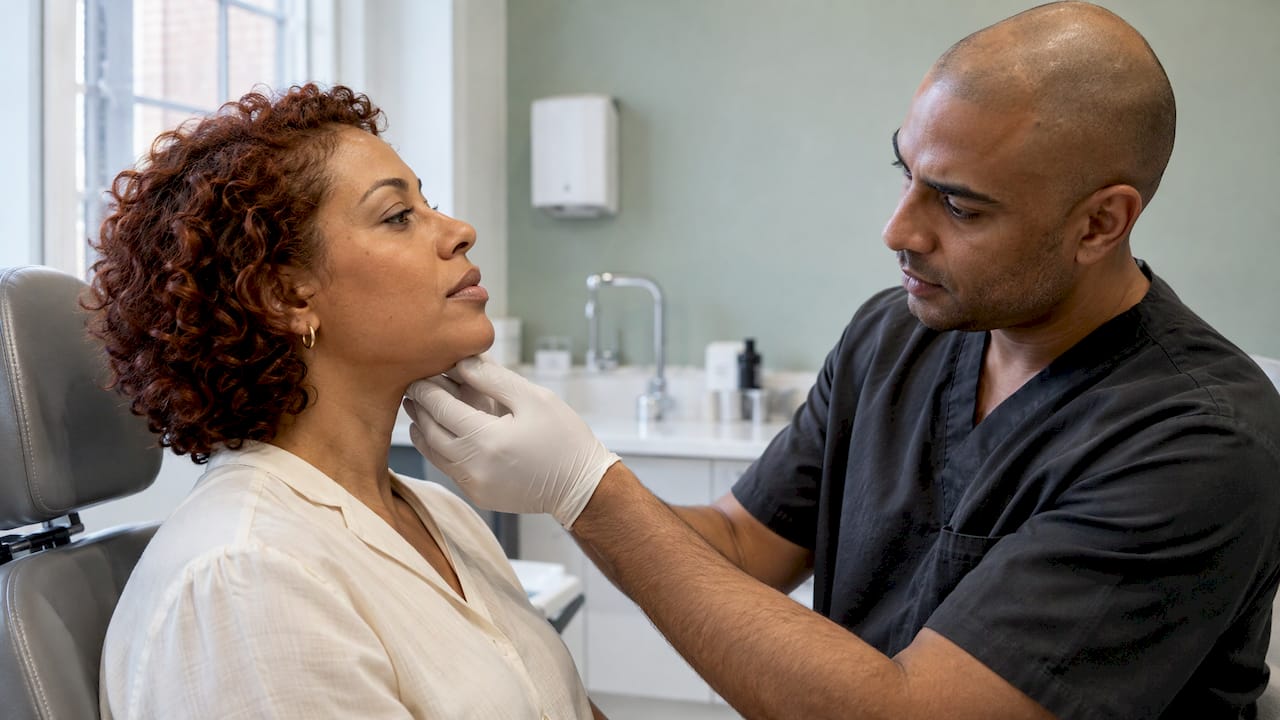
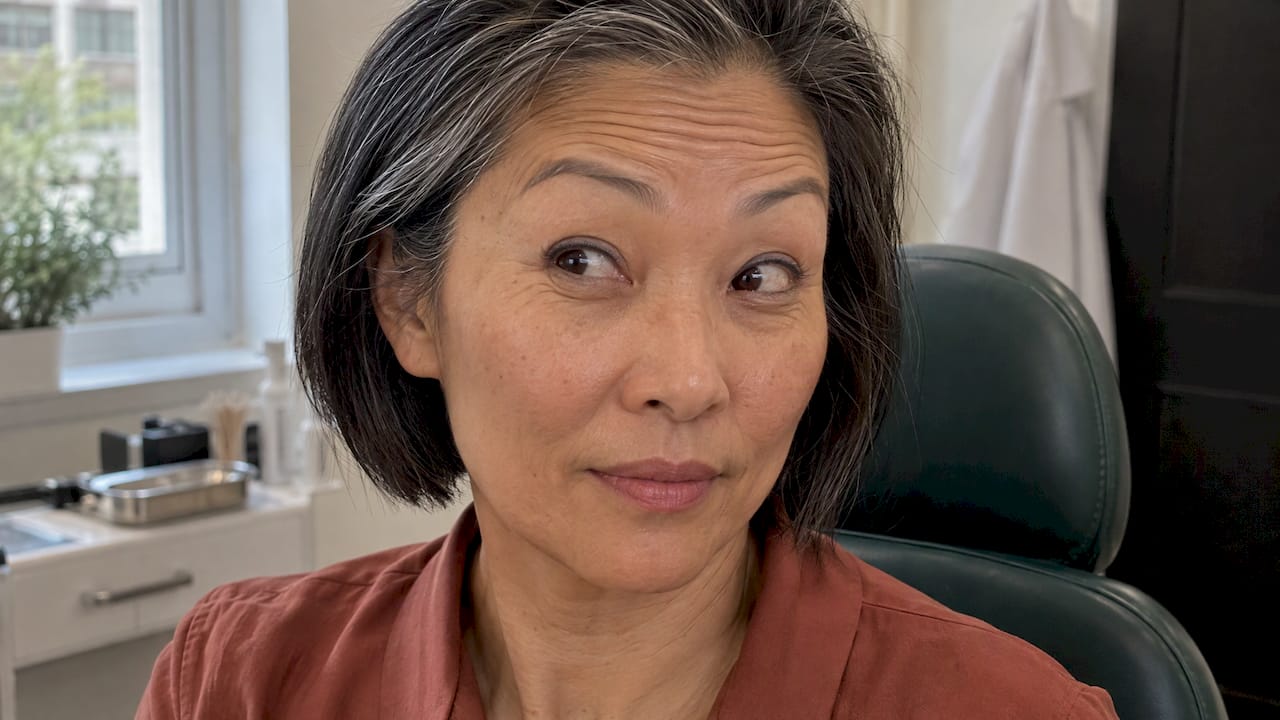

In the UK, cosmetic Botox is licensed for three areas of the upper face: the frown lines between the brows, horizontal forehead lines and crow’s feet around the eyes. Other areas, such as the jaw, chin and lips, are treated by experienced practitioners too, but those uses sit outside the product licence and call for extra care and a proper consultation. Below, we explain each area, what it can and cannot soften, how dose and placement are decided, and how to choose where to have treatment.
TL;DR
- The licensed cosmetic areas are the glabella (frown lines), forehead and crow’s feet, for adults under 65 whose lines are moderate to severe.
- Lower-face and neck treatments are off-licence in the UK, so they depend even more on a qualified, experienced prescriber.
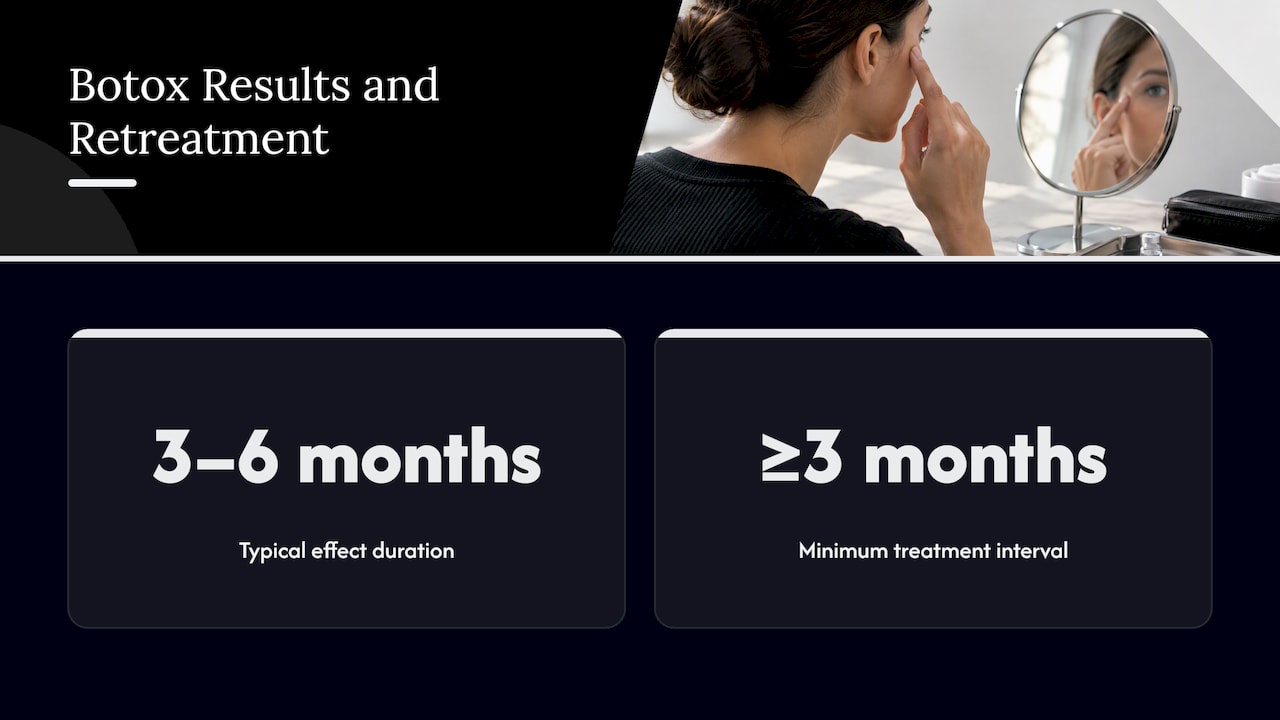
- Effects generally last three to six months, and treatments should be spaced at least three months apart.
- You need a face-to-face consultation first, and you should not be treated on the day of that consultation.
- Our anti-wrinkle treatments are priced at £200 to £358, depending on the areas treated.
Table of Contents
- The areas of the face Botox is licensed for
- Lower face and neck: what off-licence means
- A quick map of the main treatment areas
- How your practitioner decides which areas to treat
- How long results last and when to top up
- Safety and UK rules you should know
- Where to get Botox: choosing a clinic
- What our anti-wrinkle treatment costs
- Our perspective on treatment areas
- Book your consultation
- FAQ
- Sources
The areas of the face Botox is licensed for
Botulinum toxin works by relaxing the muscle that creates a line when you frown, raise your brows or squint. It does not fill anything. That is why the treatment areas follow muscles rather than wrinkles as such.
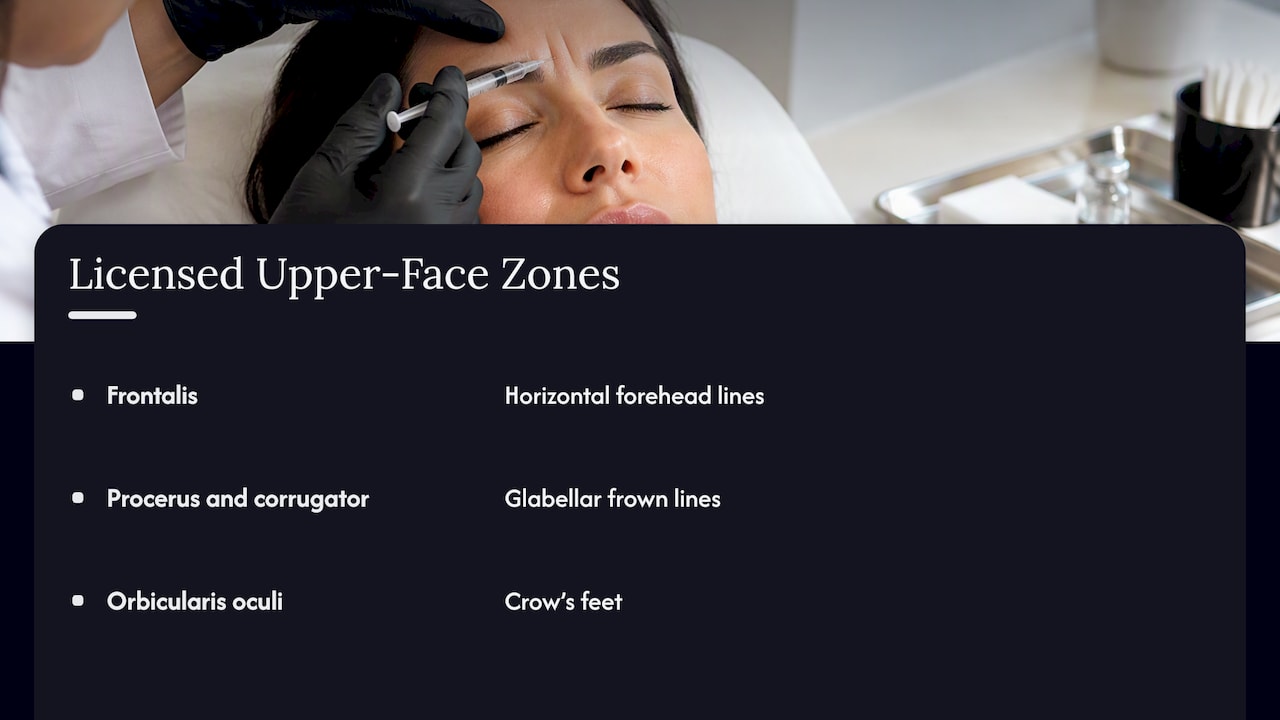
The UK product information for BOCOUTURE describes it as indicated for the temporary improvement of moderate-to-severe upper facial lines in adults below 65, when the severity has an important psychological impact on the patient. The same document sets out the three injection zones: the frontalis for horizontal forehead lines, the procerus and corrugator for glabellar frown lines, and the orbicularis oculi for crow’s feet. A professional guidance document on unlicensed medicines in cosmetic practice confirms these upper facial areas as the licensed ones, subject to age, dose and line-assessment parameters.
Other brands of botulinum toxin A each have their own product information, so always ask which product is being used.
Frown lines (the glabella)
The “11s” between the eyebrows are the area most people think of first. Repeated frowning pulls the corrugator and procerus muscles together and etches vertical lines above the nose. Softening them can take away the tired or stern look that many clients say does not match how they feel.
This area is often the starting point because it is a small, well-defined zone and the results are easy to assess at your review.
Forehead lines
Horizontal lines across the forehead come from the frontalis muscle lifting the brows. This area needs a careful hand. The frontalis is the muscle that holds the brows up, so treating it too heavily can leave the brows feeling low or the forehead flat. A practitioner will look at how your brows sit at rest and how they move before deciding where and how much to treat.
Frown lines and forehead lines are frequently treated together, because the muscles work against each other. Softening one without the other can unbalance the upper face.
Crow’s feet
The fine lines fanning out from the outer corners of the eyes are caused by the orbicularis oculi as you smile and squint. Treatment here is usually kept light so that your smile still looks natural and expressive. The aim is softer lines when you smile, not a frozen eye area.
Lower face and neck: what off-licence means
Many clinics also treat areas below the eyes and nose. Common requests include:
- the jaw muscle (masseter), for a slimmer lower face or for clenching
- the chin, for a dimpled or “orange peel” texture
- the lines around the lips
- the corners of the mouth
- the neck bands
- lines on the sides of the nose, often called bunny lines
The same guidance on unlicensed medicines in cosmetic practice states that prescribing for lower facial areas is off-licence, because the UK cosmetic indications name upper facial areas only. Off-licence does not mean improper. It means the prescriber takes on extra responsibility: explaining that the use is outside the licence, getting your informed consent and using their clinical judgement on dose and placement.
If you are offered a lower-face treatment, you should hear that explanation from your practitioner. If you do not, ask.
The jaw and masseter
The masseter is one of the strongest muscles in the face. A clinical commissioning document on Botox for masseteric hypertrophy and jaw joint disorders notes that the effect typically lasts three to six months and may need repeating, while long-term efficacy has not been proven and the best dose and duration have not been determined. We take that seriously. It is the reason we plan jaw treatment as a considered course and review the response with you rather than promising a fixed outcome. Our price list includes Jawline Slimming at £350 to £390.
Excessive sweating
Botulinum toxin is also used for underarm sweating, which is a different purpose from smoothing lines. If this is your concern, our guide to hyperhidrosis Botox costs in the UK explains how treatment is planned. Our hyperhidrosis treatment is priced at £300 to £450.
A quick map of the main treatment areas
| Area | Muscle involved | What it softens | UK licence status |
|---|---|---|---|
| Frown lines (glabella) | Procerus and corrugator | Vertical lines between the brows | Licensed |
| Forehead | Frontalis | Horizontal forehead lines | Licensed |
| Crow’s feet | Orbicularis oculi | Lines at the outer eye corners | Licensed |
| Jaw | Masseter | Jaw width, clenching | Off-licence |
| Chin, lips, mouth corners, neck | Various lower-face muscles | Dimpling, fine lines, downturned look, neck bands | Off-licence |
This table is a guide to the usual zones, not a treatment plan. Muscle strength, face shape and how you express yourself vary from person to person.
How your practitioner decides which areas to treat
Good treatment starts with assessment, not with a needle. At a consultation we look at:
- Your face at rest and in motion. We ask you to frown, raise your brows, smile and squint, because the line you see in the mirror is not always where the muscle is strongest.
- Which lines are expression lines. Lines that only appear when you move respond well to muscle relaxing. Lines that stay when your face is still may need a different approach, such as skin boosters or a peel.
- Balance. Treating one area changes how the neighbouring muscles behave, so the plan considers the whole upper face rather than one line in isolation.
- Your goals and medical history. What bothers you, what you want to keep, and whether treatment is suitable for you at all.
Dose follows from this. Botulinum toxin units are measured differently by each manufacturer. The MHRA’s drug safety update on botulinum toxin type A products states that units are not interchangeable between products, and that each product’s information sets out its authorised indications, injection sites and dosing. So a number of units quoted by one clinic cannot be compared directly with a number from another unless the product is the same. Be wary of anyone who sells purely on “price per unit” without naming the product.
If you are not sure where to start, our guide to London aesthetic consultations shows what to expect, and you can read about the difference between virtual and in-person consultations before choosing.
How long results last and when to top up
The effects of botulinum toxin generally last three to six months, and repeat treatment may be advised depending on your response, according to NHS patient information on botulinum toxin A injections in the head and neck. The product information for BOCOUTURE adds that treatments should be at least three months apart.
That gives you a practical rhythm. Some areas, such as the forehead, may wear off at a different pace from others, so we often review treatment after the effect has settled rather than booking on a rigid timetable. Our Botox maintenance schedule guide goes into the timing in more detail.
After treatment, a few simple habits help. Keep to the aftercare you are given, and read our advice on exercising after Botox so you know how long to wait. If you are curious about what is fact and what is folklore, our Botox myths guide covers the most common questions.
Safety and UK rules you should know
Botox is a prescription-only medicine, and the rules around it are clear.
- Age. In England, it is a criminal offence to give botulinum toxin injections for cosmetic purposes to anyone under 18, or to arrange such appointments, as set out in government guidance on botulinum toxin and fillers for under 18s.
- Consultation first. A face-to-face consultation with a suitably qualified prescriber is required, and you should not accept treatment on the day of your first consultation, according to local authority guidance on non-surgical aesthetic procedures.
- Ask about the product. The same guidance advises asking what product is being used and whether it is licensed. It names Botulax, reNTox and Innotox as not authorised medicines for use in the UK.
- Qualified practitioners. The Royal College of Surgeons recommends that only licensed doctors, registered dentists and registered nurses with appropriate training provide non-surgical cosmetic treatments such as Botox.
- Pregnancy and breastfeeding. Botulinum toxin is not recommended during either, because there is not enough evidence of safety, according to the NHS patient leaflet.
- Blood thinners. If you take blood-thinning medication, the same leaflet says treatment may still be possible, but your INR should be below 3 and tested within 48 hours of the procedure. Tell your practitioner about every medicine you take and ask your prescriber or GP if you are unsure.
- Rare but serious effects. The MHRA update lists iatrogenic botulism as a rare but serious risk. Seek immediate medical attention if you have difficulty swallowing, slurred speech or difficulty breathing after treatment.
The Royal College of Surgeons places Botox in its Level 2 category, a lower-risk intervention that is usually non-permanent or reversible and carried out as a day case. Its standards also cover consent and follow-up care, which is what you should expect from any clinic.
Where to get Botox: choosing a clinic
The areas matter less than who treats them. When you compare clinics, check these points:
- The clinic is registered with the Care Quality Commission and the person treating you is a qualified prescriber or works under one.
- You are given a real consultation, with a medical history, before any treatment is agreed.
- The product is named and is authorised for use in the UK.
- Off-licence areas are explained honestly, with the risks.
- There is a follow-up plan if you are unhappy with the result or have a concern.
We are a CQC-registered clinic and a member of the ACE Group, which is dedicated to patient safety. We see clients in Knightsbridge, Harley Street and Mayfair, with in-person and virtual consultations available. All treatments are performed by medically trained professionals who build a plan around your face, not a template.
What our anti-wrinkle treatment costs
Our published price for Anti Wrinkle treatment is £200 to £358. The amount depends on the areas treated, so a single zone sits towards the lower end and a fuller upper-face plan towards the higher end. Related options on our price list include Jawline Slimming at £350 to £390, Neck Rejuvenation at £380 and Medical Skincare Prescription at £50. You can see every current price on our price list.
A consultation is where you learn exactly which areas apply to you and what that means in pounds, before you commit to anything.
Our perspective on treatment areas
We often meet clients who arrive with a list of areas from a social media post. Our first job is to look at the person in front of us.
A frown line is rarely only a frown line. It is a muscle pattern, a habit, a face shape and a set of goals. We treat fewer areas, more precisely, because natural results come from restraint and from knowing the anatomy.
That is why we pair every plan with a proper consultation and why medical oversight matters to us. Our CQC registration and ACE Group membership are not badges for the website: they shape how we assess, consent and follow up. We explain clearly when a requested area is off-licence, and we plan it with extra care.
Our approach is holistic. Skin quality, sleep, stress and habits all affect how lines look, so we may suggest skin boosters, peels or skincare alongside muscle relaxing treatment to restore and refresh the whole picture, not just one line.
Vishul
Book your consultation
If you are considering Botox in London, we will help you decide which areas make sense for you and which do not. Our team will assess your face, explain the product and the dose, and give you a plan and a price before any treatment starts. You can choose a virtual or an in-person consultation at Knightsbridge, Harley Street or Mayfair.
See our current anti-wrinkle prices and book your appointment through our site at theaestheticsroom.co.uk.
FAQ
Which area of the face is best to start with?
Most people begin with the frown lines, the forehead or crow’s feet, because these are the areas the UK licence covers and the response is easy to review. The best starting point for you depends on your expressions and what bothers you most. Your practitioner will recommend it at consultation.
Can Botox be used on the lower face?
Yes, practitioners do treat areas such as the jaw, chin and lips, but these uses are off-licence in the UK. That means your prescriber should explain this to you and obtain your consent. Choose someone with proven experience and proper medical oversight.
How long does Botox last in each area?
The effects generally last three to six months, and repeat treatment may be advised depending on your response. Treatments should be spaced at least three months apart. How quickly each area softens or wears off can differ between people.
Is Botox available on the NHS for cosmetic reasons?
Usually not. NHS commissioning policy in one English area treats botulinum toxin for cosmetic reasons as a low priority, funded only on an exceptional basis. Most people pay privately for cosmetic treatment.
Sources
- BOCOUTURE product information (electronic medicines compendium)
- Prescribing unlicensed medicines in cosmetic practice
- Botox A for masseteric hypertrophy and TMJ disorders (NHS commissioning document)
- MHRA drug safety update: botulinum toxin type A products
- Botulinum toxin A injections in the head and neck region (NHS leaflet)
- Botulinum toxin and cosmetic fillers for under 18s (GOV.UK)
- Non-surgical aesthetic procedures: what you need to know
- Royal College of Surgeons: standards for cosmetic practice
- Royal College of Surgeons: Professional Standards for Cosmetic Surgery
- NHS funding policy for facial procedures