
Masseter Botox can slim a broad or square jaw when the width comes from enlarged chewing muscles, delivering measurable reduction over weeks to months, provided the treatment is planned and delivered by a medically trained clinician. Functional changes often begin within 4 to 14 days, with the fullest contouring visible around 6 to 12 weeks. Because botulinum toxin is a prescription-only medicine, results depend heavily on proper screening at a CQC-registered clinic.
TL;DR:
- A clinician should confirm jaw width comes from enlarged masseter muscles, since Botox does not treat width caused by bone, fat, or loose skin.
- Clenching changes often begin within 4 to 14 days, but visible slimming develops over 6 to 12 weeks; clinicians commonly review results around day 90.
- Research regimens use 48 or 72 units per side, but dose depends on muscle size and bite strength, so request an individualized assessment before treatment.
- Botox is prescription only, so choose a medically registered practitioner at a CQC registered clinic and confirm who prescribes and performs injections.
- Mild bruising, swelling, and chewing weakness usually settle within days; seek urgent medical attention for difficulty swallowing or breathing.
Table of Contents
- How masseter Botox works and what physically changes
- Who is a suitable candidate and what checks clinicians perform
- What happens during consultation and the treatment appointment
- Results: when slimming appears, how much change to expect, and retreatment timing
- Safe use: side effects and sensible aftercare
- Typical cost drivers and how to compare clinic offers
- A clinically led approach to jawline slimming
- Detailed pre-treatment preparation advice
- What to do if you notice complications or unexpected effects
- How to choose a qualified practitioner for masseter Botox
- A note on getting this right
- Book a masseter Botox consultation with us
- FAQ
- Sources
How masseter Botox works and what physically changes
Masseter Botox uses botulinum toxin type A, the same molecule used for frown lines, injected into the masseter muscles at the back of the jaw. It reduces the nerve signals that trigger muscle contraction, so the muscle works less hard every time you chew or clench. Over time, a muscle that contracts less also shrinks, in the same way an arm in a cast loses bulk from disuse.
This produces a two-stage response. In the first one to two weeks, clenching strength drops and jaw tension often eases noticeably. The slimming effect that changes face shape comes later, as the muscle gradually atrophies and loses bulk, a process reflected in dosing used in clinical research.
- Trial regimens commonly cited in the literature use 48-unit or 72-unit protocols per side, studied for their effect on lower facial volume.
- Botox treats the muscle only: it does not dissolve fat or reposition loose skin.
- Clinicians stage treatment and review response before considering any further dose.
A meta-analysis of randomised trials found that 48-unit and 72-unit regimens of botulinum toxin A were far more likely to achieve visible facial slimming than placebo, with measurable volume reduction recorded at 90 days. That gap between early muscle relaxation and later contour change is the main reason patience matters with this treatment.
Who is a suitable candidate and what checks clinicians perform
Masseter Botox works best when jaw width comes from muscle, not bone structure or fat. A clinician needs to confirm the cause before recommending treatment, which is why a proper assessment matters more than how the jaw looks in a mirror.
- Frequent jaw clenching, teeth grinding or a family history of a square jawline often point to masseter hypertrophy.
- A firm, bulky muscle that you can feel bunch under your fingers when you clench your teeth is a classic sign.
- Jaw width from bone structure, fat distribution or skin laxity responds differently and may need a different approach altogether.
Pregnancy, certain neuromuscular conditions and some medicines can affect suitability, so these should always be discussed openly at consultation. A responsible clinician documents your medical history, assesses your bite, takes baseline photographs and considers any dental factors, such as existing jaw pain or a history of teeth grinding, before agreeing a plan.
What happens during consultation and the treatment appointment
A proper consultation covers medical screening, informed consent and realistic expectation setting, usually alongside baseline photography so progress can be tracked against your own starting point rather than a generic ideal.
- Your clinician reviews your medical history and current medicines, and checks for any contraindications.
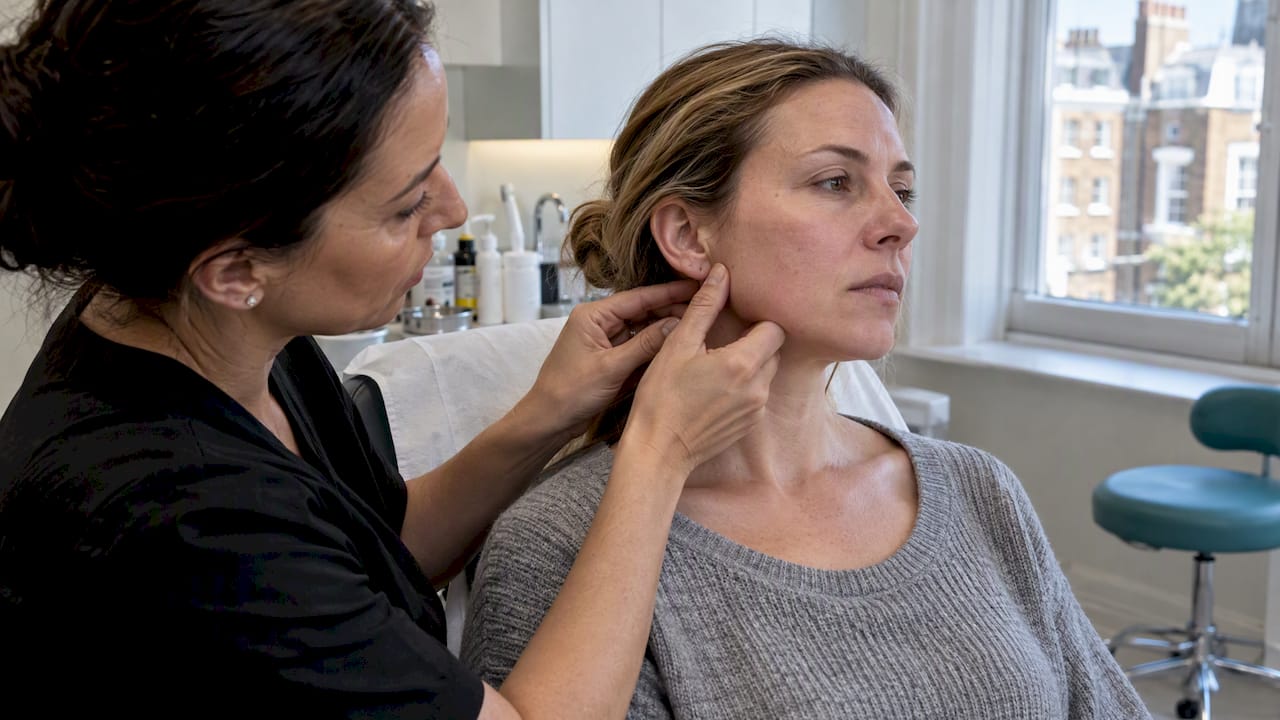
- The masseter muscle is marked while you clench your jaw, so injection points sit accurately over the muscle body.
- Small, measured injections are placed across several points per side, with the appointment itself typically taking 15 to 30 minutes.
- You’re given aftercare guidance before you leave, including what’s normal to expect over the following days.
Mild bruising, tenderness or slight swelling at injection sites are common and usually settle within days.
Pro Tip: Ask your clinician how they adjust dose for patients with strong bite force or prior grinding habits, since this affects both results and comfort.
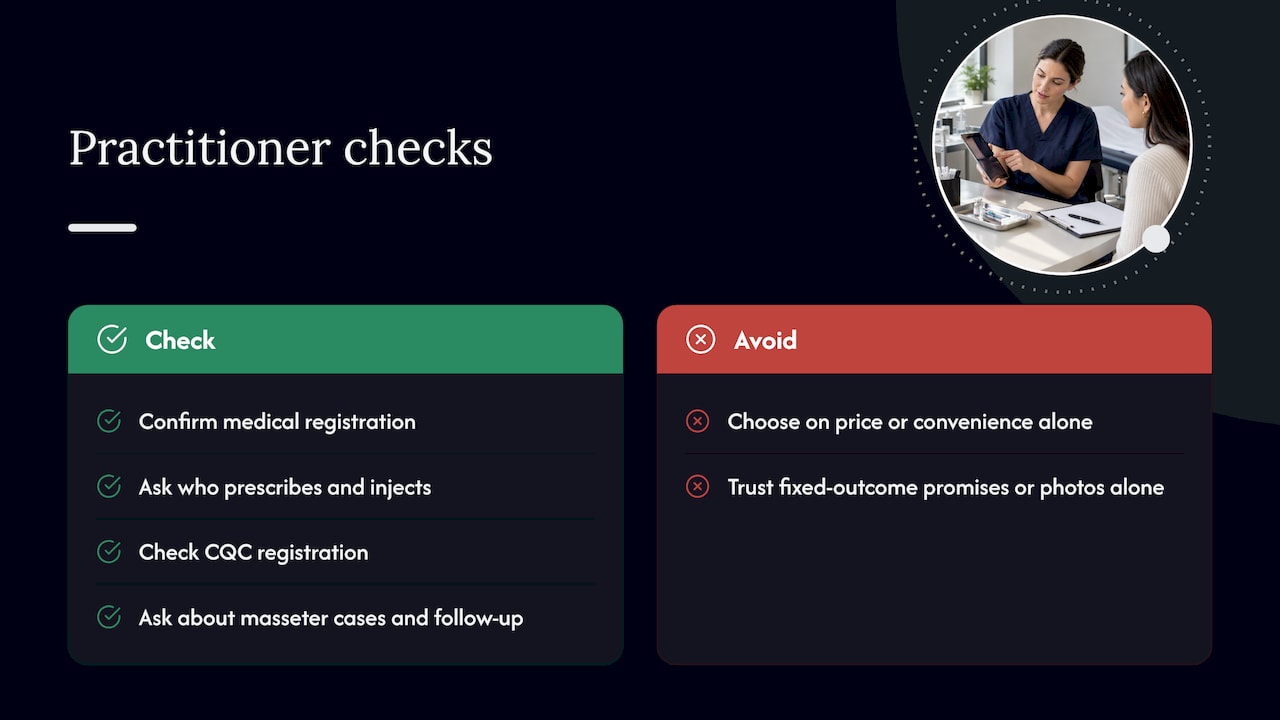
Good questions to ask include their prescribing qualification, how many masseter cases they treat regularly, and what their follow-up process looks like.
Results: when slimming appears, how much change to expect, and retreatment timing
Expectations should be set around two different timelines. Functional effects such as reduced clenching tend to appear within 4 to 14 days, while the visible slimming that changes your jawline shape usually builds over 6 to 12 weeks as the muscle gradually thins.
A randomised phase 2 study of 187 subjects found significant reductions in lower facial volume measured by 3D photography, with responder rates improving by day 90 compared with placebo, and retreatment considered safe from day 180.
- Individual anatomy, muscle size and baseline bite strength all affect how much slimming is achievable.
- Dose and injection technique influence both the degree of change and how symmetrical the result looks.
- Many people choose to retreat within 4 to 12 months as the effect gradually wears off.
Booking a follow-up appointment around the 90-day mark gives your clinician a clear point to assess your result against your baseline photographs and decide whether a top-up is worthwhile.
Safe use: side effects and sensible aftercare
Most people tolerate masseter Botox well, with effects that stay localised to the treated area. Mild bruising, swelling or soreness around injection sites is common and typically resolves within a few days.
- A temporary feeling of weaker chewing strength is possible, particularly with higher doses, and usually improves as the muscle adapts.
- Asymmetry or a change in smile shape is uncommon but more likely with uneven dosing, which is why technique and clinician experience matter.
- Effects beyond the treated muscle are rare when the medicine is injected correctly by a trained practitioner.
Keep the area clean, avoid vigorous massage of the jaw for the first day or two, and contact your clinic if you notice anything that feels markedly different from the mild effects described above. Botulinum toxin is a prescription-only medicine, and under the Botulinum Toxin and Cosmetic Fillers (Children) Act 2021, it’s a criminal offence in England to administer or arrange cosmetic botulinum toxin injections for anyone under 18.
Typical cost drivers and how to compare clinic offers
Price for masseter Botox varies with the number of units needed, the clinician’s experience and what’s included beyond the injection itself, such as a follow-up review or photographic monitoring.
- The number of units required depends on muscle size and bite strength, which only a proper assessment can judge.
- Clinician training and prescribing qualifications typically factor into price, reflecting the skill needed for accurate, symmetrical placement.
- Clinic overheads, aftercare support and included follow-up visits all affect what’s quoted.
Choosing the lowest headline price can work against you if it means a rushed assessment or no planned review. Ask for an itemised breakdown and confirm exactly what’s included in the quote before booking, including whether a follow-up consultation is part of the price.
A clinically led approach to jawline slimming
We deliver masseter Botox at The Aesthetics Room, a medical aesthetics clinic in Knightsbridge that’s CQC registered and a member of the ACE Group, a network focused on patient safety standards in aesthetics. Our medically-led team personalises dose and staging to your muscle size, bite strength and goals, aiming for a natural, proportionate result rather than a fixed formula.
You can read more about our approach to bespoke Botox treatment and see current pricing on our treatment price list before booking a consultation.
Detailed pre-treatment preparation advice
A little preparation makes your consultation and appointment smoother and helps your clinician plan accurately. In the days beforehand, avoid alcohol for at least 24 hours, since it can increase bruising at injection sites. Where possible, pause blood-thinning supplements such as high-dose fish oil, vitamin E or ginkgo biloba for a few days before treatment, after checking with your GP if you take them for a medical reason rather than general wellbeing.
Arrive with a clean face, free of heavy make-up, so your clinician can see and mark the masseter muscle accurately while you clench. It helps to bring a clear idea of what bothers you most about your jaw shape, since this guides where injection points are concentrated. If you have a history of jaw pain, teeth grinding or dental work, mention it during booking so your clinician can review relevant history in advance rather than on the day.
Avoid any other facial treatments, such as fillers or peels, in the immediate run-up to your appointment, as combining treatments close together can make it harder to judge the cause of any swelling or sensitivity. If you’re unwell, have an active skin infection near the jaw, or are pregnant or breastfeeding, reschedule your appointment rather than attending, since these are reasons treatment should be postponed. Being upfront about your full medical history and current medicines remains the single most useful thing you can do before your appointment.
What to do if you notice complications or unexpected effects
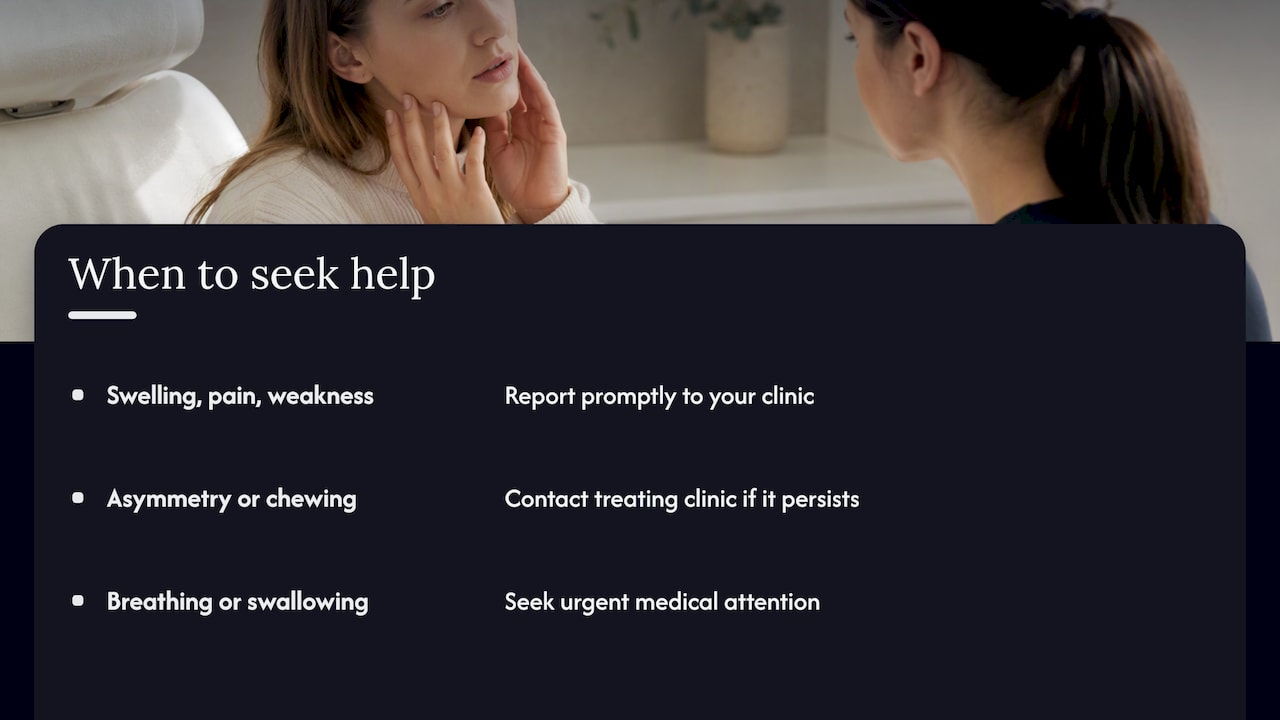
Most reactions after masseter Botox are mild and settle on their own within a few days, but it still helps to know what warrants a call to your clinic. Persistent swelling, worsening pain, or weakness that spreads beyond the jaw and into the smile or eye area is not typical and should be reported promptly rather than waited out.
If one side looks noticeably different from the other beyond the first week or two, or you develop difficulty chewing that doesn’t ease, contact the clinic that treated you rather than another provider, since they hold your treatment record and dosing details. A medically-led clinic will have a clear process for reviewing your case, which might include an in-person check or photographs sent in for assessment.
Rare but serious symptoms, such as difficulty swallowing or breathing, need urgent medical attention rather than a routine clinic callback. Reputable clinics give you direct contact details at the time of treatment precisely so you’re not left guessing who to call if something feels wrong. Keeping your appointment confirmation and any aftercare notes to hand makes it easier for the clinic to respond quickly if you do need to get in touch.
How to choose a qualified practitioner for masseter Botox
Because botulinum toxin is prescription-only, NHS guidance recommends choosing a medically registered clinician working within a clinic that follows documented safety protocols, rather than judging purely on price or convenience.
Ask directly about prescribing qualifications: who assesses you and writes the prescription, and whether that’s the same person performing the injections. Look for CQC registration, which signals a clinic has met inspection standards for safety and governance, and ask how many masseter cases the practitioner treats regularly, since muscle anatomy and bite strength vary more here than in many other injectable treatments.
A good practitioner takes time to assess your bite, discuss your goals and explain realistic timelines rather than promising a fixed outcome at a fixed price. You can read more about why CQC registration matters when comparing clinics, and it’s worth asking what follow-up is included and how asymmetry or under-correction would be handled if it occurred. A clear, confident answer to these questions tells you more about competence than any before-and-after photo alone.
A note on getting this right
Jaw shape is personal, and getting masseter Botox right means treating the muscle you actually have, not a generic template. We’ve seen that the best outcomes come from careful assessment, conservative staging and honest conversations about what’s realistic for your anatomy. If you’re considering it, book a consultation and ask to see real before-and-after results first.
— Vishul
Book a masseter Botox consultation with us
We offer medically-led masseter Botox at our Knightsbridge clinic, with both virtual and in-person consultations available so you can start with whichever suits you best. Every plan is built around your own muscle size, bite strength and goals, assessed properly before any treatment is agreed.
- Jawline Slimming treatment is priced at £350 to £390 per session.
- Consultations cover medical screening, bite assessment and baseline photography.
- Follow-up review is built into our approach to track your results over time.
Visit our Botox treatment page to see what’s involved, or check the full price list and book a consultation to find out if masseter Botox is right for your jaw.
This article is general information, not a substitute for advice from a qualified doctor. Consult a qualified healthcare professional about your own circumstances before acting on anything here.
FAQ
How much does jaw Botox cost?
Jawline Slimming treatment at our clinic is priced at £350 to £390 per session, depending on the number of units required. Your exact price is confirmed after an assessment of your muscle size and bite strength.
How long does it take for Botox to slim your jaw?
Functional changes, such as reduced clenching, often begin within 4 to 14 days. Visible slimming of the jawline typically builds gradually and reaches its fullest effect around 6 to 12 weeks after treatment.
What are the possible downsides of masseter Botox?
Common effects include mild bruising, swelling and temporary weakness when chewing, which usually settle within days. Less common issues, such as asymmetry or a change in smile shape, are more likely with uneven dosing, which is why choosing an experienced, medically registered practitioner matters.
Can Botox lift a sagging jawline?
Masseter Botox slims a jaw by reducing muscle bulk, it does not lift skin or address sagging caused by lost skin elasticity. Loose skin or jowling typically needs a different approach, such as skin tightening treatments or dermal fillers, which your clinician can discuss separately.
Is masseter Botox safe and legal to get?
Botulinum toxin is a prescription-only medicine in the UK and must be prescribed by a qualified clinician after a proper assessment, as outlined in NHS guidance. It is also a criminal offence in England to provide or arrange cosmetic botulinum toxin injections for anyone under 18.
Sources
- Efficacy of botulinum toxin for masseter muscle hypertrophy: A systematic review and meta-analysis – Journal of Plastic, Reconstructive & Aesthetic Surgery
- Reduction of masseter muscle prominence after treatment with onabotulinumtoxinA: Primary results from a randomized phase 2 study
- Gov
- Choosing who will do your cosmetic procedure – NHS