
A sharp jawline and good skincare can still be undermined by persistent redness, deep-set lines, uneven texture or a face that simply looks tired. The best facial treatments for men are not about changing how you look. They are about restoring definition, improving skin quality and helping you look as well as you feel – without an overdone result.
Men’s skin is often thicker, oilier and more prone to shaving-related irritation than women’s skin, but it is not immune to dehydration, pigmentation, sun damage or volume loss. The right treatment depends on what is actually driving the concern. A careful consultation should always come before a treatment menu.
Why a tailored approach matters for men
There is no single ‘male facial’ that suits every face. Some men want a fresher, healthier appearance before an event or a demanding period at work. Others are concerned by acne scarring, prominent pores, forehead lines or a softer-looking jawline. The treatment plan should account for skin health, facial anatomy, lifestyle, medical history and the amount of downtime you can realistically accommodate.
Natural-looking results are particularly important. Male facial features often benefit from preserving structure and character rather than pursuing excessive smoothness or volume. A medically led practitioner can assess proportion, muscle movement and skin condition, then recommend a measured plan that supports rather than masks your features.
Best facial treatments for men, matched to the concern
Medical-grade skin treatments for dullness and congestion
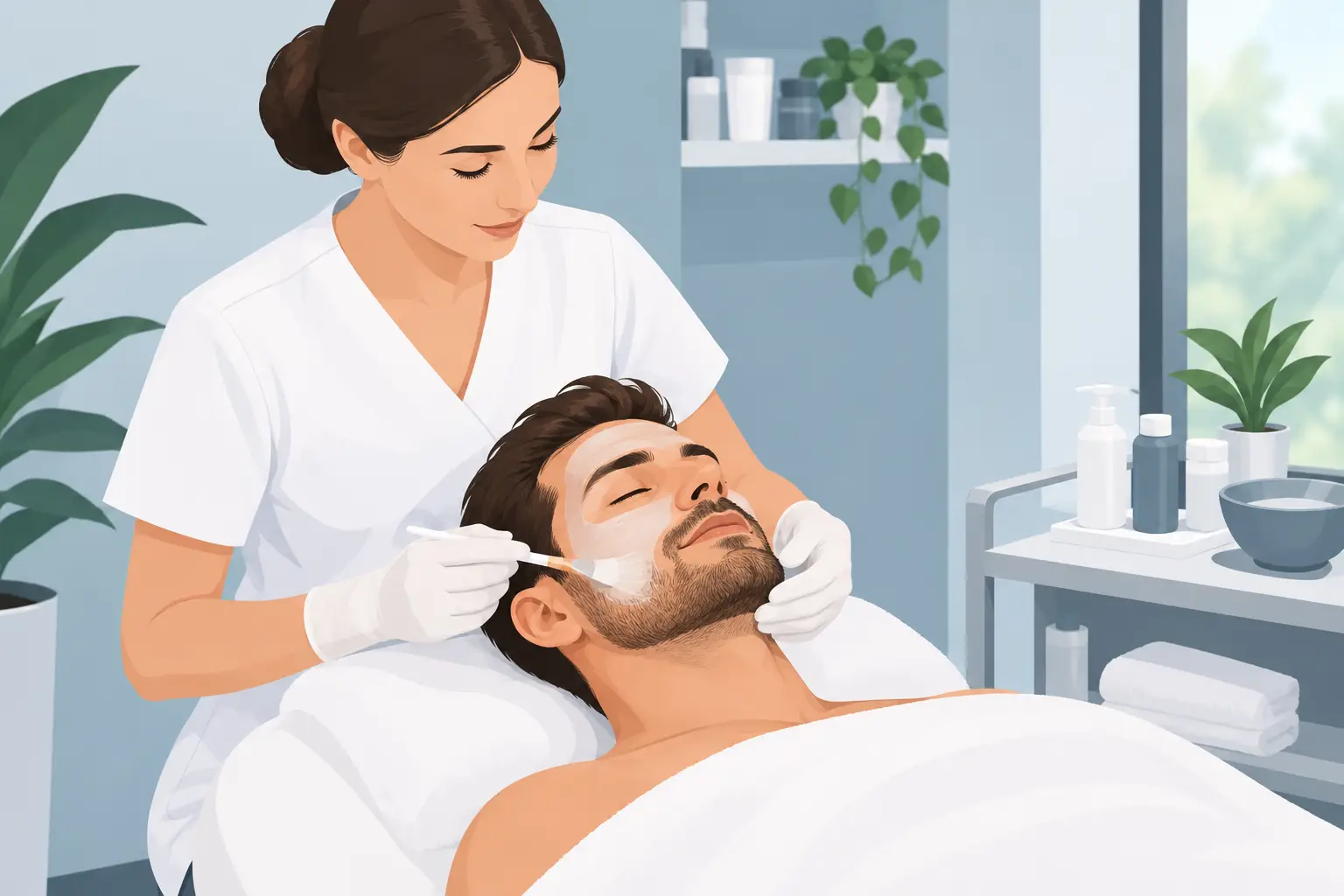
When the concern is lacklustre skin, congestion or visible pores, professional skin treatments can offer a useful starting point. These are more targeted than a standard salon facial, often combining cleansing, exfoliation, extractions where appropriate and clinically selected active ingredients to support clearer, more hydrated skin.
This approach can work well for men who are new to aesthetics or who want visible skin-quality improvements without injectables. It is also valuable before a wedding, important presentation or holiday, although it is best not to try a new treatment immediately before a major occasion. Skin can occasionally appear flushed or react unpredictably, particularly if you have sensitive skin or have recently shaved.
Regular professional treatments are most effective when paired with a straightforward home routine. Consistency with cleanser, moisturiser and daily SPF usually matters more than owning a crowded bathroom shelf.
Chemical peels for uneven tone and breakouts
A professionally selected chemical peel may help improve dullness, blocked pores, post-breakout marks and uneven pigmentation. Depending on the formulation and strength, a peel encourages controlled exfoliation and skin renewal, helping to refine the surface of the skin over a course of treatments.
Not every peel is suitable for every complexion or concern. Darker skin tones, active inflammation, eczema, certain medications and recent sun exposure all need careful consideration because the wrong treatment can increase the risk of irritation or pigment changes. A consultation is the place to establish whether a gentle superficial peel or another route is more appropriate.
Expectations should remain realistic. A peel can improve clarity and texture, but deeper acne scars and established laxity usually require a different or combined approach. Your practitioner should explain likely recovery time clearly, including any dryness, flaking or temporary redness.
Microneedling for texture and acne scarring
Microneedling uses fine, controlled needles to create microchannels in the skin. This process stimulates the skin’s natural repair response and can help with textural irregularities, enlarged pores and certain types of acne scarring over time.
It is rarely a one-off answer. The best results tend to come from a planned course, spaced to allow the skin to recover and remodel. There may be redness for a short period afterwards, so it is a better choice when you can avoid intense exercise, excessive heat and close social commitments for the recommended window.
Microneedling must be carried out with appropriate clinical hygiene, suitable device settings and honest screening. It may need to be postponed if you have active acne lesions, a skin infection or a tendency towards problematic scarring.
Skin boosters for dehydration and crepey texture
Skin boosters are injectable treatments designed to improve hydration, elasticity and overall skin quality rather than add obvious shape. They can be particularly appealing for men whose skin looks dehydrated or crepey around the cheeks, lower face or eye area, despite using good topical skincare.
The result should be subtle: skin that appears better supported, smoother and more rested rather than visibly ‘filled’. A series of sessions may be recommended, and results develop gradually. This makes skin boosters a considered option for someone seeking understated improvement, though they are not a substitute for dermal filler where significant volume loss is the primary issue.
Anti-wrinkle injections for expression lines
Forehead lines, frown lines and crow’s feet can make a composed face look permanently stressed, tired or stern. Anti-wrinkle injections temporarily relax selected facial muscles, softening lines caused by repeated expression.
For men, dosing and placement require precision. Stronger facial musculature can call for a different approach, while preserving enough movement is crucial for a natural, masculine result. The aim is not a frozen forehead. It is to soften the lines that do not reflect how you feel.
These treatments are not suitable for everyone and should only follow a proper medical assessment. Results are temporary, so a maintenance schedule can be discussed if you decide the effect suits you.
Dermal filler for facial definition and volume loss
Dermal filler can restore volume or enhance structural areas such as the cheeks, chin and jawline. For men, it is often used to address a hollow or fatigued appearance, improve profile balance or refine a jawline that has lost definition with age or weight change.
This is one of the treatments where restraint matters most. Adding filler without an anatomical plan can create heaviness or an unnatural look. A bespoke assessment considers the face as a whole, rather than treating a single feature in isolation. In some cases, improving skin quality or addressing muscle activity first produces a more balanced result than adding volume straight away.
Filler carries risks, including bruising, swelling and rare but serious vascular complications. Choose a clinic where practitioners are properly trained, complications protocols are in place and you feel able to ask direct questions about product choice, aftercare and suitability.
How to choose the right treatment plan
Start with the concern, not the trend. If you are bothered by rough texture after years of shaving and sun exposure, a skin-focused programme may be more appropriate than injectables. If the issue is a downturned, tired or stern expression, carefully placed anti-wrinkle treatment may offer more value. If facial contours have changed, structural treatment could be considered alongside skin optimisation.
At The Aesthetics Room, consultation-led care can bring these decisions into focus through its 7 pillar skin optimisation protocol. Rather than treating a symptom in isolation, the process looks at factors such as skin condition, lifestyle and long-term maintenance to create a plan that is realistic for you.
Before committing, ask what the treatment is intended to improve, how many sessions may be needed, what downtime to expect and what can be achieved within your budget. You should also disclose all medication, supplements, allergies and previous aesthetic treatments. This information is not a formality – it protects your wellbeing and helps your practitioner plan safely.
Preparing for and maintaining your results
A good treatment plan does not end when you leave the clinic. Follow any pre-treatment advice, particularly around shaving, alcohol, exercise, sun exposure and skincare actives. Aftercare varies between treatments, so generic online guidance should never override the instructions given for your procedure.
Longer-lasting results usually come from the basics: daily broad-spectrum SPF, a simple routine that you can maintain, sensible hydration, adequate sleep and avoiding smoking. These habits will not replace professional treatment, but they can protect the investment you make in your skin.
The most effective facial treatment is the one that fits your features, your skin and your life. A thoughtful consultation gives you room to ask questions, move at a pace that feels right and choose refinement over a result that looks like someone else.