


B12 injections correct medically confirmed vitamin B12 deficiency and can reverse related anaemia and, often, neurological symptoms. They are not a proven energy or mood booster for people who are not deficient. NHS guidance and NICE recommendations reserve injections for diagnosed deficiency, malabsorption and related nerve involvement, not general fatigue.
TL;DR:
- Tingling, balance problems, pale skin with fatigue, or memory changes warrant assessment; diagnosis combines symptoms, risk factors, and blood results rather than one definitive test.
- Daily 1 mg oral B12 often suits dietary deficiency, while injections are preferred for confirmed malabsorption, neurological symptoms, rapid correction, or concern about daily adherence.
- Loading injections may be given on alternate days or about three times weekly, then every two to three months; pernicious anemia usually requires lifelong maintenance.
- Anemia often resolves within about two months; nerve symptoms may improve over six weeks to three months, but delayed treatment can leave lasting problems.
- Nitrous oxide can disable B12 and cause severe nerve injury despite normal blood levels, so suggestive symptoms need urgent assessment rather than routine follow up.
Table of Contents
- What benefits do B12 injections actually have?
- Who needs B12 injections? Risk groups and warning signs
- How B12 injections work and typical dosing patterns
- Injections versus oral B12: when each makes sense
- What happens after treatment starts, and how progress is monitored
- Safety, side effects and the UK regulatory position
- How we assess suitability for B12 treatment at The Aesthetics Room
- The gap between what B12 injections promise and what they deliver
- Book a clinical assessment at The Aesthetics Room
- FAQ
- Sources
What benefits do B12 injections actually have?
The honest answer depends entirely on whether a blood test has confirmed a deficiency. Below, we separate what the evidence supports for people with confirmed low B12 from the claims made in general wellness marketing.
- Anaemia correction: Hydroxocobalamin injections reverse macrocytic anaemia caused by B12 deficiency, with NHS guidance noting that blood counts typically normalise within around two months of starting treatment.
- Neurological symptom improvement: Tingling, numbness and balance problems linked to deficiency often improve within six weeks to three months of treatment, though recovery can be incomplete if the deficiency went untreated for a long time.
- Energy and fatigue: Injections relieve fatigue caused by deficiency itself, but the improvement is tied to correcting the deficiency, not to the injection acting as a general stimulant.
- Cognition and mood: Evidence for a direct cognitive or mood benefit outside of confirmed deficiency is weak.
- Cosmetic and wellness claims: Claims about hair, skin or athletic performance are plausible only insofar as they relate to correcting an existing deficiency, and the supporting evidence for a standalone cosmetic effect is thin.
A 2015 randomised controlled trial found no benefit in people without significant deficiency. In a trial of 201 adults aged 75 and over, correcting moderate B12 deficiency, in the absence of anaemia or marked neurological symptoms, did not improve cognitive test scores or peripheral nerve function over 12 months. That single data point is the clearest evidence we have against treating B12 injections as a general-purpose energy or brain booster.
The pattern across the evidence is consistent: injections do a specific clinical job well. They correct a measurable deficiency and its downstream effects on blood and nerves. What they do not reliably do is lift energy, mood or performance in someone whose B12 levels are already adequate. Anyone drawn to injections purely on the promise of an energy lift is better served by testing first.
Who needs B12 injections? Risk groups and warning signs
Certain groups are far more likely to develop a genuine deficiency, and recognising the pattern matters more than chasing symptoms in isolation.
- Pernicious anaemia: An autoimmune condition that stops the body absorbing B12 from food, almost always requiring lifelong injections.
- Malabsorption conditions: Coeliac disease, Crohn’s disease and prior gastric or bowel surgery can all reduce B12 uptake regardless of diet.
- Severe deficiency with neurological signs: Numbness, pins and needles, balance problems or memory changes alongside confirmed low B12 usually warrant injections rather than tablets.
- Older adults: Natural declines in stomach acid reduce B12 absorption from food with age.
- Vegans without supplementation: B12 occurs almost exclusively in animal products, so a plant-based diet without a supplement carries real risk.
- Long-term metformin or proton pump inhibitor use: Both are linked to reduced B12 absorption over time.
- Nitrous oxide users: Recreational nitrous oxide inactivates B12 in the body and can cause severe nerve damage even when standard blood tests look normal.
If you notice tingling in the hands or feet, unsteady balance, unexplained tiredness alongside pale skin, or memory and concentration changes, that combination is worth raising with a clinician. NICE guidance is clear that there is no single definitive test for B12 deficiency, so diagnosis rests on weighing risk factors, symptoms and blood results together, and any decision to start treatment should be made jointly between patient and clinician rather than on symptoms alone.
How B12 injections work and typical dosing patterns
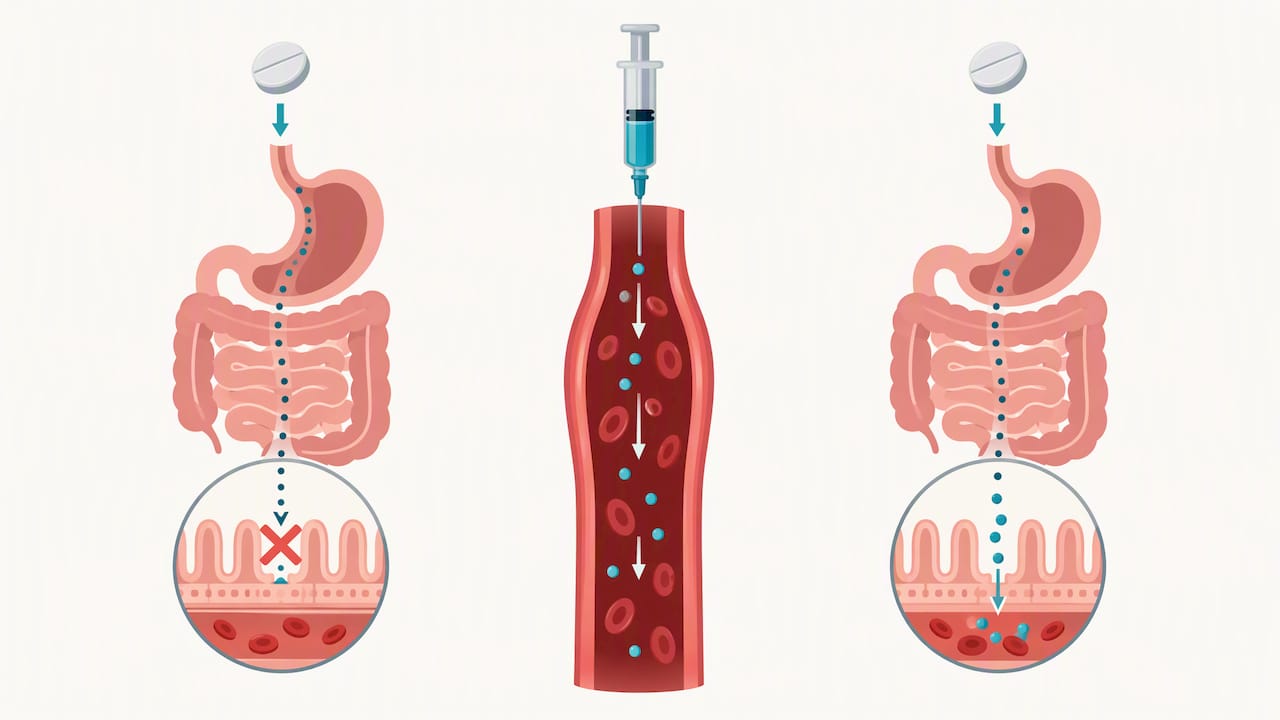
Hydroxocobalamin, given by intramuscular injection, bypasses the gut entirely, which matters for anyone whose deficiency stems from poor absorption rather than poor diet. It is also retained in the body for longer than cyanocobalamin, the form more commonly used in oral supplements, which is why UK practice generally favours hydroxocobalamin for replacement therapy.
Treatment usually runs in two phases:
- Loading phase: Injections are often given on alternate days, or around three times a week, until symptoms stop improving, a pattern reflected in UK guidance and regional prescribing protocols.
- Maintenance phase: Once levels stabilise, injections typically continue every two to three months, with licensed products varying between one and three months depending on the specific preparation.
Maintenance dosing commonly involves regular injections spaced every few months once deficiency is corrected, according to NHS treatment guidance, though the exact interval depends on the underlying cause and the licensed product used.
For irreversible causes such as autoimmune gastritis or pernicious anaemia, maintenance injections are usually needed for life. Where the cause is dietary rather than related to absorption, a clinician may trial oral B12 first. All hydroxocobalamin injectable products in the UK are prescription-only medicines, so they are only available through a qualified prescriber following assessment.
Injections versus oral B12: when each makes sense
The choice between tablets and injections comes down to cause, how quickly correction is needed, and whether absorption through the gut can be relied upon.
- Oral B12 (commonly 1mg daily) suits many dietary deficiencies, particularly in vegans, and some malabsorption cases under clinician supervision, as NHS guidance notes.
- Injections are preferred when malabsorption is confirmed, when neurological symptoms are present, when correction needs to happen quickly, or when there is genuine concern about someone remembering daily tablets.
- Cost and logistics favour tablets for straightforward dietary cases, since they avoid repeated clinic visits, while injections require a prescriber and periodic appointments but remove any reliance on daily adherence.
Pro Tip: If fatigue is your main symptom, ask for a blood test before starting any form of B12 supplementation. Treating a symptom without confirming the cause rarely gives a clear answer either way.
A practical example: someone with diagnosed pernicious anaemia and tingling in their feet will usually start on injections because absorption through the gut cannot be trusted. Someone with a vegan diet and no absorption problems, by contrast, is often well managed on daily tablets.
What happens after treatment starts, and how progress is monitored
Recovery follows a reasonably predictable pattern, which is why follow-up testing matters as much as the injections themselves.
- Blood counts: Macrocytic anaemia caused by B12 deficiency typically corrects within around two months of starting hydroxocobalamin, per NHS guidance.
- Neurological symptoms: Tingling, numbness or balance issues tend to improve over weeks to a few months, though recovery can be incomplete when treatment started late.
- Follow-up tests: Full blood count and B12 levels are usually rechecked at intervals agreed with the prescriber to confirm the regimen is working.
- Urgent review: Worsening numbness, difficulty walking or sudden confusion should prompt urgent reassessment rather than waiting for a scheduled check-up.
One group deserves particular mention: people with nitrous oxide-related functional deficiency can have normal blood B12 levels despite real nerve damage, so clinical guidance treats any suggestive symptoms in this group as requiring urgent assessment rather than routine monitoring.
Safety, side effects and the UK regulatory position
Hydroxocobalamin injections have a long safety record when given appropriately, and most people tolerate them with nothing more than mild, short-lived reactions.
- Common effects include soreness or redness at the injection site and, occasionally, mild headache or nausea in the hours afterwards.
- Rare reactions include allergic responses; people with a known cobalt sensitivity are assessed carefully before treatment, since hydroxocobalamin contains cobalt.
- Regulatory status: Hydroxocobalamin injections are prescription-only medicines in the UK, licensed specifically for diagnosed B12 deficiency and related anaemia, a status confirmed in MHRA product documentation. Non-medicinal “wellness” injectables marketed outside this licensing framework are not authorised UK medicines for this purpose.
- Before treatment, it is worth telling your clinician about any current supplements, since over-the-counter B12 or multivitamins can affect blood test results and complicate diagnosis.
Receiving injections from a medically qualified, regulated provider is the only way to ensure the product, dose and monitoring are appropriate for your specific cause of deficiency.
How we assess suitability for B12 treatment at The Aesthetics Room
We treat B12 injections as a medical decision, not a quick add-on. Our assessment starts with a history of symptoms and risk factors, followed by targeted testing where appropriate, so any recommendation reflects actual bloodwork rather than a generic protocol. We talk through the results together before agreeing on a plan, consistent with the shared decision-making approach NICE guidance describes.
We operate with a focus on patient safety standards in aesthetic and wellbeing care. Where injections are clinically appropriate, they are prescribed and administered by medically trained staff, with follow-up built into the plan. Readers who want to understand what a clinic consultation involves can read more about what a medical aesthetics consultation covers.
The gap between what B12 injections promise and what they deliver
The biggest misconception about B12 injections is that they work like a general tonic, something that lifts anyone’s energy regardless of their starting point. The evidence does not support that. Where B12 injections genuinely excel is in a narrower, more clinical lane: correcting a diagnosed deficiency and reversing its specific, measurable effects on blood and nerves.
Conventional wellness messaging tends to blur this line, presenting injections as an energy shortcut rather than a treatment for a specific medical finding. That framing does a disservice to people who might actually benefit, because it encourages skipping the one step that matters most: testing. A blood test costs little next to the disappointment of an injection that was never going to help because there was no deficiency to correct in the first place.
If there is one thing worth prioritising, it is this: treat the test result, not the symptom. Fatigue has dozens of causes, and B12 deficiency is only one of them. Confirm it before you commit to a course of injections.
— Vishul
Book a clinical assessment at The Aesthetics Room

If you suspect a B12 deficiency, or simply want clarity before considering treatment, we offer clinical assessment, testing advice and, where appropriate, prescription-led injections as part of a personalised care plan. Every plan is built around your own test results and symptoms, not a standard protocol, and delivered by medically trained staff within a CQC-registered clinic.
- We assess your history and risk factors before recommending any test or treatment.
- We explain your results clearly and agree a plan together.
- We provide prescription-led hydroxocobalamin injections only where clinically indicated, with follow-up built in.
At your first appointment, expect a thorough conversation about symptoms, diet and medical history before any decision is made. Visit our price list and booking page to see our full range of treatments and arrange a consultation.
This article is general information, not a substitute for advice from a qualified doctor. Consult a qualified healthcare professional about your own circumstances before acting on anything here.
FAQ
What are signs you need a B12 shot?
Common signs include persistent fatigue alongside pale skin, tingling or numbness in the hands or feet, balance problems, and unexplained memory or concentration changes. These symptoms warrant a blood test rather than starting injections directly, since NICE guidance recommends assessing risk factors and symptoms together rather than treating on symptoms alone.
Why are doctors cautious about routine B12 injections?
Clinicians reserve injections for confirmed deficiency because trial evidence has not shown a benefit from correcting borderline B12 levels in people without anaemia or significant neurological symptoms. A randomised controlled trial in older adults found no improvement in cognition or nerve function from treating moderate deficiency over 12 months.
How long does a B12 injection’s effect last?
For diagnosed deficiency, maintenance injections are typically given every two to three months once symptoms and blood counts have stabilised, according to NHS guidance. The exact interval depends on the underlying cause and the specific licensed product used.
What are the main benefits of B12 injections?
The clearest benefits are correcting B12 deficiency anaemia and improving related neurological symptoms such as tingling or balance problems, usually within weeks to a few months of starting treatment. Benefits for energy, mood or cognition beyond correcting an actual deficiency are not well supported by current trial evidence.
Sources
- Vitamin B12 or folate deficiency anaemia – Treatment (NHS)
- Vitamin B12 deficiency in over 16s: diagnosis and management (NICE NG239)
- Randomised controlled trial on B12 supplementation and neurological outcomes (PubMed)