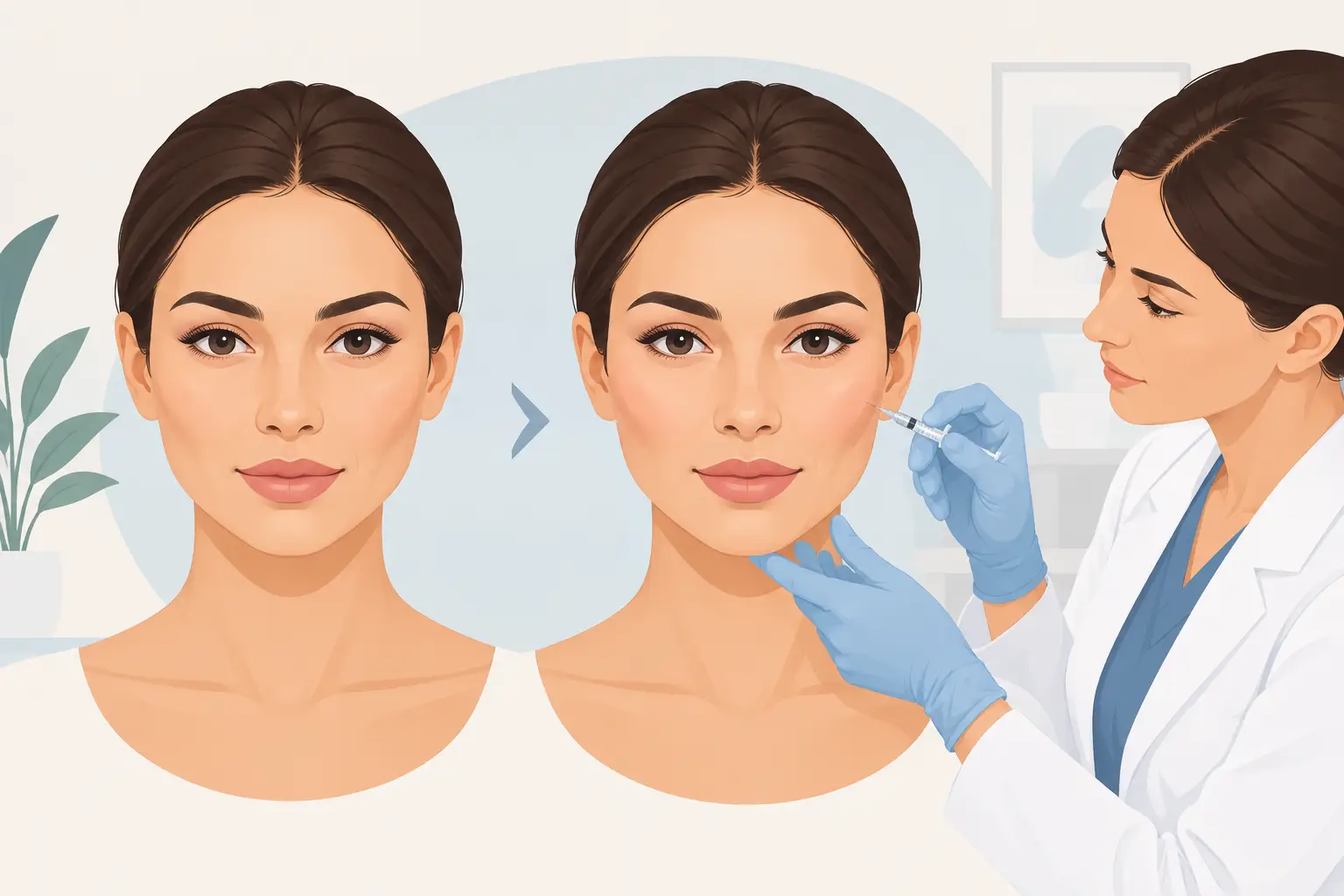
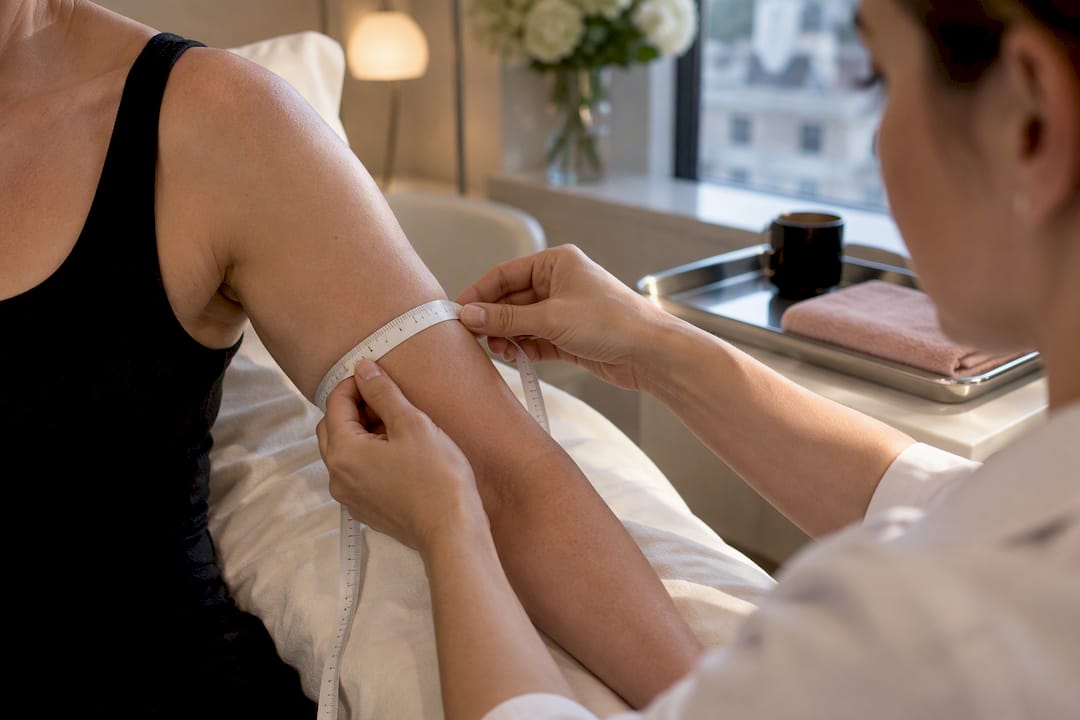

Fat dissolving injections can reduce small, stubborn pockets of upper arm fat, typically shrinking the area by measurable but modest amounts over several sessions. They are not a weight-loss treatment and will not tighten loose skin or slim a whole limb. Results depend on the dose used, the number of sessions, and, above all, on the treatment being carried out by a medically qualified practitioner in a properly equipped clinic.
TL;DR:
- Fat dissolving injections can modestly reduce small pockets of upper arm fat, typically by around 1.6 cm after a few sessions.
- The treatment’s effectiveness depends on accurate dosing, proper staging of multiple sessions, and a qualified practitioner in a regulated clinic.
- These injections work through adipocytolysis, disrupting fat cell membranes with deoxycholic acid, but results are limited by thin fat layers and close surface nerves.
- Candidates should have localized fat, stable weight, and good skin elasticity, while contraindications include pregnancy, infections, and certain medical conditions.
- Choosing a registered clinic with healthcare-qualified providers, batch verification, and proven protocols ensures safety and proper treatment quality.
Table of Contents
- How does arm fat dissolving actually work?
- What does the clinical evidence actually show?
- Who is a suitable candidate for arm fat dissolving?
- What happens during the treatment course?
- How do you know a clinic is safe and properly regulated?
- Is fat freezing or liposuction a better option?
- Why medical-led practice matters for arm treatments
- Book a consultation to check your suitability
- A safety-first take on a treatment sold on quick results
- Sources
- FAQ
How does arm fat dissolving actually work?
Fat dissolving injections work through a process called adipocytolysis. The active ingredient, most commonly a form of deoxycholic acid, disrupts the membrane of fat cells at the injection site. Once the cell membrane breaks down, the body clears the released lipid content through its normal metabolic pathways over the following weeks.
The upper arm presents specific challenges compared with areas like the chin or abdomen:
- The subcutaneous fat layer is thinner, leaving less margin for error with dosing.
- Nerves sit closer to the surface, so precise mapping of the treatment area matters more here than almost anywhere else on the body.
- Diluting the active solution, rather than using it at full strength, is a common practitioner approach for arms, balancing efficacy against pain and the larger surface area involved.
Staging treatment across several sessions with smaller volumes each time is standard practice for reducing complication risk in this anatomically sensitive zone.
What does the clinical evidence actually show?
Peer-reviewed data on arm fat dissolving is limited but consistent in direction. An older injection lipolysis study using phosphatidylcholine mixtures reported an average circumferential reduction of around 1.6 cm in the upper arms following a course of treatment.
A more recent case series testing diluted deoxycholic acid at 5 mg/mL and 2.5 mg/mL found significant reductions in subcutaneous fat thickness across three sessions spaced four weeks apart, with patients reporting less pain at the lower dilution.
A separate observational study of deoxycholic acid treatment across multiple body areas found most patients needed fewer than two sessions per area on average, though transient swelling, numbness, and tenderness were common after treatment.
Three things temper these figures:
- Sample sizes in most arm-specific studies remain small.
- Measurement methods vary between studies, from callipers to ultrasound, making direct comparison difficult.
- A reduction in subcutaneous thickness does not always translate into a dramatic drop in arm circumference, since skin and muscle contribute to the measurement too.
Who is a suitable candidate for arm fat dissolving?
Arm fat dissolving works best on a specific type of patient, and clinics should say so plainly rather than promise results to everyone who books a consultation.
- Good candidates have localised, small-to-moderate fat pockets, a stable weight, and skin with enough elasticity to adapt as fat volume reduces.
- Contraindications include pregnancy, breastfeeding, active infection at the injection site, certain bleeding or clotting disorders, and poorly controlled medical conditions.
- Warning signs of an unsafe provider include treatments offered in a home or informal setting, a practitioner unable to show product packaging or batch numbers, or anyone without a recognised healthcare registration.
The MHRA has warned about unlicensed products and informal provision leaving patients seriously unwell, which is exactly why batch verification belongs on every pre-treatment checklist, not just a nice-to-have.
What happens during the treatment course?
A proper consultation should feel more like a medical assessment than a sales conversation.
- Your practitioner takes a full medical history, examines the skin and fat distribution on your arms, and confirms informed consent before anything is injected.
- They should be willing to show you the product name and batch number they are using, not just tell you it is “the same as” a known brand.
Sessions themselves are usually short, with the practitioner injecting a diluted solution across the marked treatment area. Spacing of roughly four weeks between sessions reflects the interval used in the case series on diluted deoxycholic acid, allowing the body to clear one round of treated fat cells before the next. Most study protocols used two to three sessions in total.
Afterwards, expect some swelling, bruising, and localised numbness for several days. Visible change tends to build gradually over weeks to months, not overnight, and your clinic should schedule a follow-up assessment to measure progress and decide whether further sessions are worthwhile.
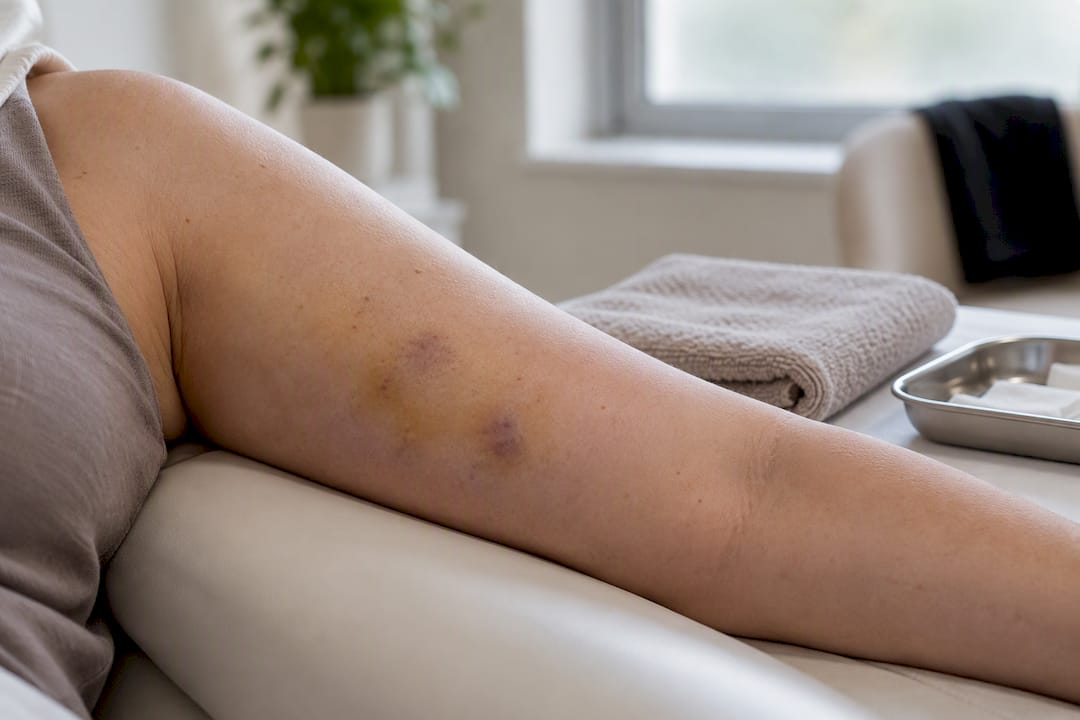
Pro Tip: Take a photo of your upper arms in the same lighting and position before your first session. Circumference measurements are useful, but a consistent photo often shows subtle changes your tape measure misses.
How do you know a clinic is safe and properly regulated?
England is moving towards a licensing regime that will require high-risk non-surgical procedures to be carried out by suitably qualified healthcare professionals working in registered providers. Until that regime is fully in force, the checks below remain the most reliable proxy for safety.
- Confirm the clinic is registered with the Care Quality Commission, which inspects standards of care rather than just aesthetic outcomes.
- Ask whether the injecting clinician holds an active healthcare registration, such as a nursing, medical, or dental qualification.
- Check that the premises hold resuscitation equipment on site and a documented aftercare protocol.
- Ask directly how the clinic manages complications. ACE Group guidance sets out specific protocols for managing oedema and other adverse events, and a competent practitioner should be able to describe their escalation process without hesitation.
The NHS advises verifying practitioner credentials and clinic standards before booking any cosmetic procedure, and arm fat dissolving is no exception to that rule.
Is fat freezing or liposuction a better option?
Fat dissolving injections sit alongside two other established routes for reducing arm fat, and the right choice depends on volume, skin condition, and how much downtime you can tolerate.
- Cryolipolysis (fat freezing) works by cooling fat cells until they die off gradually over following weeks, typically with less injection-site swelling but a longer wait to see the final result.
- Liposuction is a surgical procedure better suited to larger volumes of fat or where significant skin tightening is also needed, since it physically removes fat rather than relying on the body’s own clearance process.
- Decide based on how much fat you want reduced, how loose your skin already is, how much recovery time you can afford, and your budget for repeat non-surgical sessions versus a one-off surgical cost.
Read more on how fat dissolving compares with body sculpting if you are weighing these options against each other before booking a consultation.
Why medical-led practice matters for arm treatments
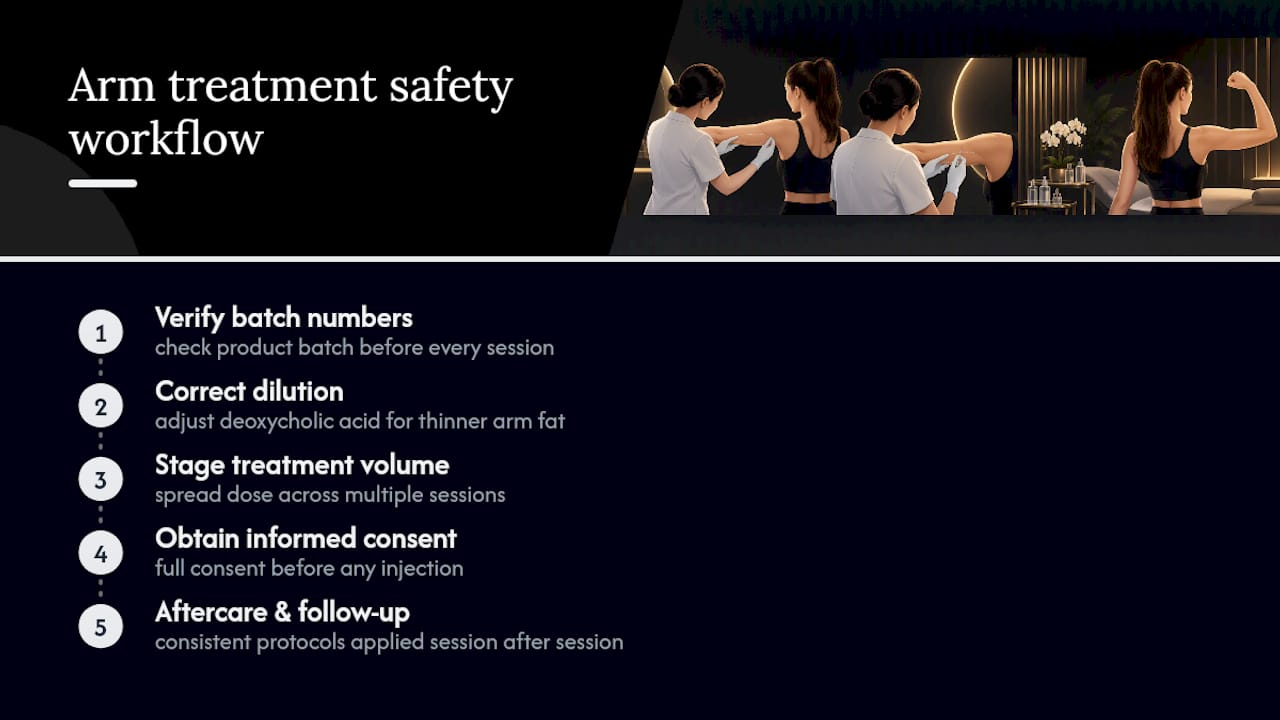
This clinic is registered with the Care Quality Commission and affiliated with the ACE Group, credentials that speak directly to the safety concerns raised throughout this article. In practice, that means checking product batch numbers before every session, diluting deoxycholic acid appropriately for the arm’s thinner fat layer, staging treatment volume across sessions rather than overloading one visit, and taking full informed consent before any injection. Evidence-led practice is not a marketing phrase here. It is batch checks, dilution ratios, and aftercare protocols applied consistently, session after session.
Book a consultation to check your suitability
There is no substitute for a proper in-person assessment when it comes to arm fat; a thorough consultation process should include full medical history, a skin and fat assessment, and a transparent conversation about realistic outcomes before any treatment plan is agreed. Consultations may be offered virtually or in-clinic, allowing flexibility to start the conversation where it suits best.

If you want to see what a treatment course actually involves, the fat dissolving portfolio page sets out what to expect, and the full price list covers current fees across every treatment, including Green Laser Fat Dissolving from £300. Book a consultation today to find out whether your arms are a good candidate and what a personalised plan would look like.
A safety-first take on a treatment sold on quick results
The gap between what arm fat dissolving promises in adverts and what the clinical literature actually supports is wider than most patients realise. A 1.6 cm reduction is real progress for someone with a stubborn pocket of fat, but it is nowhere near the dramatic transformation some marketing implies. Choosing a CQC-registered, ACE Group-affiliated clinic is not a box-ticking exercise. It is the difference between a controlled, measured treatment and an unregulated gamble with your arms.
— Vishul
This article is general information, not a substitute for advice from a qualified doctor. Consult a qualified healthcare professional about your own circumstances before acting on anything here.
Sources
- The effect of diluted deoxycholic acid on arm fat reduction (case series)
- Injection lipolysis study reporting circumferential reductions
- ACE Group guidance: management of oedema in non surgical aesthetic practice
FAQ
Can you actually get rid of arm fat with injections?
Fat dissolving injections can reduce small to moderate pockets of arm fat, with studies reporting circumferential reductions of around 1.6 cm after a course of treatment. They work best as a targeted solution for stubborn areas, not as a substitute for weight loss.
What is the best procedure to remove arm fat without surgery?
Deoxycholic acid injections, delivered at a diluted concentration and spaced roughly four weeks apart, are the most researched non-surgical injection option for arms. Cryolipolysis (fat freezing) is a non-injection alternative worth discussing at consultation if you prefer to avoid needles.
Are fat dissolving injections available on the NHS?
Fat dissolving injections are a cosmetic treatment and are not routinely available through the NHS, which focuses its resources on medically necessary care. The NHS does publish safety advice on choosing a practitioner for any cosmetic procedure you pursue privately.
How can I lose arm fat without surgery?
Non-surgical routes include injection lipolysis, cryolipolysis, and combining any clinical treatment with sustained diet and resistance training for the arms. A consultation at a CQC-registered clinic is the best way to work out which combination suits your specific fat distribution and goals.
How much does arm fat dissolving cost?
Pricing for fat dissolving treatments at Theaestheticsroom is listed on the clinic’s current price list, with Green Laser Fat Dissolving priced from £300. Costs vary depending on the number of sessions your consultation determines you need.