
Yes, dermal filler can safely create the appearance of higher, more defined cheekbones when a medically trained practitioner carries out the treatment. It delivers visible lift within minutes and the effect can last well over a year, but the same procedure carries rare, serious risks that make practitioner choice the single most important decision you’ll make. This guide walks through what results to expect, which products work best, and how to spot a clinic that takes safety as seriously as aesthetics.
TL;DR:
- High G’ hyaluronic acid fillers are preferred for cheekbones due to their shape retention and reversibility, but collagen-stimulating options require humans to be certain of their desired results.
- Serious complications such as vascular occlusion and blindness are extremely rare but can occur if the practitioner lacked emergency protocols or failed to recognize warning signs promptly.
- A staged, conservative approach to volume building yields better long-term results and preserves options for future surgical procedures.
- Clinics should have proper accreditation, qualified medical practitioners, and clear emergency response plans, including access to hyaluronidase for safe filler reversibility.
- UK law prohibits treatments for anyone under 18 and emphasizes the importance of choosing a clinic with medical oversight and strict safety standards.
Table of Contents
- How high cheekbone filler creates lift and definition
- Which filler type suits cheek enhancement best
- What happens during a cheek filler appointment
- Is high cheekbone filler safe, and what can go wrong?
- Who should avoid cheek filler, and what UK law says
- How to choose a safe, skilled cheek filler practitioner
- Why emergency readiness separates good clinics from risky ones
- Why conservative planning gets better long-term cheek results
- How Theaestheticsroom approaches cheek augmentation
- Sources
- FAQ
How high cheekbone filler creates lift and definition
Cheekbones read as “high” because of light and shadow, not bone alone. When filler adds volume to the mid face, usually along the zygomatic arch, it pushes the skin outward and creates a defined ridge that catches light. The area beneath naturally falls into shadow, mimicking the contour of a more prominent bone structure. This is why practitioners talk about “sculpting” rather than simply “filling”, the goal is a projection that looks structural, not swollen.
Realistic results tend to fall into a few categories:
- Subtle lift for someone who wants definition without an obvious change to their resting face
- Noticeable contouring for a more sculpted, editorial look often requested for events
- Corrective volume for age related flattening, where filler restores rather than exaggerates
Longevity depends on the product used, how much was injected, and how quickly your body metabolises hyaluronic acid, typically somewhere between 9 and 18 months for most cheek treatments. Faster metabolisers, often younger patients with active lifestyles, tend to see filler break down sooner. For anyone wanting a significant change, a staged approach, building volume across two or three sessions spaced weeks apart, usually produces a more natural result than one large session and gives the practitioner room to assess symmetry as swelling settles.
Which filler type suits cheek enhancement best
Two categories dominate cheek contouring, and the choice affects reversibility, longevity and how the treatment feels under the skin.
Hyaluronic acid (HA) fillers remain the standard first-line choice. They integrate well with the skin, produce an immediate result, and, critically, can be dissolved with hyaluronidase if something looks wrong or a complication arises. This reversibility is why most reputable clinics, including The Aesthetics Room, lead with HA products for cheek work.
Collagen-stimulating fillers, such as those built on calcium hydroxyapatite or poly-L-lactic acid, work differently. Rather than sitting under the skin as volume, they trigger your own collagen production over several weeks, producing gradual, longer-lasting structural support. They cannot be dissolved in the same way HA can, which makes them a less forgiving choice for a first-time patient still working out what suits their face.
A few practical distinctions worth knowing:
- HA fillers with high G’ (a measure of gel firmness) hold shape better on the cheekbone, where lift matters more than softness
- Cohesive, low-spread formulations reduce migration into areas like the tear trough
- Some practitioners combine a firmer HA base with a softer product over it for a more natural transition into the cheek
What happens during a cheek filler appointment
A cheek filler session moves through a fairly consistent sequence, though the exact technique varies by practitioner and by face.
- Consultation and photographs. Your practitioner assesses bone structure, skin quality and facial symmetry, and takes before photos to track change and plan volume.
- Marking and numbing. The treatment area is marked while you’re upright, since gravity shifts the face, and a topical or local anaesthetic is applied.
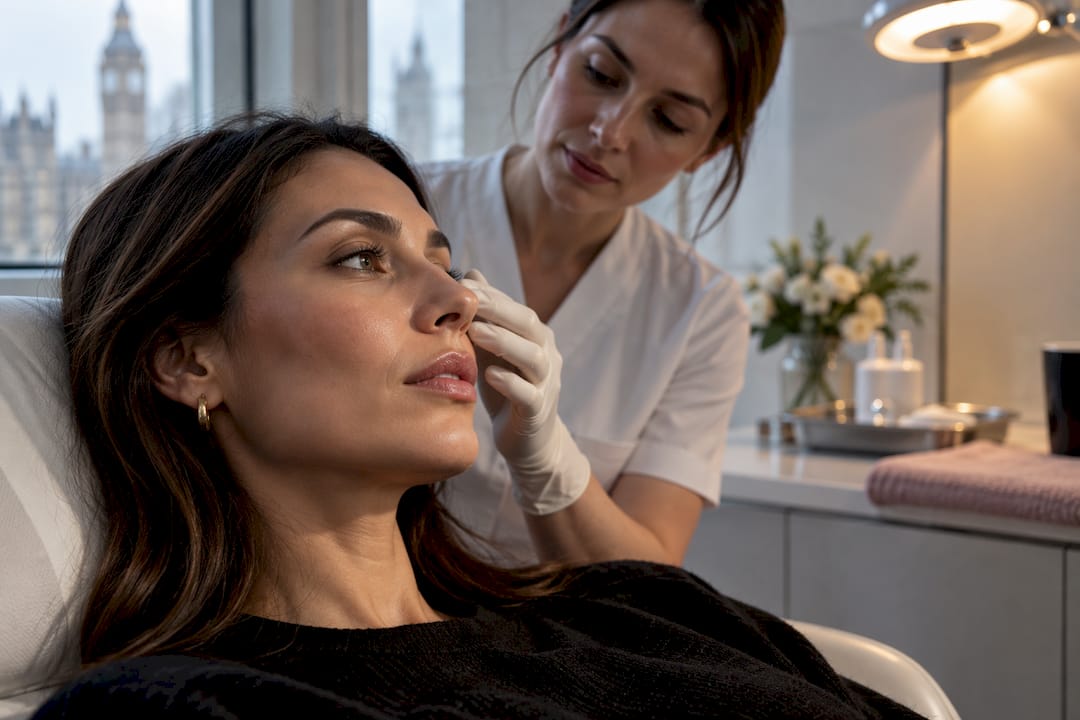
- Injection. Filler is placed using either a fine needle or a blunt-tipped cannula. Many practitioners favour cannula technique for cheek work because it reduces the number of entry points and lowers the risk of hitting a blood vessel.
- Massage and assessment. The practitioner checks symmetry, massages the product into place, and may add small adjustments before you leave.
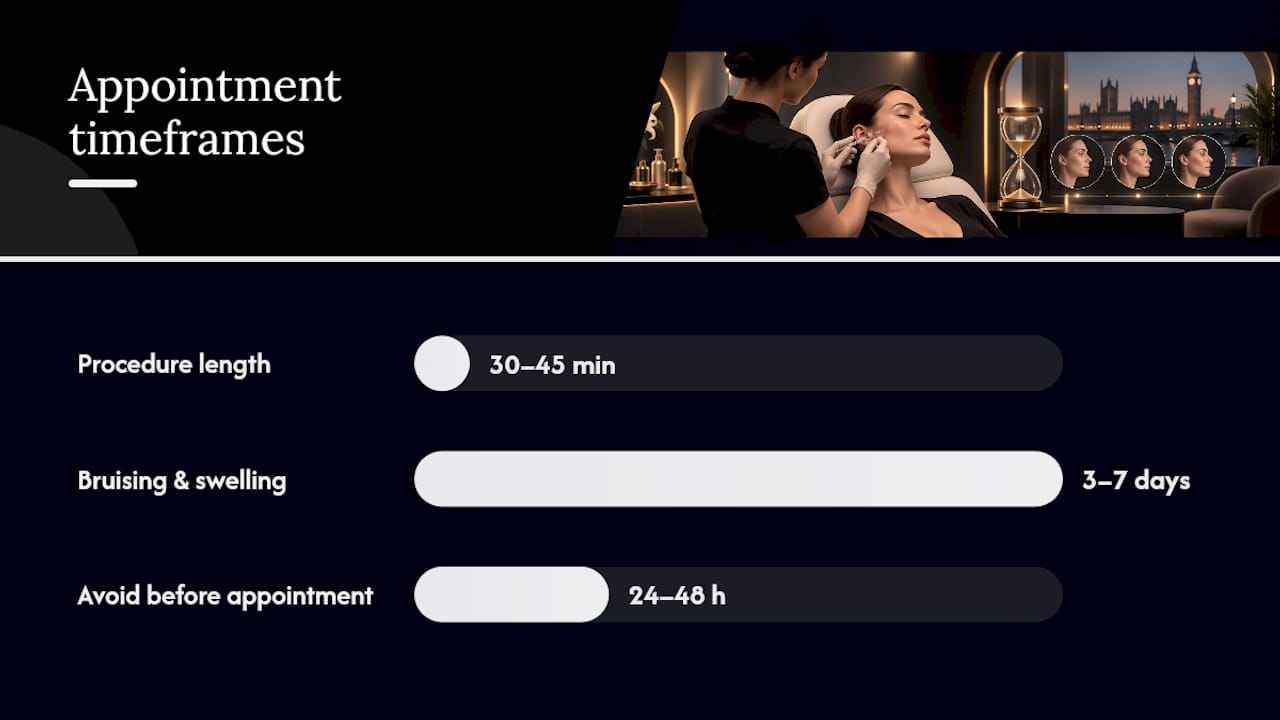
A full cheek treatment usually takes 30 to 45 minutes. Mild bruising and swelling are common for 3 to 7 days, and final results are best judged after about two weeks once swelling has fully settled.
Pro Tip: Avoid alcohol and blood-thinning medication like ibuprofen for 24 to 48 hours before your appointment. It genuinely reduces bruising and makes the whole recovery smoother.
Is high cheekbone filler safe, and what can go wrong?
Most side effects from cheek filler are minor and short-lived. Redness, tenderness, and swelling at injection points typically resolve within a week, and small lumps usually settle as the product integrates.
The serious complications are rare but worth understanding fully rather than glossing over, because the cheek sits close to blood vessels that feed the eye. NHS guidance is direct about this: dermal fillers carry risks including infection, nerve damage and, in very rare cases, blindness from filler entering an artery.
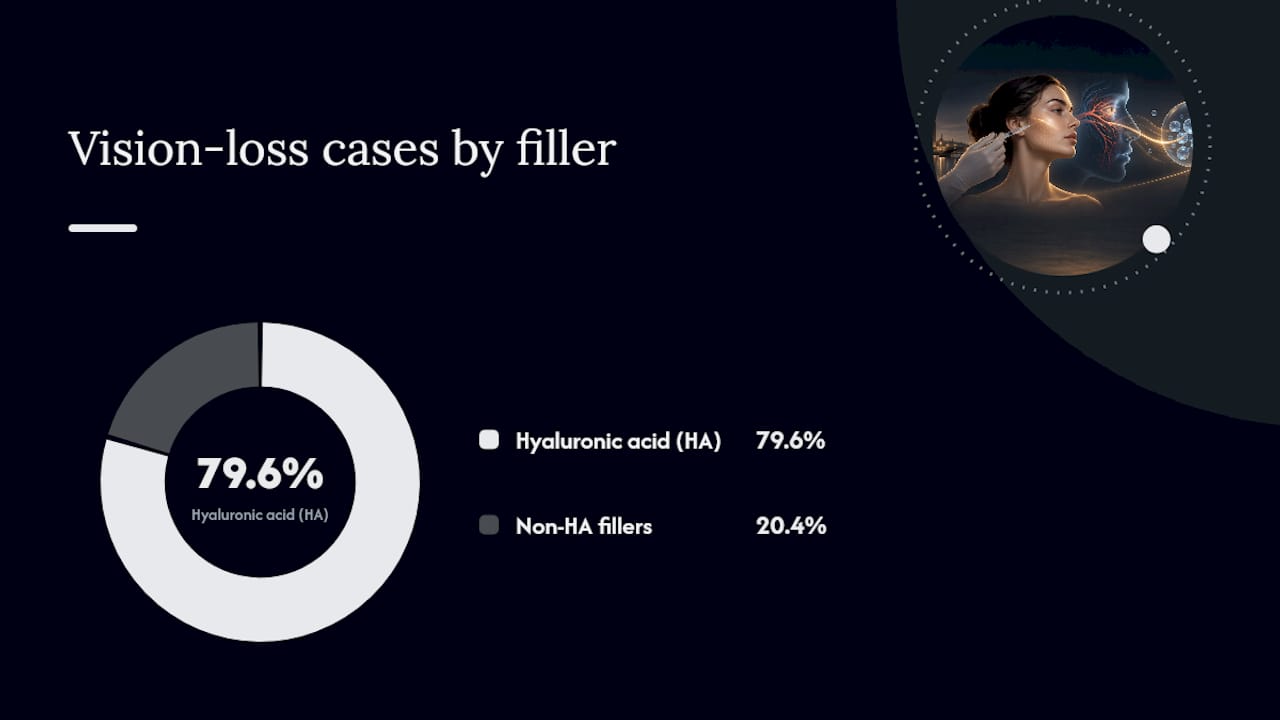
A review of published vision-loss cases found that 79.6% involved hyaluronic acid filler specifically, and early use of hyaluronidase featured in the majority of successful management approaches.
Vascular occlusion, where filler blocks blood flow to tissue, is the complication clinics train hardest to prevent and recognise. According to a clinical review of vascular complications, warning signs include severe pain out of proportion to the injection, skin that turns cool and takes on a dusky or mottled colour, and slow capillary refill. Any visual disturbance following cheek filler needs same-day emergency attention, no exceptions.
Key risks to watch for:
- Vascular occlusion (rare, but time-critical if it occurs)
- Infection at the injection site
- Tyndall effect, a bluish tint from filler placed too superficially
- Nodules or lumps that don’t resolve within a few weeks
Hyaluronidase is the emergency antidote for HA filler complications, and it works by dissolving the product almost immediately. The same vascular complications research notes that its effectiveness is time-sensitive, meaning earlier administration produces meaningfully better outcomes. Any clinic offering cheek filler should have hyaluronidase on-site and a documented same-day response plan. If they don’t, walk away.
Who should avoid cheek filler, and what UK law says
Cheek filler suits most healthy adults, but certain conditions rule it out or require extra caution. A brief self-check before booking:
- Active skin infection or cold sore near the treatment area
- Pregnancy or breastfeeding
- Known allergy to hyaluronic acid or lidocaine
- Autoimmune conditions affecting healing, or a history of keloid scarring
- Current use of blood thinners without medical clearance
There’s also a firm legal line in the UK. Since 1 October 2021, it has been a criminal offence in England to administer cosmetic fillers to anyone under 18, or to arrange such treatment on a minor’s behalf. Any clinic willing to bend this rule is telling you everything you need to know about their standards elsewhere.
Beyond age, the wider regulatory picture is thinner than most people assume. There’s currently no mandatory national licensing scheme guaranteeing that whoever holds the needle has specialist training, which is precisely why credentials matter more than convenience or price when you’re choosing where to go.
How to choose a safe, skilled cheek filler practitioner
Because the field is under-regulated, the responsibility for vetting a clinic sits largely with you. Use this as your minimum checklist before booking anything:
- Confirm CQC registration (or equivalent clinic accreditation) for the premises.
- Check the practitioner’s medical registration, whether that’s GMC, NMC or GDC, alongside specific training in facial anatomy.
- Ask directly about emergency protocols, including whether hyaluronidase is kept on-site and how quickly they can respond to vascular concerns.
- Request to see real case examples of cheek work, ideally with visible before-and-after outcomes at rest and in motion.
- Confirm the clinic carries appropriate insurance for the procedure being performed.
The Royal College of Surgeons has been explicit that the regulatory gap around non-surgical cosmetic work means patients need to do this legwork themselves, recommending registered, medically trained practitioners over commercial spa-style credentials.
Pro Tip: A genuinely confident practitioner will happily discuss what can go wrong, not just what can go right. Treat vague or dismissive answers about complications as a red flag, not reassurance.
Watch for warning signs too: prices dramatically below the local average, no visible medical oversight, or high-pressure “book now” package deals bundling multiple areas into one aggressive session. For a deeper walkthrough of vetting a provider, see choosing a dermal filler clinic in London.
Why emergency readiness separates good clinics from risky ones
The gap between a good outcome and a genuine emergency in cheek filler almost always comes down to speed and knowledge, not luck. NHS guidance tells patients to ask about the products being used, the practitioner’s qualifications, and what could go wrong, questions that only make sense to ask if the clinic can answer them properly.
While some protocols reference a 48-hour window for hyaluronidase response, clinical experience with vascular complications suggests earlier injection produces markedly better outcomes, which is why documented same-day response plans matter more than theoretical guidelines.
This is where accreditation stops being a box-ticking exercise and starts being a genuine safety signal. Theaestheticsroom operates as a CQC-registered clinic and is a member of the ACE Group, a body focused specifically on patient safety in aesthetics. That combination, medical oversight plus a stated safety framework, is exactly what the Royal College of Surgeons points to when it urges patients to look past marketing and check who is actually accountable for their care.
Why conservative planning gets better long-term cheek results
The biggest mistake people make with cheek filler isn’t choosing the wrong product, it’s chasing too much volume too fast. A conservative, staged approach almost always ages better than one dramatic session, because it lets the practitioner see how your face settles before adding more.
There’s also a strategic argument for restraint that rarely gets discussed: filler placed thoughtfully preserves your options. If you ever consider surgical cheek augmentation later in life, a history of well-placed, modest filler is far easier for a surgeon to work around than years of accumulated, poorly planned volume. Bespoke planning isn’t a luxury phrase, it’s the difference between a face that looks like you, only sharper, and one that looks like it’s had “work done”.
— Vishul
How Theaestheticsroom approaches cheek augmentation
The clinic provides treatment plans tailored to individual bone structure rather than fixed packages. The clinic emphasizes medically trained practitioners and a bespoke approach to facial contouring rather than a one-size formula.

A consultation starts with an honest assessment of your face, including whether cheek filler is even the right answer or whether a different combination of treatments would serve you better. You’ll be talked through product choice, expected longevity, and exactly what the clinic’s emergency protocols look like before you commit to anything. If you’re ready to explore what’s realistic for your face, book a consultation through the dermal fillers page and see what a bespoke cheek plan actually involves.
This article is general information, not a substitute for advice from a qualified doctor. Consult a qualified healthcare professional about your own circumstances before acting on anything here.
Sources
- NHS — Choosing who will do your cosmetic procedure
- Gov
- Vascular complications of filler injections: recognition and management
- Review — Update on blindness from filler: prognostic factors and management
- Bulletin of the Royal College of Surgeons — Protecting patients: why tighter regulation is crucial
FAQ
What is the best filler for high cheekbones?
Hyaluronic acid fillers with a higher G’ (gel firmness) are generally preferred for cheek contouring because they hold structural lift well and can be dissolved with hyaluronidase if needed. Collagen-stimulating fillers offer longer-lasting results but suit patients who already know exactly what look they want, since they can’t be reversed the same way.
What is the riskiest place for filler injections?
The mid face and under-eye area carry the highest risk because of dense blood vessel networks near the eye, including pathways linked to the retinal artery. This is why vision loss from filler, while very rare, is specifically associated with cheek and tear trough treatments rather than areas like the lips.
What are the downsides of cheek filler?
Temporary bruising, swelling and tenderness are common for around a week after treatment. Rarer but more serious risks include infection, lumps, the Tyndall effect (a bluish tint from superficial placement), and, in very rare cases, vascular occlusion, which needs same-day medical attention.
Does cheek filler make you look older or younger?
Placed conservatively, cheek filler tends to restore volume lost with age and can look genuinely rejuvenating. Overfilling, however, can pull the face into an unnaturally rounded or “puffy” shape that reads as older, which is why staged, moderate treatment consistently produces better long-term results than one large session.
How much does high cheekbone filler cost?
Current pricing for cheek and jaw contouring treatments at Theaestheticsroom is listed on the clinic’s price list, where jaw definition and contouring is priced at £310 per session. Exact cost depends on the amount of product used and whether treatment is staged across multiple visits.