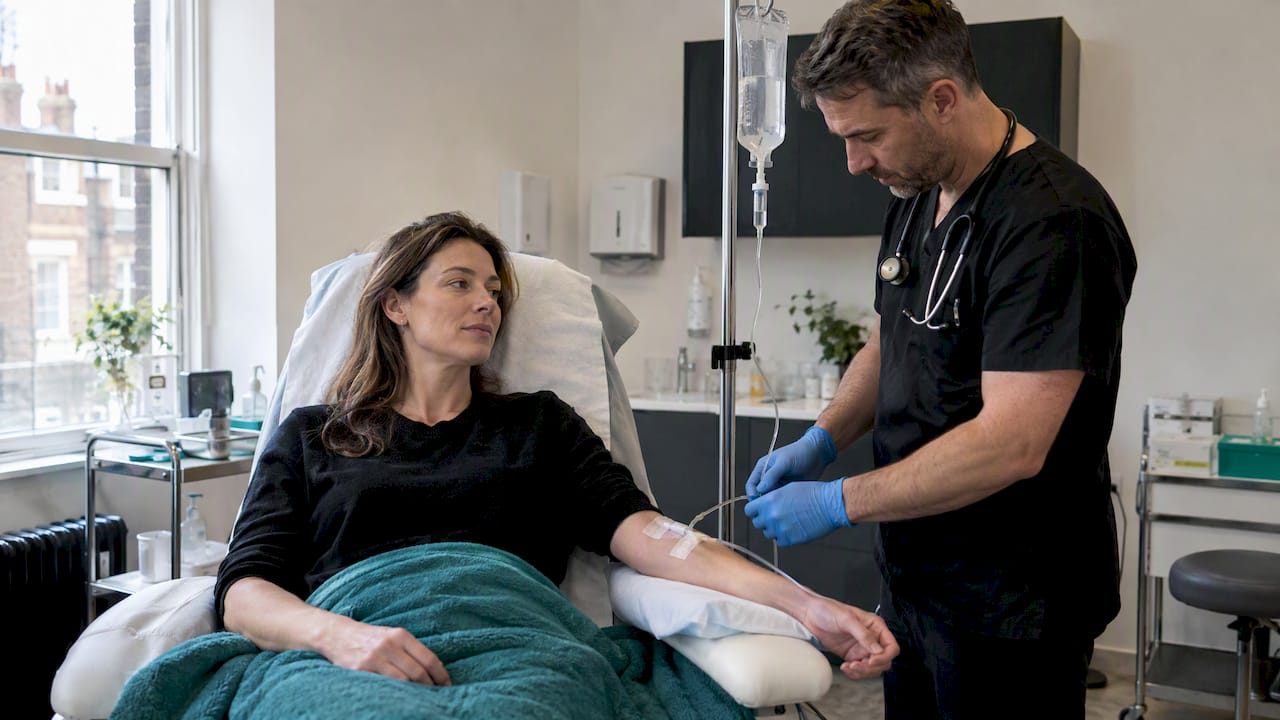
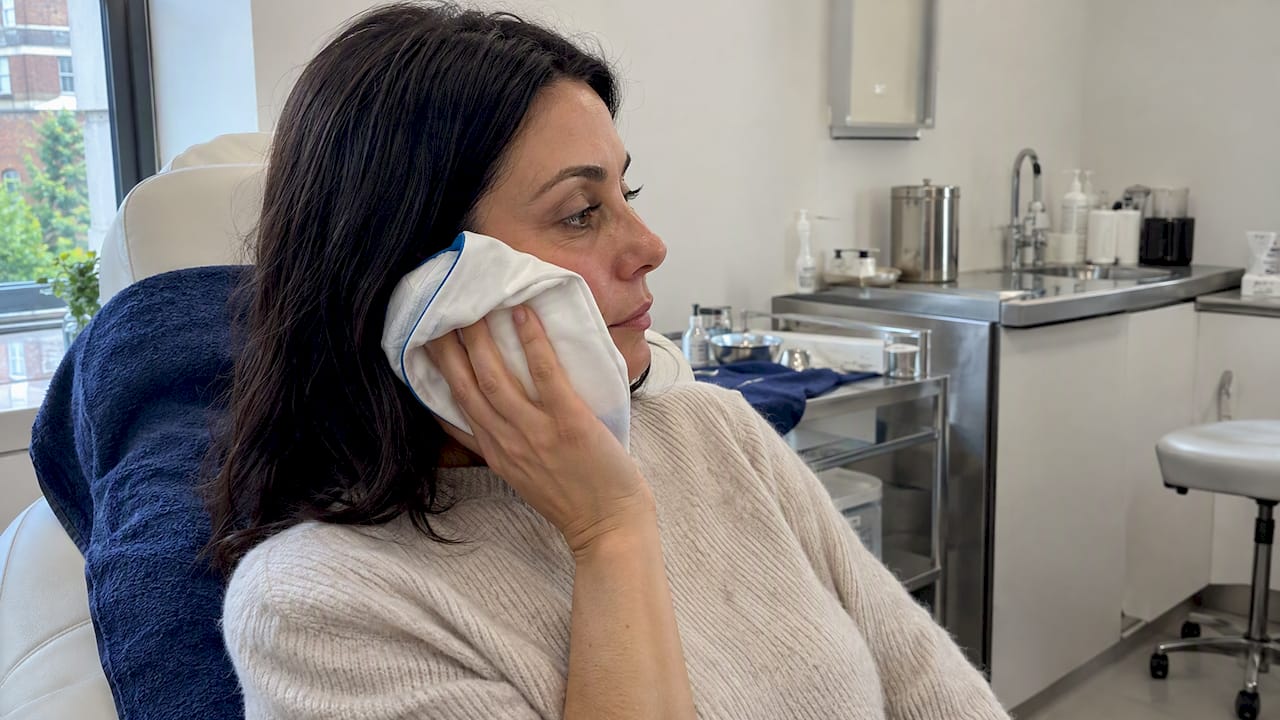

Follow your clinician’s written aftercare and protect the treated area for the best results. Keep the skin clean, avoid unnecessary touching, and stay out of the sun while it settles. If you notice severe pain, blanching or visual symptoms, contact your clinic straight away rather than waiting it out. Standards from the NHS and the ACE Group shape most responsible clinic protocols, including our own.
TL;DR:
- Most healing occurs within the first week, with redness, swelling, and bruising typically improving in days to two weeks, but full results may take several weeks.
- Avoid heavy makeup, intense sun exposure, and invasive treatments such as facials or chemical peels for at least one to two weeks after treatment to prevent complications.
- If experiencing severe pain, discoloration, warmth, pus, or visual disturbances, immediate medical review is critical to prevent lasting tissue damage.
- Use gentle cleansing, SPF 30-50+, and a fragrance-free moisturizer during recovery, and follow your clinician’s specific instructions for massage and skincare.
- Maintaining written records of your treatment details and following clinic standards enhances safety and expedites response to any complications.
Table of Contents
- Immediate aftercare: the first 24 hours
- Your first week: days 2 to 7
- Managing swelling, bruising and discomfort
- What to avoid in the days after treatment
- When to seek urgent review: warning signs that need immediate action
- Supporting habits: hydration, nutrition and rest
- What to expect: timeline and follow-up
- Why clinic standards and continuity of care matter
- Book a follow-up or consultation with us
- FAQ
- Sources
Immediate aftercare: the first 24 hours
The hours right after treatment matter most. NHS patient-leaflet guidance recommends keeping the treated area clean and avoiding unnecessary touching for the first 12 hours, which gives the injection sites time to settle without extra irritation. If your clinician applied a dressing, follow their removal instructions exactly rather than taking it off early out of curiosity.
Cold packs help with early swelling, but they need to be used carefully. Wrap the pack in a clean cloth and apply for 10 to 15 minutes at a time, never ice directly on the skin, which can cause cold burns or uneven healing.
Hold off on skincare actives until your clinician gives the go-ahead:
- Avoid retinoids, acids and active serums for at least 24 hours, and longer if advised.
- Use only clinician-approved cleansers or creams on the treated area.
- Skip make-up entirely for the first several hours.
- Keep hands away from the area unless you’re applying an approved product.
Your first week: days 2 to 7
Once the initial sensitivity eases, settle into a simple routine that protects the results without overloading the skin.
- Cleanse gently with your fingertips, no rubbing or scrubbing, and pat dry rather than wiping.
- Avoid retinol, AHAs, BHAs and strong chemical exfoliants until your clinician confirms it’s safe to resume them.
- Apply a plain, fragrance-free moisturiser daily to support the skin barrier while it heals.
- Use SPF 30 to 50+ every morning, since healing skin is more vulnerable to pigmentation changes from UV exposure.
- Check with your clinician before reintroducing make-up, though many clinics allow light coverage from 6 to 24 hours onward.
- Only massage the area if your clinician specifically told you to. Unsupervised massage can shift product or mask a developing problem.
Managing swelling, bruising and discomfort
Mild swelling, tenderness and bruising are common and usually settle within days. Cold packs and keeping your head elevated, including while sleeping, both help limit fluid build-up without putting pressure on the area.
For discomfort, paracetamol is generally the first-line option. Discuss NSAIDs such as ibuprofen with your clinician first, since these can increase bruising in some cases. If you’ve been advised to take an antihistamine for a mild allergic reaction, follow that guidance precisely.
It helps to know the difference between ordinary healing and a pattern that needs review:
- Normal: mild tenderness, light bruising, slight puffiness that eases day by day.
- Needs review: increasing pain, spreading redness, warmth, or any discharge from the treated area.
Pro Tip: Photograph the treated area daily in the same light and angle so you can track genuine changes and share clear evidence with your clinician if something looks off.
What to avoid in the days after treatment
A few sensible restrictions reduce the chance of complications while your skin recovers.
- Skip heavy make-up for 6 to 24 hours, or longer if your clinician says so.
- Hold off on facials, chemical peels, laser or IPL, waxing and microdermabrasion for at least one to two weeks, depending on your clinician’s specific instructions.
- Avoid saunas, steam rooms, intense exercise, sunbeds and prolonged sun exposure for the recommended window, commonly 48 hours up to two weeks.
- Skip alcohol and smoking immediately after treatment, and check with your clinician before taking fish oils, garlic or ginkgo supplements, since these can increase bleeding risk.
When to seek urgent review: warning signs that need immediate action
Most recoveries are straightforward, but a small number of symptoms are time-critical and need to prompt face-to-face assessment rather than a wait-and-see approach.
Watch for:
- Sudden, severe pain paired with blanching, or skin that turns cool and pale.
- Rapidly worsening mottling or progressive dark discolouration.
- Pus, spreading warmth, or fever, which point towards infection rather than ordinary bruising.
- Visual disturbance or any neurological symptom.
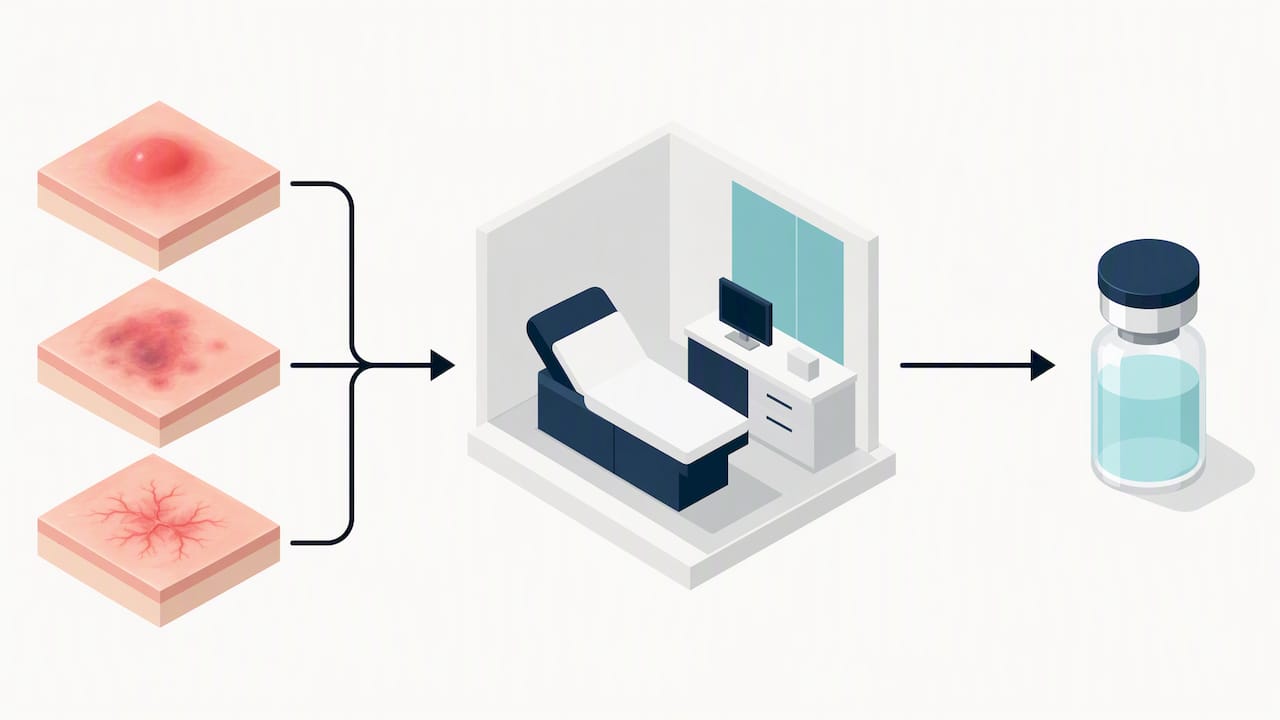
If any of these appear, stop self-massaging the area immediately and contact your treating clinic or their emergency number rather than waiting for a routine appointment. ACE Group guidance treats sudden pain with blanching as a possible vascular occlusion, a complication that can require urgent hyaluronidase to restore blood flow.
Prompt recognition changes outcomes. ACE Group’s clinical guidance recommends immediate review and, where hyaluronic acid filler is involved, high-dose pulsed hyaluronidase without delay. Acting quickly on these signs is the single biggest factor in avoiding lasting tissue damage.
Supporting habits: hydration, nutrition and rest
Staying well hydrated supports general skin recovery, and NHS patient-leaflet guidance references around two litres of fluid a day as a reasonable benchmark, though your own needs may differ depending on health conditions, so check with your clinician if you’re unsure. Prioritise rest and decent sleep in the days following treatment, and keep avoiding alcohol and smoking while the skin settles.
If you take supplements linked to bleeding risk, consider pausing them short-term with your clinician’s input. Good hydration and nutrition genuinely help, but they support your clinical aftercare plan rather than replace it, and a partner guide on post-treatment maintenance covers similar supportive principles for other injectable treatments.
What to expect: timeline and follow-up
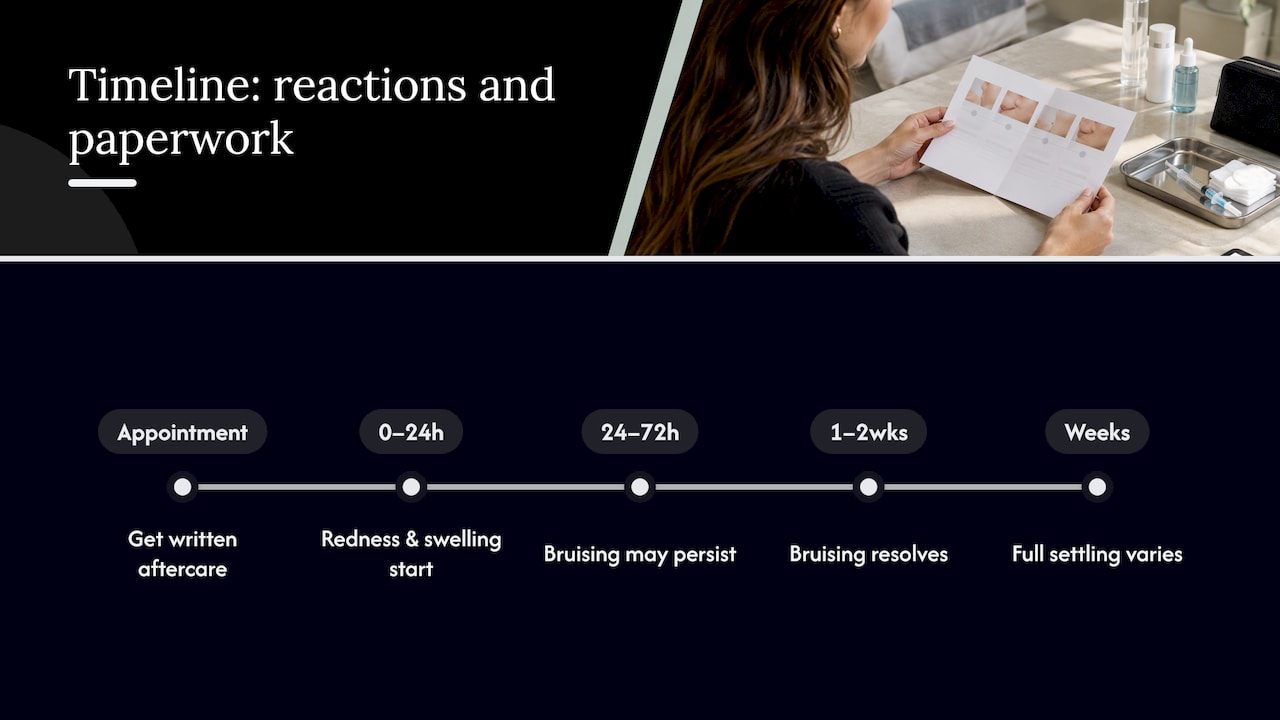
Redness and swelling typically improve within days, while bruising can linger for one to two weeks. Full settling, including how the skin ultimately looks and feels, often takes several weeks and depends heavily on which product and technique were used, since different skin boosters behave differently.
Responsible practice, as set out in RCS and GMC professional standards, means you should leave your appointment with written aftercare instructions, details of the product used and a named contact for questions or complications. Keep that paperwork. If anything changes later, having the product name and treatment date to hand speeds up any follow-up review, and our dermal filler aftercare guide covers the same documentation principles in more depth.
Why clinic standards and continuity of care matter
We work to the same markers that responsible providers are judged on: CQC registration, ACE Group membership, written aftercare, and named follow-up contacts. These aren’t guarantees, but they shape how quickly a concern gets escalated and how clearly any complication gets managed. Written records and a direct line to your treating clinic matter more than they might seem to at first glance. For treatment-specific instructions, our aftercare guidance and booking pages are the right place to check before and after your appointment.
— Vishul
Book a follow-up or consultation with us
If you’d rather have a professional review your results in person, we’re happy to talk you through what to expect and arrange a follow-up. You can see current treatments and pricing on our price list, which covers everything from Profhilo to PRP hair therapy.

Before your appointment, it helps to have a few details ready:
- The date of your original treatment.
- Any photos you’ve taken of the area, especially if something changed.
- The product name, if you have it from your aftercare paperwork.
- A short note on any symptoms, including when they started.
The clinic offers written aftercare, a named contact, and a team that takes follow-up seriously.
This article is general information, not a substitute for advice from a qualified doctor. Consult a qualified healthcare professional about your own circumstances before acting on anything here.
FAQ
What not to do after a skin booster?
Avoid touching or massaging the treated area unless your clinician specifically told you to, and skip heavy make-up, saunas, intense exercise and sun exposure for the recommended window. Also hold off on retinoids, acids and other active skincare ingredients until you’re told it’s safe to resume them.
How long does it take for skin boosters to heal?
Initial redness and swelling usually improve within a few days, while bruising can last one to two weeks. Full settling often takes several weeks and depends on the specific product and technique used, so your clinician’s written timeline is the most reliable guide.
What should I do after a skin booster treatment?
Keep the area clean, avoid unnecessary touching for the first several hours, and follow any product-specific instructions your clinician gave you. Use SPF daily once you resume normal skincare, and contact your clinic promptly if you notice severe pain, blanching or signs of infection such as pus or fever.
Is skin booster like Botox?
No, skin boosters and Botox work differently. Boosters typically use injectable hydrating or collagen-stimulating products to improve skin quality and texture, while Botox relaxes targeted muscles to soften the appearance of lines, so aftercare and expected timelines differ between the two.
Sources
- Pan London Facial Lipoatrophy Service – Aftercare tips
- Management of a vascular occlusion associated with cosmetic injections (ACE Group)
- Professional standards for cosmetic surgery (RCS)
- Understanding your wound healing (Kent Community Health NHS)