
Yes, Botox reliably softens dynamic crow’s feet for most people, with visible change appearing within days and a median effect lasting around three to four months at the standard dose. It works on the lines that appear when you smile or squint, not the ones etched into resting skin. The two things that matter most are getting the licensed dose and choosing a practitioner who understands the anatomy around your eye.
- Onset: visible softening from day 3 to 5, peak effect by around day 14
- Standard on-label dose: 24 units total (12 units per side, three injection sites)
- Typical duration: median response of roughly 119 to 148 days depending on how it’s measured
Clinical trial data: Phase 3 studies of onabotulinumtoxinA for crow’s feet found responder rates well above placebo, with a median duration of clinical effect of approximately four months. That’s the figure worth anchoring your expectations to, rather than anything a clinic’s marketing promises.
Always choose a CQC-registered clinic with medically qualified prescribers. The margin for error around the eye is small, and technique matters more here than almost anywhere else on the face.
Key Takeaways
Botox softens dynamic crow’s feet in most patients within two weeks, with a median effect lasting three to four months at the standard 24 unit dose, provided an experienced, CQC-registered practitioner follows licensed injection placement.
| Point | Details |
|---|---|
| Effectiveness is well evidenced | Phase 3 trials found a median response duration of about 119 to 148 days, roughly four months. |
| Only dynamic lines respond | Lines visible only when you move your face improve; static, resting lines usually need laser or peel treatment instead. |
| Dosing follows a set pattern | The licensed dose is 24 units total, 4 units at three sites per side. |
| Technique determines safety | Superficial placement 1.5 to 2.0cm lateral to the orbital rim is what keeps eyelid ptosis risk low. |
| Retreatment has a minimum interval | Product guidance advises no more frequent retreatment than every three months. |
| Choose an accredited clinic | Theaestheticsroom offers CQC-accredited, ACE Group affiliated consultations for crow’s feet Botox with individualised dosing plans. |
Table of Contents
- How Botox for crow’s feet actually works
- What the clinical evidence actually shows
- What happens during a crow’s feet Botox appointment
- Licensed dosing and safe injection placement for crow’s feet
- How long results last and when you can retreat
- Side effects and how good clinics reduce the risk
- When Botox isn’t the right first move
- How to choose a safe clinic and practitioner
- What Botox for crow’s feet typically costs
- Why I’d rather patients under-treat than over-promise
- Book a crow’s feet consultation with confidence
- Sources
How Botox for crow’s feet actually works
Crow’s feet form because the orbicularis oculi, the ring of muscle circling your eye, contracts every time you smile, laugh, or squint. Botulinum toxin type A blocks the release of acetylcholine at the neuromuscular junction, the chemical messenger that tells that muscle to fire. With the signal interrupted, the muscle relaxes and the skin above it stops folding into the same creases.
That mechanism explains why Botox works brilliantly on some lines and does nothing for others.
- Dynamic lines appear only when you move your face and disappear at rest. These respond well because the problem is muscle activity, and Botox switches that activity down.
- Static lines are visible even when your face is completely still, because repeated folding has permanently changed the skin’s structure and collagen. Relaxing the muscle won’t erase a crease that’s already been pressed into the skin over years.
Most people have some combination of both by their late thirties or forties, which is why clinicians often talk about “softening” rather than “removing” crow’s feet with Botox alone. If your lines vanish completely when you stop smiling, you’re a strong candidate. If a faint line remains at rest, Botox will still improve things, but a second modality may be needed to address what’s left.
Some practitioners also treat crow’s feet alongside the forehead or glabellar area (the frown lines between the brows), because the muscles of the upper face work as a linked system. Balancing an elevator muscle against a depressor elsewhere can produce a more natural result and reduce the risk of unwanted brow movement, which is one reason a full-face assessment tends to outperform a single-area quick fix.
What the clinical evidence actually shows
The most useful evidence on Botox for crow’s feet comes from two multicentre, randomised, controlled trials of onabotulinumtoxinA, the kind of study design that carries genuine weight rather than anecdotal before-and-after photos. These pivotal Phase 3 trials found responder rates significantly higher than placebo, and tracked how long that improvement actually lasted once treatment took hold.
Across these trials, the median duration of response ranged from roughly 119 to 148 days depending on which assessment scale investigators used, putting the realistic average squarely at four months rather than the “three to six months” range you’ll see quoted loosely elsewhere.
That’s a meaningful distinction. A lot of casual guidance rounds up to six months, which sets patients up for disappointment when their lines start reappearing closer to the three and a half month mark. The trial data is more conservative, and more honest.
The same body of research points to something practitioners rarely explain to patients: dose and duration are linked. Dose-ranging studies found that the total dose of 24 units, the figure established in the licensed product information, produces both a higher responder rate and a longer median duration than lower doses tested in earlier trials. This is part of why 24 units became the standard rather than an arbitrary number a clinic picked.

There’s also a psychological layer to the data that’s genuinely interesting. Patients who perceived a greater improvement in the early weeks after treatment tended to report a longer subjective duration of effect, even when objective muscle movement scores told a slightly different story. Perception and measured effect aren’t identical, and how convinced you are that a treatment worked seems to shape how long you feel it’s working.
None of this means results are guaranteed or uniform. Trial populations skew toward specific age ranges and skin types, muscle bulk varies enormously between individuals, and a study cohort is never a perfect stand-in for any one person’s face. Treat the 119 to 148 day figure as a well-evidenced average, not a personal promise, and expect your own practitioner to adjust that expectation once they’ve assessed your muscle strength and skin quality in person.
What happens during a crow’s feet Botox appointment
A properly run consultation for Botox for crow’s feet follows a fairly consistent structure, whether it’s your first treatment or your tenth.
- Medical history review. Your practitioner should ask about current medications, neurological conditions, pregnancy or breastfeeding status, allergies, and any previous toxin treatments, including brand and dose if you know it.
- Facial assessment. You’ll be asked to smile, squint, and raise your brows so the practitioner can see exactly how your muscles move and mark the injection points while your face is animated.
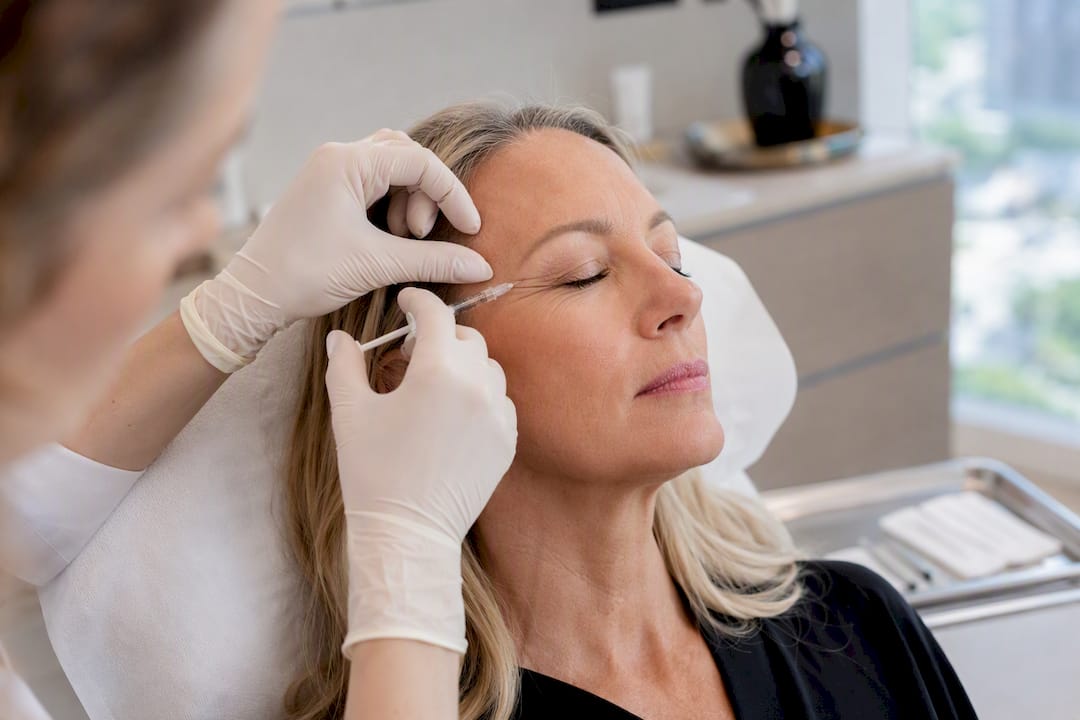
- The injections themselves. A fine sterile needle is used at each marked site. Some clinics offer topical numbing cream, though most patients find the sensation brief enough not to need it. The whole appointment, consultation included, typically runs 30 to 45 minutes, with the injections themselves taking only a few minutes.
- Immediate aftercare instructions. You’ll usually be told not to rub or massage the treated area, to avoid strenuous exercise for the rest of the day, and to skip lying flat for a few hours if you’re having other areas treated at the same time.
- Follow-up guidance. A reputable clinic will tell you exactly when and how to get in touch if something feels wrong, rather than leaving you to guess.
Pro Tip: Book your consultation with your face slightly more expressive than usual, ideally without heavy makeup around the eyes. Practitioners mark injection points based on live muscle movement, and a fully “resting” face on the day can make it harder to map your natural creases accurately.
Most people return to normal skincare and light makeup within a few hours, once any pinprick marks have settled. If you notice drooping of the eyelid, unusual swelling that worsens rather than improves, or visual disturbance in the days following treatment, contact the clinic rather than waiting it out.
Licensed dosing and safe injection placement for crow’s feet
The Summary of Product Characteristics for onabotulinumtoxinA sets out a specific, tested pattern for lateral canthal lines, and it’s worth knowing what that pattern looks like so you can recognise good practice when you see it.
- Total dose: 24 units, split evenly as 12 units per side
- Injection pattern: 4 units per injection site, three sites per side
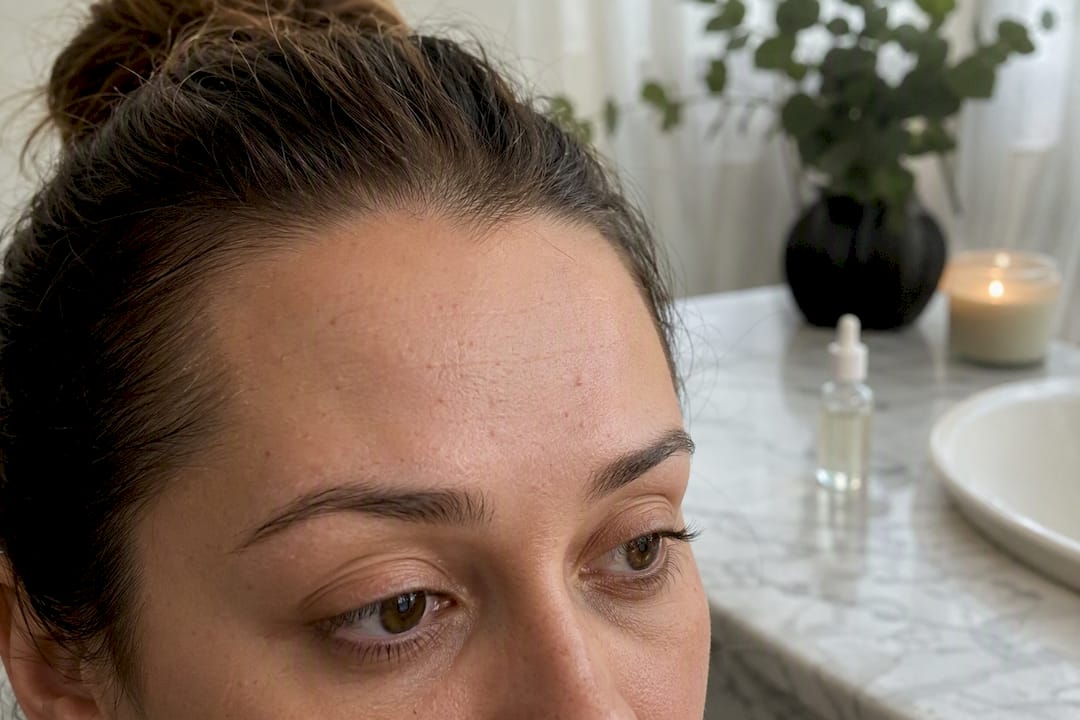
- Placement: each site sits approximately one to two centimetres lateral to the outer corner of the eye (the lateral canthus), well clear of the orbital rim
That distance matters more than it might seem. Product prescribing information is explicit that needles should be placed superficially, with the bevel oriented away from the eye, to avoid the toxin diffusing into the muscles that control eyelid position. Staying lateral to the orbital rim, rather than drifting toward the eye to chase a stubborn line, is one of the clearest markers separating careful injectors from rushed ones.
Precise placement and a superficial injection depth are the main technical safeguards against eyelid ptosis. Depth and distance from the orbital rim matter as much as the total dose used.
Experienced practitioners do individualise within this framework. Someone with a strong, hyperactive orbicularis oculi might need the full 24 units to see meaningful change, while a patient wanting a lighter, “just softened” look, sometimes called preventative or baby Botox, might be treated with less. Industry practice varies here, with some injectors working in the 8 to 16 unit per eye range for patients who want subtlety over maximal effect. The licensed dose remains 24 units total, and any deviation should be a deliberate clinical decision explained to you in advance, not a default.
How long results last and when you can retreat
Nothing happens instantly. Most people notice the first softening around day 3 to 5, and the effect continues building until it plateaus at roughly the two-week mark. If you’ve booked treatment before an event, that fortnight window is the one to plan around.
How long it lasts: trial data puts the median duration at around 119 to 148 days, which in practical terms means most people are back to booking a top-up somewhere between month three and month four. Some people stretch closer to five months, particularly with repeated treatment over time, while others with stronger muscle activity find it fades a little sooner.
The product licence is specific on timing: treatment should not be repeated more frequently than every three months. That interval isn’t arbitrary caution. It reflects both how the drug behaves in the body and a genuine gap in the evidence: controlled trial data on safety beyond twelve months of repeated use is limited, so label guidance stays conservative rather than assuming indefinite safety at shorter intervals.
In practice, this means the honest answer to “can I just top up early if it starts wearing off?” is no, not safely, and not on-label. A good clinic will hold that line even if you’re keen to book sooner.
Side effects and how good clinics reduce the risk
Most reactions to Botox for crow’s feet are minor and resolve on their own within days.
- Common, transient effects: redness, mild swelling, and bruising at the injection sites are the most frequently reported issues, and they’re linked to the needle itself rather than the toxin.
- Injector-related risks: eyelid ptosis (drooping), asymmetry between the two sides, and, rarely, double vision can occur when the toxin diffuses beyond the intended muscle. These are technique-dependent complications, and their incidence is low when injections stay superficial and lateral to the orbital rim.
- Rare systemic signs: difficulty swallowing, breathing problems, or generalised muscle weakness are extremely uncommon with cosmetic dosing but constitute a medical emergency if they occur. Anyone experiencing these should seek urgent medical attention rather than waiting for a follow-up appointment.
The gap between “bruising that fades in a week” and “eyelid drooping that lingers for weeks” almost always comes down to where the needle went, not the drug itself. That’s the argument for treating injector skill as the primary safety variable, above the specific product used.
Pro Tip: Arrange your Botox appointment with enough runway before any important event, ideally two to three weeks, so a practitioner has time to assess the result and correct minor asymmetry if needed rather than leaving you stuck with an uneven look on the day.
Clinics reduce risk in practical, checkable ways: using an experienced, medically trained injector, following the SmPC’s dosing and placement guidance exactly, taking a full medical history before treating, and giving you clear, written aftercare information rather than a verbal aside on your way out. None of these are exotic requests. They’re the baseline you should expect every time.
When Botox isn’t the right first move
Botox for crow’s feet works on movement, not on skin texture, so the decision about what to book first should follow a simple piece of logic.
- If your lines disappear completely at rest, they’re dynamic, and Botox alone is usually the most effective, lowest-downtime option.
- If a visible line remains when your face is still, that’s a static line etched into the skin’s structure, and resurfacing treatments, such as fractional CO2 or erbium lasers, or medium-depth TCA peels, tend to address it more directly than a neurotoxin ever will.
- If you’re not ready for a procedure with downtime, prescription-strength tretinoin used consistently over months can improve fine static texture, though it works far more slowly than either Botox or laser resurfacing.
Dermal fillers are usually a poor match for the crow’s feet area specifically. The skin around the eye is thin, and filler placed too superficially there commonly causes a bluish discolouration under the skin known as the Tyndall effect, alongside a puffy look that doesn’t sit naturally. That’s a different conversation from fillers used in the midface or under-eye hollows, where the tissue depth makes them a genuinely good option.
Many patients get the best of both worlds by combining approaches over time. Botox handles the movement-driven lines every few months, while a course of peels or a single laser session addresses the static component underneath. Treated well, the two don’t compete. They cover different parts of the same problem.
How to choose a safe clinic and practitioner
The single biggest safety variable in Botox for crow’s feet isn’t the product, it’s who’s holding the needle. A short checklist protects you far better than trusting a glossy before-and-after gallery.
- Confirm the clinic is CQC-registered, meaning it’s regulated and inspected against defined care standards rather than operating outside any formal oversight.
- Ask whether your practitioner is medically qualified, and whether they hold membership with a recognised body such as the ACE Group, which focuses specifically on patient safety in aesthetic practice.
- Expect a genuine consent process, not a rushed form, including a clear explanation of expected results, realistic duration, and what happens if you need a review appointment.
- Ask directly how the clinic handles complications. A confident, specific answer, rather than a vague reassurance, tells you a great deal.
The strongest signal of a well-run clinic isn’t its marketing, it’s how openly the practitioner discusses what can go wrong and how they’d handle it if it did.
A high-quality consultation should feel less like a sales pitch and more like a clinical assessment: your muscle movement examined while animated, your medical history properly recorded, and your expectations gently corrected if they’re unrealistic. Theaestheticsroom, based in Knightsbridge and operating under CQC accreditation with ACE Group membership, builds its consultations around exactly this kind of individualised planning, with detailed educational material and booking options for both in-person and virtual appointments. That structure, credentialed practitioners, transparent consent, documented aftercare, is what to look for wherever you choose to book.
What Botox for crow’s feet typically costs
Pricing for Botox around the eyes is usually structured one of two ways: a per-unit charge, or a flat price for the “crow’s feet area” that bundles the standard 24 unit dose into a single fee. Neither approach is inherently better, but it’s worth asking which model a clinic uses before you book, so you’re comparing like with like.
Several factors genuinely affect what you’ll pay:
- Total dose required. Someone with strong muscle activity needing the full 24 units will typically pay more than someone opting for a lighter, preventative dose.
- Practitioner experience and clinic location. A highly experienced injector in a central, premium clinic setting generally charges more than a newly qualified practitioner elsewhere, reflecting both skill and overheads.
- Product used. Different licensed botulinum toxin brands carry different price points, and a reputable clinic will tell you exactly which one you’re having.
- Combined treatment areas. Treating crow’s feet alongside the forehead or frown lines usually costs less per area than booking them separately, since consultation time is shared.
Resist the temptation to pick a clinic purely on the lowest quoted price. An unusually cheap treatment often means diluted product, an underqualified injector, or corners cut somewhere in the process, and none of those trade-offs are worth the saving when the treatment area sits this close to your eye.
Why I’d rather patients under-treat than over-promise
The most common mistake in aesthetic medicine isn’t a botched injection, it’s mismatched expectations set before the needle ever comes out. Patients are frequently told, implicitly or explicitly, that Botox will erase every line around their eyes. It won’t, and the practitioners who say otherwise are setting up a disappointing reveal at the two-week mark rather than a happy one.
The priority should always be conservative dosing that preserves natural movement, not the flattest possible result. A face that can’t express surprise or genuine amusement looks more unsettling than a handful of soft lines ever did. The clinics doing this well are the ones willing to tell a patient that static lines need a laser, not more units, even when the easier sell is simply agreeing to inject more.
Safety-first practice isn’t a marketing phrase. It’s choosing the smaller dose when muscle bulk is uncertain, staying honestly lateral to the orbital rim rather than chasing a line closer to the eye, and being straightforward about the three-month retreatment interval even when a patient wants to come back sooner.
— Vishul
Book a crow’s feet consultation with confidence
If you’ve read this far, you already understand more about dosing and injector safety than most people booking their first treatment. That’s exactly the standard Theaestheticsroom works to. As a CQC-accredited clinic in Knightsbridge, treatment for crow’s feet is planned around your own muscle strength and expression, not a one-size dose copied from the last patient.

Consultations are available both in-person and virtually, so you can discuss your goals, medical history, and realistic expectations before committing to anything. Every treatment plan follows the licensed dosing pattern for lateral canthal lines, delivered by practitioners trained in the precise placement that keeps results natural and risk low. If you’re ready to see what a properly individualised plan looks like for your own face, explore the Botox treatments at Theaestheticsroom and book a consultation to get a personalised assessment before your first session.
Sources
The figures on effectiveness, dosing, and safety throughout this article come from a small set of primary sources rather than general marketing material.
This article is general information, not a substitute for advice from a qualified doctor. Consult a qualified healthcare professional about your own circumstances before acting on anything here.
Recommended
- Botox Tutorial For Men | Botox Injection Patterns | Forehead, Corrugators & Crows Feet – The Aesthetics Room
- BOTOX BOOM – WHY IS BOTOX IS ONE OF THE MOST POPULAR AESTHETIC TREATMENTS? – The Aesthetics Room
- 7 Benefits of Botox for Appearance and Confidence – The Aesthetics Room
- How Do Anti Wrinkle Injections Work? – The Aesthetics Room