

TL;DR:
- Effective aesthetic treatment protocols are evidence-based procedures ensuring safe and consistent cosmetic outcomes. They involve systematic reviews, clinical decision tools, patient education, and thorough documentation to minimize risks and improve results. Following them with proper timing and personalized judgment enhances safety, compliance, and overall satisfaction.
Treatment protocols in aesthetic medicine are defined as standardised, evidence-based procedures that practitioners follow to deliver safe, consistent, and effective cosmetic care. This guide to treatment protocols covers everything you need to make an informed decision before booking a cosmetic procedure. From clinical practice guidelines that integrate systematic evidence reviews to digital tools like BMJ Best Practice, the frameworks underpinning modern aesthetic care are more sophisticated than most clients realise. Understanding them puts you in a far stronger position to ask the right questions, set realistic expectations, and choose a clinic that genuinely prioritises your safety.
What are the essential components of effective treatment protocols?
Effective treatment protocols rest on a foundation of systematic evidence reviews and actionable clinical recommendations. That foundation separates a well-run aesthetic clinic from one that simply follows trends. Every credible protocol begins with a rigorous review of published clinical data, then translates that data into clear, repeatable steps a practitioner can follow at the chair.
The core components of any strong protocol include:
- Evidence base: A structured review of clinical literature, updated regularly. BMJ Best Practice, for example, updates daily with new evidence to keep practitioners current.
- Clinical decision support: Tools and algorithms that help practitioners choose the right treatment for each patient’s anatomy, skin type, and medical history. The WHO emphasises clinical algorithms and job aids as non-negotiable for safe bedside implementation.
- Patient education materials: Written aftercare instructions, digital support apps, and symptom-recording tools. Research shows that apps and educational materials reduce complications and improve long-term adherence.
- Standardised documentation: Consent forms, treatment records, and outcome tracking sheets that create an auditable trail.
- Workflow tools: Booking systems, pre-treatment checklists, and post-procedure follow-up schedules that keep every step on track.
Pro Tip: Before your consultation, ask the clinic whether their protocols are reviewed against current clinical guidelines. A clinic that cannot answer this question clearly is one worth reconsidering.
The treatment protocol overview at any reputable clinic should be transparent and available to you on request. If a practitioner cannot explain the evidence behind a recommended treatment, that is a red flag worth taking seriously.

How to implement treatment protocols step by step for cosmetic procedures
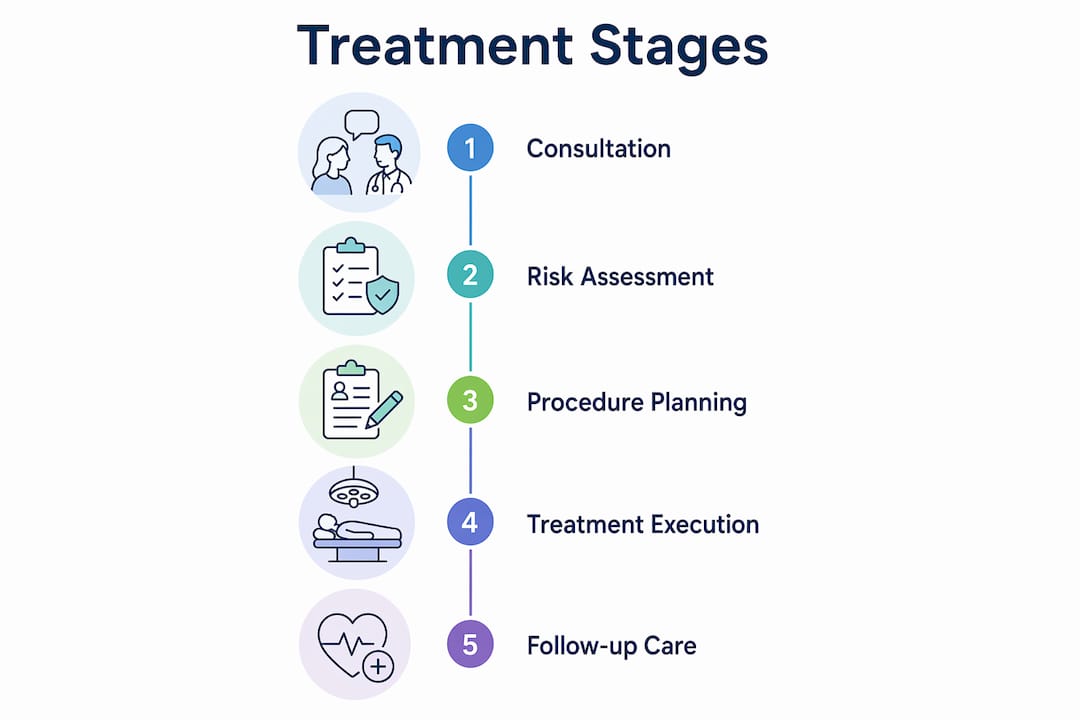
Implementing treatment protocols for aesthetic procedures follows a clear sequence. Skipping any stage increases the risk of complications and reduces the likelihood of the outcome you are hoping for.
- Initial consultation and medical history review. The practitioner collects a full medical history, including current medications, allergies, and previous aesthetic treatments. A holistic facial assessment at this stage identifies anatomical considerations that will shape the entire plan.
- Treatment planning within protocol boundaries. The practitioner maps a personalised plan that stays within evidence-based limits. For injectable treatments, this means referencing facial anatomy guidelines to identify safe injection zones and appropriate product volumes.
- Pre-procedure safety checklist. Contraindications are confirmed, informed consent is obtained, and the treatment area is prepared according to protocol. This step is where medication reconciliation happens. Protocols require reviewing interfering medications to prevent hidden interactions that could worsen outcomes.
- Procedure execution. The practitioner follows stepwise instructions, using the agreed product, technique, and dosage. Timing matters significantly here. Research confirms that optimal outcomes depend on interventions performed within defined protocol timelines.
- Post-treatment care and documentation. Aftercare instructions are provided, outcomes are recorded, and a follow-up appointment is scheduled. A structured post-treatment care guide reduces the risk of complications and supports recovery.
Pro Tip: Ask your practitioner to walk you through each stage before the procedure begins. A confident, detailed explanation is a strong indicator of protocol-driven practice.
The table below shows how each stage connects to a specific protocol objective:
| Stage | Protocol objective | Key tool or resource |
|---|---|---|
| Consultation | Identify suitability and risk factors | Medical history form, facial assessment |
| Treatment planning | Personalise within evidence-based limits | Clinical decision support, anatomy guides |
| Pre-procedure checklist | Confirm safety and obtain consent | Medication review, consent documentation |
| Procedure execution | Deliver treatment accurately and safely | Stepwise instructions, timing guidelines |
| Post-treatment care | Support recovery and record outcomes | Aftercare materials, follow-up schedule |
Common mistakes when following treatment protocols
The most damaging errors in aesthetic practice are not dramatic failures. They are quiet, procedural oversights that compound over time. Knowing what they are helps you assess the quality of care you are receiving.
- Skipping medication review. Medication reviews are often neglected but are critical to preventing treatment interference. Blood thinners, certain supplements, and anti-inflammatory drugs can all affect how your skin responds to injectables.
- Poor timing of interventions. Procedures delayed beyond 48 hours from the optimal window can reduce efficacy. In aesthetic medicine, this applies to follow-up top-up appointments and corrective treatments after initial procedures.
- Incomplete patient communication. Practitioners who do not explain aftercare clearly set patients up to inadvertently undermine their own results. Patient symptom logging critically impacts protocol adherence and overall treatment success.
- Treating protocols as rigid scripts. Guidelines serve as a tool, not a replacement, for clinical judgement tailored to individual patient needs. A practitioner who applies every protocol identically regardless of patient anatomy is not practising at the standard you deserve.
- Failing to document deviations. When a practitioner adjusts a protocol for a specific patient, that decision must be recorded. Undocumented deviations make follow-up care and complication management far more difficult.
“The best protocols are living documents. They are updated, questioned, and adapted as new evidence emerges and as individual patients respond. A protocol that never changes is a protocol that has stopped serving its patients.”
Resolving complications requires returning to the protocol baseline. If a result is not as expected, a good practitioner will review the original plan, identify where the deviation occurred, and adjust the next stage accordingly.
How do treatment protocols improve safety and outcomes?
Standardised protocols directly reduce the rate of adverse events in cosmetic and aesthetic medicine. The comparison below illustrates the difference between protocol-driven care and ad hoc treatment approaches:
| Factor | Protocol-driven care | Ad hoc approach |
|---|---|---|
| Consistency of results | High: same evidence-based steps each time | Variable: depends on practitioner mood or habit |
| Patient safety | Structured risk assessment at every stage | Risk assessment inconsistent or absent |
| Complication management | Clear escalation pathway documented | Reactive and often underprepared |
| Patient education | Standardised materials provided at each stage | Verbal only, easily forgotten |
| Regulatory compliance | Auditable records support CQC requirements | Gaps in documentation create compliance risk |
High-quality treatment protocols depend on continuous evidence review and updates to remain accurate and effective. This is why accreditation bodies such as the Care Quality Commission (CQC) and organisations like the ACE Group place such emphasis on documented, reviewable protocols. A clinic that holds CQC accreditation has demonstrated that its protocols meet a defined standard of safety and governance.
For you as a patient, this means one practical thing: always ask whether the clinic is CQC registered before booking. It is the clearest external signal that the protocols in use have been independently assessed.
Understanding treatment protocols also helps you participate more actively in your own care. When you know what to expect at each stage, you are better placed to flag concerns, follow aftercare instructions accurately, and recognise when something is not progressing as it should.
Key takeaways
Effective treatment protocols in aesthetic medicine combine evidence-based guidelines, clinical decision support tools, and personalised patient assessment to deliver safe, consistent, and measurable results.
| Point | Details |
|---|---|
| Evidence base is non-negotiable | Protocols must be grounded in systematic clinical reviews, updated regularly using tools like BMJ Best Practice. |
| Timing directly affects outcomes | Interventions performed within protocol timelines consistently produce better results than delayed procedures. |
| Medication review prevents complications | A complete medication list reviewed before treatment prevents hidden interactions that could compromise safety. |
| Protocols require clinical judgement | Guidelines are a framework, not a script; skilled practitioners adapt them to each patient’s anatomy and history. |
| CQC accreditation signals protocol quality | Clinics registered with the CQC have had their protocols independently assessed against national safety standards. |
Protocols as a foundation, not a ceiling
I have worked in aesthetic medicine long enough to see what happens when protocols are treated as bureaucratic boxes to tick rather than genuine clinical tools. The results are predictable and avoidable.
The most common misconception I encounter is that a strong protocol limits creativity or personalisation. The opposite is true. A well-constructed protocol gives you the confidence to personalise precisely because you know the boundaries are safe. When I assess a patient for dermal fillers or Botox, the protocol does not tell me what to do with every millimetre of their face. It tells me what not to do, which is far more valuable.
Technology has changed how we maintain protocols. Digital workflow tools and clinical decision support systems mean that updates to evidence reach practitioners faster than ever. That is genuinely exciting for patient safety. But technology is only as good as the practitioner interpreting it. I have seen clinics invest in sophisticated software while their consultation process remains superficial. The tool does not replace the conversation.
My honest view is that patients who understand protocols make better decisions. They ask sharper questions, they follow aftercare more carefully, and they are more likely to return for the follow-up appointments that complete the treatment cycle. This guide exists because an informed patient is the best outcome any protocol can produce.
— Vishul
Safe, protocol-driven aesthetic care at Theaestheticsroom
Theaestheticsroom brings together CQC-accredited practitioners and evidence-based protocols at its Knightsbridge clinic to deliver treatments that are as safe as they are effective.
Whether you are considering Botox treatments for the first time or exploring dermal filler options to restore volume and definition, every treatment at Theaestheticsroom begins with a thorough consultation and a personalised protocol built around your anatomy, medical history, and aesthetic goals. The clinic’s membership of the ACE Group and its medical aesthetics workflow reflect a commitment to care that goes beyond the procedure itself. Book a consultation today and experience the difference that genuinely protocol-driven practice makes.
FAQ
What is a treatment protocol in aesthetic medicine?
A treatment protocol is a standardised, evidence-based set of steps a practitioner follows to deliver a cosmetic procedure safely and consistently. It covers everything from patient assessment and consent through to post-treatment care and outcome documentation.
How do I know if a clinic follows proper treatment protocols?
Ask whether the clinic holds CQC registration and whether its protocols are reviewed against current clinical guidelines. Clinics affiliated with bodies like the ACE Group have additional independent oversight of their safety standards.
Why does timing matter in treatment protocols?
Optimal outcomes depend on interventions being performed within defined protocol timelines. In aesthetic medicine, this applies to both the initial procedure and any follow-up or corrective appointments.
Can treatment protocols be personalised?
Yes. Guidelines serve as a tool, not a replacement, for clinical judgement tailored to individual patient needs. A skilled practitioner uses the protocol as a framework and adapts it to your specific anatomy and medical history.
What role does patient adherence play in protocol success?
Active patient participation is a significant factor in treatment success. Following aftercare instructions, recording any symptoms, and attending follow-up appointments all contribute directly to the quality of your final result.