

TL;DR:
- Muscle relaxing injections use botulinum toxin to temporarily block nerve signals, reducing muscle activity for medical or cosmetic benefits. Their effects begin within two weeks and last three to four months, requiring repeat treatments, with safety dependent on skilled administration. Proper patient education and clinician expertise are essential to achieve natural results and minimize risks.
Muscle relaxing injections are medical treatments that temporarily reduce muscle activity by blocking the nerve signals that cause muscles to contract. The most common agent used is botulinum toxin, a purified protein that interrupts communication between nerves and muscles at the injection site. These treatments serve two distinct purposes: medical applications such as managing spasticity, cervical dystonia, and eyelid spasms, and cosmetic applications such as softening facial wrinkles and expression lines. The effects are temporary by design, which means repeat treatments are part of any long-term plan. Understanding how they work, what to expect, and where the risks lie puts you in the best position to make a confident, informed decision.
What is muscle relaxing injections and how do they work in the body?
Muscle relaxing injections work by delivering botulinum toxin directly into a targeted muscle, where it blocks nerve-to-muscle signalling, preventing the muscle from contracting. The toxin binds to the nerve endings at the neuromuscular junction and stops the release of acetylcholine, the chemical messenger responsible for triggering muscle movement. Without that signal, the muscle relaxes and its overactivity reduces.
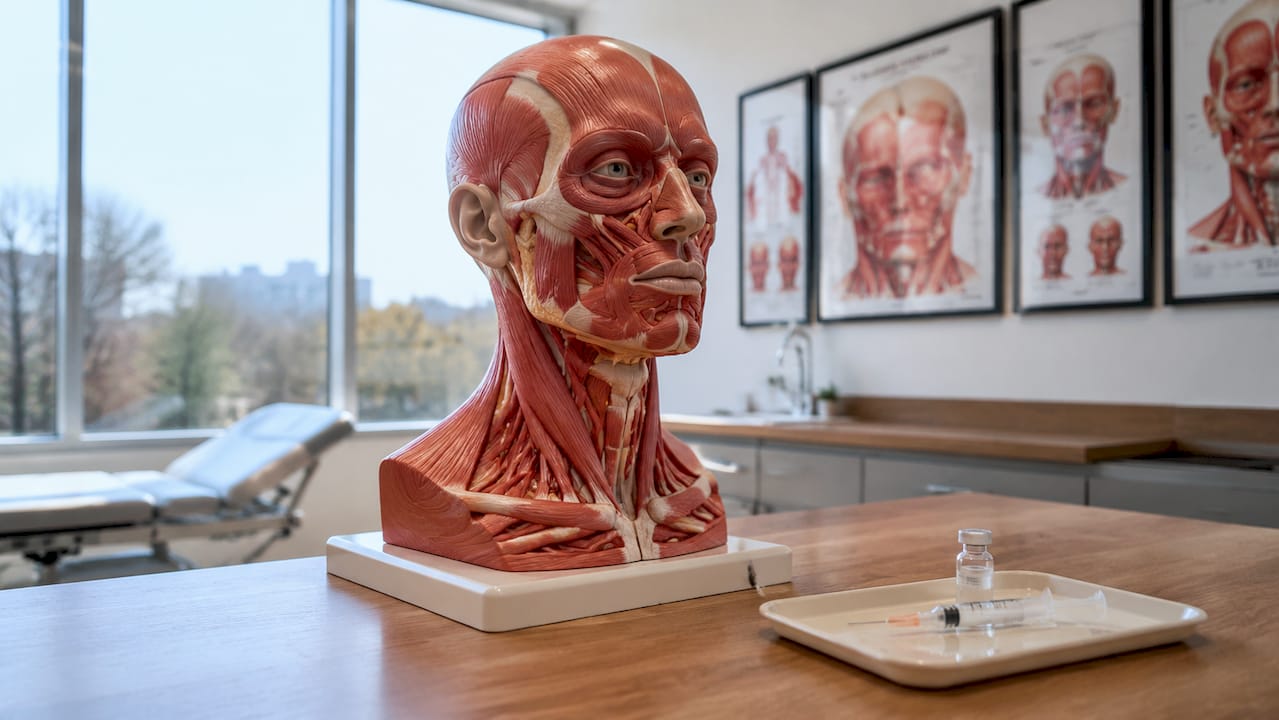
The effect is gradual, not instant. The NHS notes that onset takes up to two weeks, with effects typically lasting three to four months before the body naturally metabolises the toxin and muscle activity returns. This temporary nature is not a flaw in the treatment. It is a built-in safety feature that allows clinicians to adjust dosing and targeting at each session.
It is worth noting that botulinum toxin products are not interchangeable. Products such as OnabotulinumtoxinA (Botox), IncobotulinumtoxinA (Xeomin), and AbobotulinumtoxinA (Dysport) differ in potency, dosing units, and clinical indications. A clinician who selects the correct product for the correct condition achieves better outcomes and reduces the risk of adverse effects.
Pro Tip: Ask your practitioner which specific botulinum toxin product they are using and why. The answer tells you a great deal about their clinical knowledge and the precision of your treatment plan.
What are the main medical and cosmetic uses of muscle relaxing injections?
Muscle relaxant injections serve a wider range of conditions than most people realise. Their uses fall into two broad categories, each with distinct treatment goals.
Medical applications focus on reducing muscle overactivity that causes pain, stiffness, or functional impairment. The NHS identifies the following treatment goals for spasticity management:
- Reducing muscle stiffness and spasm to improve range of motion and posture
- Relieving pain associated with overactive or contracted muscles
- Supporting rehabilitation by making physiotherapy more effective
- Managing conditions such as cervical dystonia (involuntary neck muscle contractions), blepharospasm (eyelid spasms), and post-stroke spasticity
A 2026 review highlighted that combining botulinum toxin with rehabilitation after stroke produces better functional recovery than the injection alone. This integration with physical therapy extends the practical benefit well beyond the toxin’s pharmacological window.
Cosmetic applications use the same mechanism but with a different goal: softening the appearance of expression lines by relaxing the facial muscles that create them. IncobotulinumtoxinA, for example, is used to improve upper facial lines such as glabellar lines (the frown lines between the brows), forehead lines, and crow’s feet. The muscle is not paralysed permanently. It is simply quietened for a period, allowing the overlying skin to smooth.
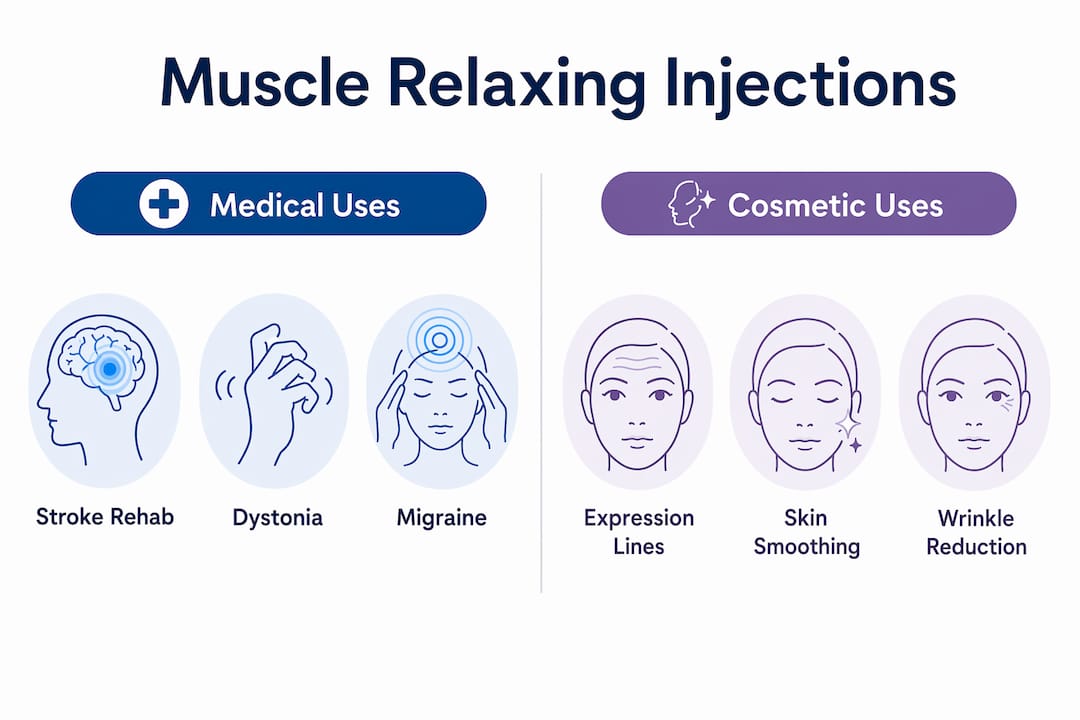
The distinction between medical and cosmetic use matters for dosing, product selection, and treatment frequency. Cosmetic doses are generally lower and more precisely targeted to preserve natural facial movement. Medical doses may be higher and spread across multiple muscle groups depending on the condition. To understand how anti-wrinkle injections compare to dermal fillers for facial rejuvenation, the two treatments address different structural concerns entirely.
What can you expect during and after treatment?
Knowing what happens before, during, and after your appointment removes the uncertainty that causes most patient anxiety.
Before the injection, your clinician will assess the target muscles, review your medical history, and confirm the appropriate product and dose. A topical numbing cream may be applied for cosmetic treatments, though the needles used are very fine and most patients describe only mild discomfort.
During the procedure, the injections are administered directly into the muscle or muscles identified during assessment. A cosmetic session for facial lines typically takes 15 to 30 minutes. Medical treatments for conditions like cervical dystonia may take longer and involve multiple injection sites.
After treatment, the timeline for results varies by condition and muscle group:
- For neck disorders such as cervical dystonia, improvement typically appears within two to six weeks of injection.
- For eyelid disorders such as blepharospasm, results can be seen in as little as three days to two weeks, as reported by Mayo Clinic.
- For cosmetic wrinkle reduction, most patients notice visible softening within seven to fourteen days, with peak effect around two weeks.
- Effects across all indications generally last three to four months, after which a repeat session is required to maintain results.
Pro Tip: Schedule your follow-up appointment before your effects fully wear off. Treating muscles that have partially regained activity is more predictable than waiting until full contraction returns.
Recovery is minimal. Most people return to normal activities immediately. Avoid rubbing the treated area, strenuous exercise, and lying flat for four hours post-treatment. These precautions reduce the risk of the toxin migrating to unintended muscles. For a detailed explanation of how neuromodulator injections work and what the recovery period involves, that resource covers the cosmetic context thoroughly.
What are the risks and side effects of muscle relaxing injections?
Muscle injection side effects range from mild and temporary to rare but serious. Understanding both ends of that spectrum is part of making an informed choice.
| Side effect | Frequency | Notes |
|---|---|---|
| Bruising or swelling at injection site | Common | Resolves within a few days; minimised by skilled technique |
| Temporary localised muscle weakness | Common | Expected effect; resolves as toxin wears off |
| Eyelid droop (ptosis) | Uncommon | Occurs with cosmetic facial injections; resolves within weeks |
| Facial asymmetry | Uncommon | Related to dose or placement; correctable at follow-up |
| Difficulty swallowing or breathing | Rare but serious | Requires urgent medical attention; more likely with higher doses |
The FDA’s package insert for Xeomin (IncobotulinumtoxinA) carries a specific warning: systemic toxin effects can appear hours to weeks after injection and may include difficulty swallowing, speaking, or breathing. These distant effects are rare but potentially life-threatening. Any patient who experiences these symptoms after treatment must seek urgent medical care.
A 2026 review in American Family Physician confirmed that adverse effects depend heavily on technique and dose precision. This is why the skill and experience of your practitioner matters as much as the product itself. Clinics that conduct thorough pre-treatment screening, use facial anatomy knowledge to guide placement, and follow established consent protocols significantly reduce the risk of complications.
The muscle relaxer vs painkiller comparison is worth addressing directly. Botulinum toxin injections are not painkillers. They do not block pain signals. They reduce the muscle overactivity that causes pain, which is a fundamentally different mechanism. For conditions where pain is the primary complaint, muscle relaxant therapy with botulinum toxin is often used alongside other treatments rather than as a standalone solution.
Key takeaways
Muscle relaxing injections using botulinum toxin are safe and effective for both medical and cosmetic purposes when administered by a skilled clinician using the correct product and dose.
| Point | Details |
|---|---|
| Mechanism of action | Botulinum toxin blocks nerve signals to muscles, causing temporary, controlled relaxation. |
| Onset and duration | Effects begin within two weeks and last three to four months across most indications. |
| Medical and cosmetic uses | Treats spasticity, cervical dystonia, and eyelid spasms; also reduces facial expression lines. |
| Risk awareness | Rare systemic effects like swallowing difficulty require urgent care; technique precision reduces risk. |
| Product specificity | Different botulinum toxin products are not interchangeable; correct selection is critical for safety. |
Why realistic expectations are the most underrated part of this treatment
From a clinical perspective, the most common source of patient dissatisfaction with muscle relaxant injections is not the treatment itself. It is the gap between what patients expect and what the treatment actually delivers.
Patients often arrive expecting immediate results. They are surprised when nothing visible happens in the first few days. The gradual onset is not a sign that the treatment has failed. It is how the biology works. Improving patient education on this point, as Mayo Clinic’s own guidance emphasises, reduces dissatisfaction and prevents patients from seeking unnecessary top-up treatments too early.
The second misconception I encounter regularly is the idea that more product means better results. In cosmetic treatments especially, over-treating a muscle produces an unnatural, frozen appearance rather than a refreshed one. Precision matters far more than volume. The best outcomes come from a clinician who understands facial anatomy deeply, selects the right product for the indication, and doses conservatively with the option to review.
My honest view is this: muscle relaxant therapy works exceptionally well within its defined scope. It is not a permanent solution, and it is not a substitute for other treatments where structural volume loss is the issue. But for managing overactive muscles, whether for medical relief or cosmetic refinement, it remains one of the most evidence-backed, repeatable, and well-tolerated treatments available. Choose your clinician as carefully as you choose the treatment.
— Vishul
Explore muscle relaxing injection treatments at Theaestheticsroom
If you are considering muscle relaxant injections for cosmetic or medical purposes, the quality of your clinic and practitioner determines your outcome as much as the treatment itself.

Theaestheticsroom, based in Knightsbridge and with locations on Harley Street and in Mayfair, offers Botox treatments administered by trained medical specialists in a CQC-accredited environment. Every treatment begins with a thorough consultation to assess your goals, medical history, and suitability. The clinic’s membership in the ACE Group reflects its commitment to patient safety and clinical excellence. Whether you are seeking cosmetic wrinkle reduction or therapeutic muscle relaxation, Theaestheticsroom provides bespoke treatment plans designed around your individual needs. Book a virtual or in-person consultation today to take the first step with confidence.
FAQ
What is muscle relaxing injections used for?
Muscle relaxing injections use botulinum toxin to treat both medical conditions, such as cervical dystonia, post-stroke spasticity, and eyelid spasms, and cosmetic concerns such as facial expression lines. The toxin temporarily reduces muscle activity by blocking nerve signals at the injection site.
How long do muscle relaxing injections last?
Effects typically begin within two weeks of treatment and last three to four months before the body metabolises the toxin and muscle activity gradually returns. Repeat sessions are required to maintain results over time.
Are muscle relaxing injections the same as painkillers?
No. Botulinum toxin injections reduce muscle overactivity that causes pain rather than blocking pain signals directly. They are a form of muscle relaxant therapy, not an analgesic, and are often used alongside other pain management approaches.
What are the most common side effects?
Common side effects include temporary bruising, swelling, or localised weakness at the injection site. Rare but serious effects, such as difficulty swallowing or breathing, require urgent medical attention and are more likely with higher doses or imprecise technique.
How do I know which botulinum toxin product is right for me?
Different products such as Botox, Xeomin, and Dysport are not interchangeable and vary in potency and dosing. A qualified clinician will select the appropriate product based on your specific condition and treatment goals during a pre-treatment consultation.