

TL;DR:
- Personalized treatment plans in aesthetic medicine reduce risks and produce natural, proportionate results.
- Clinicians assess individual anatomy, skin condition, and goals to tailor procedures and decide the best approach.
Customising a treatment plan means building a medically informed, bespoke programme of care aligned precisely to your anatomy, skin health, and personal goals. In aesthetic medicine, this approach is known as individualised care planning, and it is the standard that separates safe, natural-looking results from generic, trend-driven procedures. The question of why customize treatment plans matters deeply because no two faces, skin types, or healing responses are identical. Theaestheticsroom, based in Knightsbridge and registered with the Care Quality Commission (CQC), applies this principle to every consultation, from Botox to dermal fillers and skin rejuvenation.
Why customize treatment plans: the safety and effectiveness case
Bespoke planning directly reduces the risk of complications and over-treatment. A medically led aesthetic clinic uses physician oversight at every stage, from initial consultation through to treatment delivery, which produces safer and more clinically sound outcomes. That oversight is not a formality. It means a qualified practitioner can identify when a patient’s anatomy or medical history makes a standard procedure unsuitable, and can recommend a more conservative or alternative approach instead.
The benefits of personalised treatment extend beyond safety. When a clinician assesses your facial structure, skin quality, and lifestyle before selecting any procedure, the results look proportionate rather than exaggerated. Personalised treatment plans consider anatomy, skin quality, medical history, and patient lifestyle, producing more proportionate and effective outcomes. One patient may need skin quality improvement before volume restoration is even considered. Another may need staged treatments across several months to achieve a balanced result.
Generic packages cannot account for these differences. A fixed-volume dermal filler protocol applied to two patients with different bone structures will produce two very different outcomes, and not always the intended one.
Pro Tip: Ask your practitioner to explain exactly which factors they assessed before recommending any procedure. If they cannot answer in specific terms, that is a signal the plan is not truly bespoke.
- Bespoke plans reduce the likelihood of over-treatment by matching product volume and technique to your actual anatomy.
- Medical oversight helps distinguish when a conservative approach or no treatment at all is the right clinical decision.
- Staged treatment allows gradual, natural-looking change rather than sudden, noticeable alteration.
- Personalised risk evaluation accounts for individual healing capacity, medication use, and skin sensitivity.
What factors influence tailoring aesthetic treatments to you?
The importance of custom treatment becomes clear when you consider how many individual variables a clinician must weigh before recommending any procedure. No single factor determines the right plan. It is the combination of all of them together.
-
Facial anatomy and bone structure. Treatments customised to bone structure and tissue quality minimise long-term risk and preserve natural facial function. Practitioners frequently decline procedures that are misaligned with a patient’s underlying anatomy, because forcing volume into the wrong area distorts rather than enhances.
-
Skin type and condition. Skin thickness, hydration levels, collagen density, and the presence of conditions such as rosacea or hyperpigmentation all affect which treatments are appropriate and at what intensity. A patient with thin, dehydrated skin requires a different approach to one with oily, resilient skin.
-
Medical history and active health concerns. Autoimmune conditions, blood-thinning medications, and previous aesthetic procedures all influence treatment selection. A thorough medical history review is not optional. It is a clinical requirement.
-
Patient goals and lifestyle. A patient who cannot tolerate any visible downtime requires different planning to one who can take a week away from public-facing work. Goals must be realistic and aligned with what the patient’s anatomy can safely support.
-
Ethnic and demographic considerations. Skin pigmentation, facial proportions, and ageing patterns vary significantly across ethnic backgrounds. Specialised skin treatments for different demographics reflect this reality. A plan that works well for one demographic may produce unnatural results in another.
-
Tolerance for staged treatment. Some patients want immediate results. Others benefit more from a phased approach that allows the face to adapt gradually. Understanding a patient’s tolerance for this process shapes the entire treatment timeline.
Why do ethical clinics insist on cooling-off periods?
The ethical and clinical importance of consultation goes well beyond gathering information. Ethical clinics follow a cooling-off period of 24–48 hours between consultation and treatment, giving patients time to reflect on what they have heard before committing. This period is not legally mandated universally, but it is standard practice in responsible aesthetic medicine and a clear marker of patient-centred care.
The cooling-off period serves as an ethical safeguard. It prevents impulsive decisions made in the moment of enthusiasm, and it ensures patients fully understand the risks, benefits, and alternatives before proceeding. A patient who books and receives treatment in the same appointment has not had adequate time to process the information given to them.
Consent forms are equally specific to the individual plan. Detailed, treatment-specific consent forms cover the mechanism of each procedure, its risks, expected results, recovery requirements, and available alternatives. Generic consent forms that apply to all treatments are a warning sign. Proper consent is tailored to the exact procedure being performed.
- Consultation is a clinical evaluation, not a sales meeting. It may conclude that no treatment is the right recommendation.
- Cooling-off periods protect patients from trend-driven or emotionally driven decisions.
- Consent forms must be procedure-specific to be clinically meaningful.
- A practitioner who advises no treatment when anatomy does not support a procedure is demonstrating the highest standard of patient care.
Pro Tip: Use the cooling-off period actively. Write down any questions that arise after your consultation and bring them to your next appointment. A good practitioner will welcome this.
From consultation to results: how bespoke plans work in practice
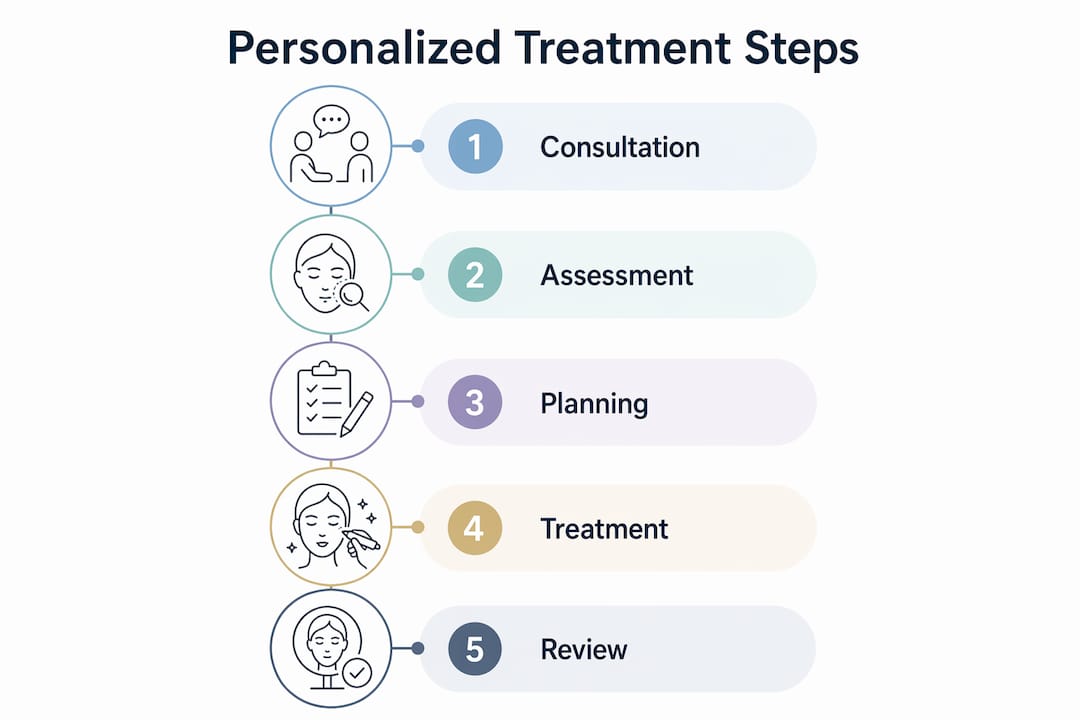
Understanding how to tailor treatment plans is one thing. Seeing how that process unfolds in practice is another. The advantages of individualised care become most visible when you follow a patient’s journey from first contact through to their final review appointment.

| Stage | What happens | Why it matters |
|---|---|---|
| Consultation | Full assessment of anatomy, skin, medical history, and goals | Establishes the clinical baseline for all decisions |
| Planning | Selection of treatments, products, volumes, and timeline | Aligns the programme with realistic, proportionate outcomes |
| Preparation | Pre-treatment advice, lifestyle adjustments, consent review | Reduces risk and sets accurate expectations |
| Treatment | Procedure delivered according to the bespoke plan | Technique and volume matched to individual anatomy |
| Aftercare | Personalised recovery guidance and monitoring | Supports healing and identifies any early concerns |
| Review | Assessment of results and adjustment of future plan | Ensures long-term satisfaction and ongoing safety |
Patient satisfaction improves with consultation-driven, realistic goal-setting and staged, personalised treatment plans rather than impulsive, trend-driven approaches. That improvement is not accidental. It is the direct result of aligning what a patient wants with what their anatomy can safely deliver.
Bespoke dermal filler treatments assess facial structure at rest and in movement to maintain natural expression and harmony. Specific filler types and gradual application produce balanced, long-term support rather than simply adding volume. This is why two patients receiving dermal fillers at the same clinic may receive entirely different products, volumes, and injection points. The treatment is built around them, not around a standard protocol.
The review stage is often underestimated. Ongoing monitoring allows practitioners to adjust the plan as the patient’s face responds to treatment, as they age, or as their goals evolve. This is why personalised care matters beyond the initial appointment. It is a continuing clinical relationship, not a single transaction.
Key takeaways
Customising treatment plans is the single most effective way to achieve safe, natural-looking aesthetic results that hold up over time.
| Point | Details |
|---|---|
| Bespoke plans improve safety | Personalised assessment of anatomy and medical history reduces the risk of complications and over-treatment. |
| Cooling-off periods protect patients | A 24–48 hour gap between consultation and treatment prevents impulsive decisions and supports informed consent. |
| Individual factors drive every decision | Bone structure, skin type, ethnicity, and lifestyle all shape which treatments are appropriate and at what stage. |
| Staged treatment delivers natural results | Phased plans allow gradual change that looks proportionate rather than sudden or exaggerated. |
| Review appointments sustain outcomes | Ongoing monitoring allows the plan to adapt as the patient’s face and goals evolve over time. |
Why I believe bespoke planning is non-negotiable in aesthetics
The most common regret I hear from patients who have had poor aesthetic experiences is not that they chose the wrong treatment. It is that nobody asked them the right questions beforehand. A practitioner who spends thirty minutes understanding your anatomy, your lifestyle, and your realistic expectations will almost always produce a better outcome than one who applies a standard protocol in fifteen.
What strikes me most is how often the best clinical decision is to do less, or to do nothing at all. Clinicians in bespoke plans may advise no treatment or a less invasive alternative to prioritise facial anatomy and long-term health over unnecessary intervention. That takes confidence and integrity. It also builds the kind of trust that brings patients back for years.
The medical consultation process is where bespoke care either begins or fails. Patients who invest time in a thorough consultation, ask questions during the cooling-off period, and engage with their review appointments consistently report greater satisfaction and more natural-looking results. The science supports this. The clinical experience confirms it.
Generic plans are faster and simpler to deliver. Bespoke plans are safer, more effective, and more honest. For anyone serious about their long-term skin and facial health, there is no real comparison.
— Vishul
Theaestheticsroom: bespoke aesthetic care in the heart of London
Theaestheticsroom offers medical-led consultations and personalised aesthetic planning from its clinics in Knightsbridge, Harley Street, and Mayfair. Every treatment programme begins with a thorough clinical assessment, followed by a cooling-off period before any procedure is agreed.
Whether you are considering Botox treatments tailored to your facial anatomy or exploring dermal filler options designed around your natural proportions, Theaestheticsroom’s practitioners build every plan around you. CQC registration and ACE Group membership underpin the clinic’s commitment to patient safety and ethical standards. Book a consultation today and experience the difference that genuinely personalised care makes.
FAQ
What does it mean to customise a treatment plan?
Customising a treatment plan means designing a programme of aesthetic care based on your individual anatomy, skin condition, medical history, and personal goals rather than applying a standard protocol. Every element, from product selection to timing and technique, is chosen specifically for you.
Why does personalised care produce better aesthetic results?
Personalised treatment plans account for individual differences in facial structure, skin quality, and lifestyle, producing outcomes that look proportionate and natural rather than generic or overdone.
What is a cooling-off period and why does it matter?
A cooling-off period is a 24–48 hour gap between your consultation and your treatment appointment. It gives you time to reflect on the information you have received and to confirm your decision without pressure or impulse.
Can a bespoke consultation result in no treatment being recommended?
Yes. A clinician following ethical, patient-centred practice may conclude that no treatment or a less invasive alternative is the right recommendation, particularly when a patient’s anatomy does not support the procedure they originally requested.
How does Theaestheticsroom tailor treatments to individual patients?
Theaestheticsroom conducts a full clinical assessment covering anatomy, skin health, medical history, and patient goals before recommending any procedure. Treatment plans are built around each patient’s specific needs, with a cooling-off period and a review appointment included as standard.