

TL;DR:
- A boutique aesthetic clinic is a doctor-led, low-volume practice emphasizing personalized care, safety, and continuity throughout treatment. It offers a focused range of treatments like Botox, dermal fillers, and skin rejuvenation with longer consultations and transparent pricing. This model supports better outcomes for complex procedures by ensuring consistent practitioner involvement and thorough follow-up.
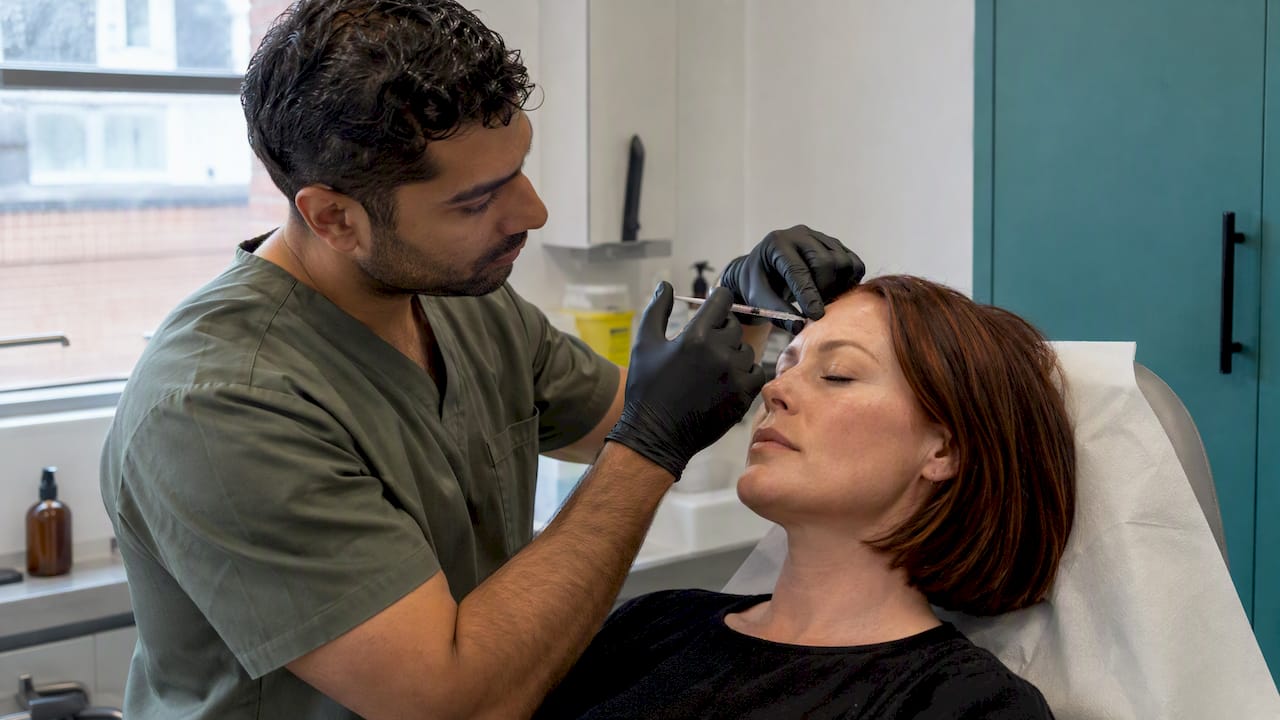
A boutique aesthetic clinic is a doctor-led, low-volume practice that delivers personalised, non-surgical cosmetic treatments through longer consultations, a focused service menu, and consistent practitioner involvement from first appointment through to aftercare. The model prioritises quality and safety over throughput.
Defining attributes at a glance:
- Doctor or senior clinician involvement at every stage: consultation, treatment, and follow-up
- Limited patient volume, with extended appointment times
- A focused rather than exhaustive treatment menu
- Bespoke treatment plans, transparent pricing, and minimal upselling
- A discreet, private clinic environment
- Visible practitioner credentials, testimonials, and before-and-after records
This matters because continuity of care and clinical accountability reduce the risk of inconsistent outcomes, particularly for complex or injection-based procedures.
Table of Contents
- What defines a boutique aesthetic clinic?
- What services do boutique aesthetic clinics offer?
- How do boutique clinics differ from standard high-volume clinics?
- What UK safety and regulation should you expect from a boutique clinic?
- How to choose a boutique aesthetic clinic: a practical checklist
- Typical costs and treatment timelines in the UK
- Main risks of aesthetic treatments and what proper aftercare looks like
- What a UK boutique clinic looks like in practice: Theaestheticsroom
- Key takeaways
- The case for continuity in aesthetic care
- Considering boutique aesthetic care in London
- Authoritative UK sources and further reading
What defines a boutique aesthetic clinic?
Boutique clinics are doctor-led, low-volume practices that prioritise personalised treatment, longer consultations, and customised procedures rather than standardised packages. In practice, that translates into several observable features.
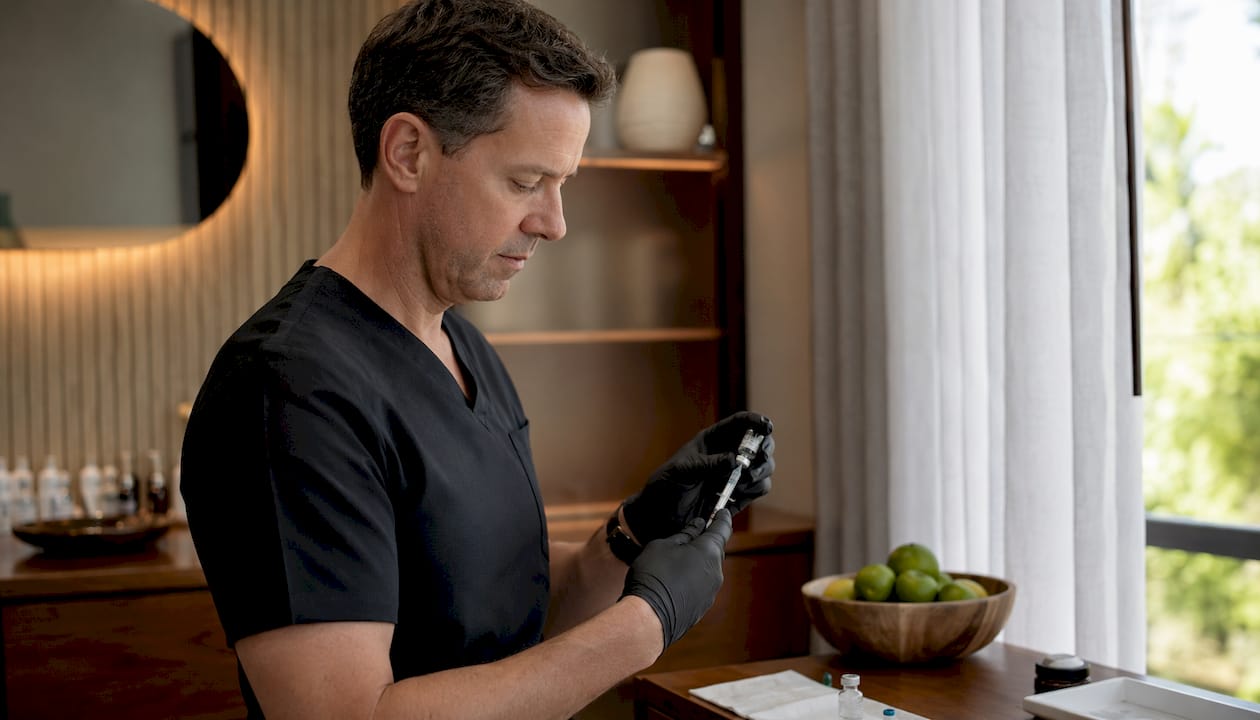
The lead clinician is present and accountable throughout. They assess your skin, perform the treatment, and manage any follow-up. This is not always the case in higher-volume settings, where consultation and treatment may be split between different members of staff.
Appointment slots are longer, typically including sufficient time for thorough analysis and planning, which allows the practitioner to build a picture of your skin history, lifestyle, and aesthetic goals before recommending anything. Boutique models emphasise transparency and minimise upselling, using patient education during consultations to support informed decisions rather than pushing additional treatments.
The clinic environment itself reflects the positioning: private waiting areas, discreet appointment systems, and a calm setting that feels closer to a medical consulting room than a high-street beauty salon. Visible practitioner bios, professional credentials, before-and-after galleries, and patient testimonials are standard trust signals you should expect to find.
Pro Tip: Before booking, check whether the clinic’s website names the specific practitioner who will carry out your treatment. Anonymous staff listings are a warning sign in any aesthetic setting.
What services do boutique aesthetic clinics offer?
Boutique clinics limit their service menu to a select range of procedures so practitioners maintain deeper expertise in those treatments rather than spreading across a broad, generalised list. The most common non-surgical services include:
- Anti-wrinkle injections (Botox): Administered by the lead clinician to soften dynamic lines on the forehead, around the eyes, and between the brows
- Dermal fillers: Hyaluronic acid or calcium hydroxyapatite-based products used to restore volume, define contours, and smooth deeper folds
- Skin rejuvenation: Treatments such as Profhilo, polynucleotides, chemical peels, and collagen-stimulating procedures to improve texture and tone
- Fat-dissolving injections: Targeted reduction of localised fat deposits using injectable compounds
- Hair restoration: Platelet-rich plasma (PRP) therapy and related treatments to address thinning or hair loss
- IV vitamin therapy and lymphatic drainage: Adjunctive wellness treatments that complement aesthetic outcomes
The key distinction is depth over breadth. A boutique clinic performing anti-wrinkle injections will typically have the lead doctor administering every treatment, rather than delegating to a rotating team of technicians. Complementary at-home skincare, such as a quality anti-wrinkle formulation, can support and extend in-clinic results between appointments.
Pro Tip: Ask whether the same clinician who conducts your consultation will also perform the treatment. If the answer is no, ask why and who will.
How do boutique clinics differ from standard high-volume clinics?
The practical differences affect safety, results, and the overall experience.
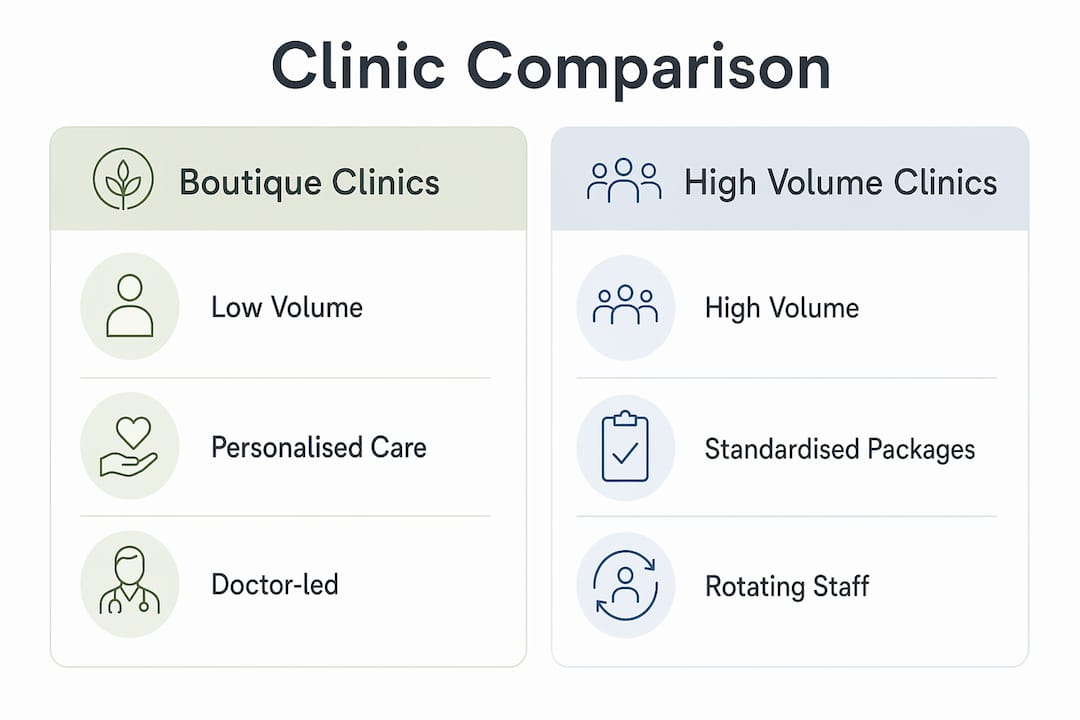
| Dimension | Boutique clinic | High-volume clinic |
|---|---|---|
| Patient volume | Low; extended slots | High; fast turnaround |
| Practitioner involvement | Lead clinician throughout | May vary by appointment |
| Consultation length | extended duration typical | Often short duration |
| Treatment plans | Bespoke, documented | Standardised packages |
| Pricing transparency | Itemised, upfront | Variable; upselling common |
| Clinic environment | Private, discreet | Busy, open-plan |
| Safety credentials | CQC, professional memberships | Variable |
| Treatment range | Focused, specialist | Broad, generalised |
High-volume clinics often use standardised packages, shorter consultations, and rotating staff, which can increase the risk of inconsistent outcomes for complex or high-risk procedures. For straightforward, low-risk treatments on uncomplicated skin, a higher-volume setting may be perfectly adequate. Where the boutique model becomes preferable is for injection-based treatments, sensitive or reactive skin, acne scarring, pigmentation, or any case requiring a long-term plan and genuine continuity.
What UK safety and regulation should you expect from a boutique clinic?
In the United Kingdom, independent clinics providing cosmetic procedures are expected to ensure their staff are properly trained; many register voluntarily with the Care Quality Commission (CQC) or the Professional Standards Authority to demonstrate standards of training, insurance, and skill.
CQC registration is not legally mandatory for all aesthetic clinics, but voluntary registration signals that a clinic has submitted to independent inspection of its governance, safety processes, and clinical standards. For you as a patient, it is one of the clearest third-party signals available. Understanding why CQC registration matters can help you filter out clinics that operate without meaningful oversight.
Alongside CQC status, look for:
- Practitioners holding recognised medical qualifications (doctor, nurse prescriber, or dentist with aesthetic training)
- Professional indemnity insurance confirmed in writing
- A documented, signed consent process before any treatment begins
- Written aftercare instructions and a named point of contact for post-treatment concerns
- Photographic records taken before and after treatment
Red flags to walk away from: anonymous or unverifiable staff profiles; no written pricing before the appointment; high-pressure upselling during consultation; no visible professional credentials or registration numbers; inability to explain what happens if a complication occurs.
How to choose a boutique aesthetic clinic: a practical checklist
Start your research before you set foot in a clinic.
- Check credentials online. Search the practitioner’s name on the General Medical Council (GMC), Nursing and Midwifery Council (NMC), or General Dental Council (GDC) register to confirm they are currently registered.
- Look for CQC registration or recognised membership bodies. The ACE Group, for example, is a recognised industry body focused on patient safety standards.
- Review practitioner bios and before-and-after galleries. These should be specific, not stock images, and should show results relevant to your concern.
- Book a consultation before committing to treatment. A thorough medical consultation is non-negotiable; any clinic that skips this step is not operating to an acceptable standard.
- Ask directly: Who will perform my treatment? What happens if I experience a complication? Is there a follow-up appointment included?
- Request a written treatment plan and itemised pricing before you agree to anything.
Pro Tip: A cooling-off period between consultation and treatment is good practice. Any clinic that pressures you to book on the same day as your first consultation warrants caution.
Red flags: no consultation offered; inability to name the treating practitioner; verbal-only pricing; no written consent form.
Typical costs and treatment timelines in the UK
Prices vary by clinician seniority, clinic location, and treatment complexity. Doctor-led boutique clinics in London typically sit at the higher end of the market, reflecting the level of clinical involvement and the quality of the environment.
| Treatment | Typical UK price range | Consultation to treatment | Review appointment |
|---|---|---|---|
| Anti-wrinkle injections | typical UK pricing varies by area and clinician | Usually a short wait between consultation and treatment | Review generally occurs a few weeks post-treatment |
| Dermal fillers | typical UK pricing varies by clinician and product | Usually a short wait between consultation and treatment | Review generally occurs several weeks post-treatment |
| Skin rejuvenation (e.g. Profhilo) | typical UK pricing varies with clinic and treatment type | Usually a short wait between consultation and treatment | Review generally occurs a few weeks post-treatment |
| Fat-dissolving injections | typical UK pricing varies by session and clinician | Usually a short wait between consultation and treatment | Review generally occurs several weeks post-treatment |
A typical patient journey runs: initial consultation → written treatment plan and pricing → treatment appointment (often 1–2 weeks later) → immediate aftercare guidance → review appointment. Boutique clinics build the review appointment into the process as standard; high-volume settings often do not.
Main risks of aesthetic treatments and what proper aftercare looks like
Common side effects include bruising, swelling, redness, and temporary tenderness at the injection site. These usually resolve within a few days. Serious complications can include tissue necrosis and vision loss in rare cases; thorough assessment and trained practitioners reduce these risks substantially.
Proper aftercare from a reputable boutique clinic includes:
- Written aftercare instructions provided at the appointment
- Clear guidance on what to avoid (heat, exercise, alcohol) in the 24–48 hours following treatment
- A named contact number for post-treatment concerns
- A scheduled review appointment
Seek urgent medical attention if you experience: significant or worsening pain beyond the first 24 hours; spreading redness or skin discolouration; any change in vision; or signs of vascular compromise such as blanching or mottled skin near the treatment area.
When to contact the clinic: any side effect that concerns you, any result that does not match the agreed plan, or any question about your aftercare. A boutique clinic should welcome these calls; reluctance to engage post-treatment is itself a red flag.
Pro Tip: Photograph the treatment area before and immediately after your appointment. This gives both you and your clinician a clear baseline if any concern arises.
What a UK boutique clinic looks like in practice: Theaestheticsroom
Theaestheticsroom operates from Knightsbridge, with additional locations on Harley Street and in Mayfair. It is CQC-registered and holds membership of the ACE Group, a recognised industry body dedicated to patient safety. These credentials map directly to the checklist above: independent inspection, professional standards, and a documented commitment to governance.
In practice, the clinic delivers bespoke treatment plans across anti-wrinkle injections, dermal fillers, skin rejuvenation, fat-dissolving, hair restoration, IV vitamin therapy, and lymphatic drainage. Practitioner continuity is built into the model: the same clinician who assesses you is involved in your treatment and follow-up.
What this looks like for patients: a detailed initial consultation, a written treatment plan with clear pricing, treatment performed by the lead clinician, and a follow-up appointment to assess results and plan next steps.
Before-and-after images, patient testimonials, and visible practitioner bios are published on the site, providing the proof points that a well-governed boutique clinic should make available.
Pro Tip: Virtual consultations are available at Theaestheticsroom, which means you can assess the clinic’s approach and the practitioner’s communication style before committing to an in-person appointment.
Key takeaways
A boutique aesthetic clinic is defined by doctor-led continuity, a focused service menu, and transparent, personalised care — not simply by price or location.
| Point | Details |
|---|---|
| Doctor-led continuity | The same clinician should assess, treat, and follow up — this reduces fragmentation and improves outcomes. |
| Focused service menu | A narrower treatment range supports deeper practitioner expertise and more consistent results. |
| Safety credentials to check | Look for CQC registration, GMC/NMC/GDC listing, professional indemnity insurance, and ACE Group membership. |
| Pricing and transparency | Expect a written treatment plan and itemised pricing before any treatment begins. |
| Theaestheticsroom | A CQC-registered, ACE Group member clinic in London offering bespoke, doctor-led aesthetic treatments across multiple locations. |
The case for continuity in aesthetic care
The conventional wisdom about boutique clinics tends to focus on luxury: the private waiting room, the premium postcode, the higher price per session. That framing misses the point. The real advantage is clinical, not cosmetic.
When one clinician follows you over time, they accumulate knowledge that no intake form can replicate: how your skin responds to specific products, how your anatomy affects filler placement, how your results evolve between sessions. That accumulated understanding is what produces natural, durable outcomes rather than the kind of results that look fine in isolation but drift over time.
High-volume settings are not inherently unsafe, but they are structurally less able to deliver that continuity. Rotating staff, standardised protocols, and compressed appointment times are not failures of individual practitioners; they are features of a model optimised for throughput rather than depth. For straightforward, low-stakes treatments, that trade-off may be acceptable. For anything complex, injection-based, or long-term, the boutique model’s insistence on practitioner continuity is a genuine clinical advantage, not a marketing position.
Considering boutique aesthetic care in London
Theaestheticsroom offers the kind of doctor-led, CQC-registered boutique care this article describes, from its Knightsbridge, Harley Street, and Mayfair locations. Treatments are delivered through bespoke plans, with the same clinician involved from consultation through to review.
Whether you are considering anti-wrinkle injections, dermal fillers, or skin rejuvenation, the starting point is a thorough consultation that puts your safety and goals first. Book a virtual or in-person consultation at Theaestheticsroom to discuss your options with a qualified practitioner and receive a written treatment plan before committing to anything.
Authoritative UK sources and further reading
- NHS: Choosing who will do your cosmetic procedure
- Theaestheticsroom: Why choose a CQC-registered aesthetic clinic
- Theaestheticsroom: Safety in cosmetic procedures London
- Theaestheticsroom: Why medical consultation matters
- Theaestheticsroom: Why customise treatment plans for better aesthetic results
- Theaestheticsroom: Safety in aesthetics